Artwork
The Crucifixion
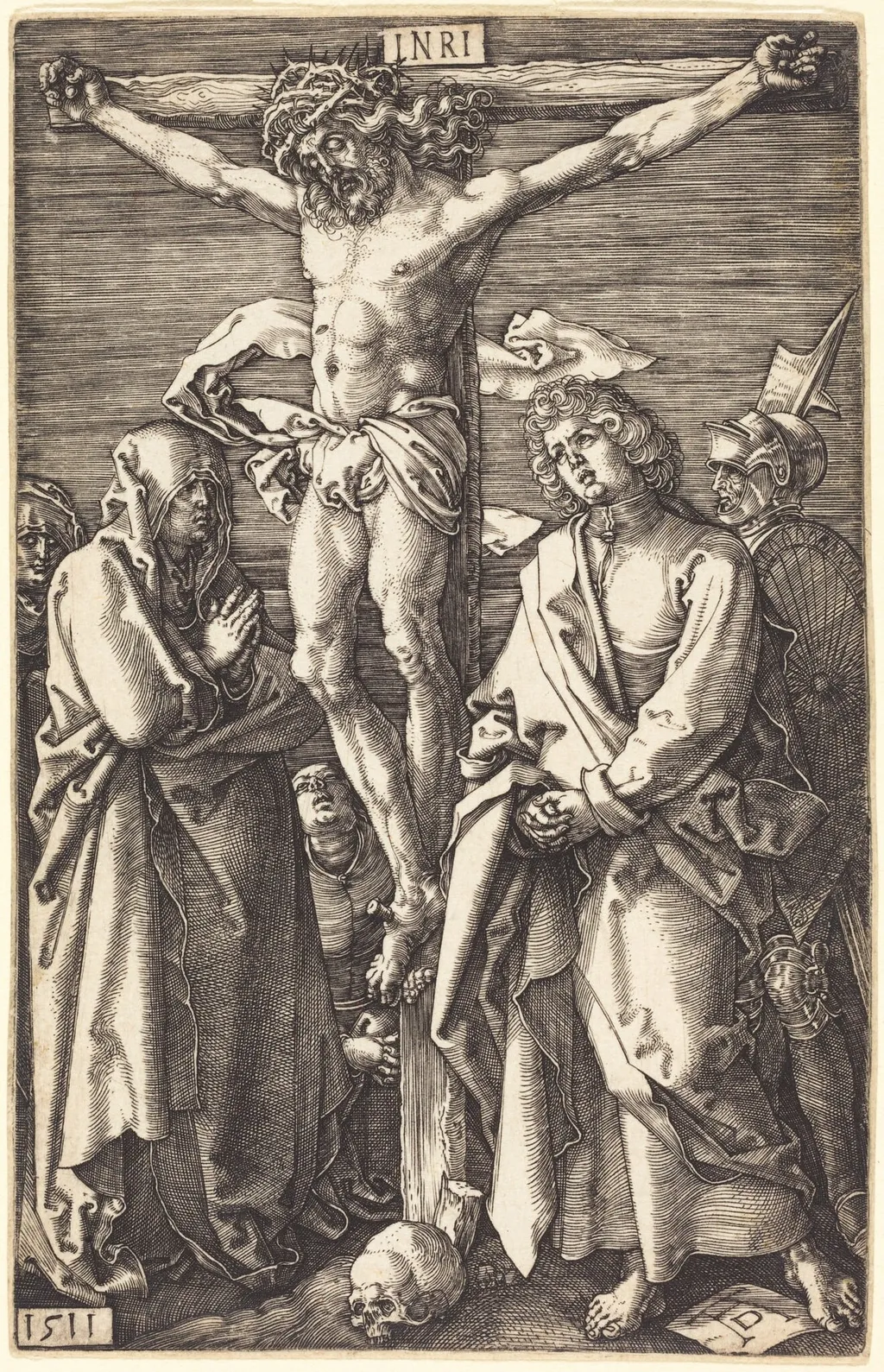
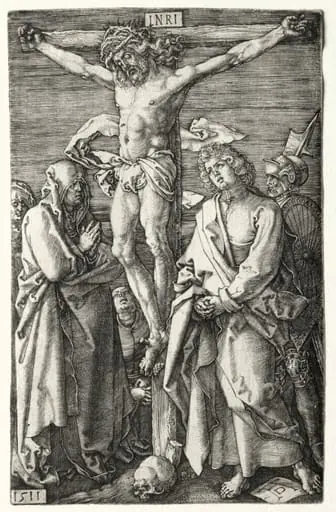
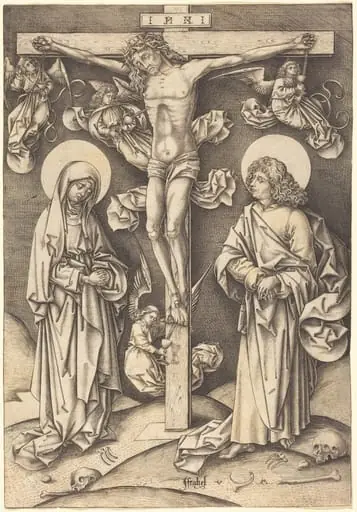
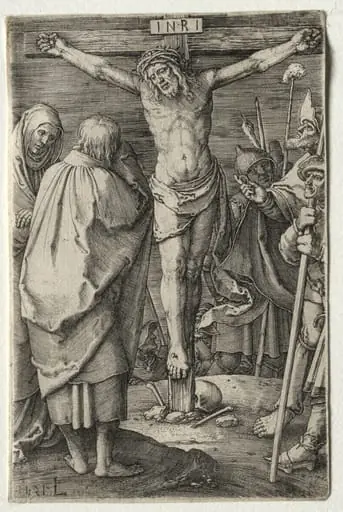
The Crucifixion is an ink print by the Northern Renaissance artist Albrecht Dürer. It dates from 1511 and is held in the collection of the National Gallery of Art.
About this work
Overview
Created in 1511, Albrecht Dürer's engraving *The Crucifixion* is a seminal work from his second series of the Large Passion.
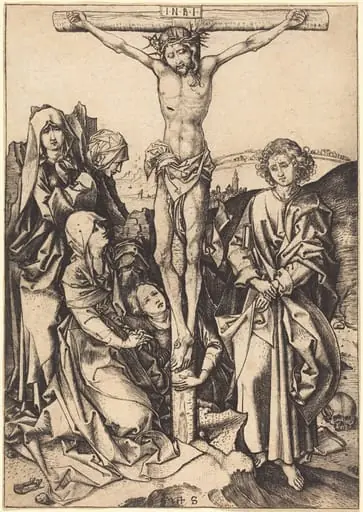
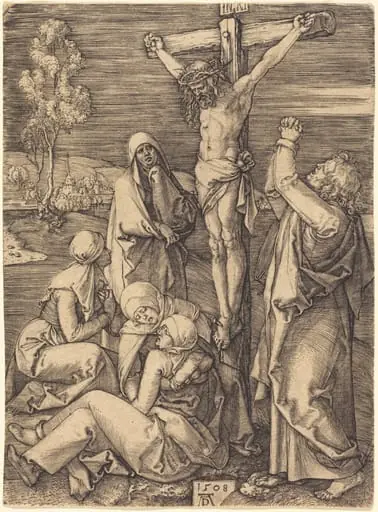
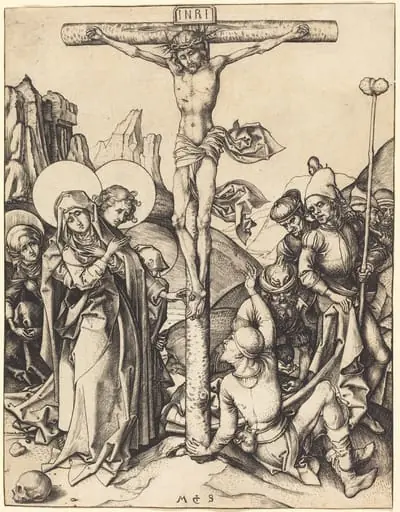
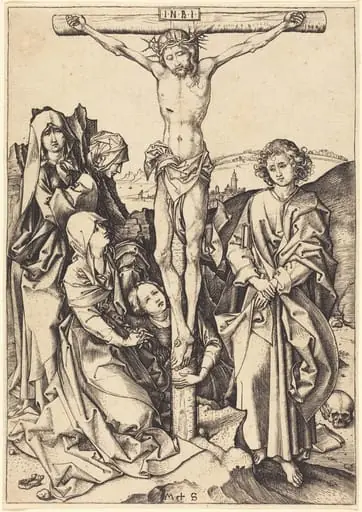
Created in 1511, Albrecht Dürer's engraving *The Crucifixion* is a seminal work from his second series of the Large Passion. The composition centers on the figure of Christ on the cross, his head bowed in death, flanked by the Virgin Mary and Saint John the Evangelist who stand in the foreground. Dürer employs his mastery of the burin to create a dense network of fine lines and cross-hatching, generating deep chiaroscuro effects that define the muscular tension of the figures and the somber atmosphere of the scene. The background features a dramatic, stormy sky and a landscape that recedes into the distance, populated by additional figures and architectural elements typical of the artist's Northern Renaissance style. This print exemplifies Dürer's technical innovation in translating painterly light and shadow into the medium of engraving, establishing a new standard for reproductive printmaking in the German Renaissance. The work reflects the artist's mature engagement with religious themes, combining intense emotional expression with precise anatomical observation and complex spatial organization.
Subject & Meaning
The image centers on the crucified Christ, his head bowed and his torso illuminated by a sharp light that emphasizes the wound on his side. Flanking the cross, the Virgin Mary and the apostle John are depicted in a subdued posture, underscoring themes of grief and devotion inherent to the Passion narrative.
Technique & Style
Dürer achieved the work through fine incisions in a metal plate, employing dense cross‑hatching to render shadows and texture. The interlacing lines create a woven effect across the paper, while the precise, knife‑like illumination on Christ’s flesh demonstrates the master’s control of tonal contrast within the print medium.
History & Provenance
Since its creation in the early sixteenth century, the engraving has been part of several collections before entering the National Gallery of Art in Washington. The museum’s holdings include this work as a representative example of Dürer’s religious printmaking during his mature period.
Artist & collection
Artist
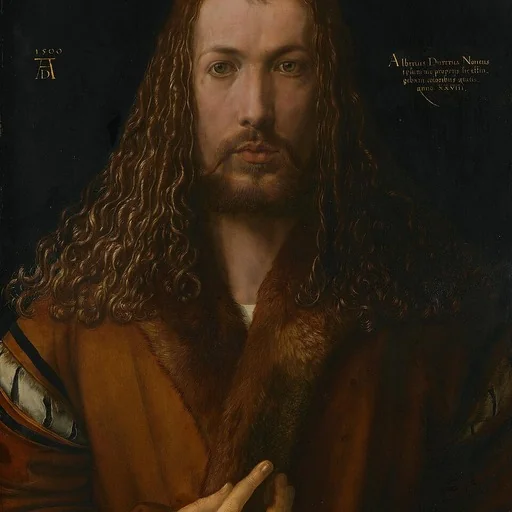
Albrecht Dürer spent his life in Nuremberg, a busy German city where artists traded prints like currency.

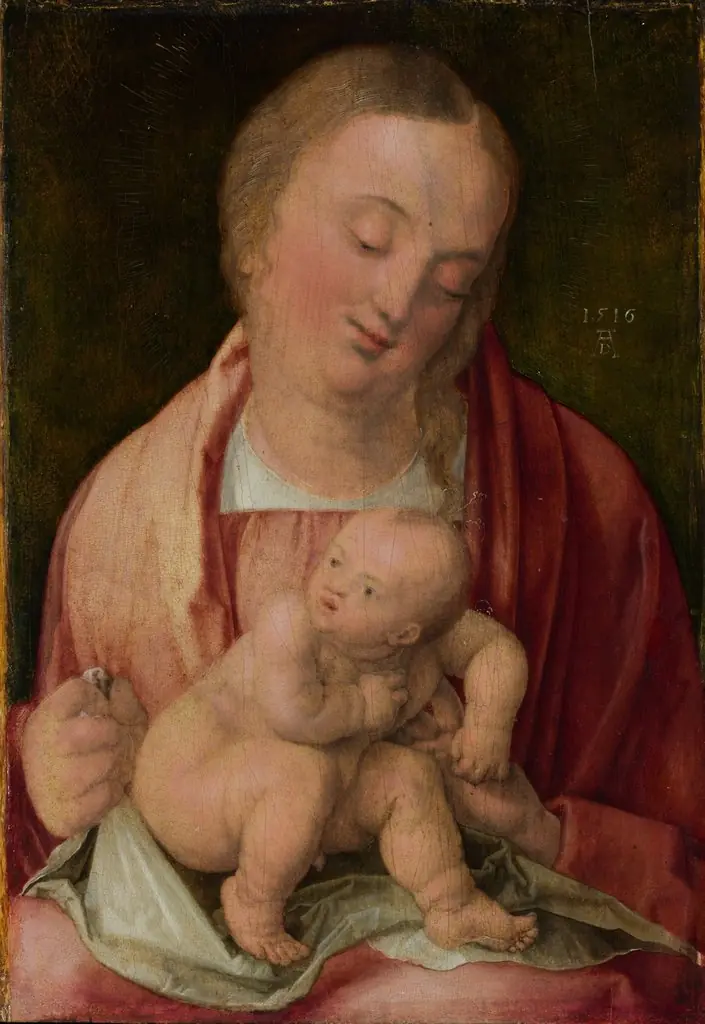
![Madonna and Child [obverse], by Albrecht Dürer](https://artifactworldgallery.com/img/albrecht-durer--madonna-and-child-obverse--d7b8ebf05d22ebe5-w320.webp)
![Lot and His Daughters [reverse], by Albrecht Dürer](https://artifactworldgallery.com/img/albrecht-durer--lot-and-his-daughters-reverse--b4ebf9b282faa17a-w320.webp)