Artwork
Revelation of St. John: The Woman of Babylon
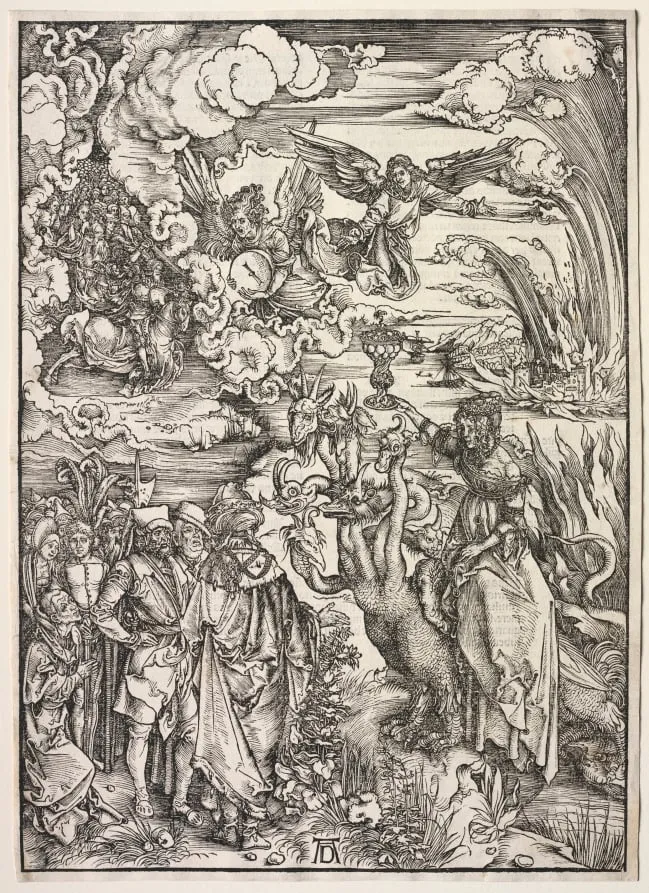
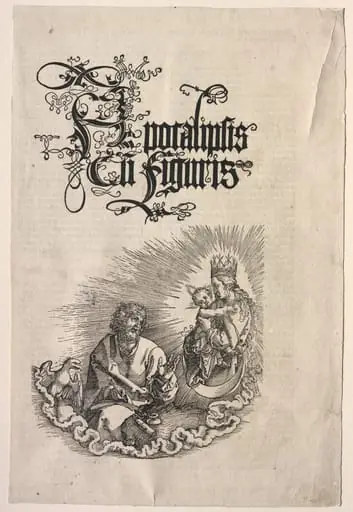
Revelation of St. John: The Woman of Babylon is a print by the Renaissance artist Albrecht Dürer. It dates from 1511 and is held in the collection of the Cleveland Museum of Art.
About this work
Overview
Created in 1511, this engraving by Albrecht Dürer illustrates a passage from the Book of Revelation, focusing on the symbolic figure of the Woman of Babylon.
Created in 1511, this engraving by Albrecht Dürer illustrates a passage from the Book of Revelation, focusing on the symbolic figure of the Woman of Babylon. Executed in fine line work on copper, the print reflects Dürer’s technical precision and his engagement with apocalyptic themes. It belongs to a series of large-scale engravings he produced during his mature period, demonstrating his command over complex narrative composition and intricate detail.
Subject & Meaning
The scene portrays the Woman of Babylon as a figure of moral decay, surrounded by chaos and divine retribution. Figures of angels, monstrous beasts, and earthly observers interact in a disordered space, reflecting the biblical vision of judgment. The glowing orb above may signify divine presence or impending doom. The tangled roots and scattered objects—crosses, books—suggest the collapse of spiritual and temporal order under corruption.
Technique & Style
Dürer employed fine, controlled engraving lines to build texture, depth, and dramatic contrast. The use of chiaroscuro—sharp transitions between light and shadow—enhances the three-dimensionality of forms and intensifies the scene’s emotional weight. Delicate cross-hatching defines fabric, skin, and foliage, while the dense, overlapping elements create a sense of overwhelming movement and spiritual tension.
History & Provenance
The engraving was produced during Dürer’s peak years as a printmaker, following his travels to Italy and his growing reputation across Europe. It entered the collection of The Cleveland Museum of Art in the 20th century, having passed through several private and institutional holdings since its creation. Its survival in good condition reflects its early recognition as a significant work of Northern Renaissance printmaking.
Context
Dürer created this work amid religious upheaval in Europe, as reformist ideas challenged established Church authority. His engagement with apocalyptic imagery resonated with contemporary anxieties about sin, judgment, and divine intervention. The print’s complexity aligns with humanist interests in biblical scholarship and visual allegory, positioning Dürer as both artist and intellectual commentator.
Legacy
This engraving exemplifies Dürer’s influence on the development of printmaking as a serious artistic medium. Its intricate detail and symbolic depth inspired later Northern artists and contributed to the acceptance of prints as collectible works of art. Scholars continue to study its iconography as a window into early 16th-century theological and cultural concerns.
Artist & collection
Artist
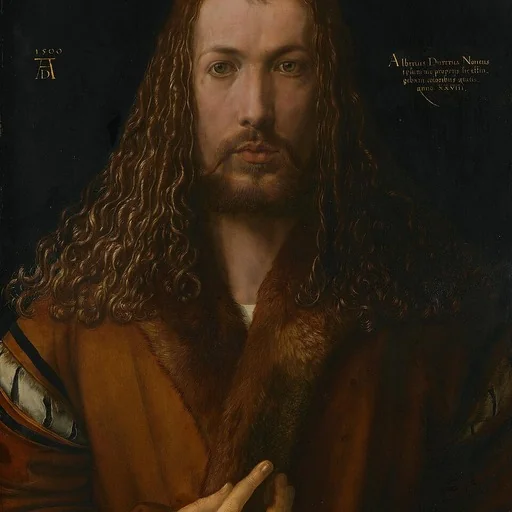
Albrecht Dürer spent his life in Nuremberg, a busy German city where artists traded prints like currency.

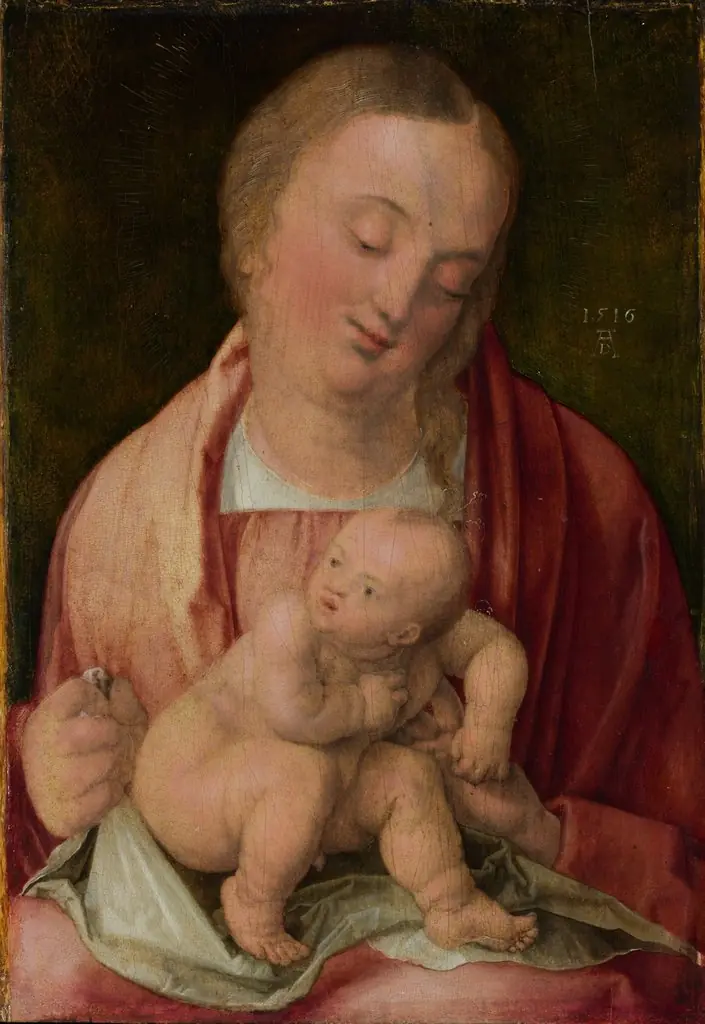
![Madonna and Child [obverse], by Albrecht Dürer](https://artifactworldgallery.com/img/albrecht-durer--madonna-and-child-obverse--d7b8ebf05d22ebe5-w320.webp)
![Lot and His Daughters [reverse], by Albrecht Dürer](https://artifactworldgallery.com/img/albrecht-durer--lot-and-his-daughters-reverse--b4ebf9b282faa17a-w320.webp)
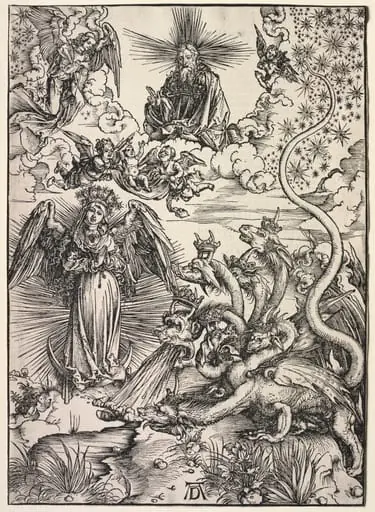 Revelation of St. John: The Woman Clothed with the Sun
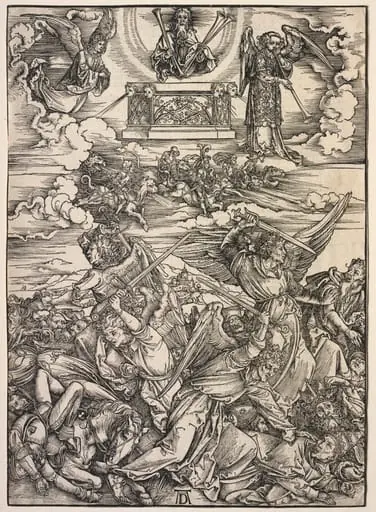 Revelation of St. John: The Four Destroying Angels
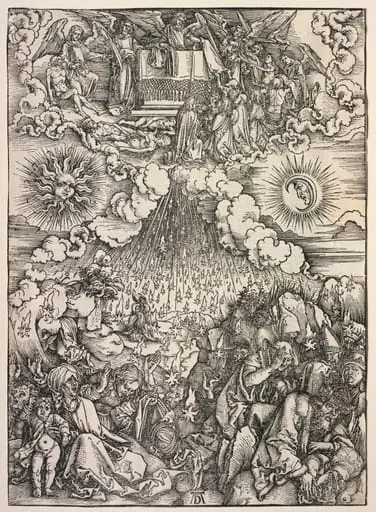 Revelation of St. John: Opening of the Sixth Seal
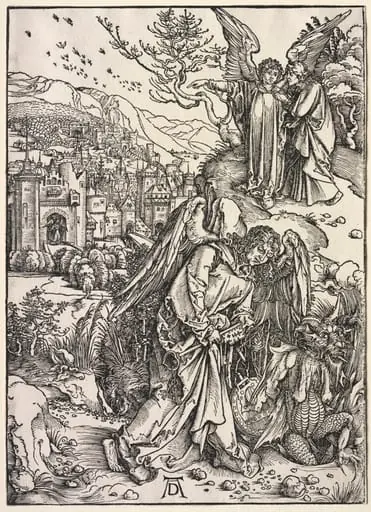 Revelation of St. John: Angel with the Key of the Bottomless Pit
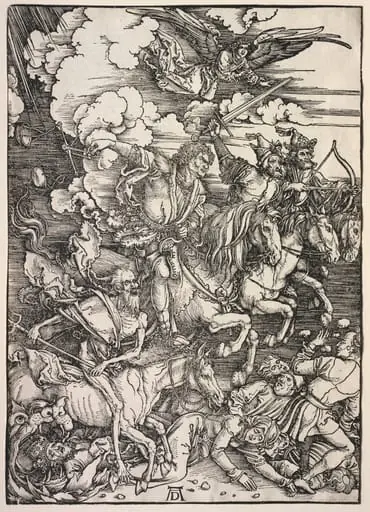 Revelation of St. John: The Four Horsemen
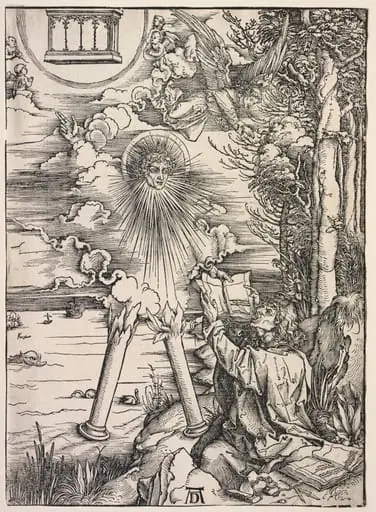 Revelation of St. John: St. John Devouring the Books
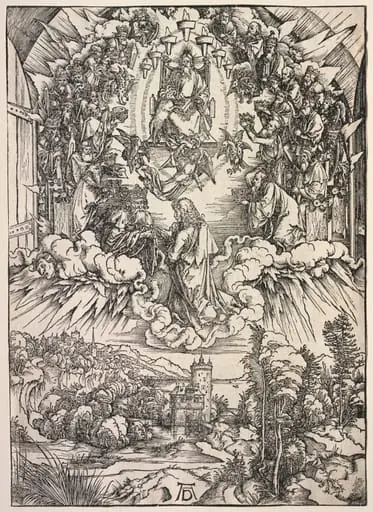 Revelation of St. John: St. John before the Throne
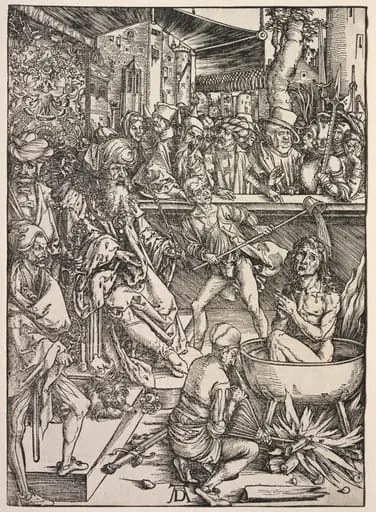 Revelation of St. John: Martyrdom of St. John
 Revelation of St. John