Artwork
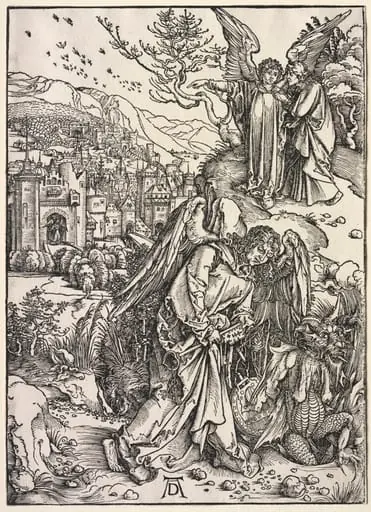
Revelation of St. John: St. John Devouring the Books
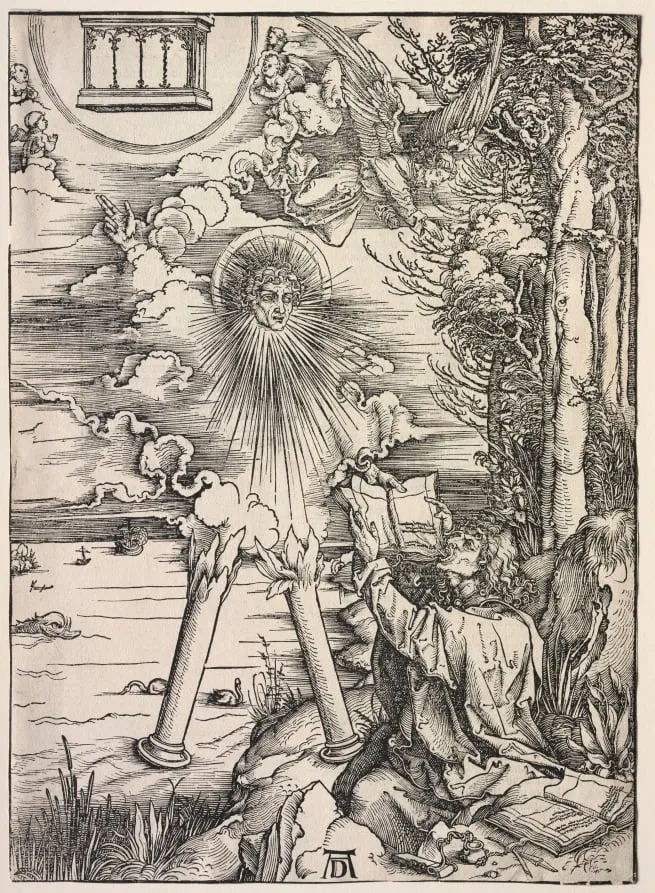
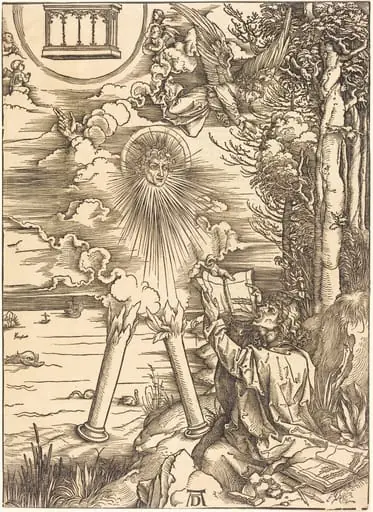
Revelation of St. John: St. John Devouring the Books is a print by the Renaissance artist Albrecht Dürer. It dates from 1511 and is held in the collection of the Cleveland Museum of Art.
About this work
Overview
Dürer’s reputation as a leading German Renaissance artist was already established across Europe, largely due to the widespread circulation of his prints.
Created in 1511, this woodcut by Albrecht Dürer is part of a series illustrating the Book of Revelation. It reflects his advanced skill in printmaking, where fine lines and tonal contrasts convey complex narratives. Dürer’s reputation as a leading German Renaissance artist was already established across Europe, largely due to the widespread circulation of his prints. This work exemplifies his ability to merge religious themes with intense visual drama.
Subject & Meaning
The image portrays the apostle John consuming a scroll, as described in Revelation 10:9–10, symbolizing the internalization of divine prophecy. His kneeling posture and radiant halo mark him as a vessel of sacred revelation. The chaotic landscape around him—broken architecture, twisted trees, and hovering forms—suggests the upheaval of the end times. The act of eating the scroll represents both spiritual absorption and the burden of prophetic knowledge.
Technique & Style
Dürer employed intricate woodcut techniques to achieve dramatic chiaroscuro, using dense cross-hatching to model form and depth. The contrast between the illuminated figure and the dark, swirling sky heightens the scene’s mystical tension. Fine, controlled lines define the figure’s anatomy and the fragmented ruins, while the sky’s abstract shapes—suggesting angels or spectral faces—are rendered with suggestive economy. The composition balances detail with symbolic ambiguity.
History & Provenance
The print was produced in Nuremberg during Dürer’s mature period, following his return from Italy, where he absorbed Renaissance ideals. It was part of a larger series commissioned for a broad audience, distributed widely through print shops. Surviving impressions are held in major European collections, including the British Museum and the Albertina. Its early popularity ensured multiple reprints, confirming its significance in early modern visual culture.
Context
Created amid rising religious tensions in Europe, Dürer’s Revelation series responded to widespread apocalyptic anxieties preceding the Reformation. The imagery drew from both biblical texts and medieval iconographic traditions, yet his naturalistic rendering and psychological depth marked a departure from earlier stylizations. His prints circulated among scholars, clergy, and merchants, bridging devotional and intellectual audiences during a time of profound spiritual questioning.
Legacy
This print influenced later generations of Northern European artists in their treatment of biblical narrative and emotional intensity. Dürer’s fusion of technical precision with symbolic complexity set a standard for printmaking as a serious artistic medium. Scholars continue to analyze the work for its theological undertones and visual innovation, affirming its role in shaping early modern visual theology.
Artist & collection
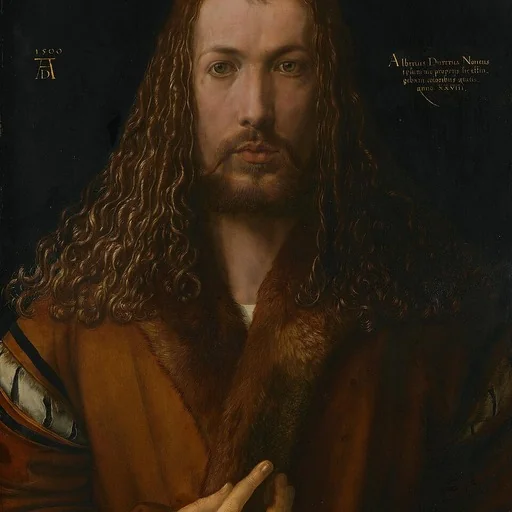
Artist
Albrecht Dürer spent his life in Nuremberg, a busy German city where artists traded prints like currency.

![Madonna and Child [obverse], by Albrecht Dürer](https://artifactworldgallery.com/img/albrecht-durer--madonna-and-child-obverse--d7b8ebf05d22ebe5-w320.webp)
![Lot and His Daughters [reverse], by Albrecht Dürer](https://artifactworldgallery.com/img/albrecht-durer--lot-and-his-daughters-reverse--b4ebf9b282faa17a-w320.webp)

 Saint John Devouring the Book
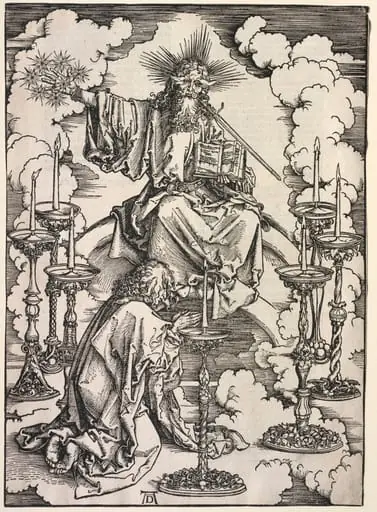 Revelation of St. John: St. John Beholding the Seven Candlesticks
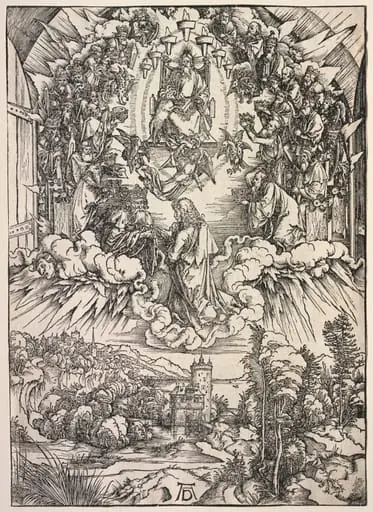 Revelation of St. John: St. John before the Throne
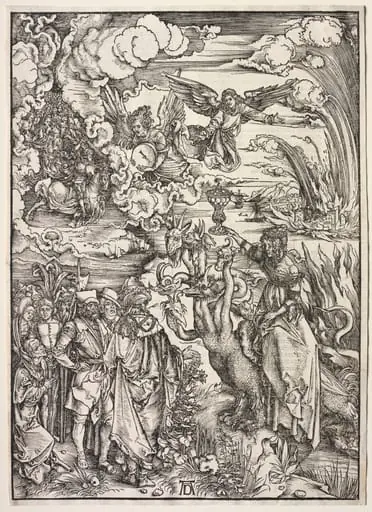 Revelation of St. John: The Woman of Babylon
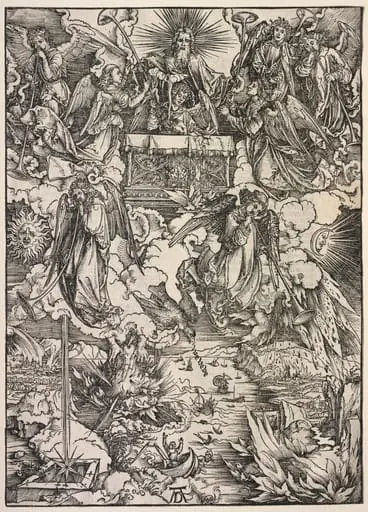 Revelation of St. John: Seven Angels with Trumpets
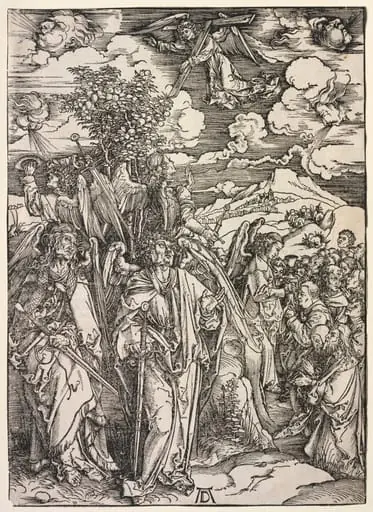 Revelation of St. John: Four Angels Holding up the Winds
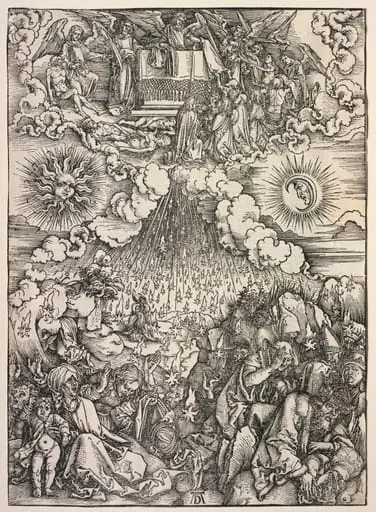 Revelation of St. John: Opening of the Sixth Seal
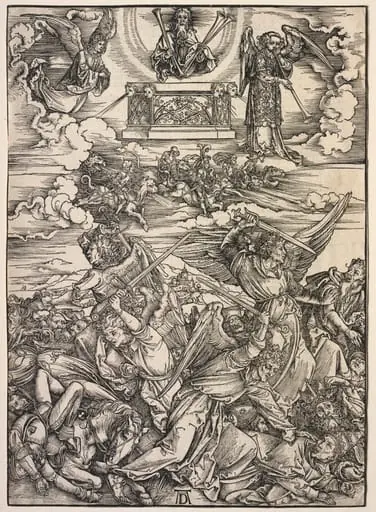 Revelation of St. John: The Four Destroying Angels
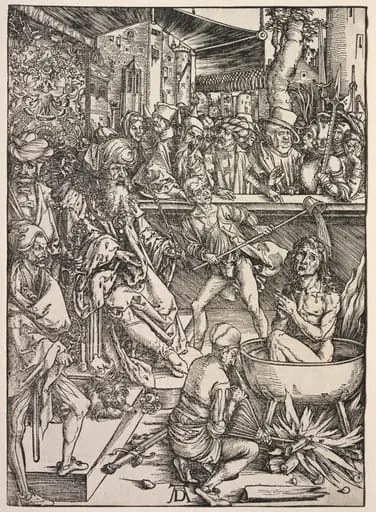 Revelation of St. John: Martyrdom of St. John
 Revelation of St. John: Angel with the Key of the Bottomless Pit