Artwork
The Small Passion: The Nativity
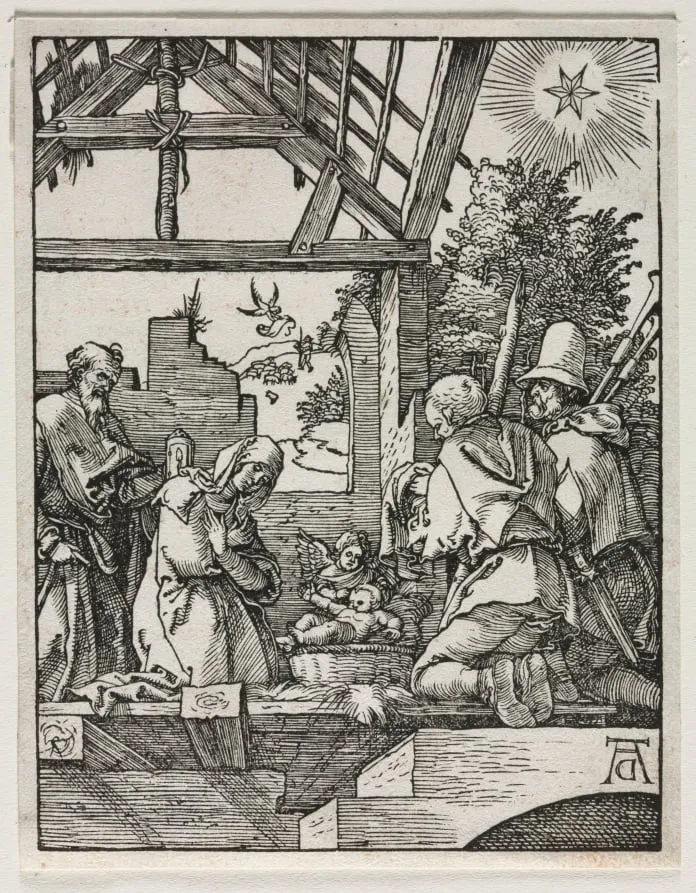
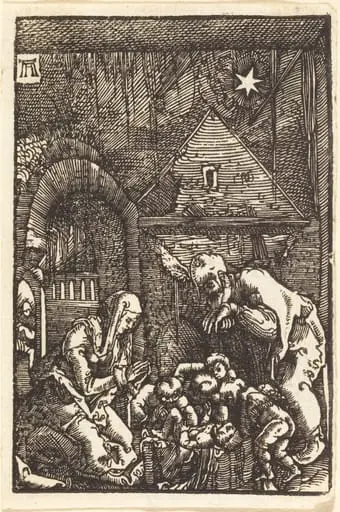
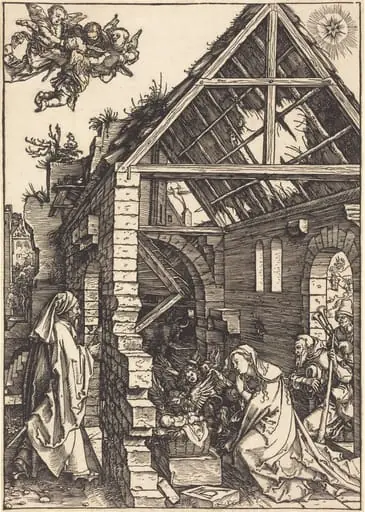
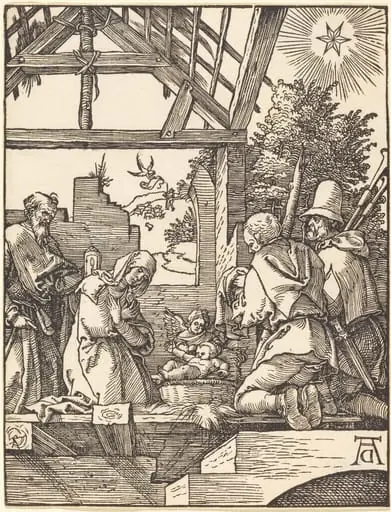
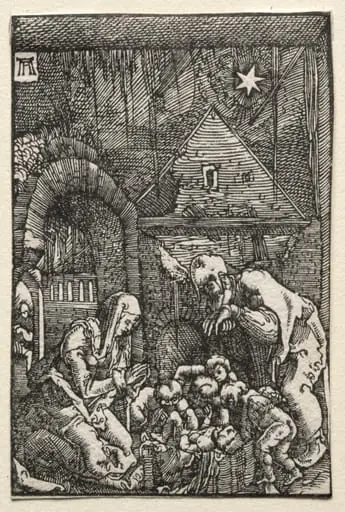
The Small Passion: The Nativity is a print by the Renaissance artist Albrecht Dürer. It dates from 1510 and is held in the collection of the Cleveland Museum of Art.
About this work
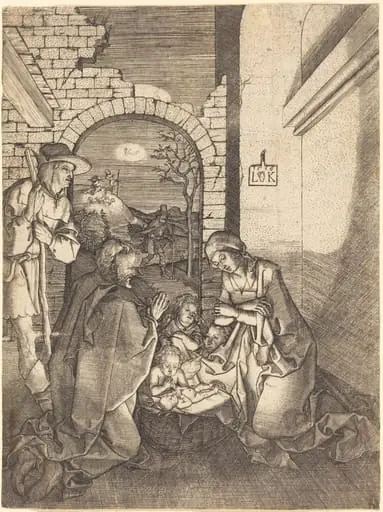
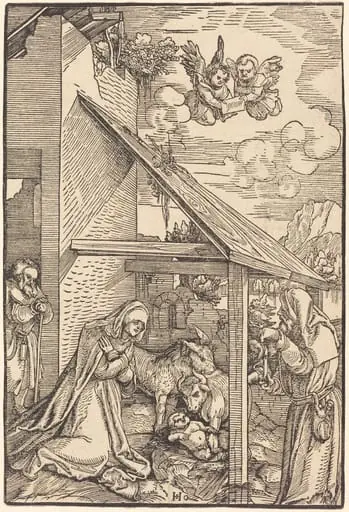
The painting shows a scene of the Nativity with Mary, Joseph, and the baby Jesus.
This work is interesting because it's part of a series called The Small Passion, which tells the story of Jesus' life. The series is notable for its detailed and intimate scenes.
You can learn more about this style by looking into the work of artist: Albrecht Dürer (German, 1471–1528)
Overview
Created around 1510, *The Small Passion: The Nativity* is one of 36 woodcuts in a narrative series by Albrecht Dürer depicting events from the life of Christ.
Created around 1510, *The Small Passion: The Nativity* is one of 36 woodcuts in a narrative series by Albrecht Dürer depicting events from the life of Christ. Designed for private devotion, the series combines intimate scale with intricate detail, reflecting Dürer’s skill in woodcut technique. This particular scene captures the birth of Jesus, rendered with quiet solemnity amid the quietude of a stable.
Subject & Meaning
The scene portrays Mary, Joseph, and the newborn Christ in a modest stable, illuminated by a soft celestial glow. Angels observe from above, while animals rest nearby, emphasizing humility over grandeur. Dürer avoids theatricality, instead focusing on the sacred stillness of the moment, reinforcing the theological emphasis on divine presence in ordinary circumstances.
Technique & Style
Dürer employed fine, controlled lines in woodcut to render textures—from the wool of sheep to the folds of Mary’s garment—with remarkable precision. The composition balances spatial depth with flattened perspective, a hallmark of Northern Renaissance printmaking. Shadows and cross-hatching create volume without heavy contrast, enhancing the scene’s quiet reverence.
History & Provenance
The print was produced as part of Dürer’s *Small Passion*, published in 1511 with accompanying text. It circulated widely across Europe, reaching both clerical and lay audiences. The Cleveland Museum of Art acquired the print as part of its broader collection of Northern Renaissance prints, preserving its original state and historical context.
Context
During the early 16th century, devotional prints like this one became accessible tools for personal piety, especially as literacy rose and the Reformation approached. Dürer’s series responded to this demand, blending traditional iconography with humanist attention to detail. His work bridged medieval symbolism and emerging Renaissance naturalism.
Legacy
Dürer’s *Small Passion* set a standard for narrative print cycles in Northern Europe, influencing generations of artists in both technique and thematic depth. Its emphasis on emotional restraint and meticulous detail became a model for religious imagery beyond the confines of the church, shaping how sacred stories were visually transmitted in print form.
Artist & collection
Artist
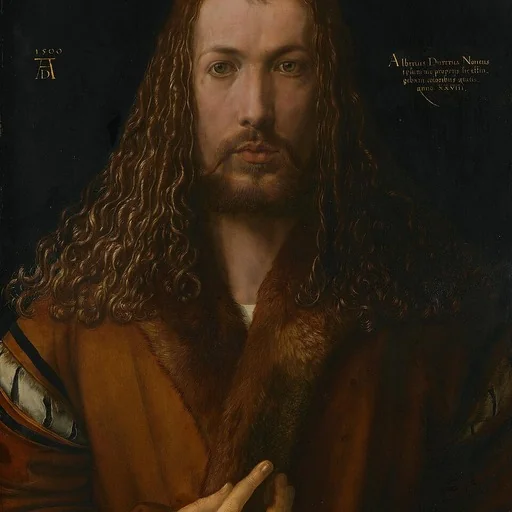
Albrecht Dürer spent his life in Nuremberg, a busy German city where artists traded prints like currency.

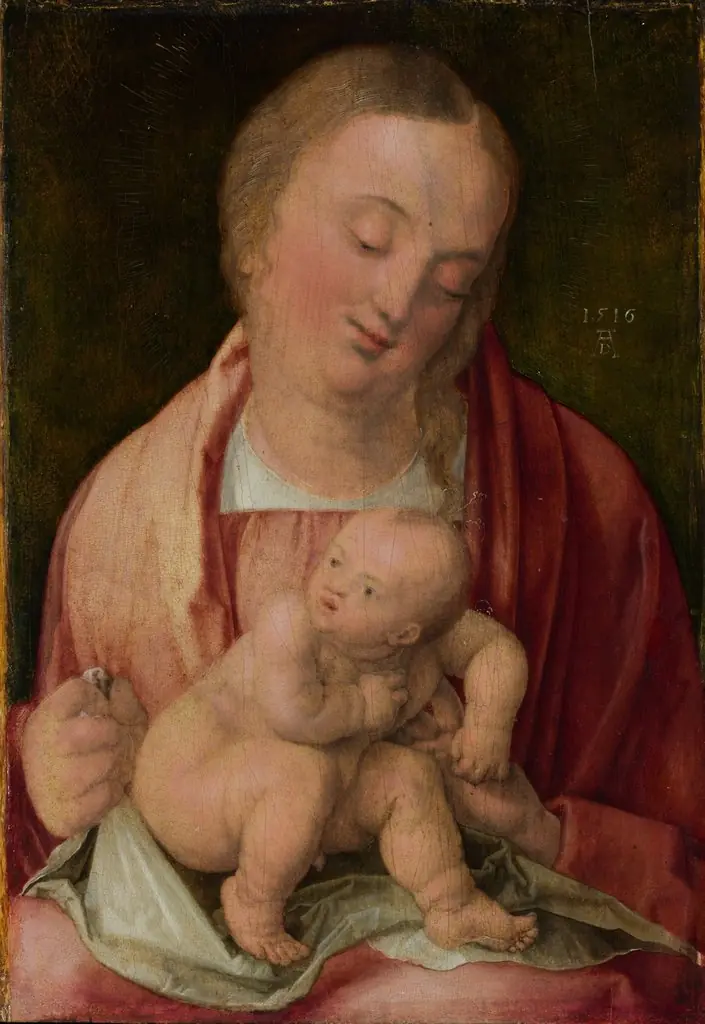
![Madonna and Child [obverse], by Albrecht Dürer](https://artifactworldgallery.com/img/albrecht-durer--madonna-and-child-obverse--d7b8ebf05d22ebe5-w320.webp)
![Lot and His Daughters [reverse], by Albrecht Dürer](https://artifactworldgallery.com/img/albrecht-durer--lot-and-his-daughters-reverse--b4ebf9b282faa17a-w320.webp)