Artwork
The Assumption and Coronation of the Virgin
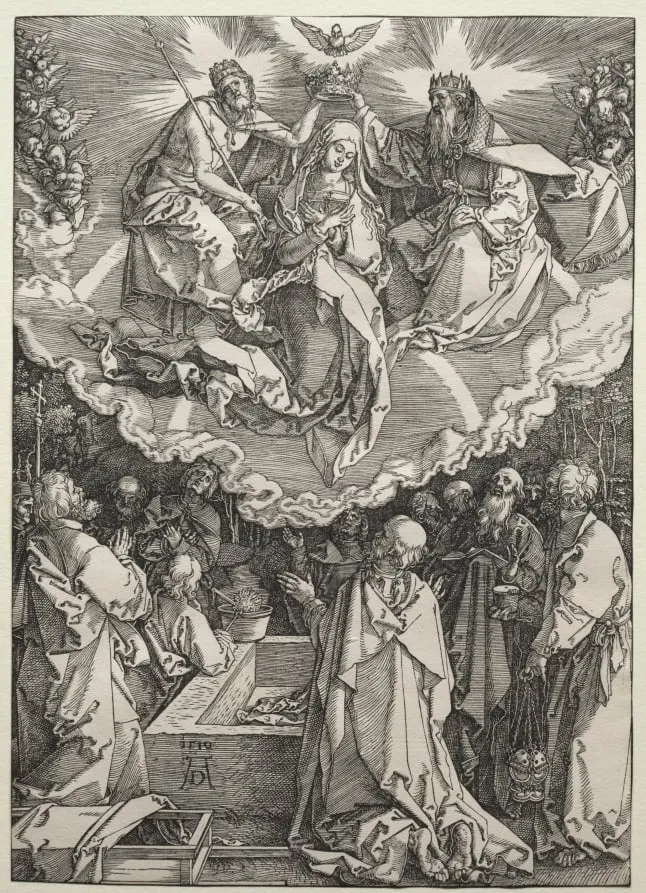
The Assumption and Coronation of the Virgin is a print by the Renaissance artist Albrecht Dürer. It dates from 1510 and is held in the collection of the Cleveland Museum of Art.
About this work
Overview
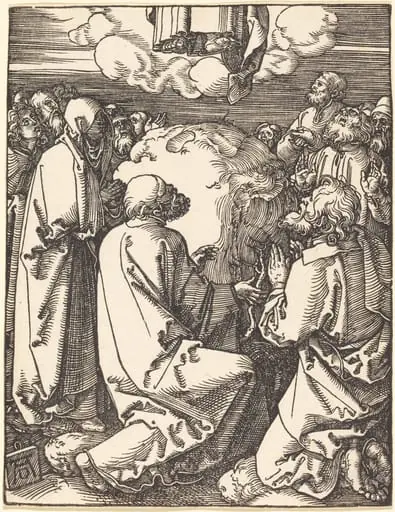
It depicts Mary ascending bodily into heaven, surrounded by swirling clouds and celestial light, while apostles below kneel in awe beside her empty bed.
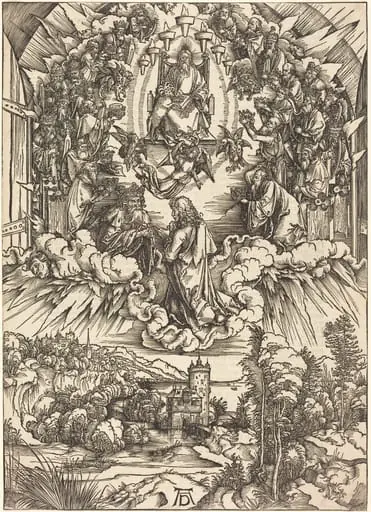
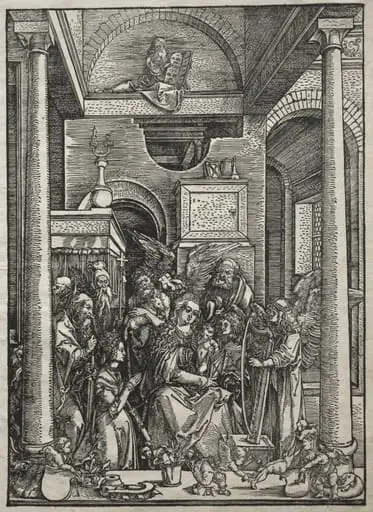
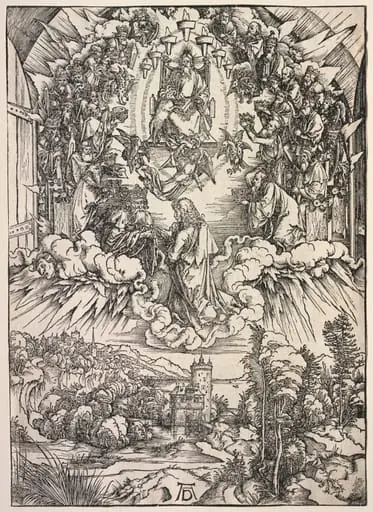
This woodcut is the central image of a three-part series by Albrecht Dürer illustrating the Assumption and Coronation of the Virgin. It depicts Mary ascending bodily into heaven, surrounded by swirling clouds and celestial light, while apostles below kneel in awe beside her empty bed. The composition balances earthly grief with divine triumph, rendered through meticulous linear detail and subtle tonal contrasts.
Subject & Meaning
The scene captures the moment Mary is lifted into heaven, where God the Father awaits to crown her Queen of Heaven. The apostles, still present at her deathbed, serve as witnesses to the mystery of her bodily assumption. The absence of death’s violence and the serene elevation suggest a peaceful transition, affirming her unique role in Christian theology as both human and divinely exalted.
Technique & Style
Dürer employed fine, controlled lines to model form and depth, using chiaroscuro to distinguish celestial radiance from earthly shadow. Tiny figures recede into hazy backgrounds through graduated engraving, creating spatial illusion. The clouds and heavenly host are suggested rather than fully rendered, inviting contemplation and emphasizing the ineffable nature of the event.
History & Provenance
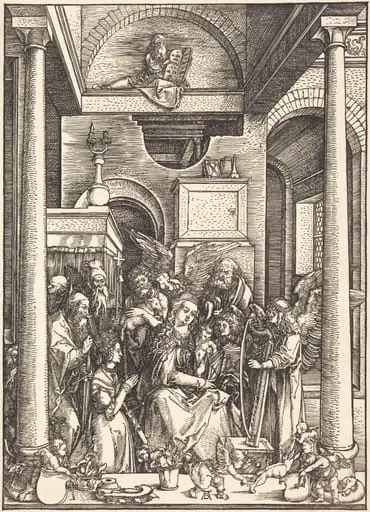
The print is one of three in a series produced around 1510, likely commissioned for private devotion. Each plate was printed separately and may have been bound as a devotional album. The third image, showing Mary in a domestic setting with saints, was possibly added later as a reflective coda, though its connection to the narrative remains debated among scholars.
Context
Created during the early Reformation, Dürer’s series reflects Catholic doctrine on Mary’s assumption, a belief not yet universally contested. The intimate scale and quiet tone contrast with the dramatic altarpieces of the period, aligning with growing interest in personal piety and manuscript-like devotional objects among educated patrons.
Legacy
The series influenced later Northern printmakers in their treatment of sacred subjects, particularly in blending narrative clarity with emotional restraint. Dürer’s use of line to suggest transcendence became a model for devotional imagery, even as theological shifts in the decades after his death altered how such scenes were interpreted and produced.
Artist & collection
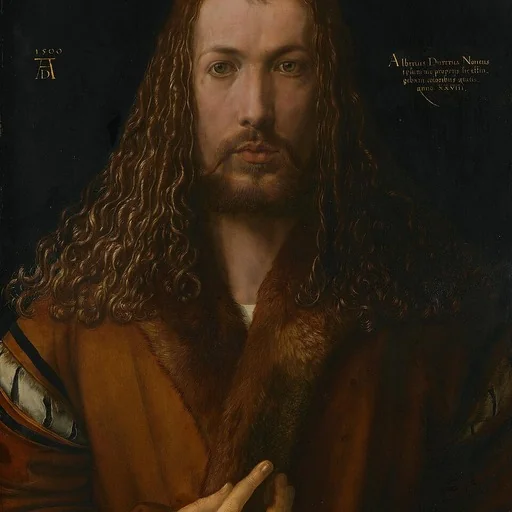
Artist
Albrecht Dürer spent his life in Nuremberg, a busy German city where artists traded prints like currency.

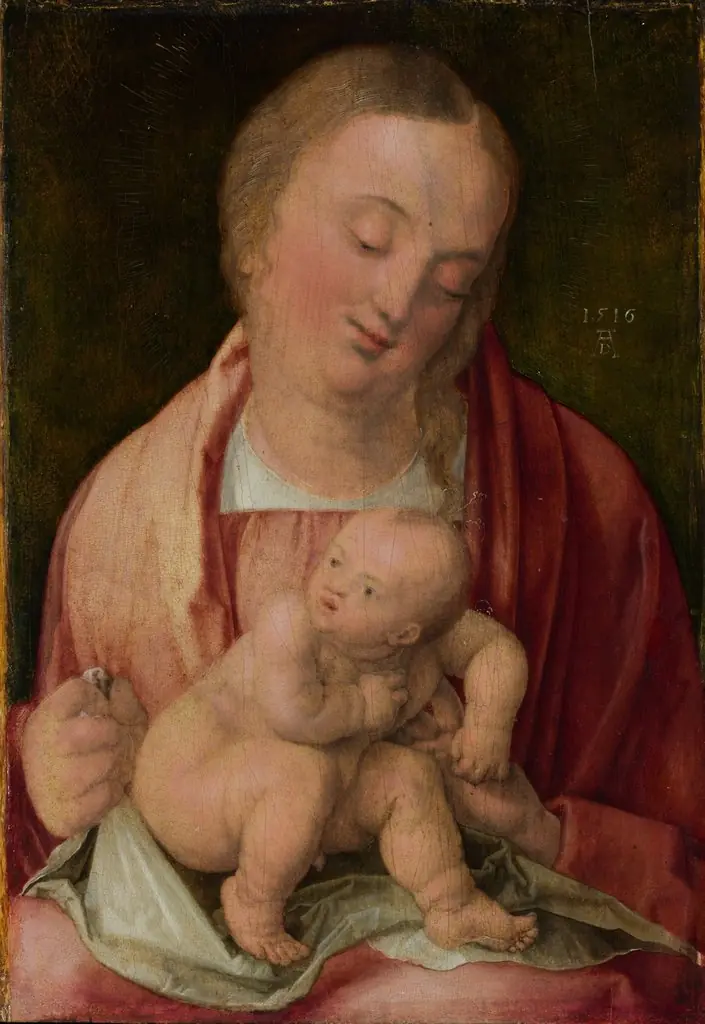
![Madonna and Child [obverse], by Albrecht Dürer](https://artifactworldgallery.com/img/albrecht-durer--madonna-and-child-obverse--d7b8ebf05d22ebe5-w320.webp)
![Lot and His Daughters [reverse], by Albrecht Dürer](https://artifactworldgallery.com/img/albrecht-durer--lot-and-his-daughters-reverse--b4ebf9b282faa17a-w320.webp)