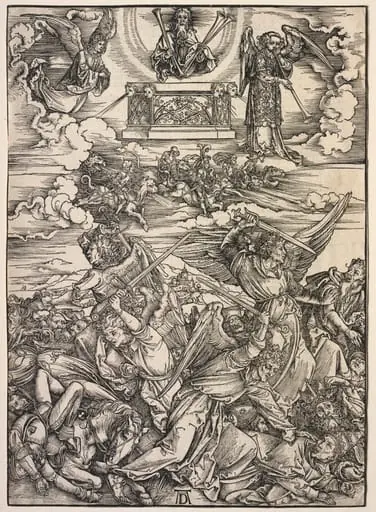
Artwork
The Seven Angels with the Trumpets
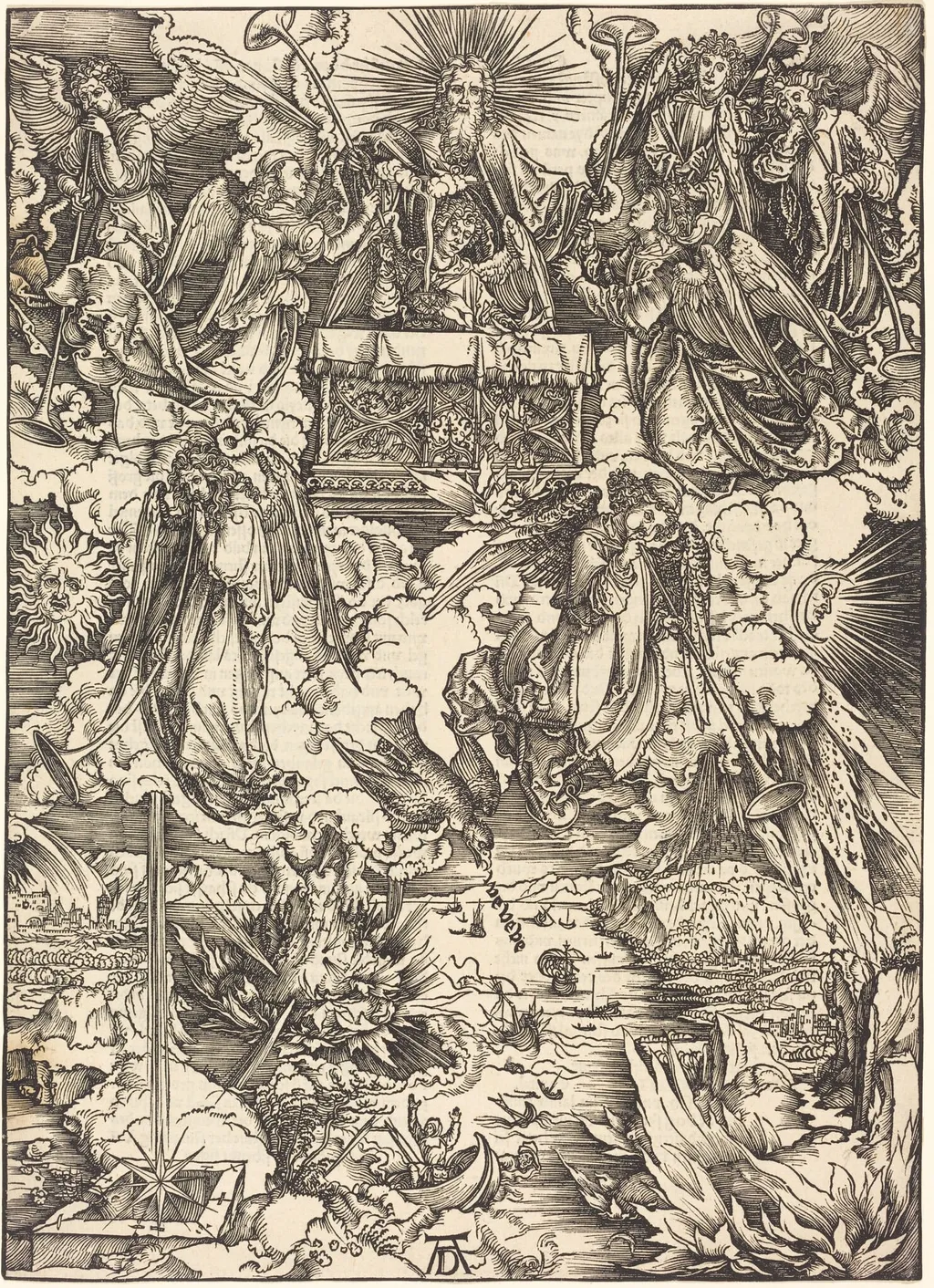
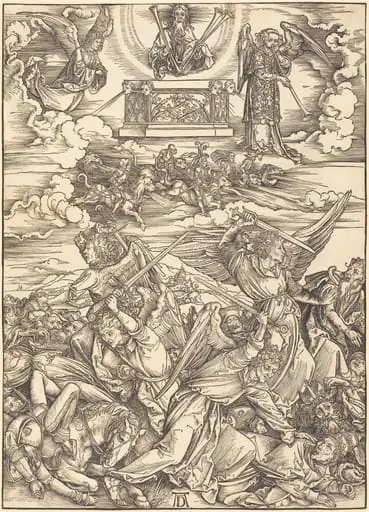
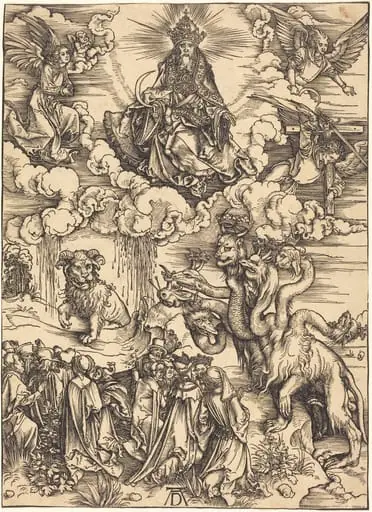
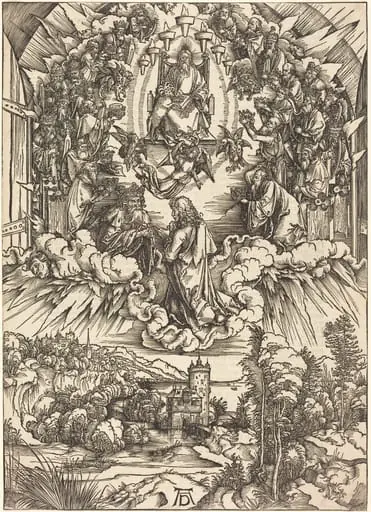
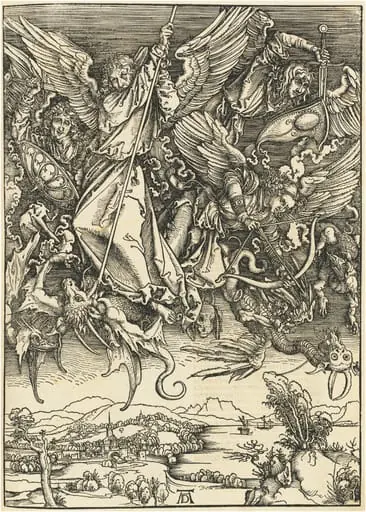
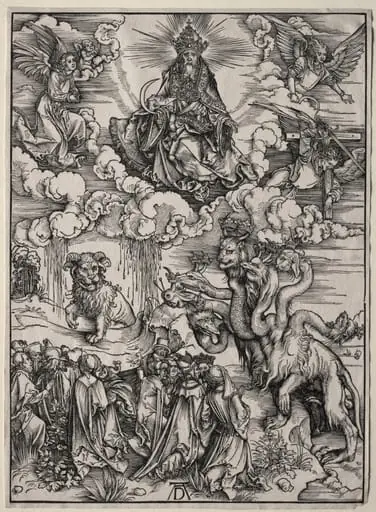
The Seven Angels with the Trumpets is an ink print by the Northern Renaissance artist Albrecht Dürer. It dates from 1497 and is held in the collection of the Städel Museum.
About this work
Overview
Albrecht Dürer’s woodcut titled The Seven Angels with the Trumpets dates from around 1497. Executed as a print, the image presents a dramatic biblical scene in which seven angels sound trumpets while chaotic forces unfold beneath them. The composition is rendered in the stark, graphic language of early German woodcut, emphasizing line and contrast.
Subject & Meaning
The work visualizes the fifth and sixth seals from the Book of Revelation, moments when divine trumpets herald cataclysmic events. Seven angels raise their trumpets, and below them a swirl of strange beasts, a dragon, and a falling star suggest the apocalyptic turmoil described in the biblical text.
Technique & Style
Dürer employed a carved wooden block to incise bold outlines and fine details, then inked the surface to transfer the image onto paper. The resulting print displays the high-contrast, sharp linear quality typical of woodcut, with intricate hatching that conveys movement and texture in the surrounding chaos.
History & Provenance
Created in the 1490s, when printmaking was emerging as a major artistic medium, the piece reflects Dürer’s early experimentation with the woodcut process. It formed part of a series of religious prints that helped disseminate biblical narratives across Europe, though specific ownership records for this individual sheet remain limited.
Artist & collection
Artist
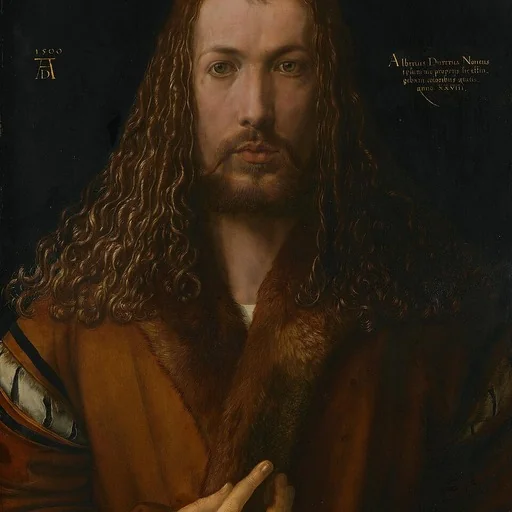
Albrecht Dürer spent his life in Nuremberg, a busy German city where artists traded prints like currency.

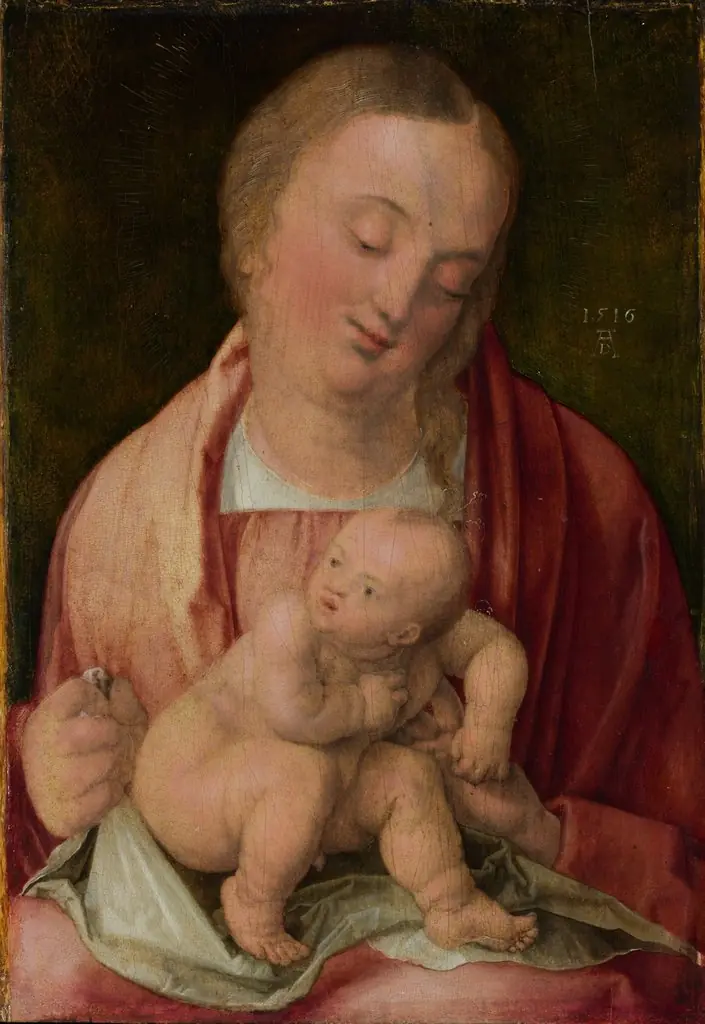
![Madonna and Child [obverse], by Albrecht Dürer](https://artifactworldgallery.com/img/albrecht-durer--madonna-and-child-obverse--d7b8ebf05d22ebe5-w320.webp)
![Lot and His Daughters [reverse], by Albrecht Dürer](https://artifactworldgallery.com/img/albrecht-durer--lot-and-his-daughters-reverse--b4ebf9b282faa17a-w320.webp)