Artwork
The Ecstasy of Mary Magdalene
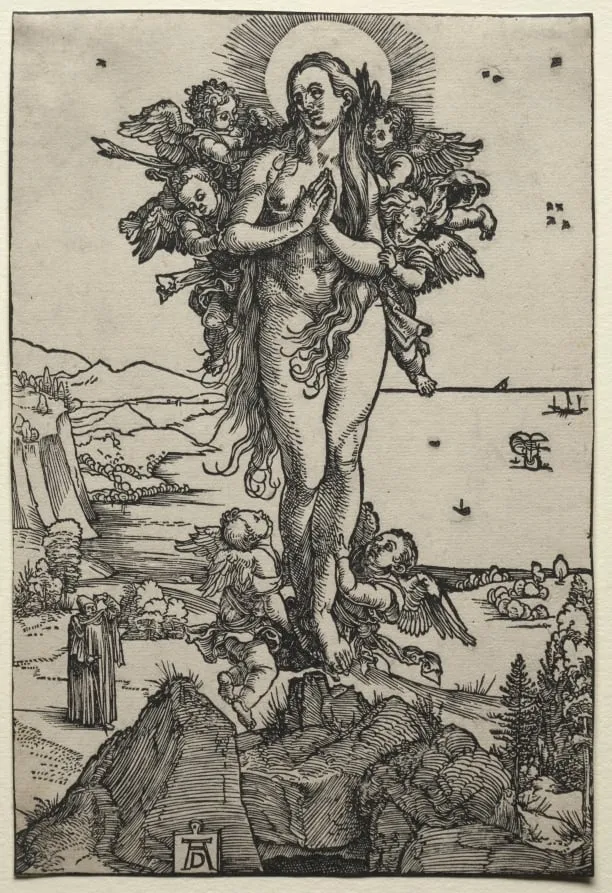
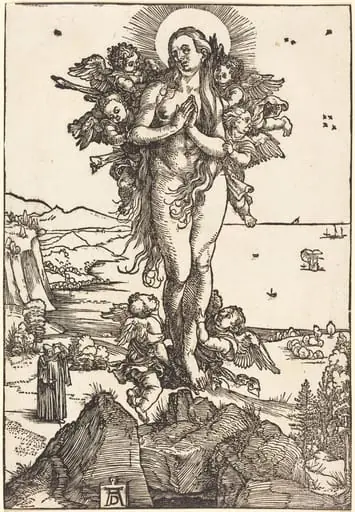
The Ecstasy of Mary Magdalene is a print by the Renaissance artist Albrecht Dürer. It dates from 1502 and is held in the collection of the Cleveland Museum of Art.
About this work
The story of Mary Magdalene is one of redemption, and this painting shows that.
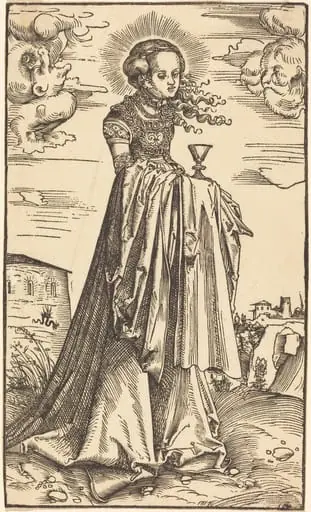
The painting shows Mary Magdalene being lifted up to heaven.
She's surrounded by angels and a bright light.
This painting is interesting because it tells a story from a medieval book of saints' lives, where Mary Magdalene spent her last years as a hermit and was miraculously borne aloft to hear the choir of angels.
The story of Mary Magdalene is one of redemption, and this painting shows that.
You can learn more about this style by looking at the work of artist: Albrecht Dürer (German, 1471–1528)
Overview
Albrecht Dürer’s woodcut entitled *The Ecstasy of Mary Magdalene* depicts the saint being lifted into the heavens, surrounded by a radiant light and attendant angels. Executed as a simple, widely distributed print, the image illustrates a popular medieval narrative of Mary’s final years as a hermit near Marseille, during which she is said to ascend repeatedly to hear celestial choirs.
Subject & Meaning
The work draws on the *Golden Legend*, a medieval collection of saints’ lives, which recounts that Mary Magdalene, once judged a sinner, spent three decades in solitary devotion before being miraculously borne aloft seven times each day to listen to angelic music. Dürer’s portrayal emphasizes her redemption through ascension, presenting the saint in a state of divine rapture.
Technique & Style
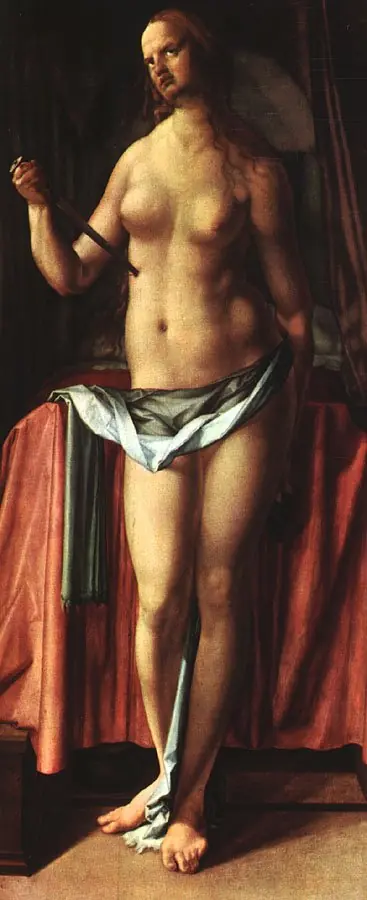
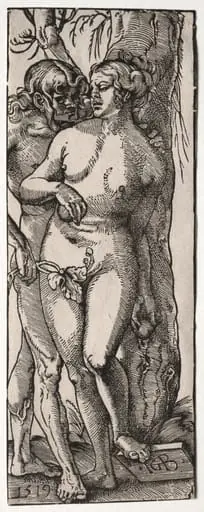
Created as a woodcut, the image belongs to the category of *schlechtes Holzwerk*, a modestly crafted print intended for broad consumption rather than elite patronage. Dürer’s interest in accurate human proportion is evident in the robust legs and widened hips of the figure, echoing the anatomical emphasis found in his other studies of the female form, such as *The Dream of the Doctor* and his rendition of Adam and Eve.
History & Provenance
The print was produced during Dürer’s early career, a period when he was exploring the possibilities of printmaking as a means of disseminating religious imagery. While specific details of its original ownership are scarce, the work circulated widely among devotional audiences in the German-speaking lands of the early sixteenth century.
Context
In the early 1500s, depictions of Mary Magdalene’s penitence and heavenly ascent were common in German art, reflecting contemporary devotional practices that highlighted personal conversion. Dürer’s choice of a woodcut format aligns with the era’s demand for affordable, reproducible images that could reach lay believers beyond the confines of churches and elite collections.
Artist & collection
Artist
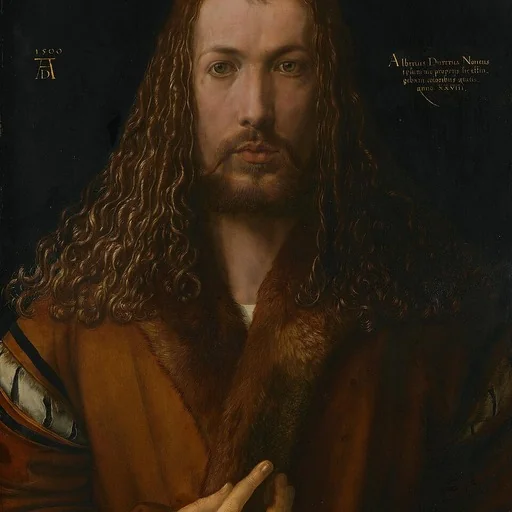
Albrecht Dürer spent his life in Nuremberg, a busy German city where artists traded prints like currency.

![Madonna and Child [obverse], by Albrecht Dürer](https://artifactworldgallery.com/img/albrecht-durer--madonna-and-child-obverse--d7b8ebf05d22ebe5-w320.webp)
![Lot and His Daughters [reverse], by Albrecht Dürer](https://artifactworldgallery.com/img/albrecht-durer--lot-and-his-daughters-reverse--b4ebf9b282faa17a-w320.webp)