Artwork
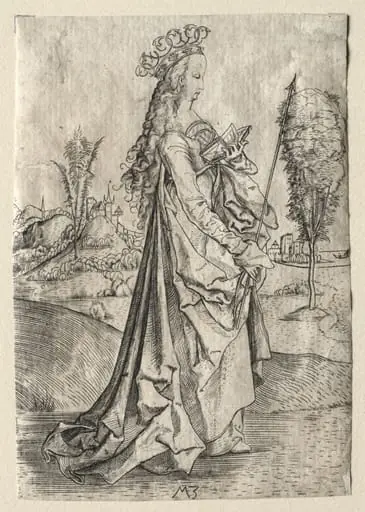
Saint Barbara
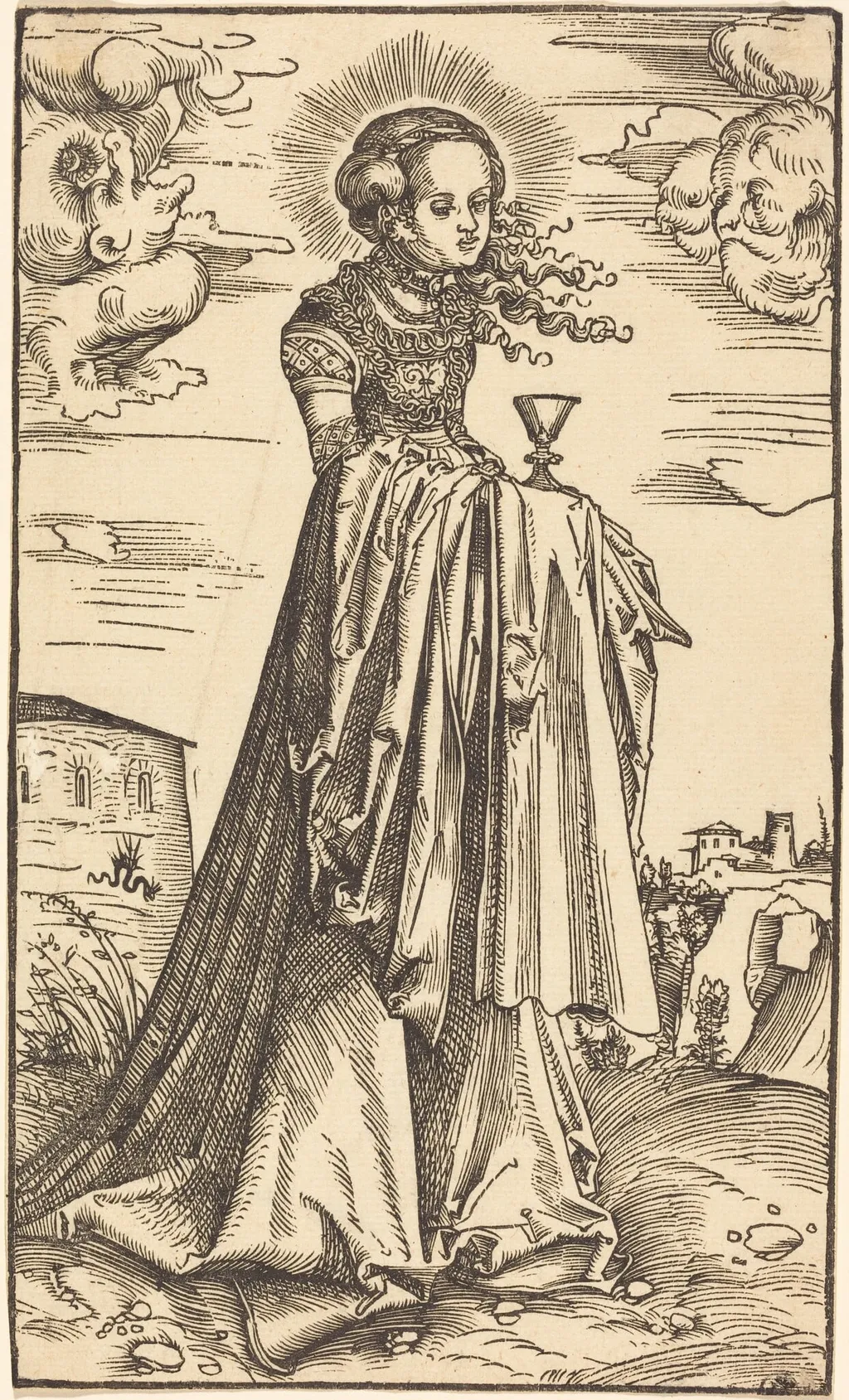
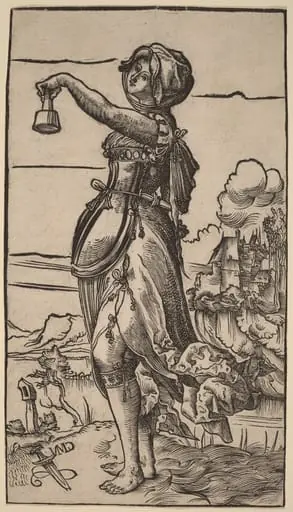
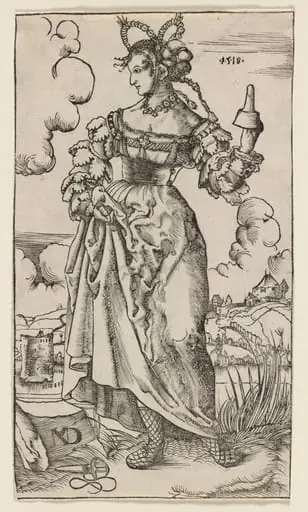
Saint Barbara is an ink print by the Renaissance artist Lucas Cranach the Elder. It dates from 1512 and is held in the collection of the National Gallery of Art.
About this work
Overview
Created in 1512, this woodcut depicts Saint Barbara, a figure venerated in both Catholic and early Protestant contexts. Executed by Lucas Cranach the Elder, a leading German Renaissance artist and court painter to the Electors of Saxony, the print exemplifies the period’s blend of devotional imagery and emerging reformist sensibilities.
Subject & Meaning
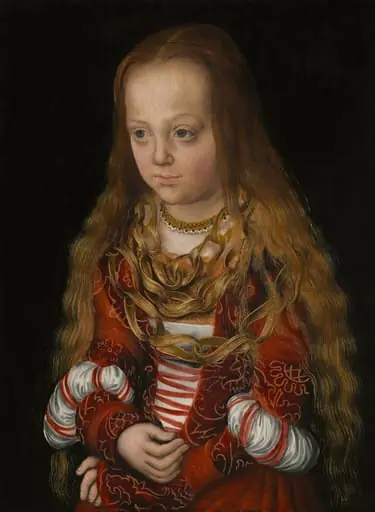
The central figure is a composed woman in a flowing gown, clutching a tall tower that references the legend of Barbara’s imprisonment and martyrdom. Her serene yet solemn expression, framed by soft curls, underscores the saint’s steadfast faith. The background shows a town perched on a hill beneath a cloud‑filled sky, populated by angels, reinforcing the narrative of divine protection.
Technique & Style
Cranach employed the woodcut process, carving the design into a wooden block to produce bold lines and stark contrasts. The medium allowed for clear delineation of forms and a dramatic interplay of light and shadow, while still conveying a tranquil atmosphere. This approach facilitated the replication of the image for wide distribution among devotional audiences.
History & Provenance
The print belongs to Cranach’s extensive oeuvre of religious works, which ran alongside portraits of Reformation leaders such as Martin Luther. As a court artist, Cranach’s productions were circulated both at the Saxon court and among broader audiences, reflecting his role in shaping visual culture during the early Reformation.
Artist & collection
Artist
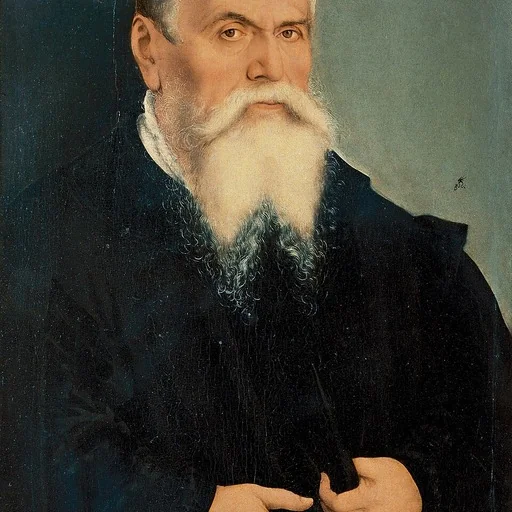
Lucas Cranach the Elder was a German Renaissance painter and printmaker in woodcut and engraving.