Artwork
The Great Triumphal Car of Emperor Maximilian
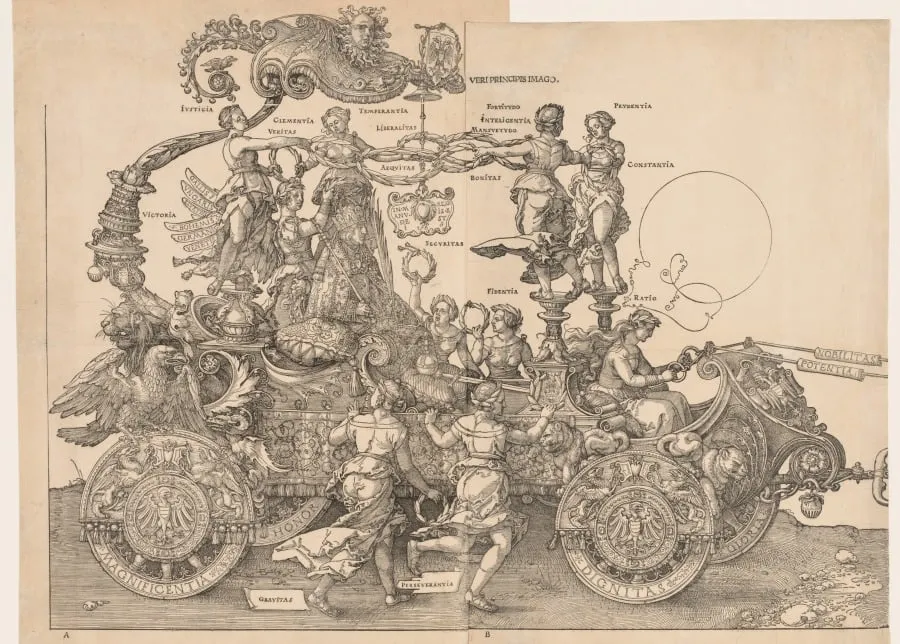
The Great Triumphal Car of Emperor Maximilian is a print by the Renaissance artist Albrecht Dürer. It dates from 1523 and is held in the collection of the Cleveland Museum of Art.
About this work
If you like how words and pictures mix, look up Albrecht Dürer (German, 1471–1528)—he did the same trick in his famous *Apocalypse* prints.
You see a long, fancy chariot rolling down a road, pulled by twelve strong horses. On top sits a king in a throne, with a winged woman holding a crown over his head. Every inch is covered in tiny words and symbols—flags, shields, even the horses’ harnesses have labels.
Dürer never meant this to be painted. It’s a woodcut design for a giant print that would celebrate Emperor Maximilian like a Roman hero. The Latin words spell out virtues like “honor” and “glory,” turning the ruler into a walking lesson in power.
If you like how words and pictures mix, look up Albrecht Dürer (German, 1471–1528)—he did the same trick in his famous *Apocalypse* prints.
Overview
Albrecht Dürer’s monumental woodcut, The Great Triumphal Car of Emperor Maximilian, presents a richly ornamented chariot drawn by twelve horses, bearing the emperor on a throne beneath a winged Victory. The vehicle is surrounded by allegorical figures and Latin inscriptions that enumerate virtues and titles, turning the procession into a visual catalogue of princely ideals.
Subject & Meaning
The composition celebrates Maximilian I as a ruler embodying classical virtues. Victory crowns the emperor, while her wings list his military exploits. Personifications of Justice, Strength, Wisdom and Temperance stand on pedestals, and the driver, labeled Reason, guides the horses whose reins bear the names Nobility and Power. Each element functions as a moral exemplar for an ideal sovereign.
Technique & Style
Designed as a woodcut for a single, oversized print, the image relies on intricate line work to render dense decorative motifs, heraldic devices, and tiny Latin labels. Dürer’s precise incising allows a complex narrative to unfold across the broad surface, combining the clarity of printmaking with the grandeur of monumental relief sculpture.
History & Provenance
The project formed part of a larger program to depict Maximilian’s reign in a triumphal procession, but the emperor died in 1519 before its completion. Dürer financed the publication himself, pairing the image with a Latin text authored by his friend Willibald Pirckheimer. The print circulated in the early sixteenth century as a testament to Maximilian’s legacy.
Context
Created during the transition from medieval allegory to Renaissance humanism, the work reflects contemporary efforts to link German imperial authority with classical Roman triumphs. Dürer’s use of text and image parallels his earlier Apocalypse series, illustrating a broader trend of integrating scholarly language into visual art to convey political and moral messages.
Artist & collection
Artist
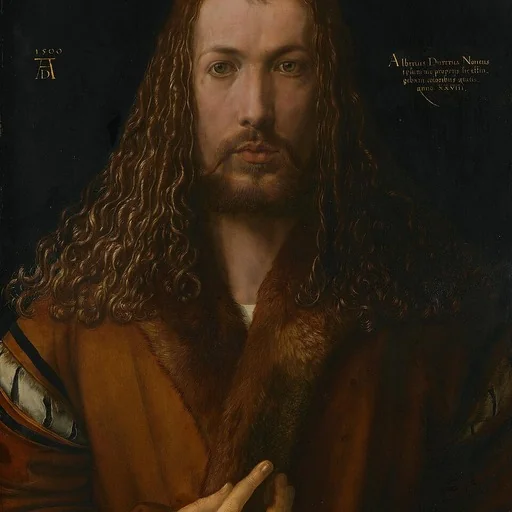
Albrecht Dürer spent his life in Nuremberg, a busy German city where artists traded prints like currency.

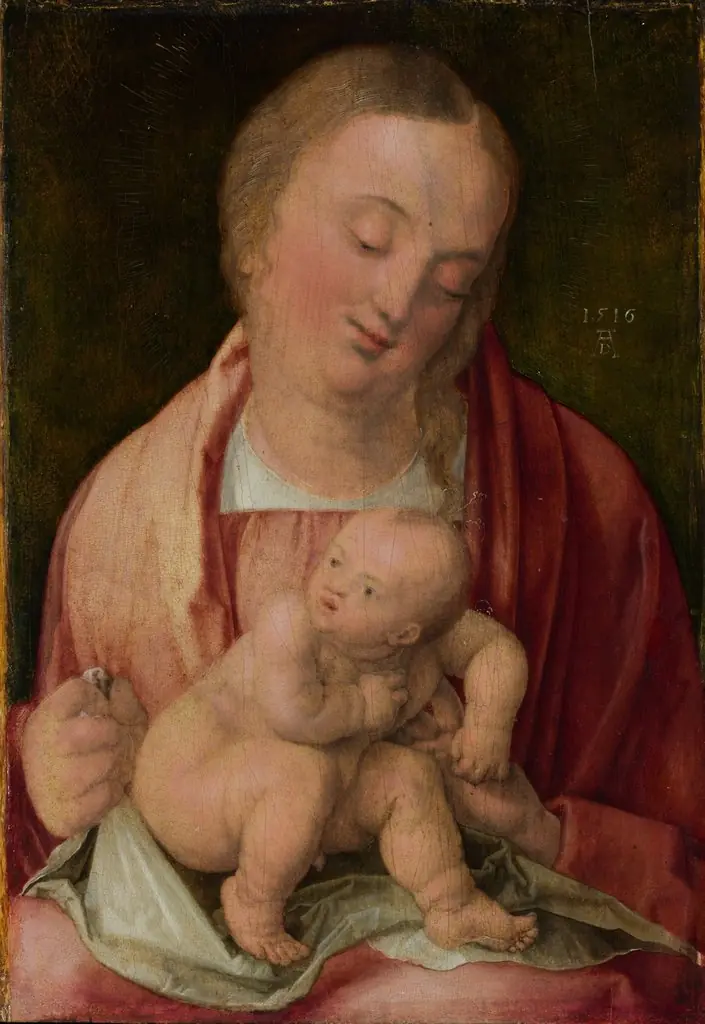
![Madonna and Child [obverse], by Albrecht Dürer](https://artifactworldgallery.com/img/albrecht-durer--madonna-and-child-obverse--d7b8ebf05d22ebe5-w320.webp)
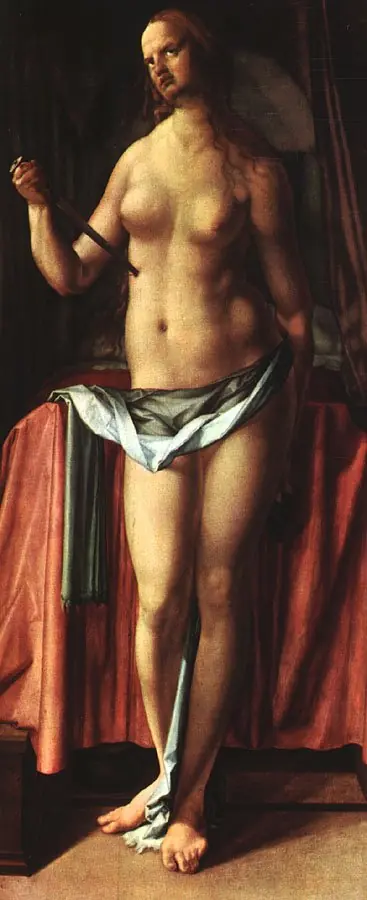
![Lot and His Daughters [reverse], by Albrecht Dürer](https://artifactworldgallery.com/img/albrecht-durer--lot-and-his-daughters-reverse--b4ebf9b282faa17a-w320.webp)
![The Triumphal Chariot of Maximilian I (The Great Triumphal Car) [plate 2 of 8], by Albrecht Dürer](https://artifactworldgallery.com/img/albrecht-durer--the-triumphal-chariot-of-maximilian-i-the-great-triumphal-ca--7466f3f42f71a1a4-w320.webp) The Triumphal Chariot of Maximilian I (The Great Triumphal Car) [plate 2 of 8]
The Triumphal Chariot of Maximilian I (The Great Triumphal Car) [plate 2 of 8]![The Triumphal Chariot of Maximilian I (The Great Triumphal Car) [plate 1 of 8], by Albrecht Dürer](https://artifactworldgallery.com/img/albrecht-durer--the-triumphal-chariot-of-maximilian-i-the-great-triumphal-ca--4840429519ebb12d-w320.webp) The Triumphal Chariot of Maximilian I (The Great Triumphal Car) [plate 1 of 8]
The Triumphal Chariot of Maximilian I (The Great Triumphal Car) [plate 1 of 8]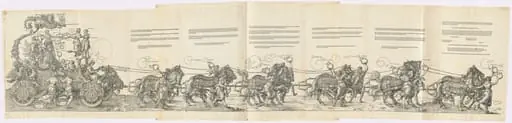 The Triumphal Chariot of Maximilian I (The Great Triumphal Car)
![The Triumphal Chariot of Maximilian I (The Great Triumphal Car) [plate 8 of 8], by Albrecht Dürer](https://artifactworldgallery.com/img/albrecht-durer--the-triumphal-chariot-of-maximilian-i-the-great-triumphal-ca--11b447e67d8ede54-w320.webp) The Triumphal Chariot of Maximilian I (The Great Triumphal Car) [plate 8 of 8]
The Triumphal Chariot of Maximilian I (The Great Triumphal Car) [plate 8 of 8]![The Triumphal Chariot of Maximilian I (The Great Triumphal Car) [plate 6 of 8], by Albrecht Dürer](https://artifactworldgallery.com/img/albrecht-durer--the-triumphal-chariot-of-maximilian-i-the-great-triumphal-ca--8007a16762e7f7f8-w320.webp) The Triumphal Chariot of Maximilian I (The Great Triumphal Car) [plate 6 of 8]
The Triumphal Chariot of Maximilian I (The Great Triumphal Car) [plate 6 of 8]![The Triumphal Chariot of Maximilian I (The Great Triumphal Car) [plate 5 of 8], by Albrecht Dürer](https://artifactworldgallery.com/img/albrecht-durer--the-triumphal-chariot-of-maximilian-i-the-great-triumphal-ca--9e04416abdc764bf-w320.webp) The Triumphal Chariot of Maximilian I (The Great Triumphal Car) [plate 5 of 8]
The Triumphal Chariot of Maximilian I (The Great Triumphal Car) [plate 5 of 8]![The Triumphal Chariot of Maximilian I (The Great Triumphal Car) [plate 7 of 8], by Albrecht Dürer](https://artifactworldgallery.com/img/albrecht-durer--the-triumphal-chariot-of-maximilian-i-the-great-triumphal-ca--ca892ffdfd4d048f-w320.webp) The Triumphal Chariot of Maximilian I (The Great Triumphal Car) [plate 7 of 8]
The Triumphal Chariot of Maximilian I (The Great Triumphal Car) [plate 7 of 8]![The Triumphal Chariot of Maximilian I (The Great Triumphal Car) [plate 3 of 8], by Albrecht Dürer](https://artifactworldgallery.com/img/albrecht-durer--the-triumphal-chariot-of-maximilian-i-the-great-triumphal-ca--2a87fc011039500b-w320.webp) The Triumphal Chariot of Maximilian I (The Great Triumphal Car) [plate 3 of 8]
The Triumphal Chariot of Maximilian I (The Great Triumphal Car) [plate 3 of 8]![The Triumphal Chariot of Maximilian I (The Great Triumphal Car) [plate 4 of 8], by Albrecht Dürer](https://artifactworldgallery.com/img/albrecht-durer--the-triumphal-chariot-of-maximilian-i-the-great-triumphal-ca--c3101b959fdb629d-w320.webp) The Triumphal Chariot of Maximilian I (The Great Triumphal Car) [plate 4 of 8]
The Triumphal Chariot of Maximilian I (The Great Triumphal Car) [plate 4 of 8]