Artwork
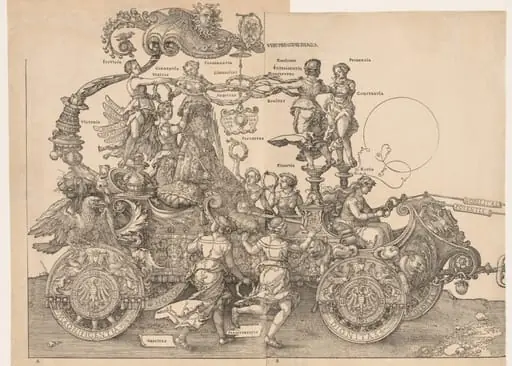
The Triumphal Chariot of Maximilian I (The Great Triumphal Car) [plate 8 of 8]
![The Triumphal Chariot of Maximilian I (The Great Triumphal Car) [plate 8 of 8], by Albrecht Dürer, ink, 1523](https://artifactworldgallery.com/img/albrecht-durer--the-triumphal-chariot-of-maximilian-i-the-great-triumphal-ca--11b447e67d8ede54-w1024.webp)
The Triumphal Chariot of Maximilian I (The Great Triumphal Car) [plate 8 of 8] is an ink print by the Northern Renaissance artist Albrecht Dürer. It dates from 1523 and is held in the collection of the National Gallery of Art.
About this work
Overview
Albrecht Dürer’s 1523 woodcut, the eighth and final plate of the series titled The Great Triumphal Car, presents a monumental view of Maximilian I’s triumphal chariot. Executed as a large-scale print, the image combines numerous figures, horses, and decorative elements into a single, cohesive scene.
Subject & Meaning
The central focus is a richly adorned chariot, surrounded by a procession of riders, attendants, and standards. The arrangement celebrates imperial power and pageantry, reflecting the propagandistic purpose of the larger project that commemorated Maximilian’s reign.
Technique & Style
Dürer achieved the expansive composition by carving the image on several wood blocks, which were printed separately and then joined to form the complete picture. This modular approach allowed for fine detail—such as the intricate flags and individual horse tack—while maintaining a uniform visual scale across the massive print.
History & Provenance
Created in 1523, the woodcut formed part of a commissioned series intended to glorify the Holy Roman Emperor. The plates were produced in Dürer’s workshop in Nuremberg and circulated as part of the printed propaganda that accompanied the emperor’s self‑portraiture and ceremonial publications.
Context
The work belongs to the early 16th‑century tradition of monumental prints that combined artistic skill with political messaging. Dürer’s involvement linked the technical innovations of printmaking with the humanist interest in documenting and idealising contemporary rulers.
Legacy
The Great Triumphal Car series, and especially its final plate, exemplify the capacity of woodcut printing to convey complex, large‑scale narratives. Dürer’s method of assembling multiple blocks set a precedent for later artists seeking to produce expansive, detail‑rich prints.
Artist & collection
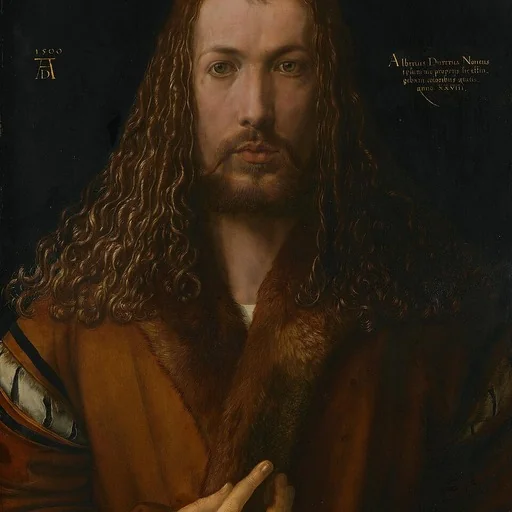
Artist
Albrecht Dürer spent his life in Nuremberg, a busy German city where artists traded prints like currency.

![Madonna and Child [obverse], by Albrecht Dürer](https://artifactworldgallery.com/img/albrecht-durer--madonna-and-child-obverse--d7b8ebf05d22ebe5-w320.webp)
![Lot and His Daughters [reverse], by Albrecht Dürer](https://artifactworldgallery.com/img/albrecht-durer--lot-and-his-daughters-reverse--b4ebf9b282faa17a-w320.webp)
![The Triumphal Chariot of Maximilian I (The Great Triumphal Car) [plate 5 of 8], by Albrecht Dürer](https://artifactworldgallery.com/img/albrecht-durer--the-triumphal-chariot-of-maximilian-i-the-great-triumphal-ca--9e04416abdc764bf-w320.webp) The Triumphal Chariot of Maximilian I (The Great Triumphal Car) [plate 5 of 8]
The Triumphal Chariot of Maximilian I (The Great Triumphal Car) [plate 5 of 8]![The Triumphal Chariot of Maximilian I (The Great Triumphal Car) [plate 4 of 8], by Albrecht Dürer](https://artifactworldgallery.com/img/albrecht-durer--the-triumphal-chariot-of-maximilian-i-the-great-triumphal-ca--c3101b959fdb629d-w320.webp) The Triumphal Chariot of Maximilian I (The Great Triumphal Car) [plate 4 of 8]
The Triumphal Chariot of Maximilian I (The Great Triumphal Car) [plate 4 of 8]![The Triumphal Chariot of Maximilian I (The Great Triumphal Car) [plate 7 of 8], by Albrecht Dürer](https://artifactworldgallery.com/img/albrecht-durer--the-triumphal-chariot-of-maximilian-i-the-great-triumphal-ca--ca892ffdfd4d048f-w320.webp) The Triumphal Chariot of Maximilian I (The Great Triumphal Car) [plate 7 of 8]
The Triumphal Chariot of Maximilian I (The Great Triumphal Car) [plate 7 of 8]![The Triumphal Chariot of Maximilian I (The Great Triumphal Car) [plate 6 of 8], by Albrecht Dürer](https://artifactworldgallery.com/img/albrecht-durer--the-triumphal-chariot-of-maximilian-i-the-great-triumphal-ca--8007a16762e7f7f8-w320.webp) The Triumphal Chariot of Maximilian I (The Great Triumphal Car) [plate 6 of 8]
The Triumphal Chariot of Maximilian I (The Great Triumphal Car) [plate 6 of 8]![The Triumphal Chariot of Maximilian I (The Great Triumphal Car) [plate 2 of 8], by Albrecht Dürer](https://artifactworldgallery.com/img/albrecht-durer--the-triumphal-chariot-of-maximilian-i-the-great-triumphal-ca--7466f3f42f71a1a4-w320.webp) The Triumphal Chariot of Maximilian I (The Great Triumphal Car) [plate 2 of 8]
The Triumphal Chariot of Maximilian I (The Great Triumphal Car) [plate 2 of 8]![The Triumphal Chariot of Maximilian I (The Great Triumphal Car) [plate 1 of 8], by Albrecht Dürer](https://artifactworldgallery.com/img/albrecht-durer--the-triumphal-chariot-of-maximilian-i-the-great-triumphal-ca--4840429519ebb12d-w320.webp) The Triumphal Chariot of Maximilian I (The Great Triumphal Car) [plate 1 of 8]
The Triumphal Chariot of Maximilian I (The Great Triumphal Car) [plate 1 of 8]![The Triumphal Chariot of Maximilian I (The Great Triumphal Car) [plate 3 of 8], by Albrecht Dürer](https://artifactworldgallery.com/img/albrecht-durer--the-triumphal-chariot-of-maximilian-i-the-great-triumphal-ca--2a87fc011039500b-w320.webp) The Triumphal Chariot of Maximilian I (The Great Triumphal Car) [plate 3 of 8]
The Triumphal Chariot of Maximilian I (The Great Triumphal Car) [plate 3 of 8]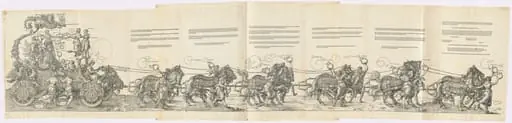 The Triumphal Chariot of Maximilian I (The Great Triumphal Car)
 The Great Triumphal Car of Emperor Maximilian