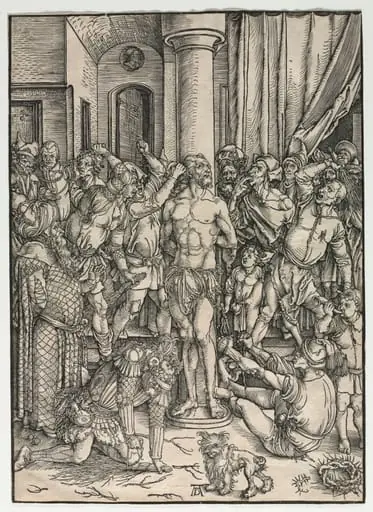
Artwork
The Large Passion: The Crucifixion
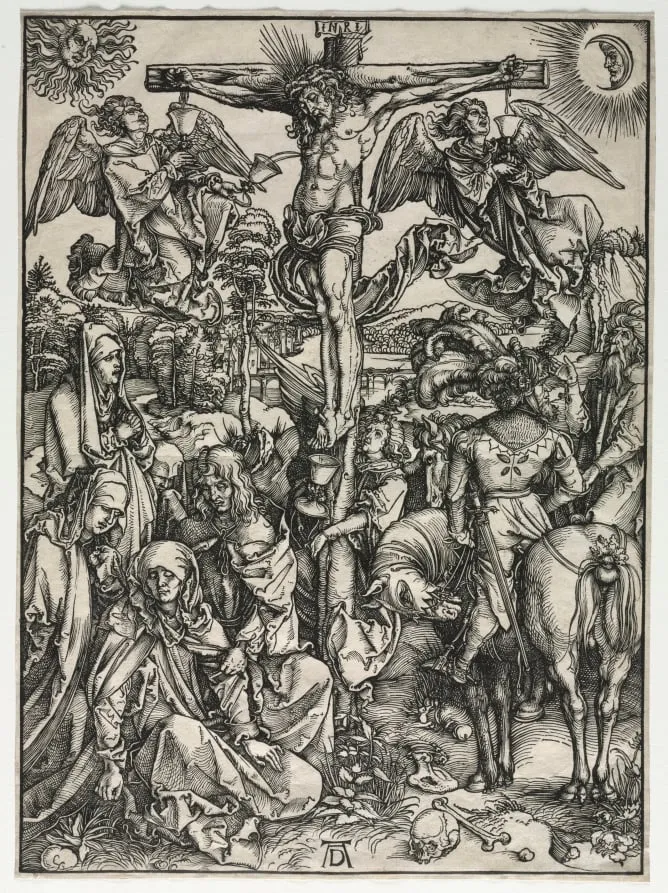
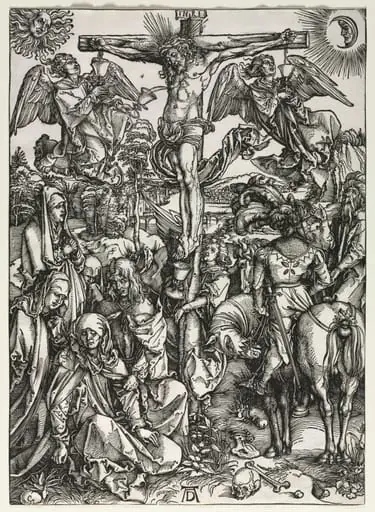
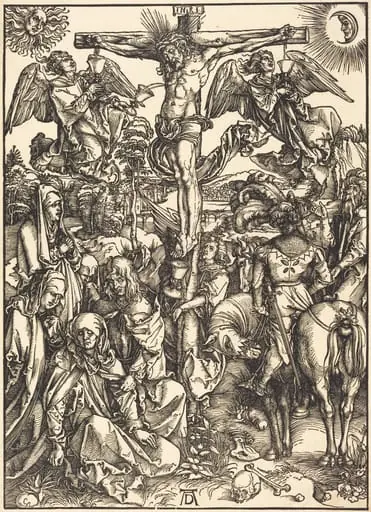
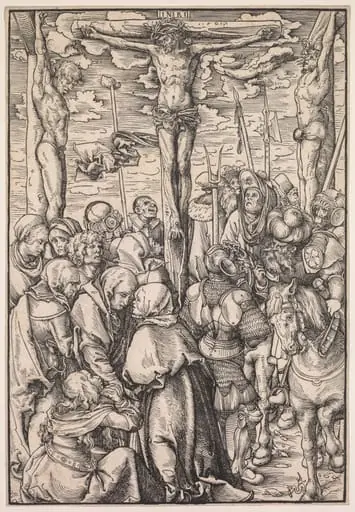
The Large Passion: The Crucifixion is a print by the Renaissance artist Albrecht Dürer. It dates from 1498 and is held in the collection of the Cleveland Museum of Art.
About this work
Overview
That same year, Dürer also released new editions of The Apocalypse and The Life of the Virgin, establishing his reputation as a leading printmaker of his time.
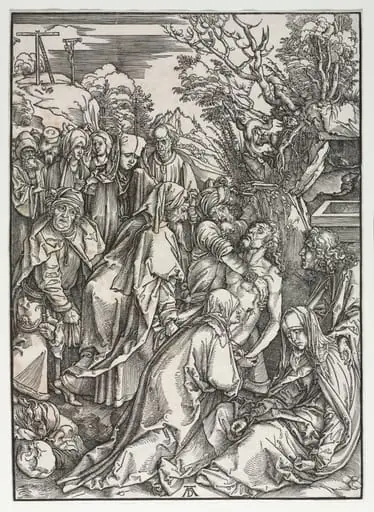
Albrecht Dürer produced twelve woodcuts for The Large Passion in two phases: seven between 1497 and 1500, and four more in 1510. The complete series was published in 1511 as a book with a frontispiece and Latin verses by Benedict Schwalbe, printed on the reverse of each sheet. That same year, Dürer also released new editions of The Apocalypse and The Life of the Virgin, establishing his reputation as a leading printmaker of his time.
Subject & Meaning
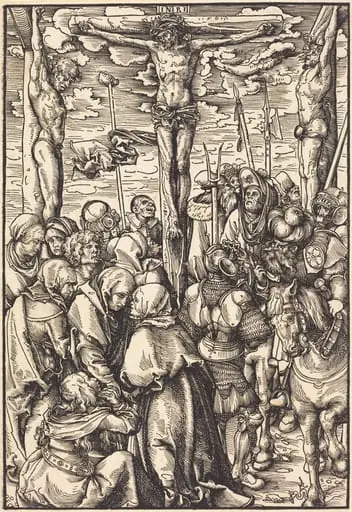
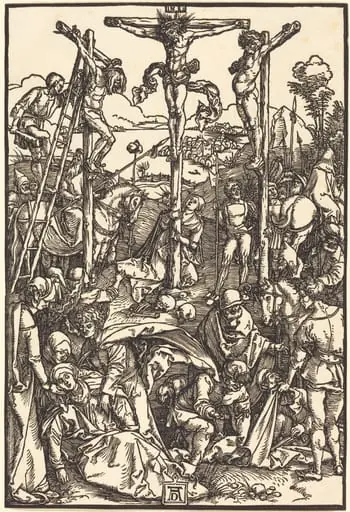
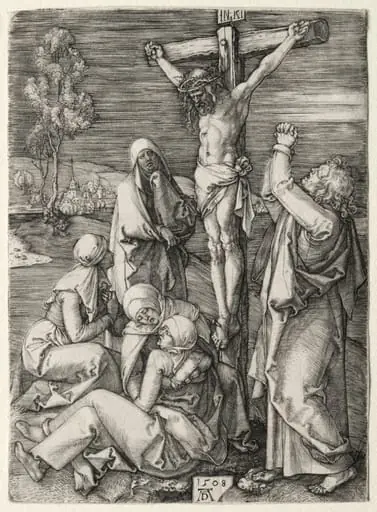
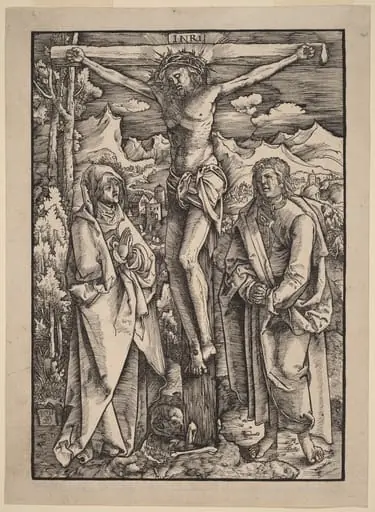
The Crucifixion scene depicts Christ on the cross flanked by two thieves, surrounded by a dense assembly of soldiers, mourners, and onlookers on a steep, rocky slope. The composition emphasizes human suffering and divine sacrifice, with figures arranged in a compressed space that heightens emotional intensity. The inclusion of both grief and indifference among the crowd underscores the complexity of human response to the event.
Technique & Style
The early woodcuts employ bold, black lines carved into wood, creating stark contrasts against the white paper that lend dynamic energy to the images. Early versions retain Gothic traits—flattened space, rigid figures, and intricate detail—while the 1510 prints reflect a shift toward greater naturalism and subtler modeling. The precision required in woodcut carving meant each line was irreversible, demanding exceptional control from the artist.
History & Provenance
The series was published in Nuremberg in 1511 by Dürer himself, with text by the monk and poet Benedict Schwalbe. The prints were produced in multiple copies, making them accessible beyond elite circles. Dürer’s simultaneous release of The Apocalypse and The Life of the Virgin suggests a deliberate effort to establish a cohesive body of devotional imagery, reinforcing his role as both artist and publisher.
Context
Woodcut prints were an emerging medium for religious dissemination in late 15th-century Europe, valued for their affordability and portability. Dürer’s series capitalized on this, allowing widespread circulation of biblical narratives among lay audiences. The integration of Latin poetry on the reverse of each sheet reflects the scholarly and devotional culture of the time, bridging visual art and textual theology.
Legacy
Dürer’s Large Passion helped elevate woodcut from a craft to a respected artistic medium. His use of contrast and composition influenced generations of printmakers. The series’ accessibility contributed to the visual literacy of Protestant audiences, laying groundwork for the role of imagery in religious reform. Its technical rigor and narrative clarity remain benchmarks in early modern printmaking.
Artist & collection
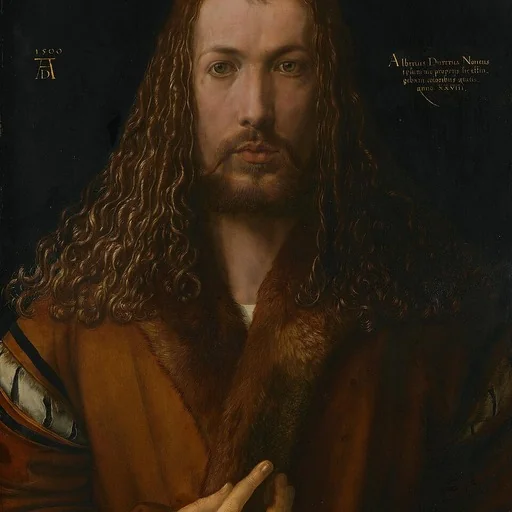
Artist
Albrecht Dürer spent his life in Nuremberg, a busy German city where artists traded prints like currency.

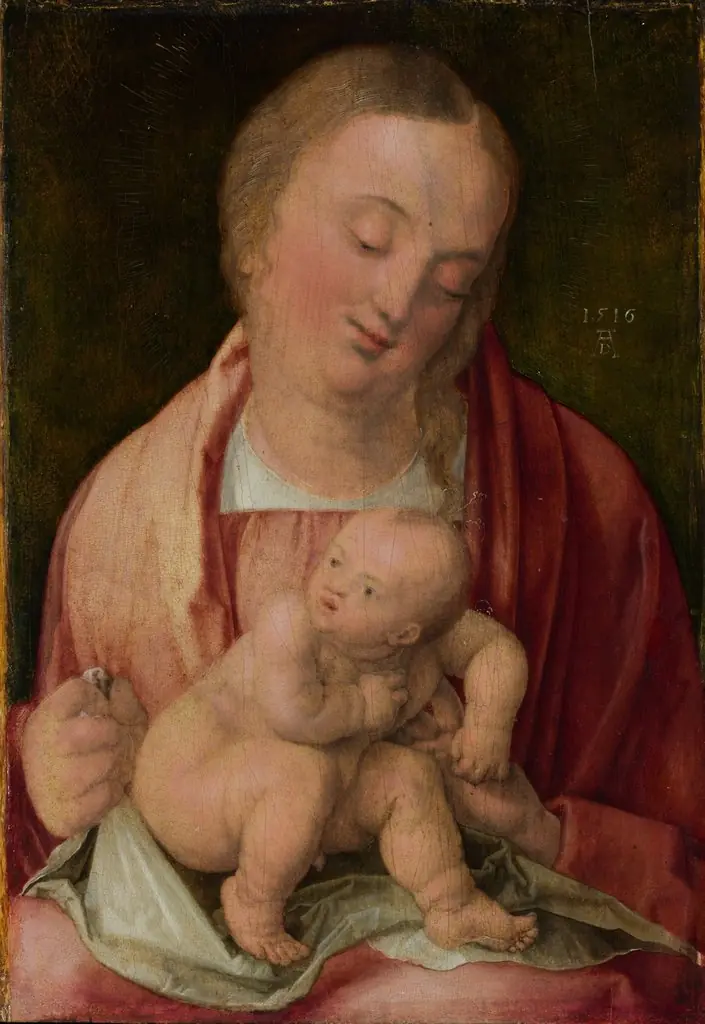
![Madonna and Child [obverse], by Albrecht Dürer](https://artifactworldgallery.com/img/albrecht-durer--madonna-and-child-obverse--d7b8ebf05d22ebe5-w320.webp)
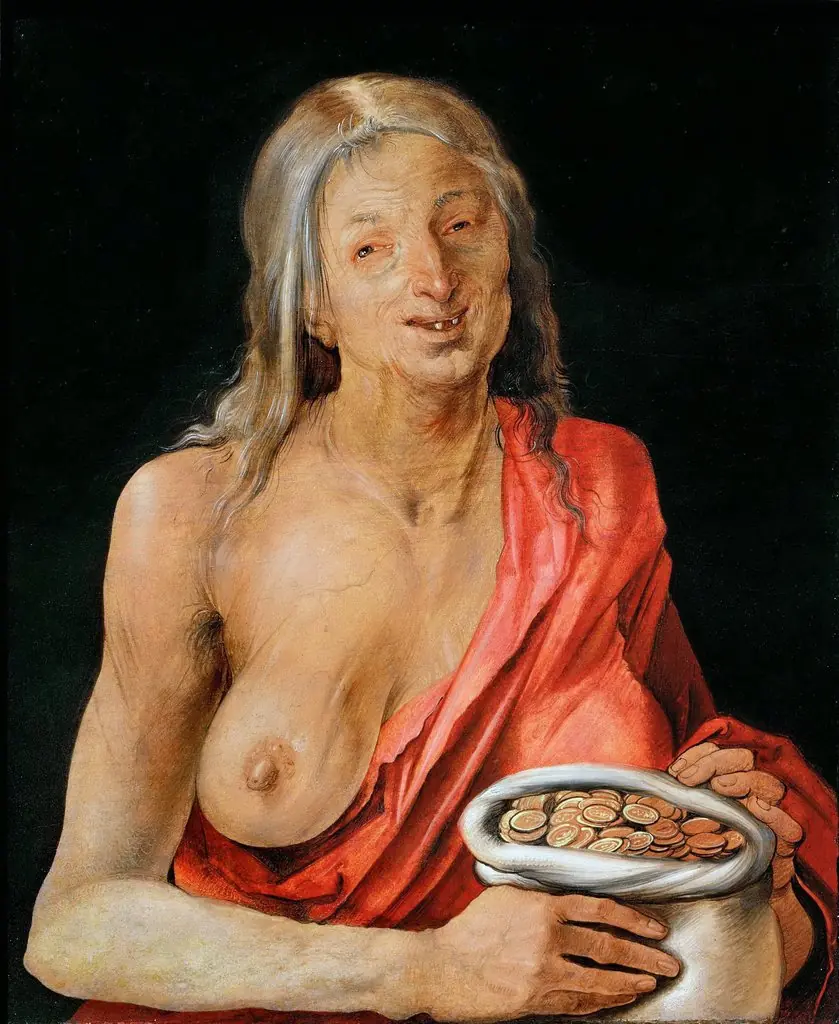
![Lot and His Daughters [reverse], by Albrecht Dürer](https://artifactworldgallery.com/img/albrecht-durer--lot-and-his-daughters-reverse--b4ebf9b282faa17a-w320.webp)