Artwork
The Crucifixion
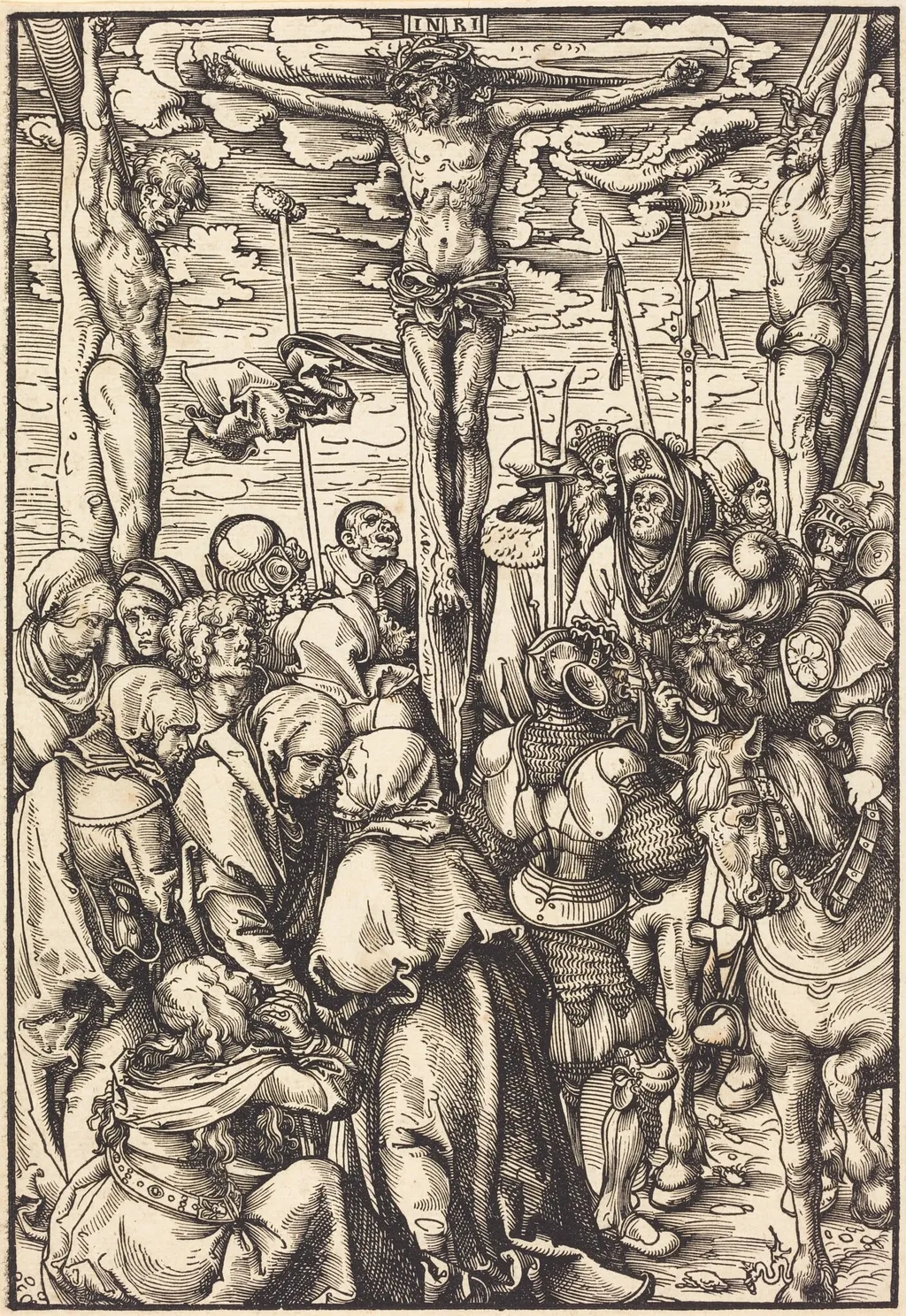
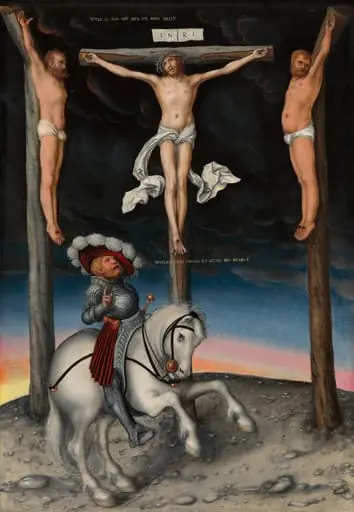
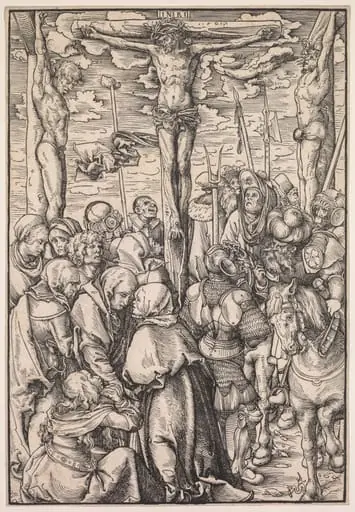
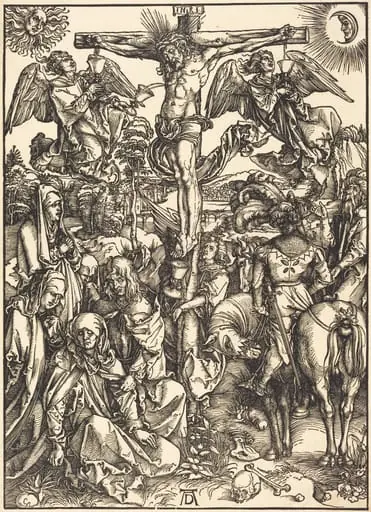
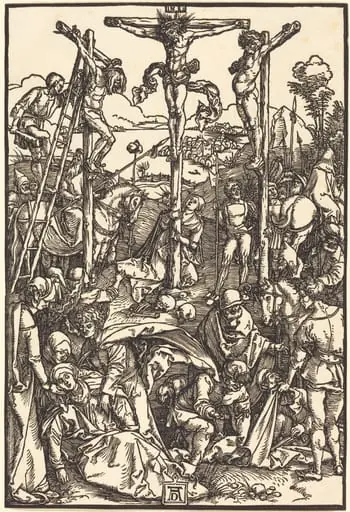
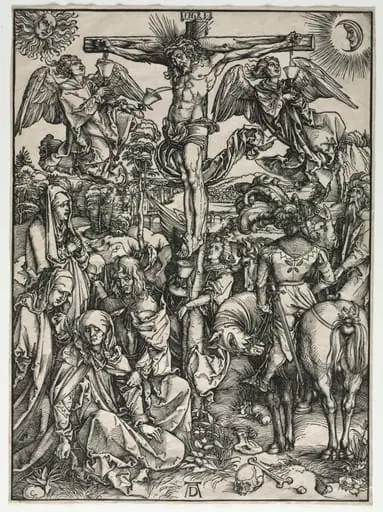
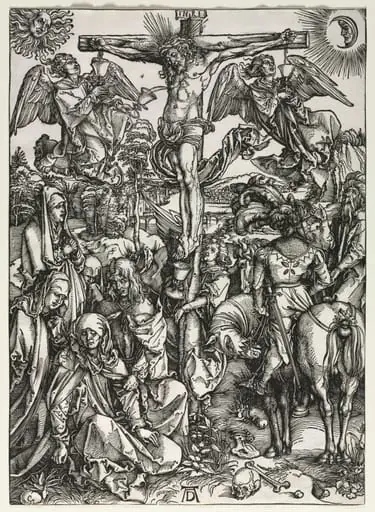
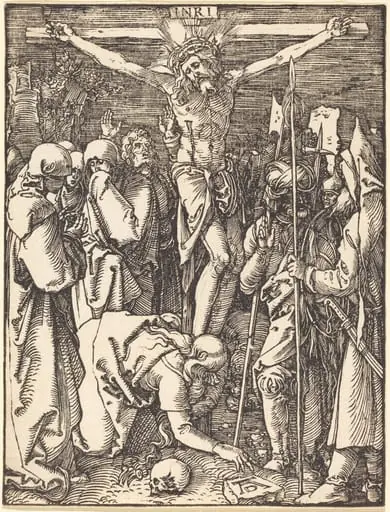
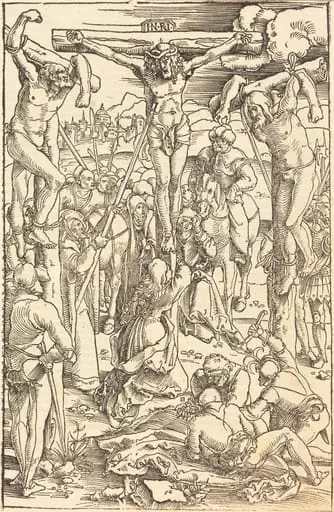
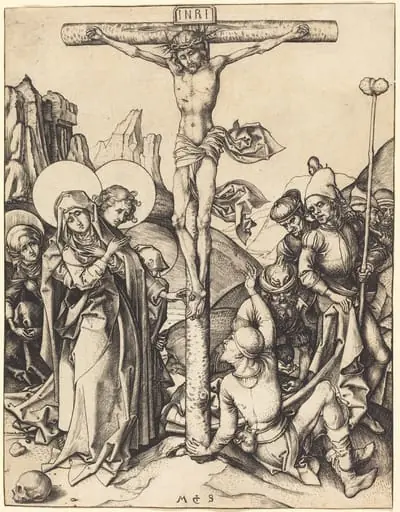
The Crucifixion is an ink print by the Renaissance artist Lucas Cranach the Elder. It dates from 1509 and is held in the collection of the National Library of Brazil.
About this work
Overview
As one of many prints he produced alongside his paintings, this work reflects his role as a prolific visual communicator in early 16th-century Germany.
Created in 1509, Lucas Cranach the Elder’s *The Crucifixion* is a woodcut print that exemplifies his mastery of the medium. As one of many prints he produced alongside his paintings, this work reflects his role as a prolific visual communicator in early 16th-century Germany. The composition is densely populated with figures and finely carved lines, characteristic of his precision in relief printing. It was made during a period of religious upheaval, when traditional imagery was being reinterpreted in light of emerging Protestant thought.
Subject & Meaning
The scene centers on Christ crucified between two thieves, surrounded by a varied crowd of onlookers—some in prayer, others gesturing with alarm or disbelief. The storm-lit sky and tightly packed figures convey emotional intensity without overt sentimentality. While rooted in conventional Christian iconography, the inclusion of contemporary German dress and expressions subtly shifts the narrative toward immediacy, suggesting a personal or communal engagement with the event rather than distant veneration.
Technique & Style
Cranach employed the woodcut technique, carving lines into a wooden block to create a relief surface that, when inked and pressed, produced sharp, high-contrast imagery. His use of fine, controlled lines creates a sense of rhythmic density, guiding the viewer’s eye through the crowded composition. The absence of tone or shading emphasizes linear clarity, a hallmark of his printmaking. The stark black-and-white contrast enhances the dramatic tension without relying on color or gradation.
History & Provenance
Produced during Cranach’s tenure as court artist to the Electors of Saxony, the print predates his full alignment with Martin Luther but already shows signs of his evolving religious perspective. It circulated widely among educated audiences in northern Germany, likely used for private devotion or teaching. Though no early ownership records are documented, its survival in multiple museum collections attests to its early and sustained reception within print culture of the period.
Context
In 1509, the Catholic Church still dominated religious life in Germany, yet reformist ideas were gaining traction. Cranach, though not yet a declared Protestant, was already moving away from ornate medieval devotional styles. His woodcut reflects this transition: the scene is stripped of excessive ornament, focusing instead on human emotion and narrative clarity. This shift aligned with broader trends in Northern Renaissance art toward accessibility and moral immediacy.
Legacy
Cranach’s *The Crucifixion* contributed to the spread of religious imagery through print, making sacred narratives more widely available beyond elite audiences. His precise, linear style influenced later German printmakers and helped define the visual language of Protestant devotional art. Though not revolutionary in subject, its disciplined composition and emotional restraint marked a departure from earlier, more ornate depictions, shaping how future generations would visualize the Passion.
Artist & collection
Artist
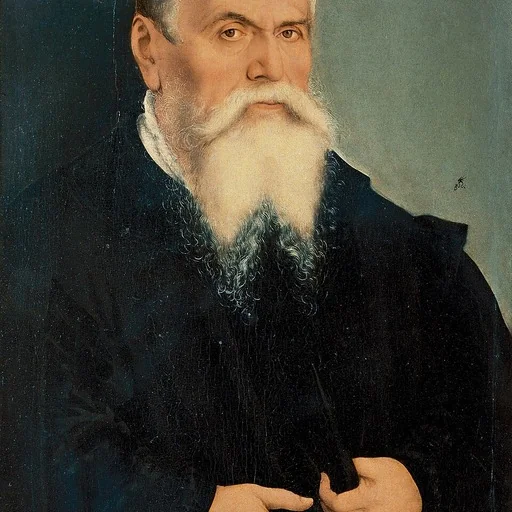
Lucas Cranach the Elder was a German Renaissance painter and printmaker in woodcut and engraving.