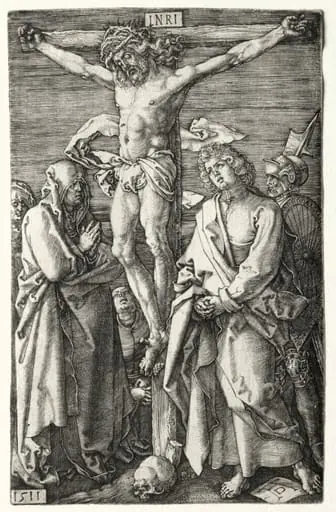
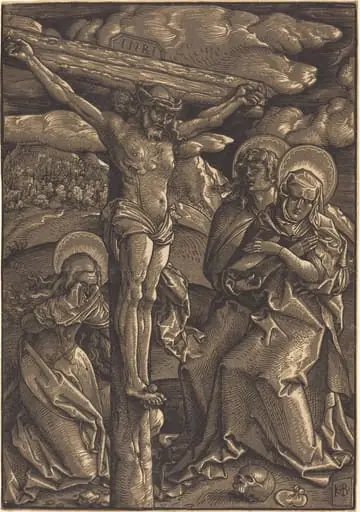
Artwork
The Passion: Crucifixion
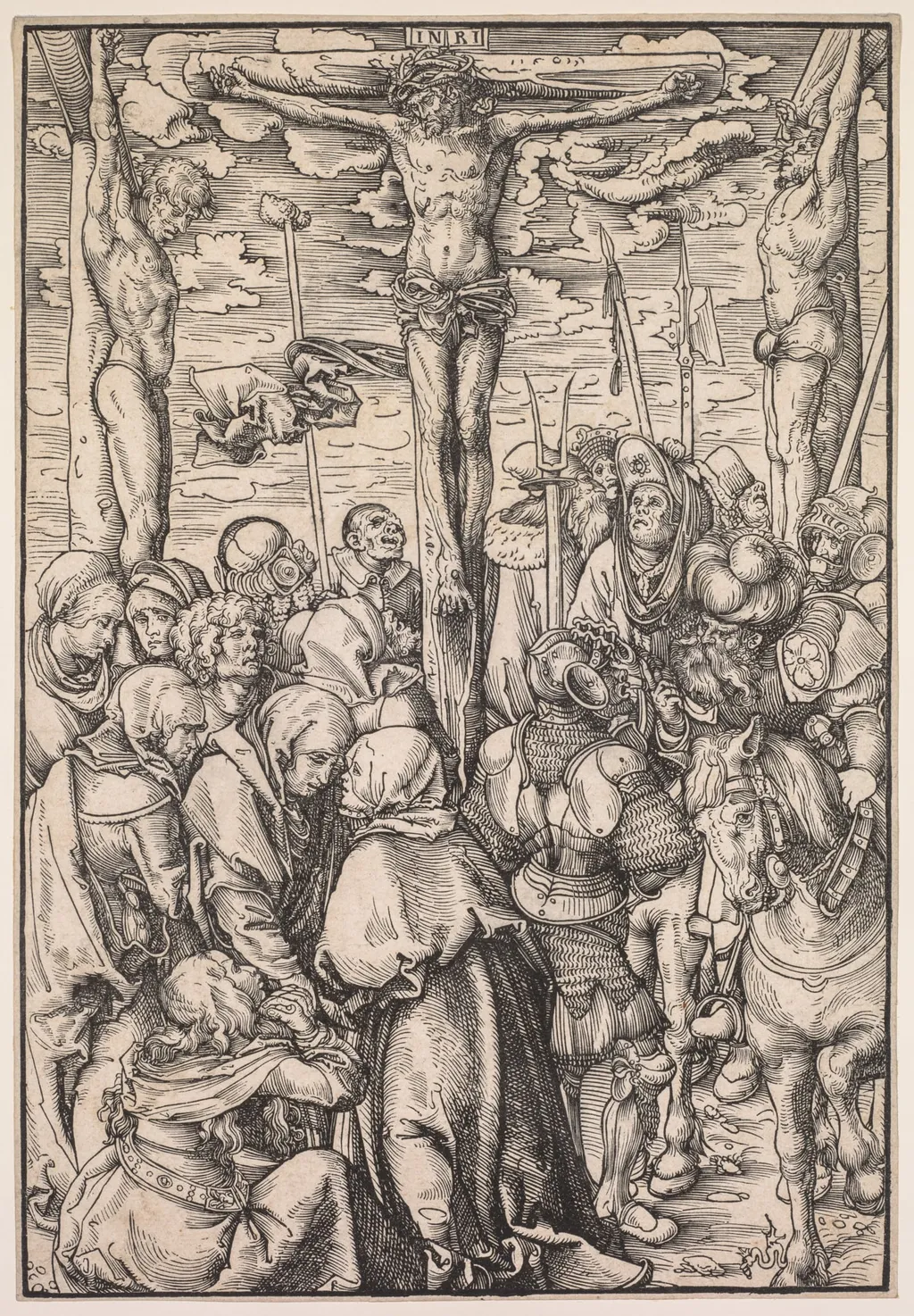
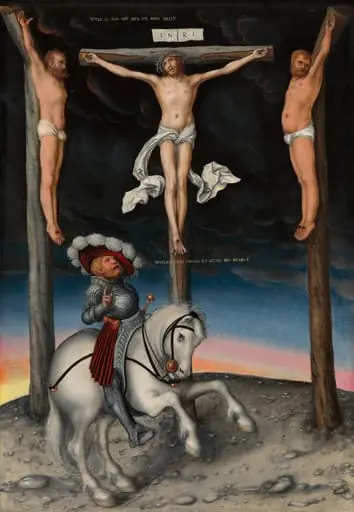
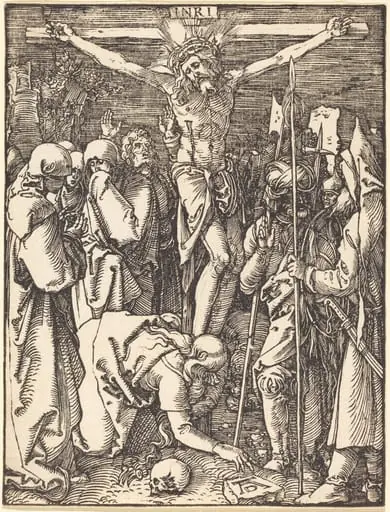
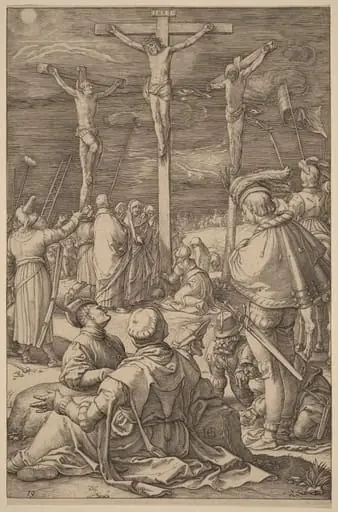
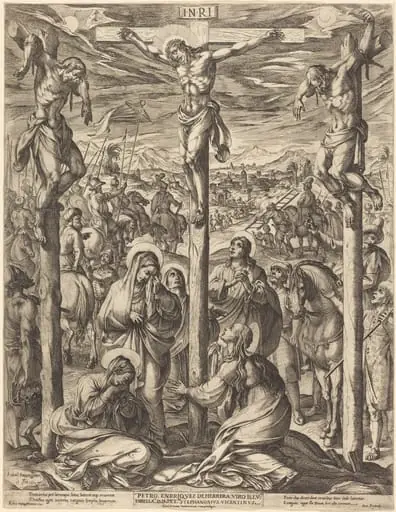
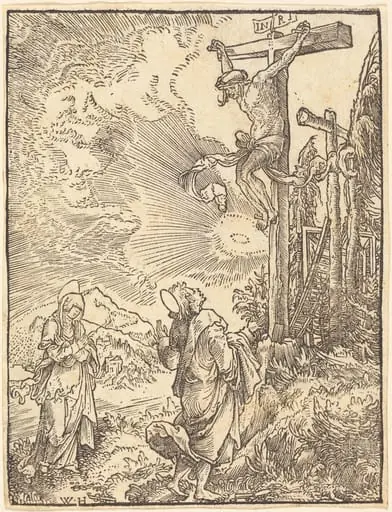
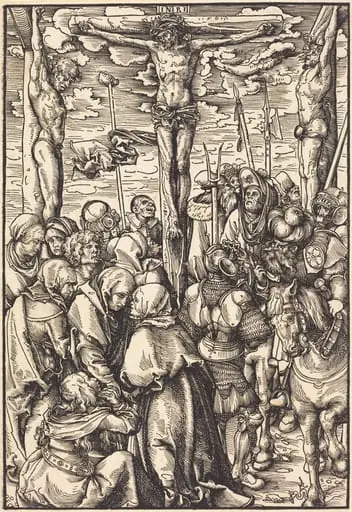
The Passion: Crucifixion is a print by the Renaissance artist Lucas Cranach the Elder. It dates from 1509 and is held in the collection of the Cleveland Museum of Art.
About this work
Overview
The Crucifixion, part of *The Passion* series, is a 1509 engraving by Lucas Cranach the Elder, a prominent German Renaissance artist. It depicts the chaotic scene of Jesus' crucifixion, characterized by a densely packed composition and dramatic intensity.
Subject & Meaning
At its core, the engraving illustrates the climactic moment of Jesus' crucifixion, emphasizing the emotional turmoil of the onlookers. The central cross, flanked by two groups of figures, conveys the spiritual and emotional depth of the event.
Technique & Style
Cranach employed sharp lines, deep shadows, and expressive, sketch-like figures to create a sense of urgency and movement. The stormy, jagged-clouded background amplifies the dramatic tension, reflecting Renaissance influences.
History & Provenance
Created in 1509, the engraving is now held in The Cleveland Museum of Art's collection. Cranach, then court painter to the Electors of Saxony, was closely associated with key Reformation figures, including Martin Luther.
Context
This work reflects the artistic and religious climate of the early German Renaissance. Cranach's style, while rooted in traditional religious themes, hints at the impending changes of the Reformation, with whom the artist had close ties.
Legacy
The Crucifixion engraving showcases Cranach's contribution to the evolution of Renaissance art, particularly in printmaking. Its dynamic composition and emotional depth influenced subsequent artistic interpretations of religious themes.
Artist & collection
Artist
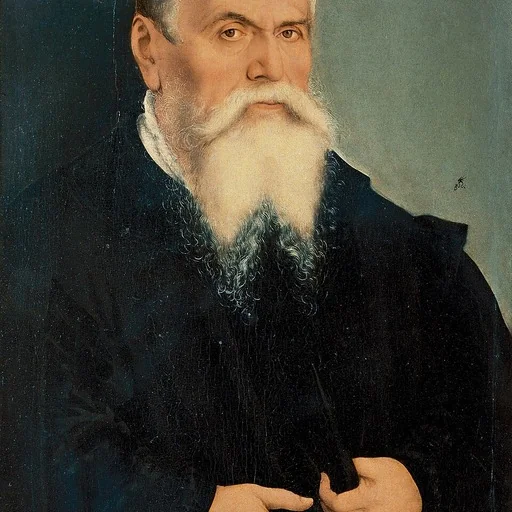
Lucas Cranach the Elder was a German Renaissance painter and printmaker in woodcut and engraving.