Artwork
The Promenade
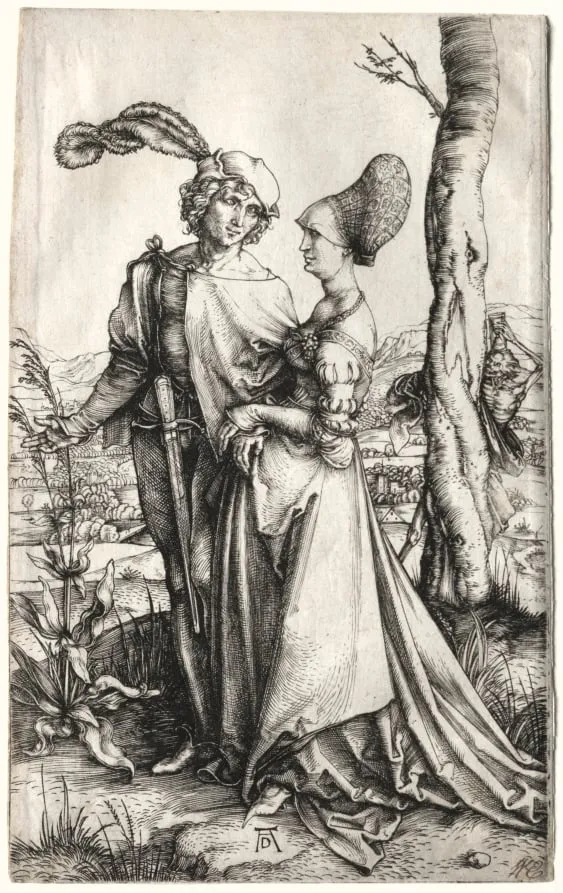
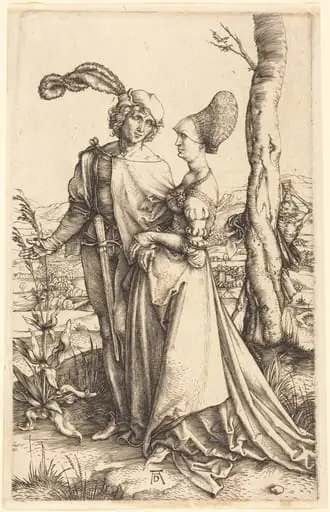
The Promenade is a print by the Renaissance artist Albrecht Dürer. It dates from 1497 and is held in the collection of the Cleveland Museum of Art.
About this work
A well-dressed man and woman walk through a leafy field while a skeleton balances an hourglass on its head behind them.
A well-dressed man and woman walk through a leafy field while a skeleton balances an hourglass on its head behind them. The man’s sword hangs awkwardly, and the woman’s fancy bonnet tells us she’s married.
This wasn’t just a pretty scene—it was a warning. In Dürer’s time, skeletons like this one reminded people that life was short and pleasure could be dangerous. The hourglass means time is running out, and the sword’s odd position hints the man has bad intentions.
To see more prints where art carries a moral lesson, look up Albrecht Dürer (German, 1471–1528).
Overview
Albrecht Dürer’s print *The Promenade* depicts a well‑dressed man and woman strolling through a leafy landscape while a skeletal figure, emblematic of Death, balances an hourglass on its skull. The composition juxtaposes the leisurely couple with the stark reminder of mortality, creating a visual allegory that was common in early sixteenth‑century Northern European prints.
Subject & Meaning
The figures convey a moralizing narrative: the man’s sword is held in an awkward, almost careless manner, suggesting dishonorable motives, while the woman’s elaborate bonnet indicates her status as a married woman. Together they hint at an illicit liaison, and the presence of Death with the hourglass underscores the fleeting nature of pleasure and the inevitable passage of time.
Technique & Style
Executed in fine line engraving, Dürer employs precise hatching to render textures—from the foliage’s delicate leaves to the skeletal ribs of Death. The contrast between the crisp, detailed rendering of the couple’s clothing and the stark, monochrome figure of the skeleton exemplifies Dürer’s skill in using chiaroscuro to emphasize moral contrast within a single plane.
Context
In the early 1500s, Northern Renaissance artists frequently used personifications of Death to caution viewers against excess and moral laxity. Dürer’s inclusion of an hourglass and the skeletal figure aligns with contemporary emblematic traditions that linked mortality with the dangers of carnal desire, especially for those of the emerging bourgeois class.
Legacy
*The Promenade* remains a representative example of Dürer’s didactic prints, illustrating how visual art functioned as a vehicle for ethical instruction. Its clear symbolic language continues to inform studies of Renaissance iconography and the ways artists embedded moral commentary within everyday scenes.
Artist & collection
Artist
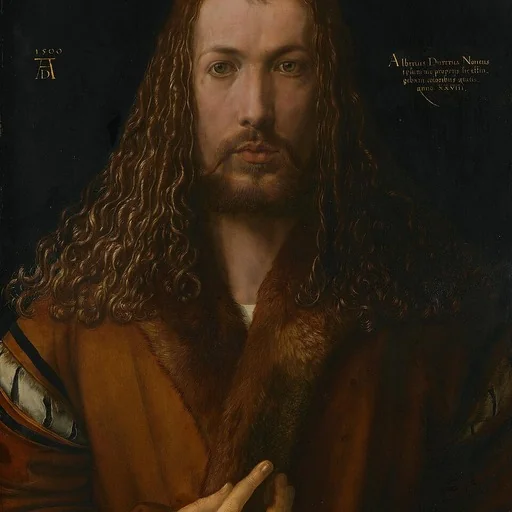
Albrecht Dürer spent his life in Nuremberg, a busy German city where artists traded prints like currency.

![Madonna and Child [obverse], by Albrecht Dürer](https://artifactworldgallery.com/img/albrecht-durer--madonna-and-child-obverse--d7b8ebf05d22ebe5-w320.webp)
![Lot and His Daughters [reverse], by Albrecht Dürer](https://artifactworldgallery.com/img/albrecht-durer--lot-and-his-daughters-reverse--b4ebf9b282faa17a-w320.webp)