Artwork
Couple Seated on a Bed
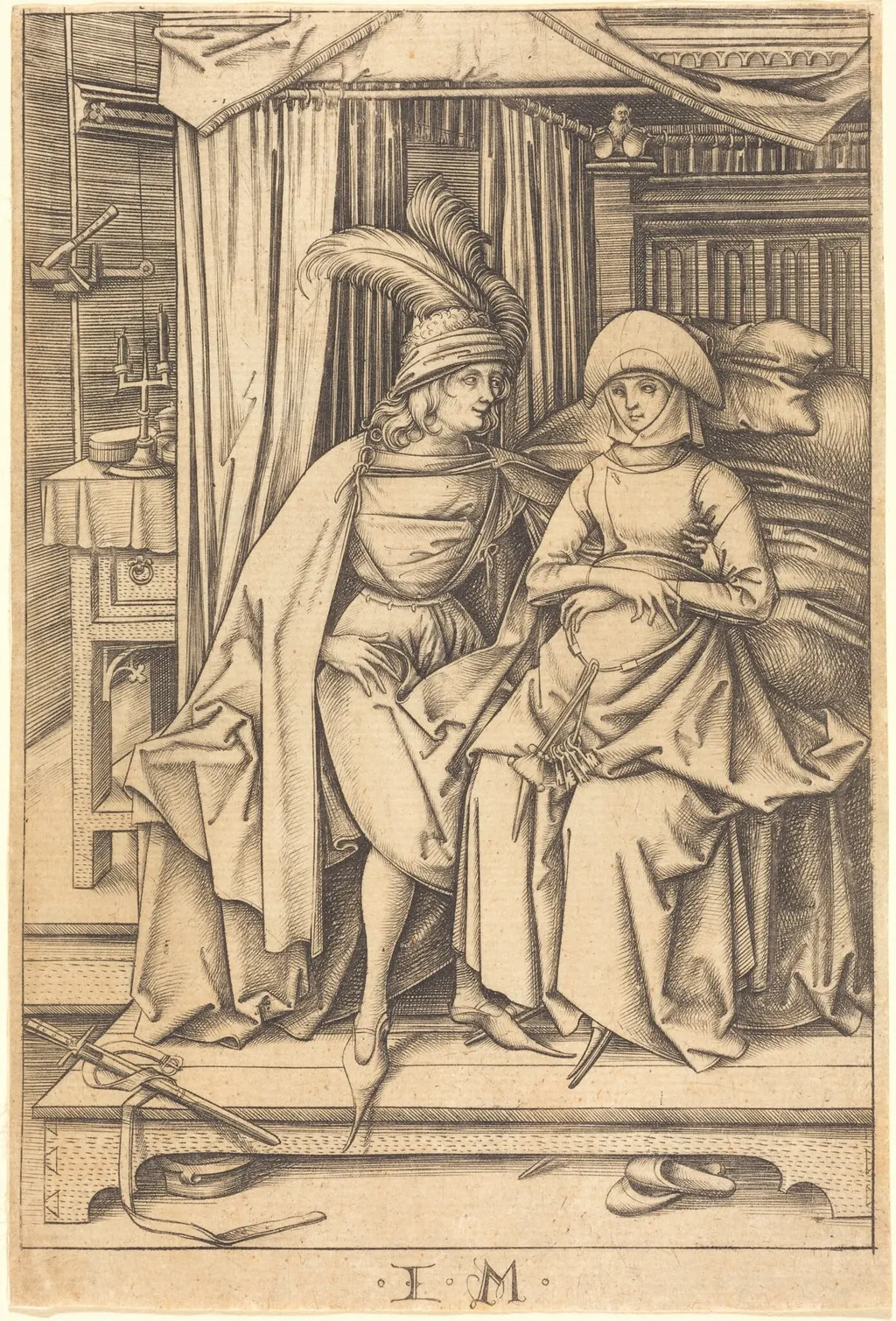
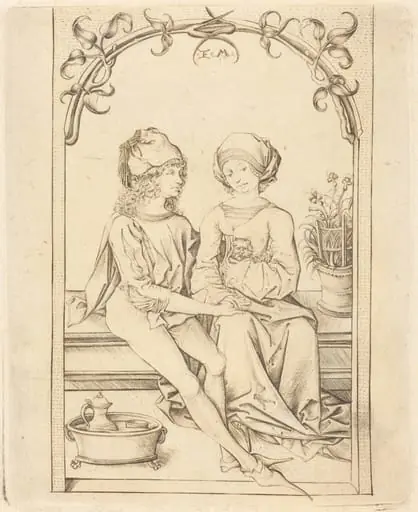
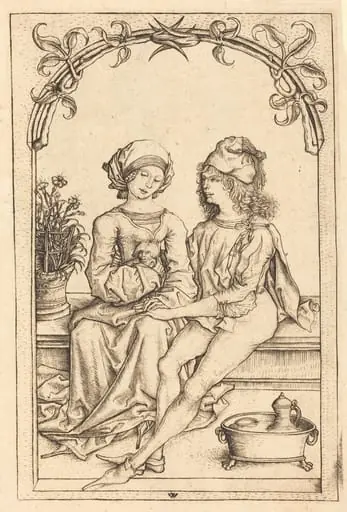
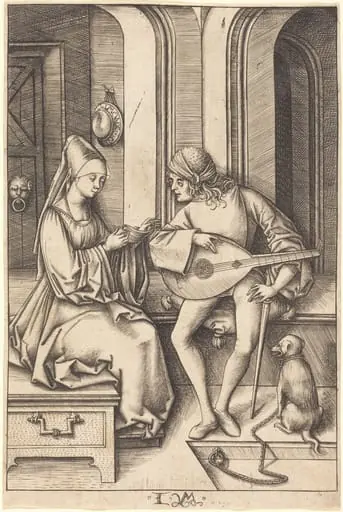
Couple Seated on a Bed is an ink print by the Renaissance artist Israhel van Meckenem. It dates from 1499 and is held in the collection of the National Gallery of Art.
About this work
Overview
This piece exemplifies his technical precision and his interest in domestic subjects, rendered with fine, controlled lines that define form without overt drama.
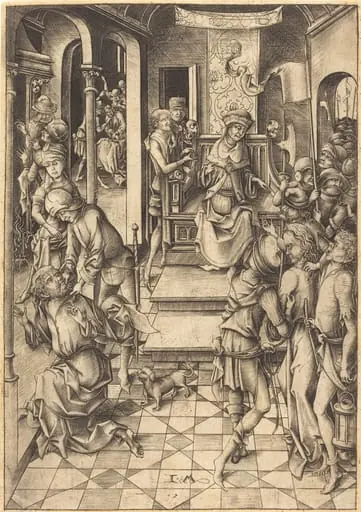
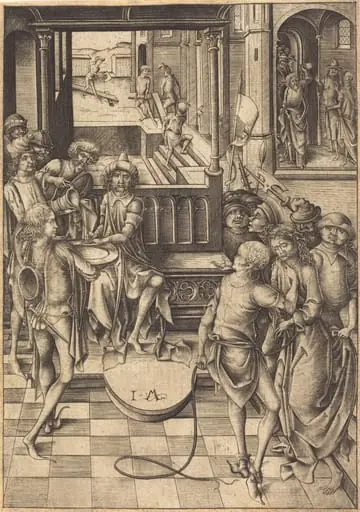
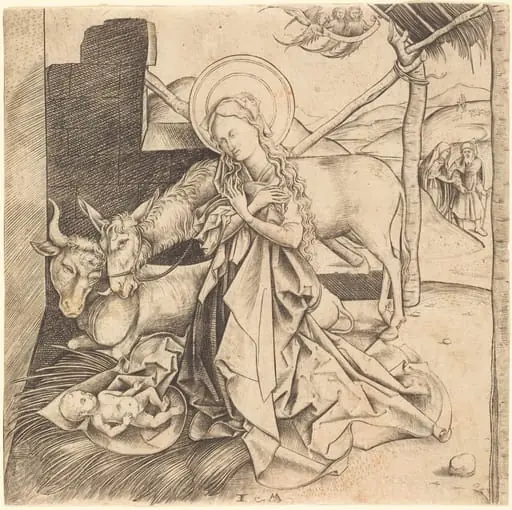
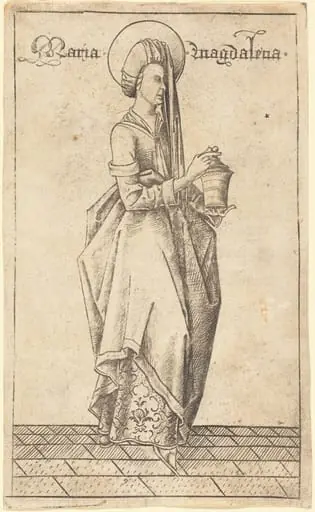
Created around 1499 by Israhel van Meckenem, this engraving is one of over six hundred prints produced by the German artist, who was among the most active printmakers of the late fifteenth century. Working as both a goldsmith and engraver, van Meckenem specialized in detailed, small-scale compositions. This piece exemplifies his technical precision and his interest in domestic subjects, rendered with fine, controlled lines that define form without overt drama.
Subject & Meaning
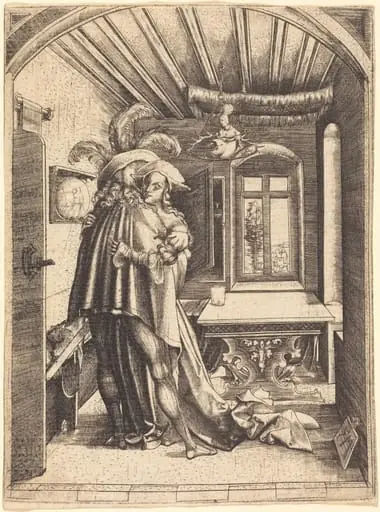
The image portrays a man and woman in a private interior, seated on a bed. The man, dressed in a feathered hat and short tunic, stands beside her; the woman, in a long robe and hood, holds a small object, possibly a tool or personal item. The scene lacks narrative climax, suggesting an ordinary moment rather than a symbolic or religious event. The quiet intimacy implies a focus on daily life, a theme increasingly common in Northern European art of the period.
Technique & Style
Van Meckenem employed fine, incised lines to model form and texture, using hatching and cross-hatching to suggest volume in fabric, skin, and wood. The bed’s frame, shelves, and window are rendered with meticulous attention to detail, demonstrating his skill in translating three-dimensional space onto a flat surface. The absence of bold contrasts or dramatic lighting reinforces a subdued, observational tone, characteristic of his approach to engraving.
History & Provenance
The print was made during the height of van Meckenem’s career, when he operated a workshop in Bocholt, producing prints for a broad market. Many of his works were copies or adaptations of other artists’ compositions, reflecting the commercial nature of printmaking at the time. This piece, like others, likely circulated widely across Northern Europe, serving both as art and as a model for other craftsmen.
Context
In late 15th-century Northern Europe, printmaking became a vital medium for disseminating images beyond elite circles. Van Meckenem’s focus on domestic interiors aligned with a growing interest in secular life, paralleling developments in painting and literature. His work contributed to the rise of the print as a collectible object, accessible to merchants and artisans, not just the nobility.
Legacy
Van Meckenem’s prolific output helped standardize engraving techniques and expand the audience for printed imagery. While his works were often derivative, their precision and consistency influenced later printmakers. This engraving, like many of his, survives in multiple impressions, offering insight into how everyday scenes were visualized and reproduced in the decades before the Reformation.
Artist & collection
Artist
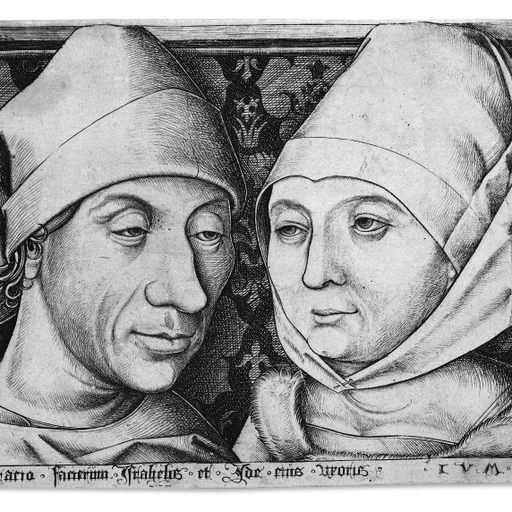
Israhel van Meckenem (c. 1445 – 10 November 1503), also known as Israhel van Meckenem the Younger, was a German printmaker and goldsmith, perhaps of a Dutch family origin. He was the most prolific engraver of the…