Artwork
A Soldier Walking with a Camp Follower
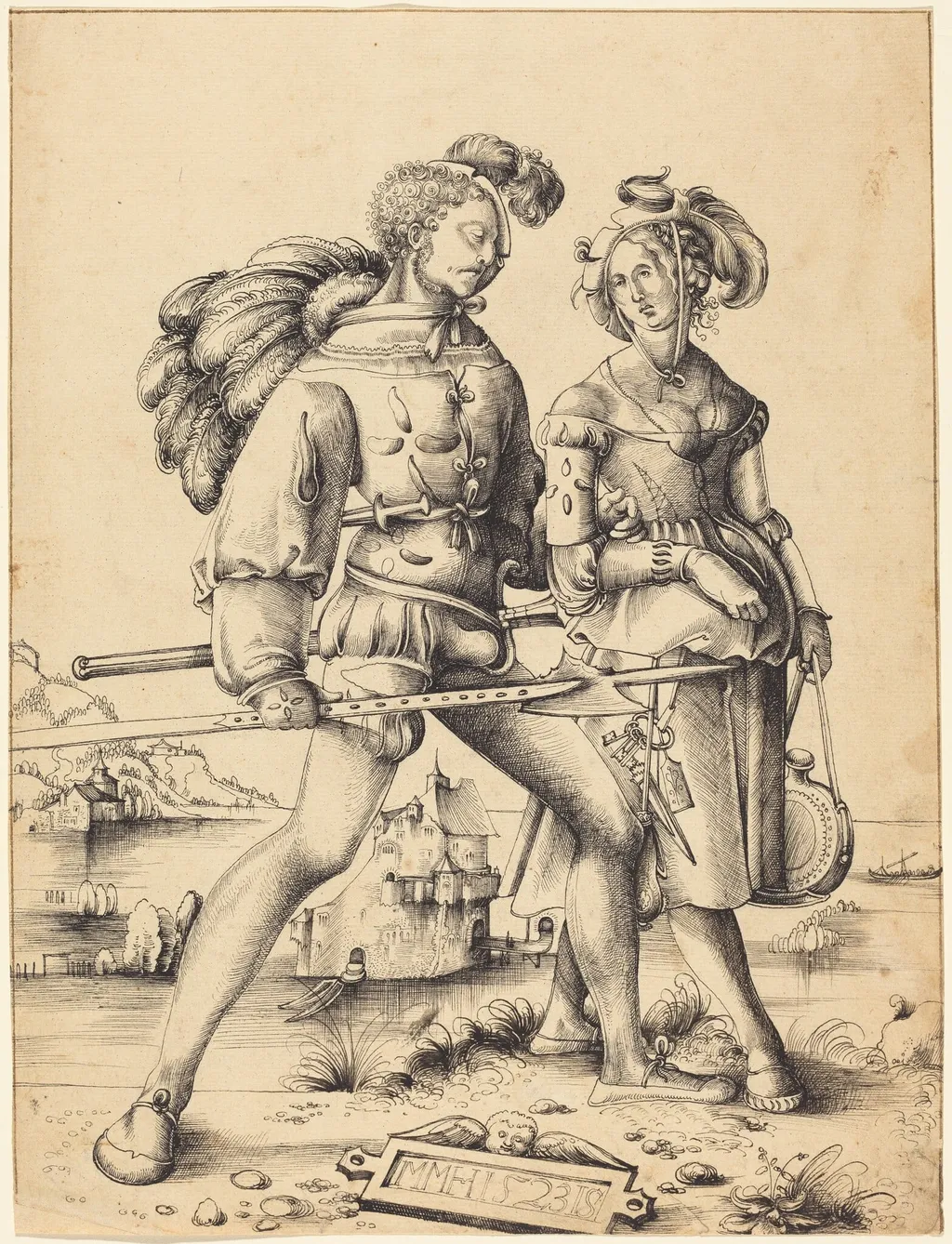
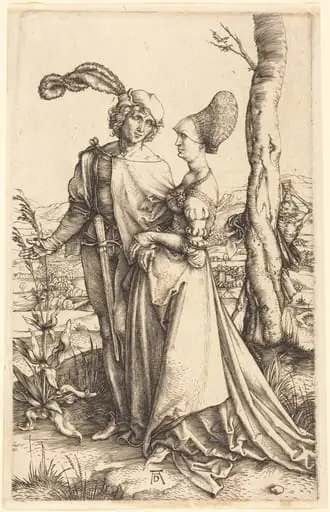
A Soldier Walking with a Camp Follower is an ink drawing by the Renaissance artist Urs Graf I. It dates from 1523 and is held in the collection of the National Gallery of Art.
About this work
Overview
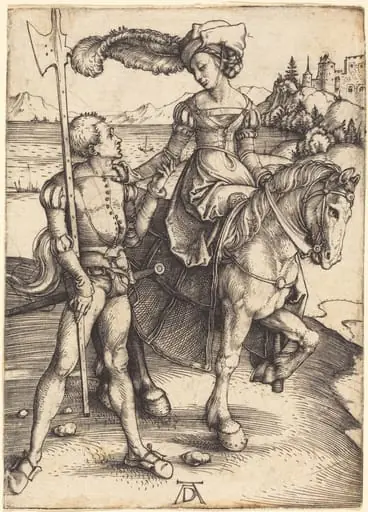
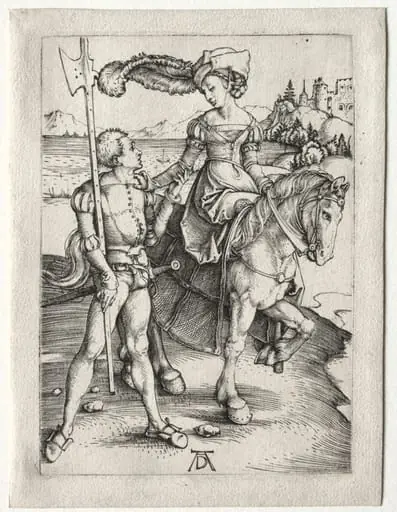
Created in 1523 by Urs Graf I, this pen-and-ink drawing depicts a soldier and a camp follower traversing a rural landscape.
Created in 1523 by Urs Graf I, this pen-and-ink drawing depicts a soldier and a camp follower traversing a rural landscape. Executed on laid paper, the work captures a moment of quiet movement amid the aftermath of conflict. The artist’s precise linework defines both figures and their surroundings, balancing detail with restraint. The composition suggests a transient pause in an otherwise unsettled journey.
Subject & Meaning
The soldier, clad in full armor and carrying a helmet under his arm, walks beside a woman bearing a staff and a small bag—likely a camp follower who supported troops with domestic tasks. Their parallel movement implies a fragile companionship forged in wartime. The distant town, nestled by a river with boats, hints at a fragile peace beyond the immediate scene, contrasting the weight of the soldier’s gear with the woman’s quiet resolve.
Technique & Style
Graf employed fine, controlled pen strokes to render textures: the ridges of armor, the folds of fabric, and the subtle contours of landscape. Cross-hatching builds depth without heavy shading, preserving the drawing’s lightness. The scale of the town in the background, rendered with minimal strokes, enhances the intimacy of the foreground figures. The line quality conveys both precision and spontaneity, characteristic of Graf’s draftsmanship.
History & Provenance
The drawing originates from the early 16th century, a period when Swiss mercenaries were frequently deployed across Europe. Urs Graf, a Swiss artist and former soldier, drew from firsthand experience of military life. The work likely belonged to a private collection of sketches, possibly used as studies or personal records. Its survival reflects the value placed on such intimate observations of soldierly existence.
Context
In early 1500s Europe, armies relied on non-combatants—women, servants, and vendors—to sustain campaigns. These figures, often overlooked in official histories, appear here with dignity. Graf’s depiction aligns with a broader Swiss tradition of documenting everyday life amid war, resisting idealized narratives. The quiet realism of the scene contrasts with the grandeur of contemporary battle paintings, offering a grounded view of military logistics.
Legacy
This drawing contributes to a body of work that humanizes the periphery of war. Graf’s unembellished approach influenced later artists who sought to portray soldiers and camp followers not as symbols, but as individuals. Its preservation allows modern viewers to encounter the quiet rhythms of wartime life, grounded in observation rather than myth.
Artist & collection


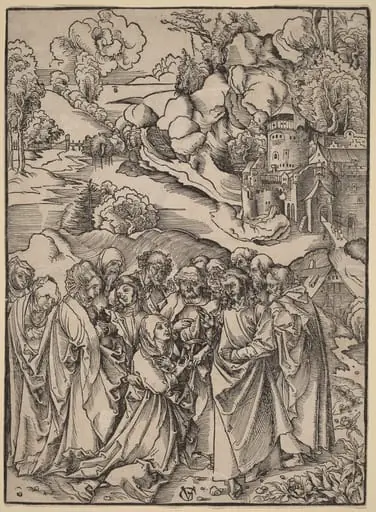 Christ and the Apostles and the Holy Women
![The Madonna with Saint Ulrich and Saint Afra [recto], by Urs Graf I](https://artifactworldgallery.com/img/urs-graf-i--the-madonna-with-saint-ulrich-and-saint-afra-recto--563a13dc2b4b63a3-w320.webp) The Madonna with Saint Ulrich and Saint Afra [recto]
The Madonna with Saint Ulrich and Saint Afra [recto]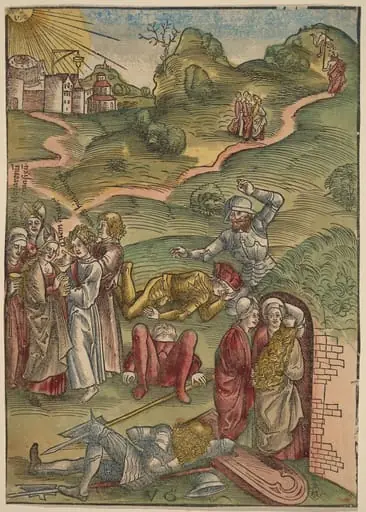 Three Marys at the Tomb
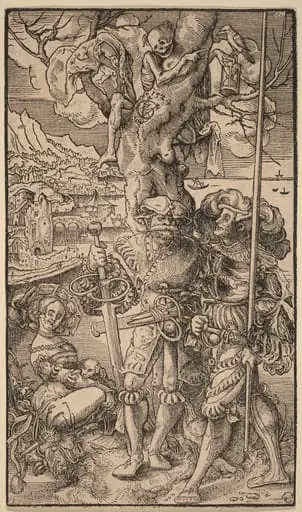 Two Mercenaries and a Woman
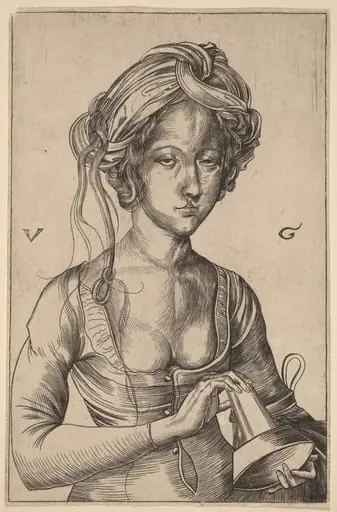 A Bust Figure of a Foolish Virgin Holding Her Inverted Lamp
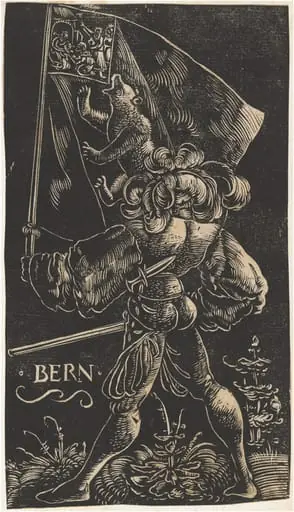 Standard-Bearer for the Canton of Bern
![Title Page for a Missal, with Satyr and Putti Border [verso], by Urs Graf I](https://artifactworldgallery.com/img/urs-graf-i--title-page-for-a-missal-with-satyr-and-putti-border-verso--df26a3e076a25bf5-w320.webp) Title Page for a Missal, with Satyr and Putti Border [verso]
Title Page for a Missal, with Satyr and Putti Border [verso]