Artwork
The Apostle James the Elder
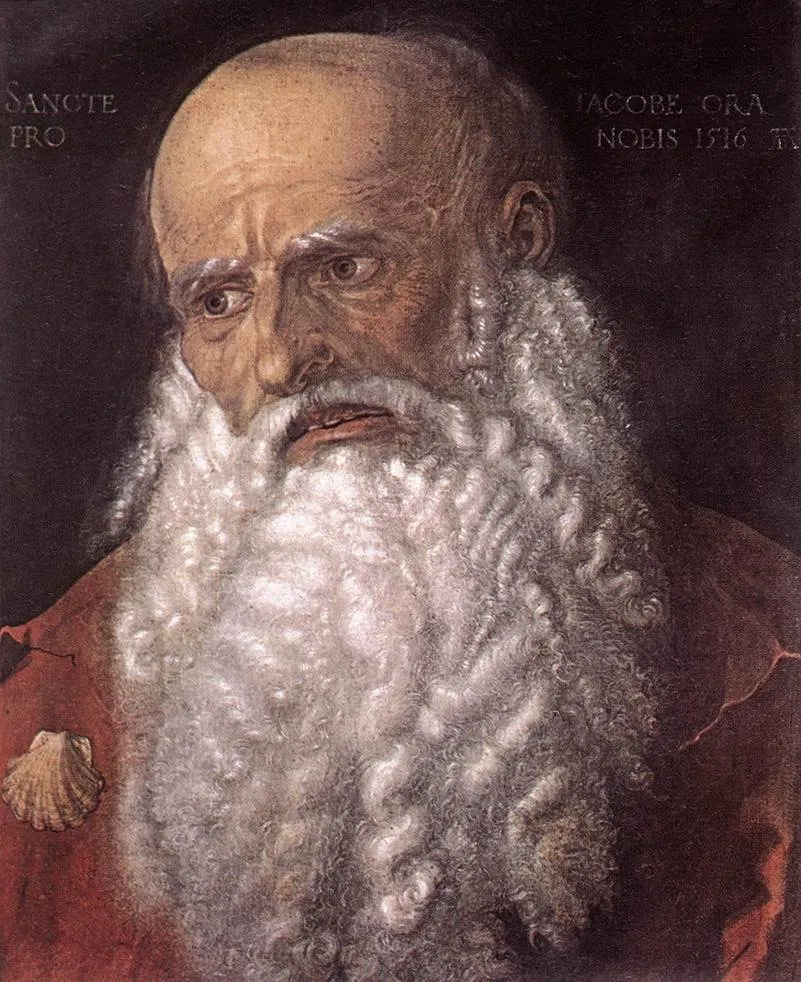
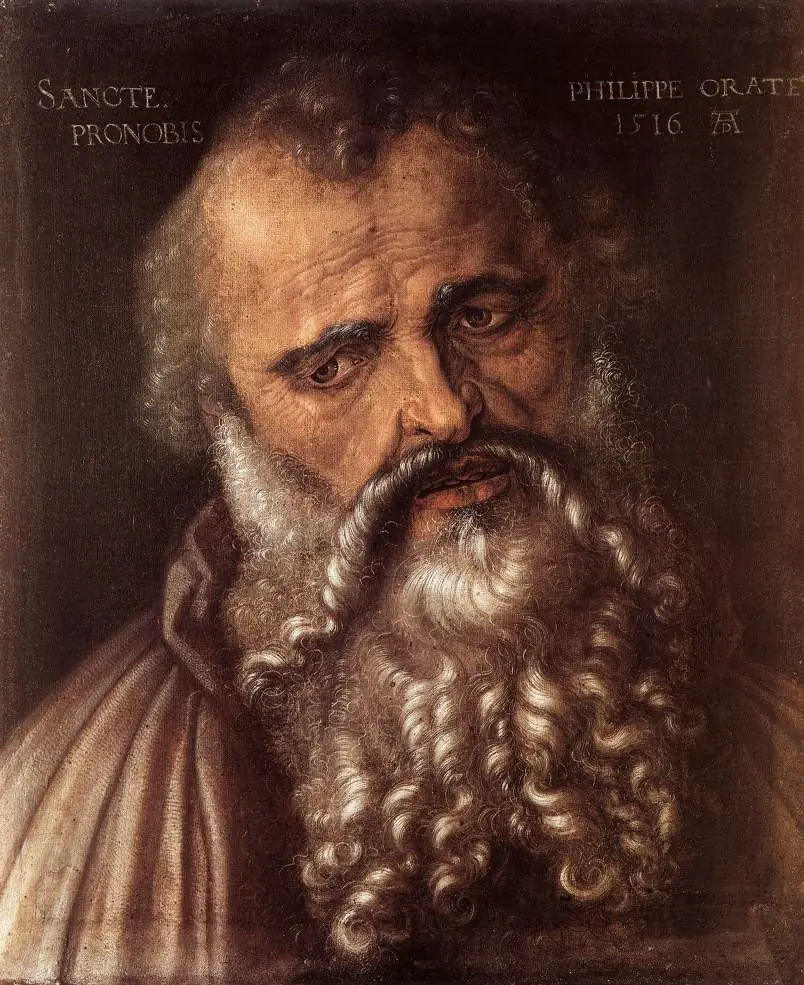
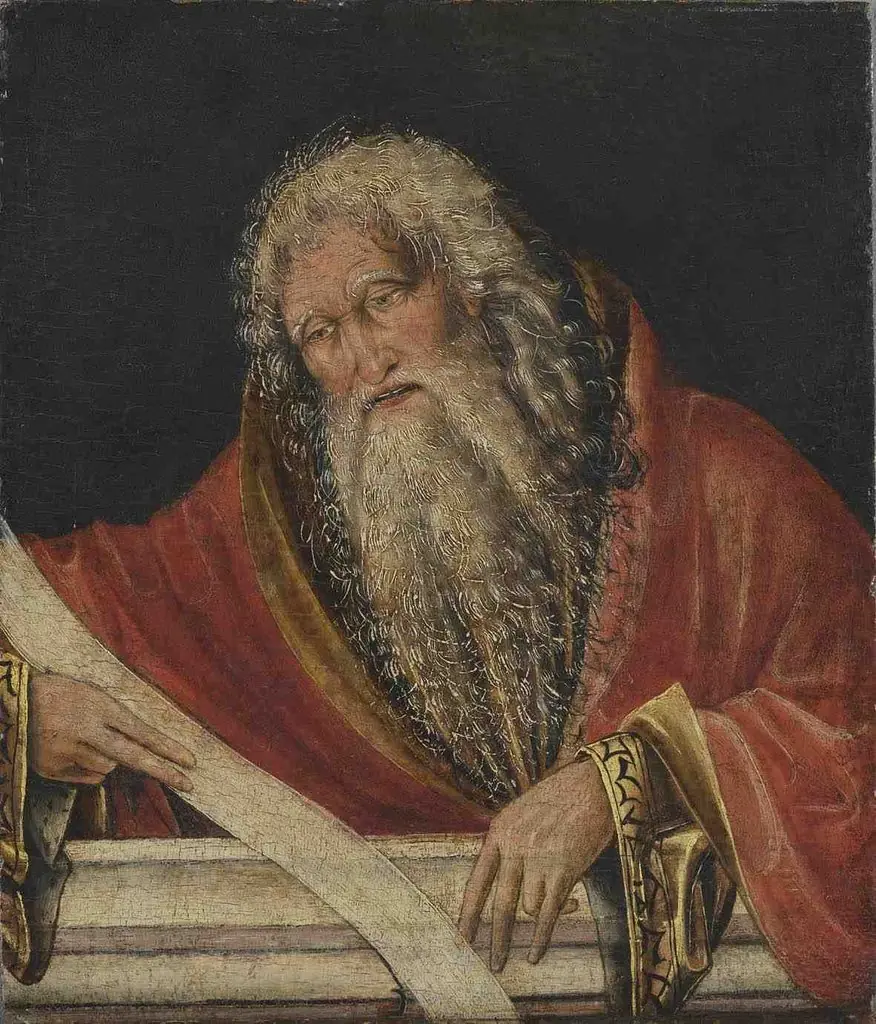
The Apostle James the Elder is an oil painting by the Northern Renaissance artist Albrecht Dürer. It dates from 1516 and is held in the collection of the Uffizi Gallery.
About this work
In the upper left corner of the painting, the words "SANCTE PRO" are inscribed, while the upper right corner reads "IACOBE ORA NOBIS 1516".
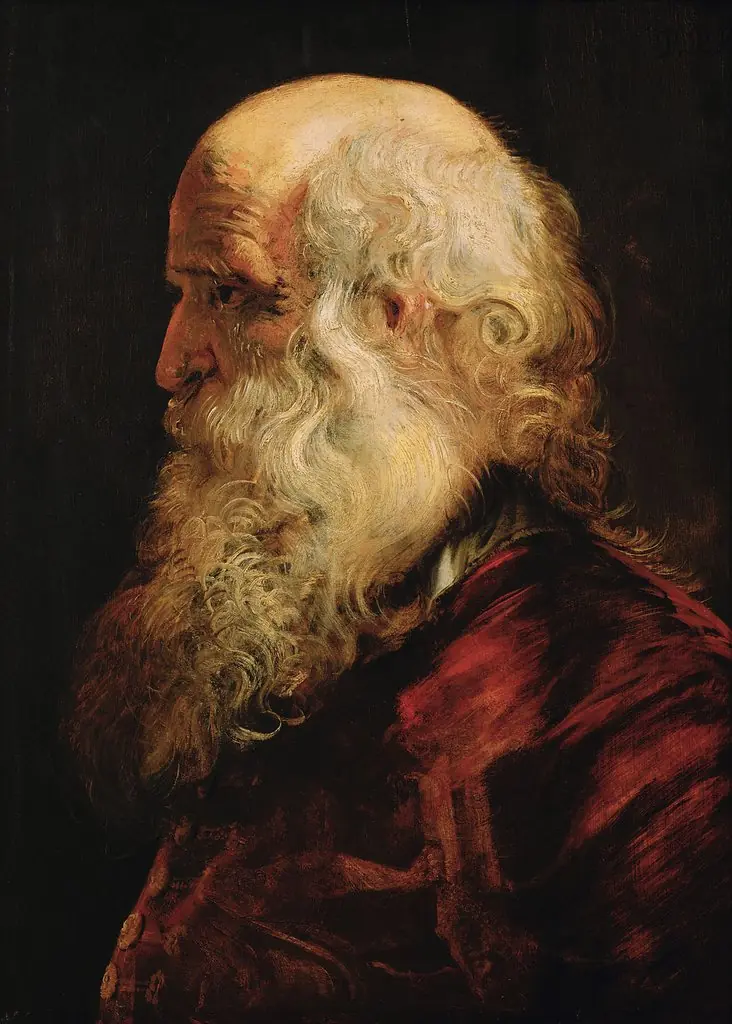
The painting depicts a man with a long white beard and a red robe, set against a dark background. He is balding, with a serious expression on his face. The man's eyes are cast downward, and his mouth is slightly open.
In the upper left corner of the painting, the words "SANCTE PRO" are inscribed, while the upper right corner reads "IACOBE ORA NOBIS 1516". The painting's use of chiaroscuro creates a sense of depth and dimensionality, drawing the viewer's eye to the subject's face.
The artist's attention to detail and use of lighting create a sense of realism, making the subject feel almost lifelike. To learn more about the artist's use of chiaroscuro, explore the technique of chiaroscuro.
Overview
Created in 1516, *The Apostle James the Elder* is an oil painting by Albrecht Dürer, a pivotal figure of the German Renaissance. The work is a religious portrait housed in the Uffizi Gallery.
Subject & Meaning
The painting portrays Saint James the Elder, distinguished by his long white beard, red robe, and contemplative demeanor against a dark backdrop. Inscriptions in the upper corners, including the date 1516, frame the solemn figure.
Technique & Style
Dürer employed chiaroscuro to achieve depth, focusing attention on the subject's face. The meticulous rendering and lighting effects contribute to a realistic, lifelike quality.
History & Provenance
By 1516, Dürer, born in Nuremberg in 1471, had gained European prominence, supported by Emperor Maximilian I. His practice spanned woodcuts, engravings, and altarpieces before creating this piece.
Context
As a religious genre piece, *The Apostle James the Elder* reflects Dürer's ability to balance religious themes with emerging Renaissance artistic innovations.
Legacy
This painting demonstrates Dürer's influence on Renaissance art, blending traditional religious subjects with advanced techniques that would impact subsequent European artistic practices.
Artist & collection
Artist
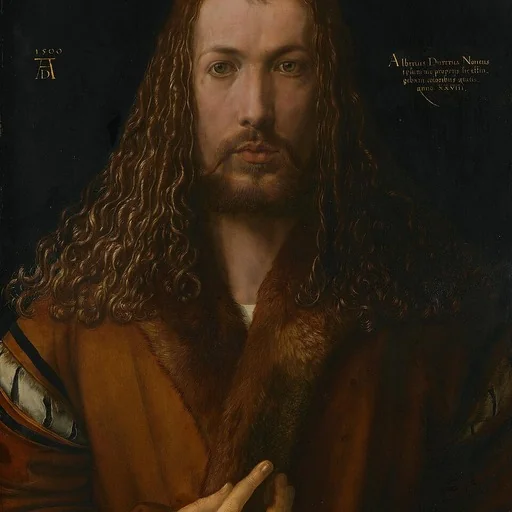
Albrecht Dürer spent his life in Nuremberg, a busy German city where artists traded prints like currency.

![Madonna and Child [obverse], by Albrecht Dürer](https://artifactworldgallery.com/img/albrecht-durer--madonna-and-child-obverse--d7b8ebf05d22ebe5-w320.webp)
![Lot and His Daughters [reverse], by Albrecht Dürer](https://artifactworldgallery.com/img/albrecht-durer--lot-and-his-daughters-reverse--b4ebf9b282faa17a-w320.webp)