Artwork
Way to Calvary
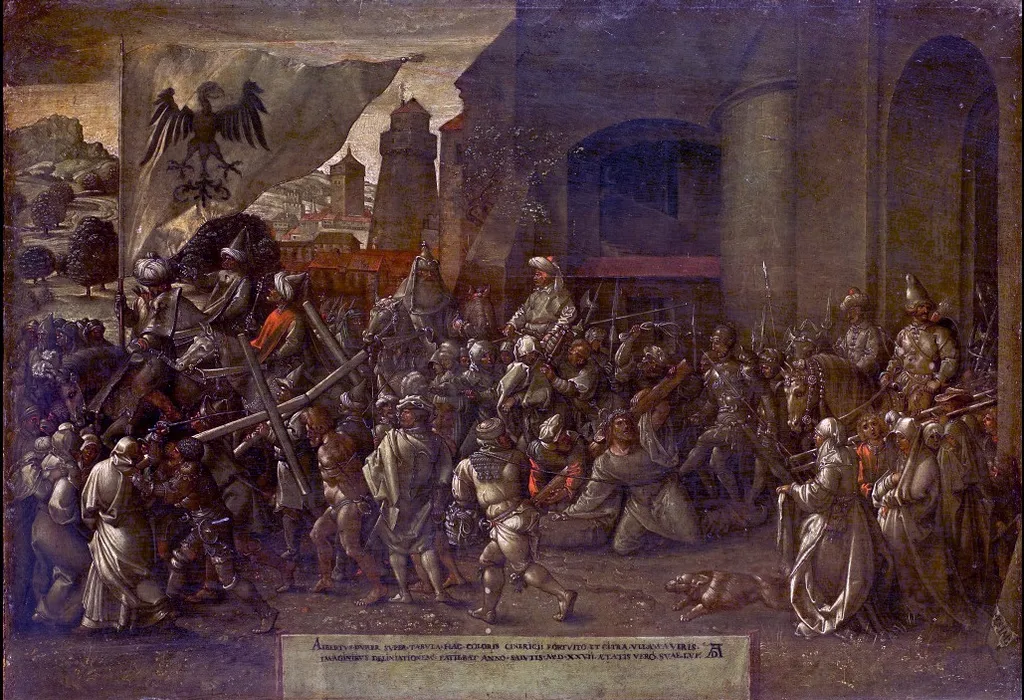
Way to Calvary is an oil painting by the Northern Renaissance artist Albrecht Dürer. It dates from 1527 and is held in the collection of the Accademia Carrara.
About this work
Overview
Though best known for his prints, Dürer produced a limited number of paintings, this one among them.
Painted in 1527, *Way to Calvary* is an oil-on-panel work by Albrecht Dürer, reflecting his engagement with religious narrative during the later phase of his career. Though best known for his prints, Dürer produced a limited number of paintings, this one among them. It resides in the Accademia Carrara in Bergamo, Italy, and exemplifies his synthesis of Northern European detail with Italian compositional principles learned during his travels.
Subject & Meaning
The painting portrays Christ at the moment of carrying the cross toward Golgotha, a scene drawn from the Passion narrative. His physical strain is rendered with quiet intensity, emphasizing human suffering over theatrical drama. Surrounding figures—soldiers, spectators, and mourners—form a heterogeneous crowd, suggesting the varied human responses to sacred tragedy. The absence of divine intervention underscores the solitude of the moment.
Technique & Style
Dürer employs chiaroscuro to model form and direct attention to Christ’s figure, whose white robe contrasts with the muted tones of the crowd. Brushwork is precise yet restrained, with attention to texture in fabric, armor, and stone. The background cityscape, rendered with architectural clarity, anchors the scene in a tangible world, reinforcing the earthly gravity of the event rather than its supernatural dimensions.
History & Provenance
Commissioned or acquired during Dürer’s later years, the painting entered the Accademia Carrara’s collection in the 19th century after passing through private Italian holdings. Its survival is notable, given the fragility of panel paintings and the upheavals of the Reformation, which diminished demand for Catholic devotional imagery in Protestant regions. Dürer’s reputation helped preserve the work despite shifting religious climates.
Context
Created during a period of religious turmoil, the painting reflects Dürer’s personal faith amid the Protestant Reformation. Though he aligned with Lutheran ideas, he retained a deep respect for traditional iconography. This work stands apart from his more widely circulated prints, offering a quieter, more intimate meditation on suffering, possibly intended for private devotion rather than public display.
Legacy
*Way to Calvary* remains a rare example of Dürer’s painted output, illustrating his ability to adapt his graphic precision to the medium of oil. It influenced later Northern artists seeking to balance emotional gravity with formal control. While not as widely reproduced as his engravings, it is studied for its restrained humanity and technical discipline within the broader context of Renaissance religious art.
Artist & collection
Artist
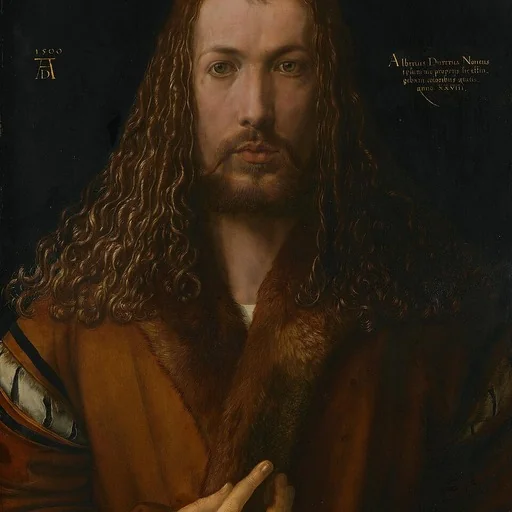
Albrecht Dürer spent his life in Nuremberg, a busy German city where artists traded prints like currency.

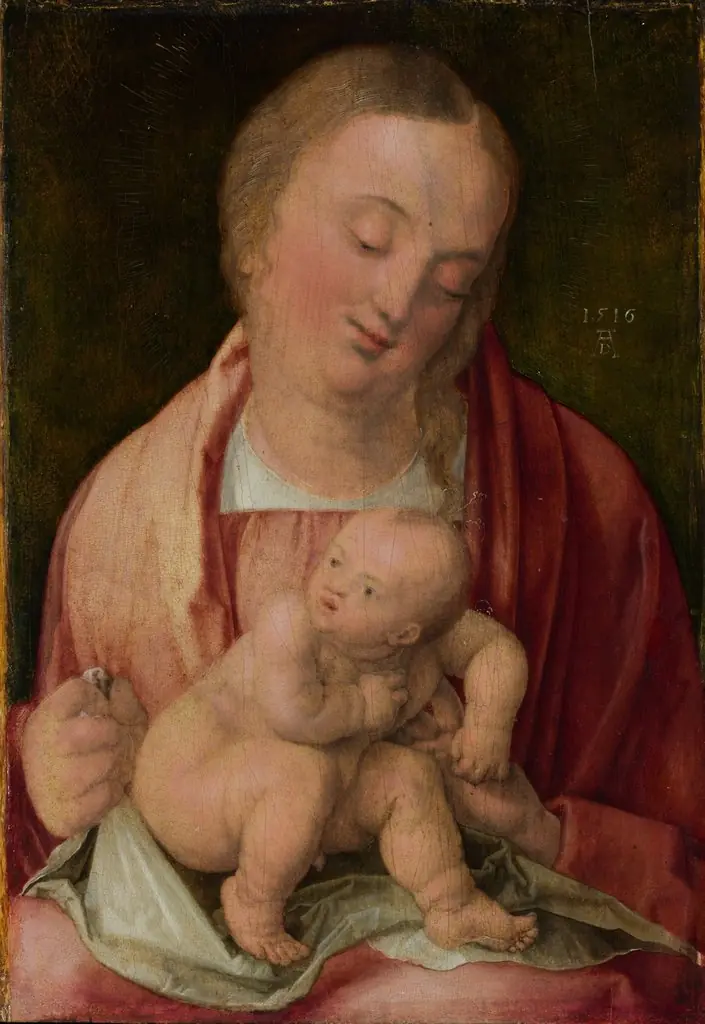
![Madonna and Child [obverse], by Albrecht Dürer](https://artifactworldgallery.com/img/albrecht-durer--madonna-and-child-obverse--d7b8ebf05d22ebe5-w320.webp)
![Lot and His Daughters [reverse], by Albrecht Dürer](https://artifactworldgallery.com/img/albrecht-durer--lot-and-his-daughters-reverse--b4ebf9b282faa17a-w320.webp)
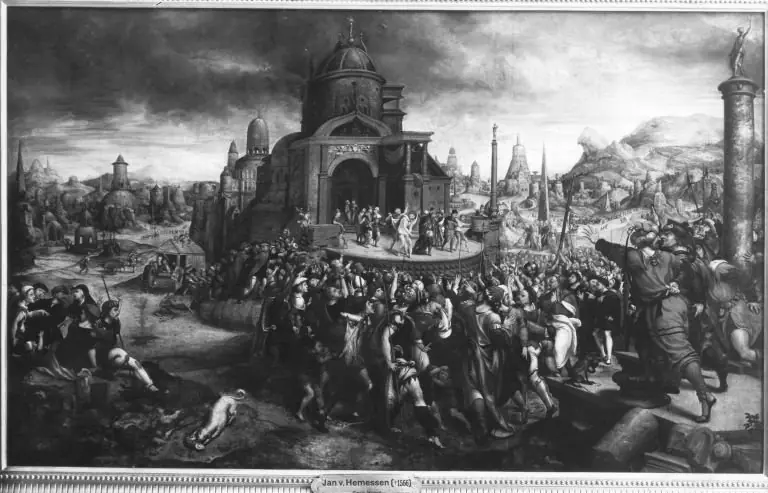 Ecce homo
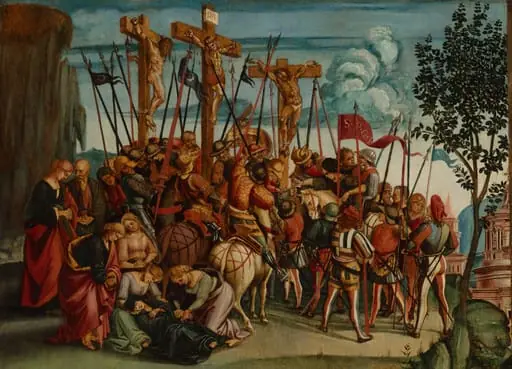 The Crucifixion
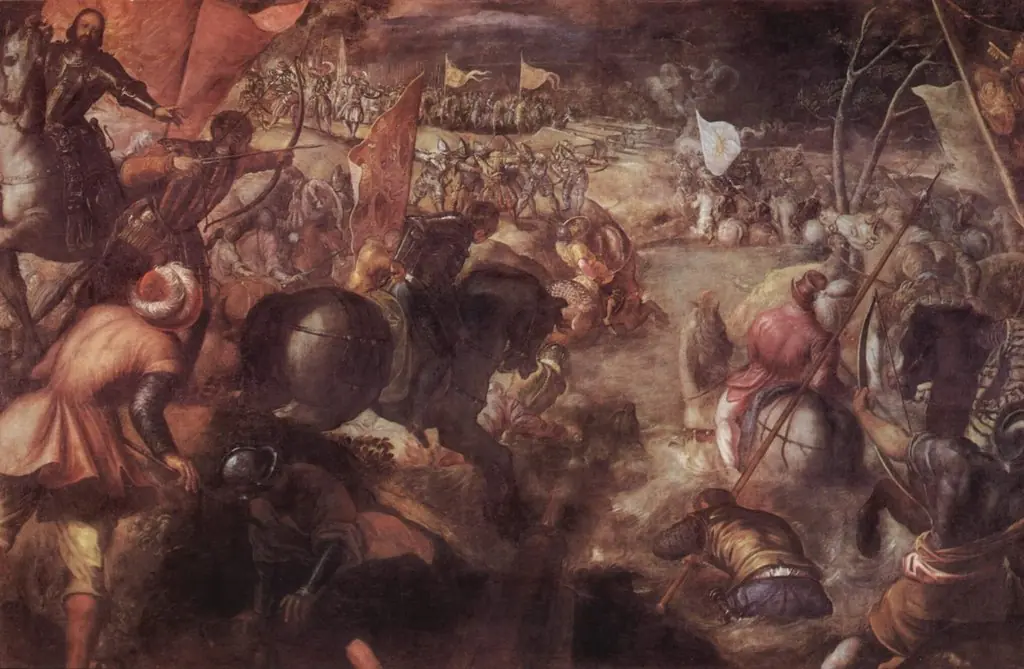 The battle of Taro
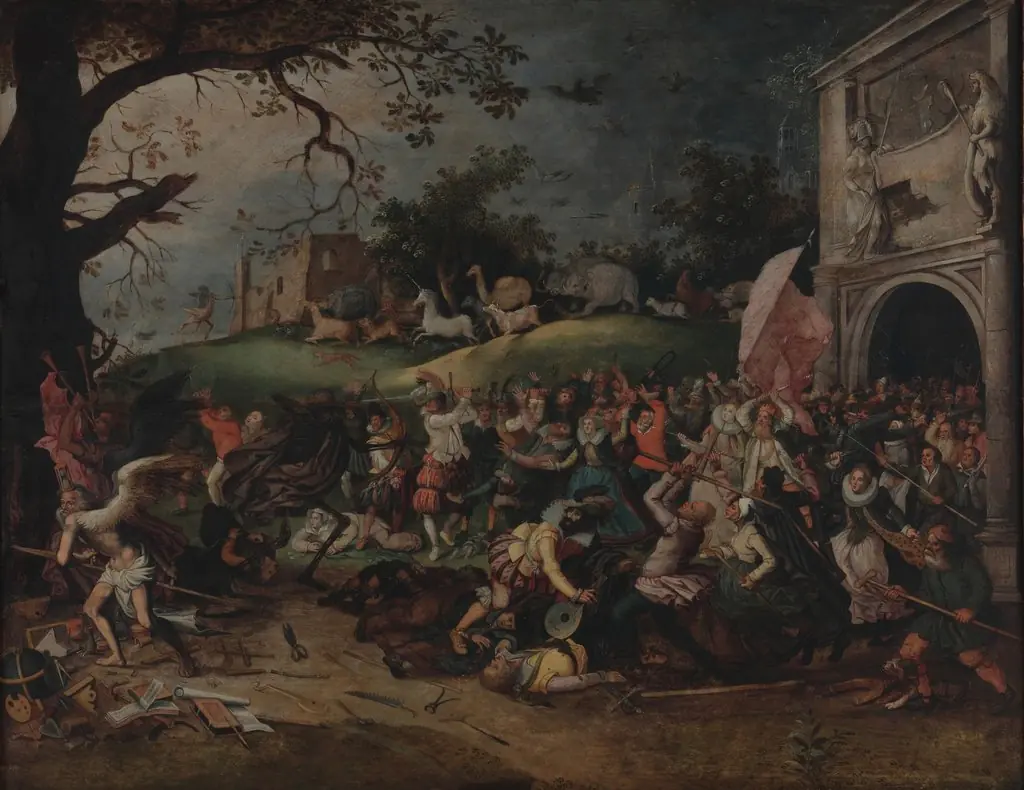 The fight against death and time
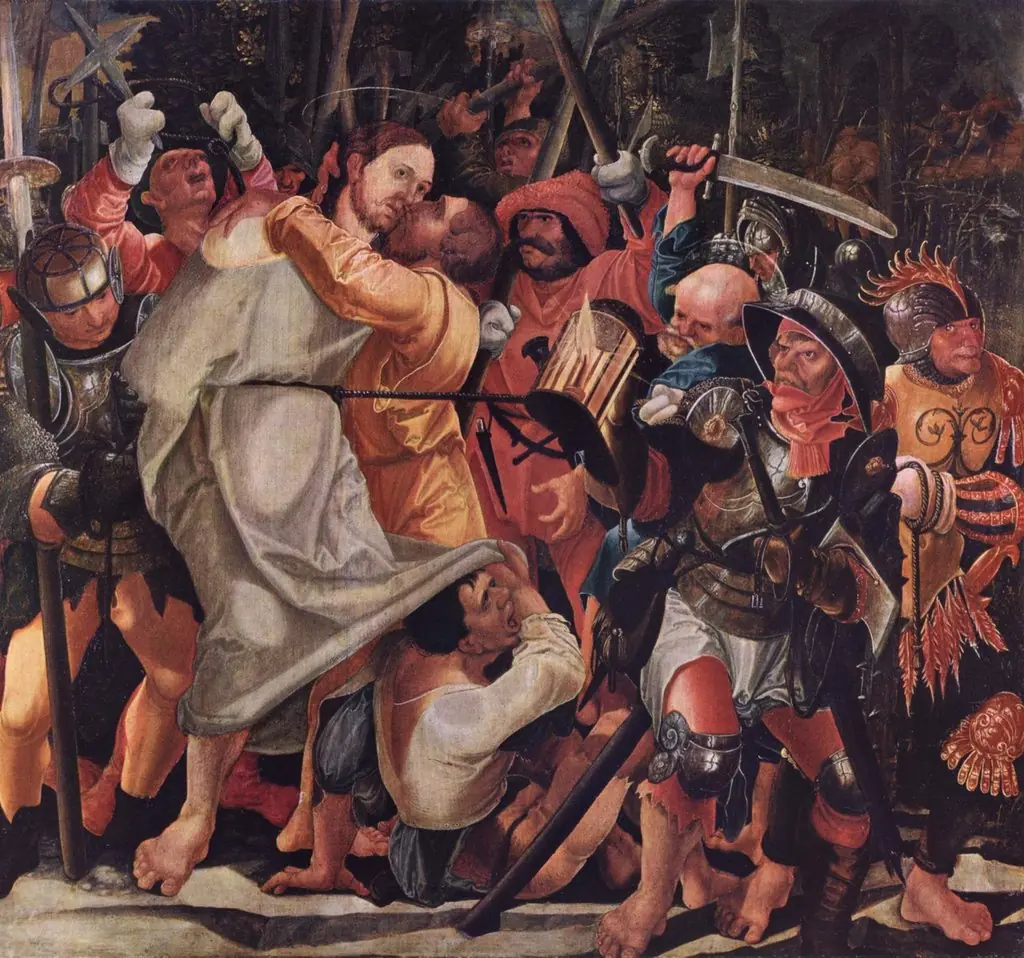 The Arrest of Christ
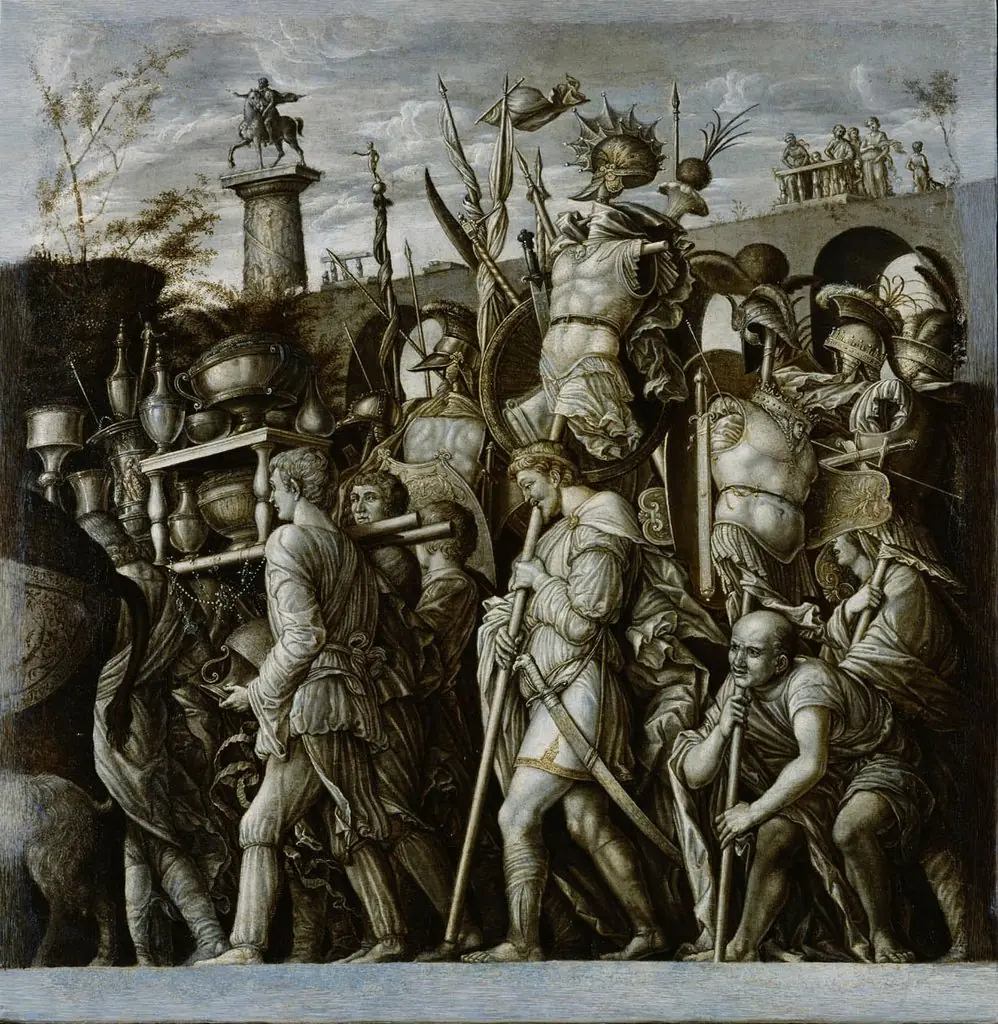 Triumphs of Caesar: Corselet Bearers
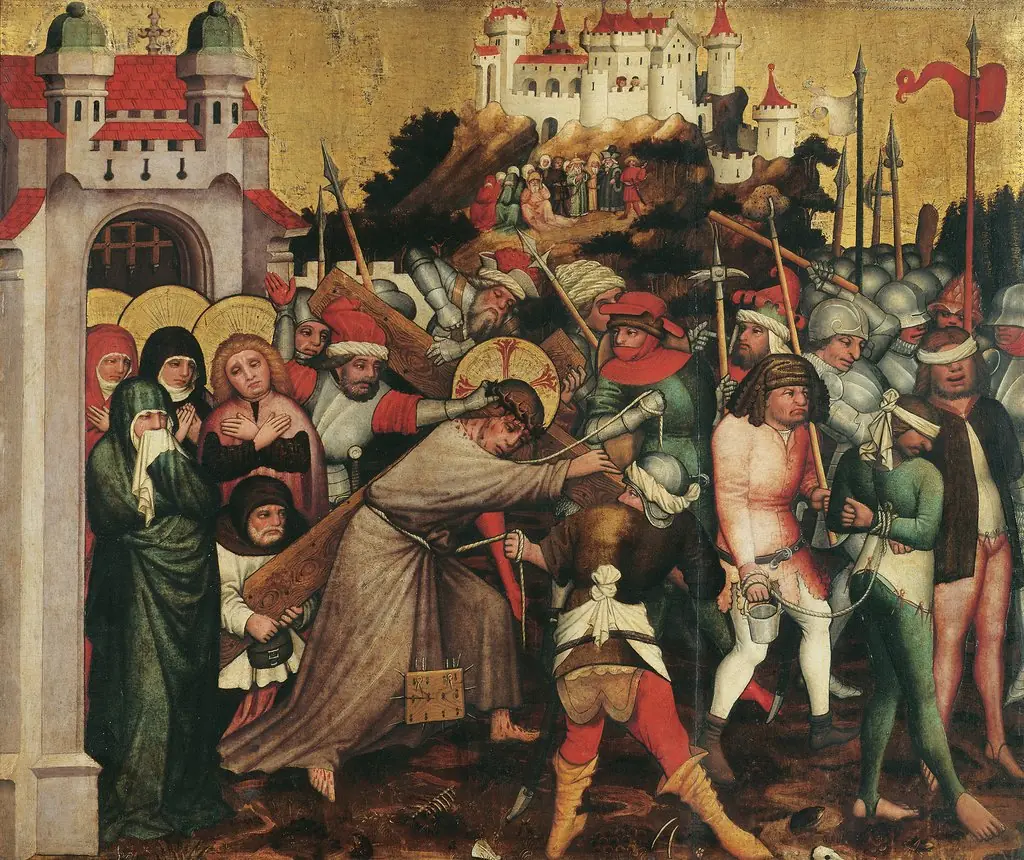 Christ carrying the cross
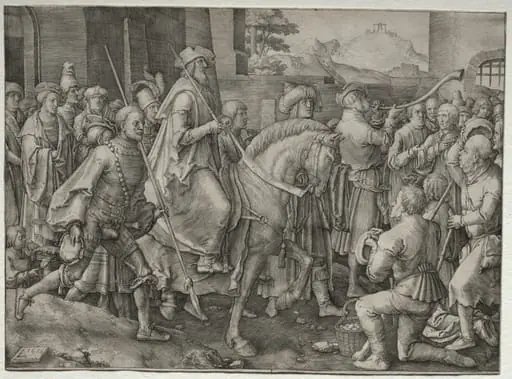 The Triumph of Mordecai
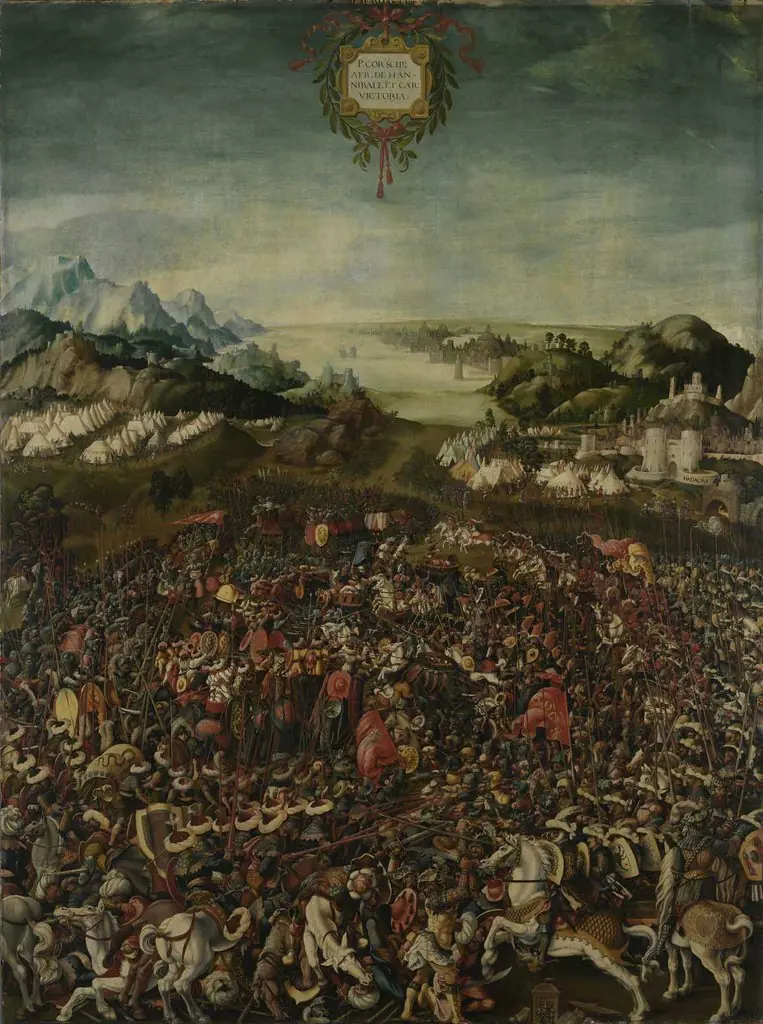 Historienzyklus: Der Sieg des P. Cornelius Scipio über Hannibal in der Schlacht bei Zama
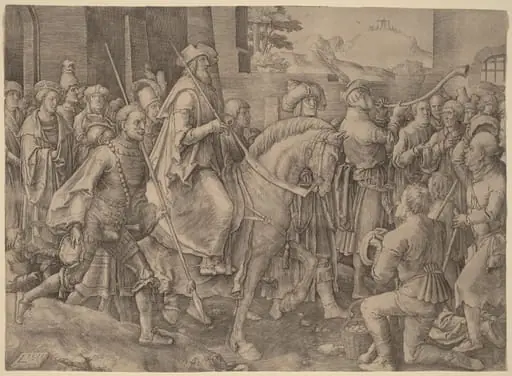 The Triumph of Mordecai
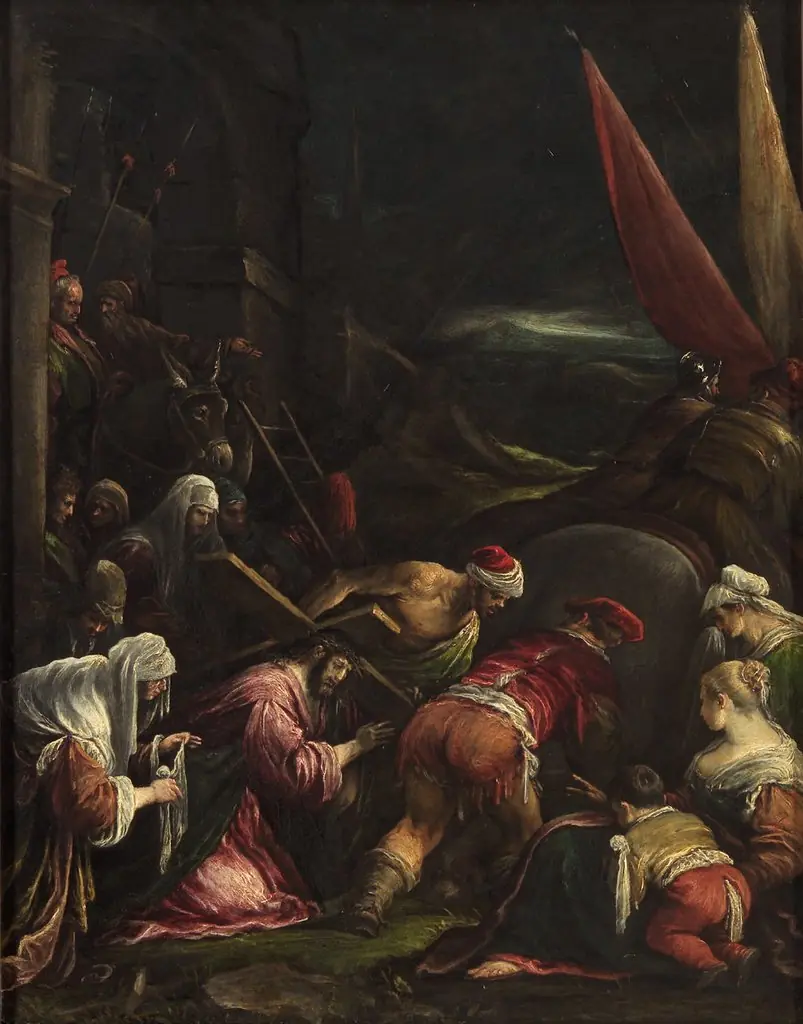 Christ Carrying the Cross meets with Veronica
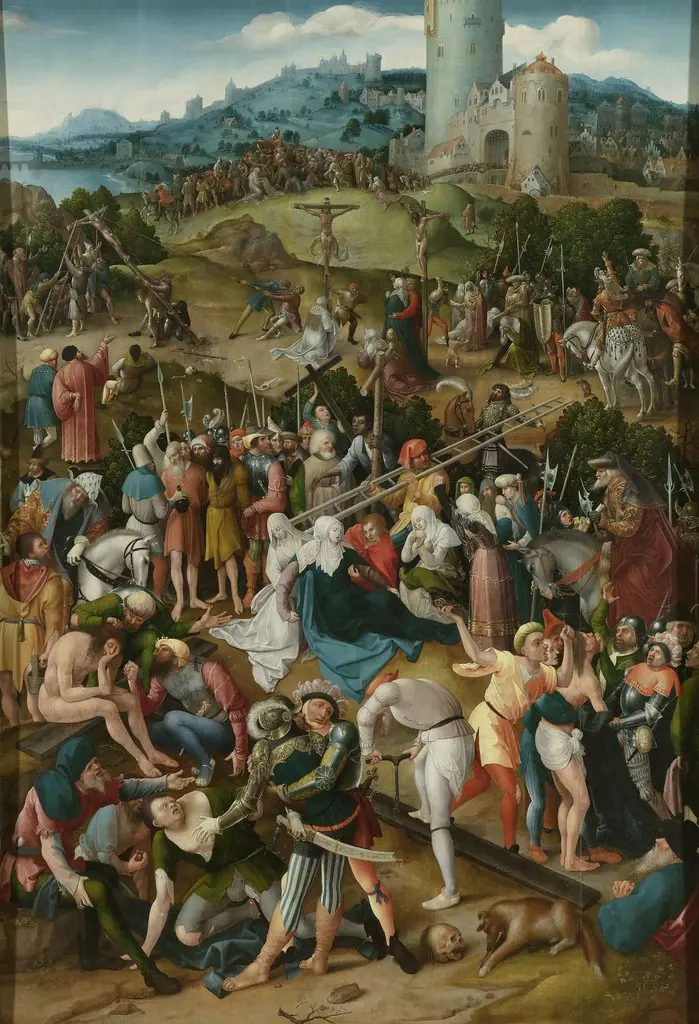 Calvary