Artwork
Philip of Alsace
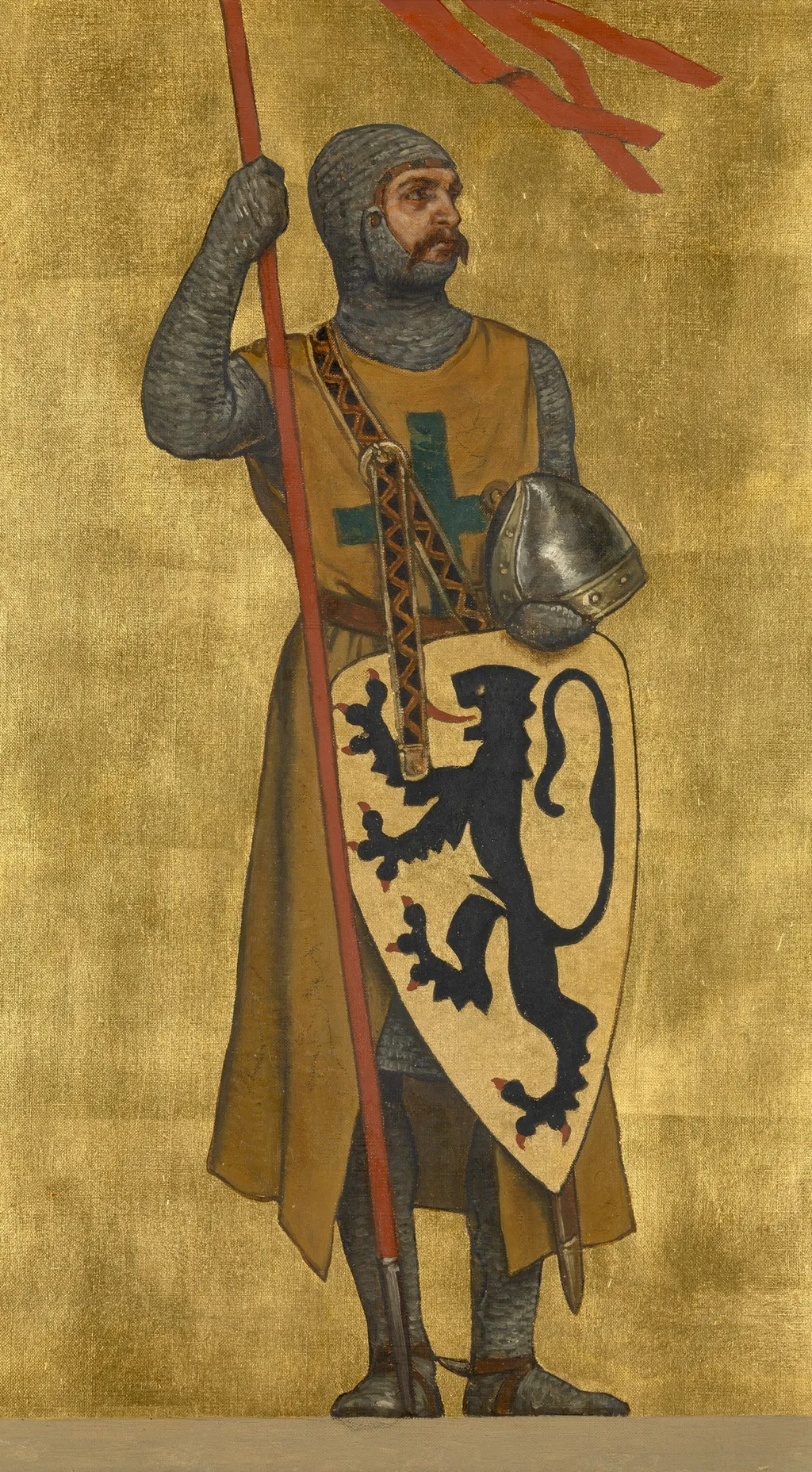
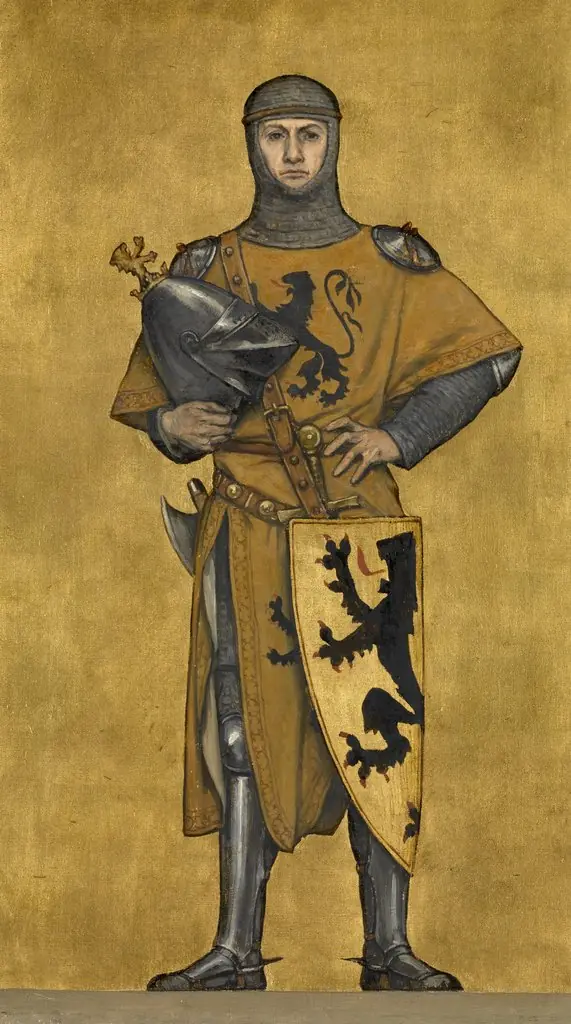
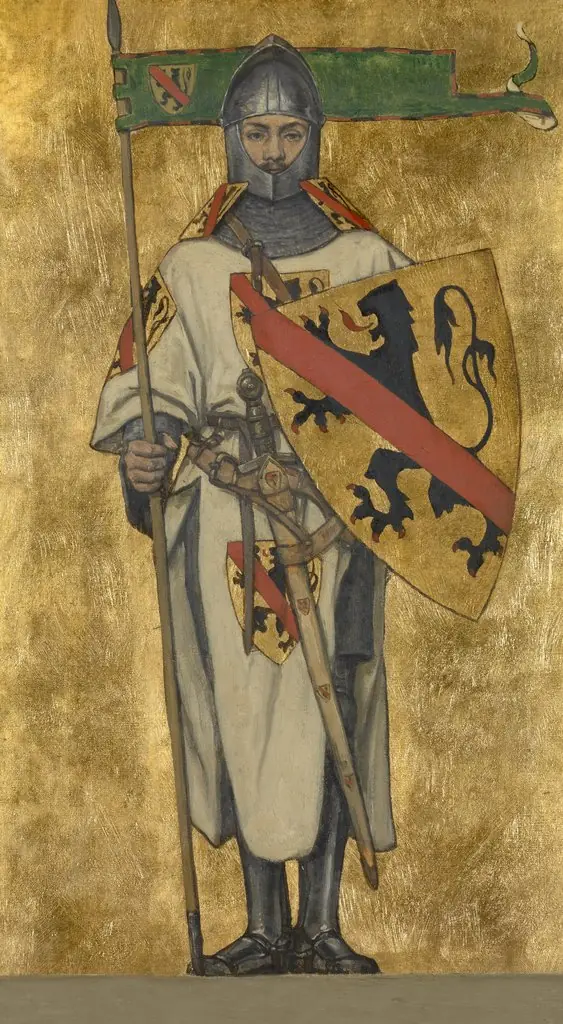
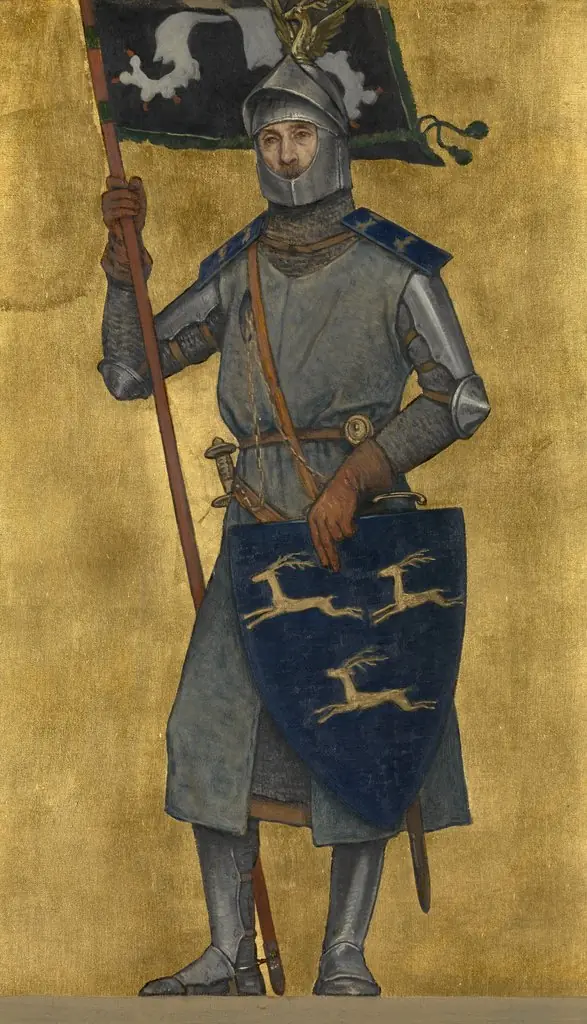
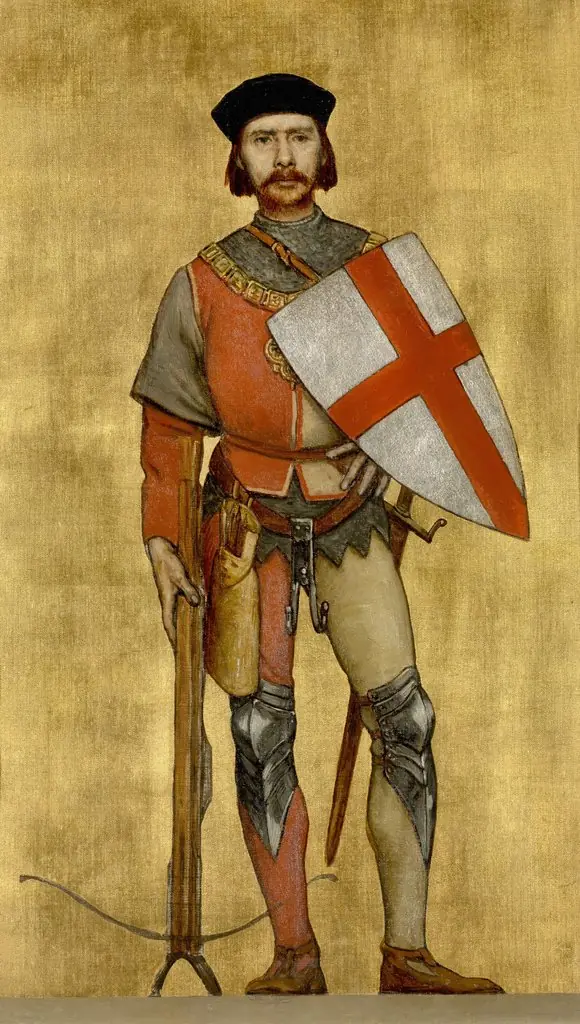
Philip of Alsace is an oil painting by the Post-Impressionist artist Albrecht De Vriendt. It dates from 1895 and is held in the collection of the Royal Museum of Fine Arts Antwerp.
About this work
Overview
The work is part of the Royal Museum of Fine Arts Antwerp’s collection and reflects the artist’s engagement with historical narrative painting.
Albrecht De Vriendt painted *Philip of Alsace* in 1895 using oil on canvas. The work is part of the Royal Museum of Fine Arts Antwerp’s collection and reflects the artist’s engagement with historical narrative painting. De Vriendt, active in late 19th-century Belgium, was known for meticulous figure studies and a revival of romanticized historical themes, aligning with broader national efforts to articulate cultural identity through art.
Subject & Meaning
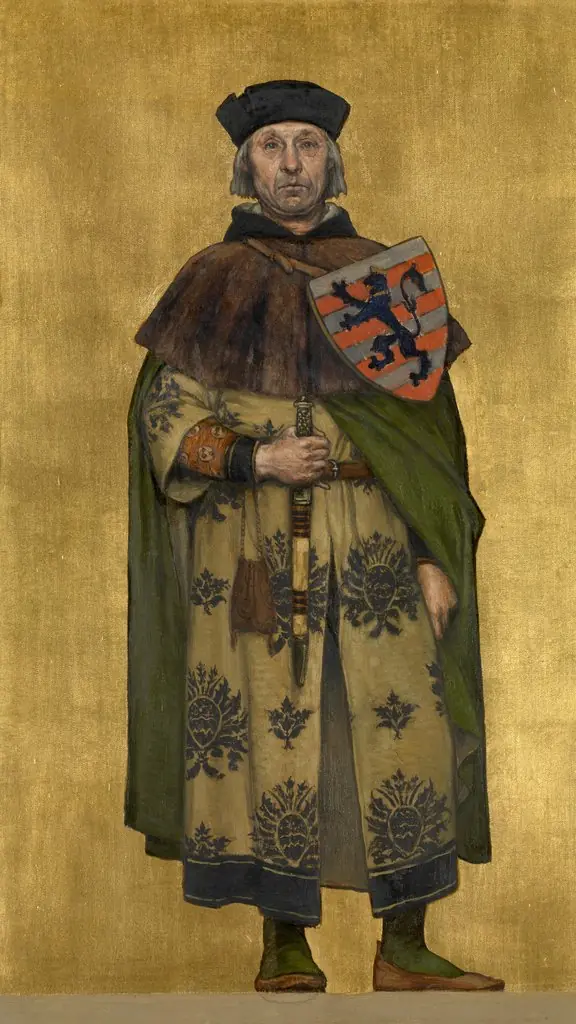
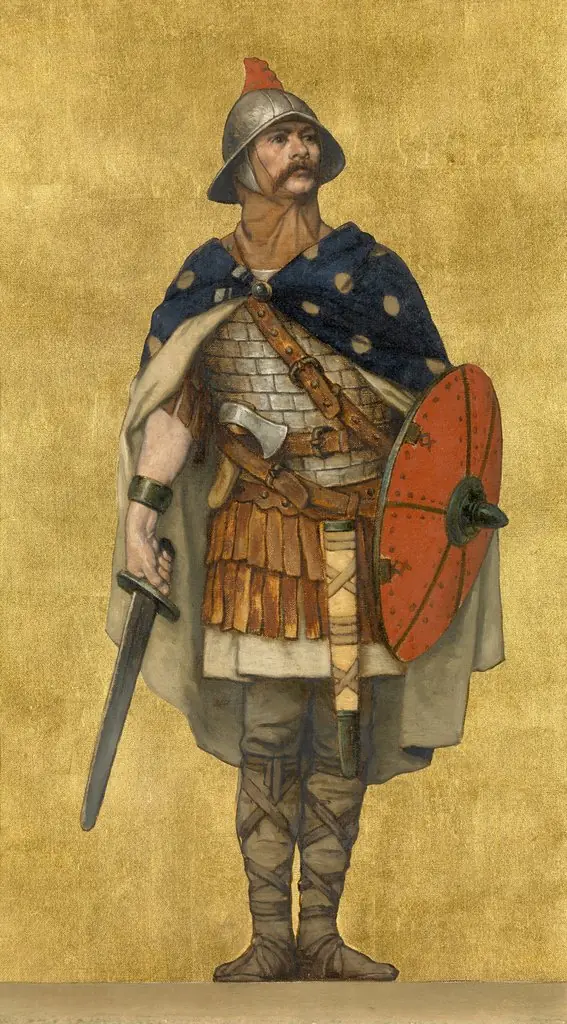
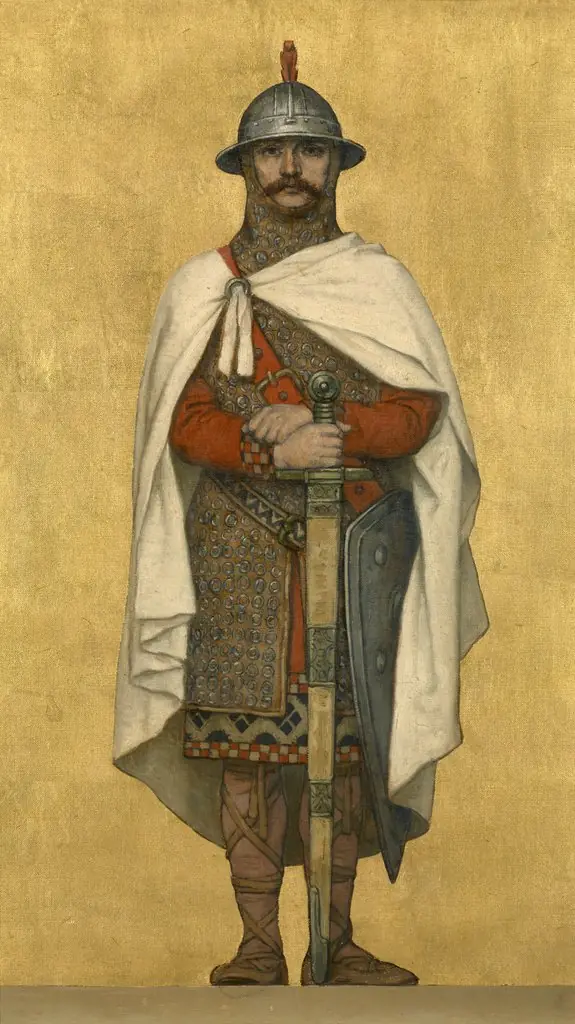
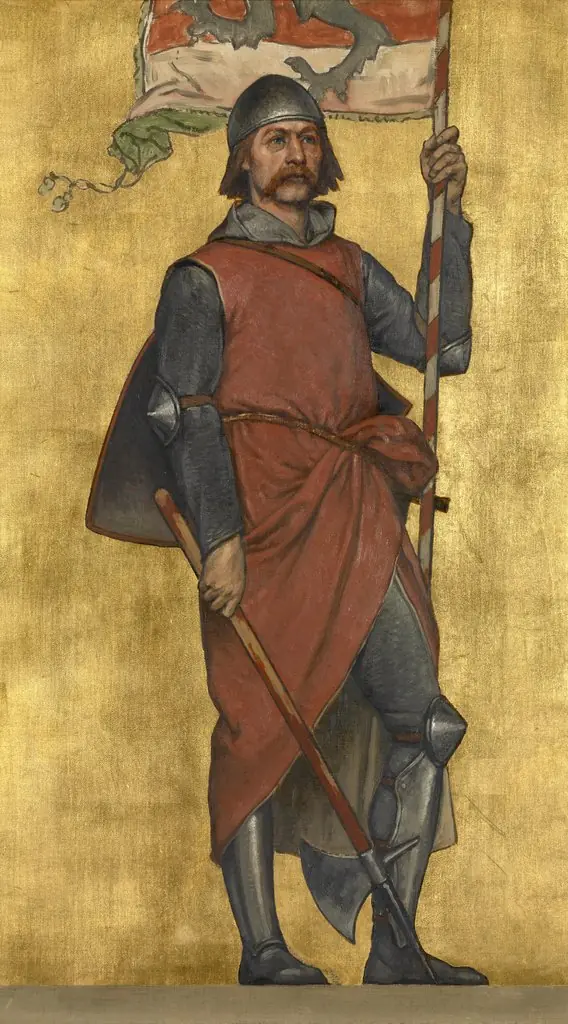
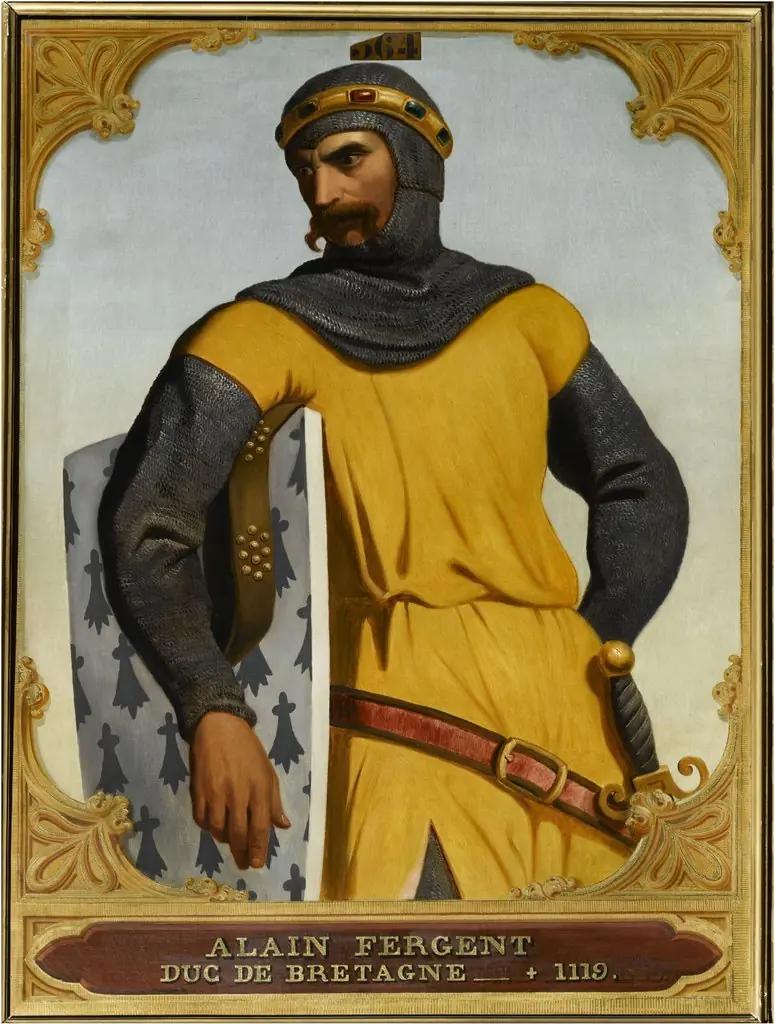
The painting portrays Philip of Alsace, a 12th-century Count of Flanders and crusader, depicted in full armor holding a red banner. His posture conveys solemn authority, while the flag suggests leadership in a military or religious campaign. The attire—yellow tunic with a green cross—references medieval heraldry, reinforcing his historical role as a noble warrior. The image does not depict action but rather a moment of dignified stillness, evoking legacy rather than battle.
Technique & Style
De Vriendt employed detailed brushwork to render the textures of chain mail, fabric, and metal, emphasizing material realism without overt naturalism. The warm golden background unifies the composition and enhances the luminosity of the knight’s tunic. Color choices are deliberate but restrained, avoiding theatricality. The style bridges academic precision with the tonal sensitivity of post-impressionist approaches, prioritizing clarity and symbolic presence over emotional intensity.
History & Provenance
Completed in 1895, the painting entered the collection of the Royal Museum of Fine Arts Antwerp shortly after its creation. De Vriendt, a respected figure in Belgian artistic circles, was active in institutions promoting historical art, and this work was likely commissioned or exhibited as part of a broader cultural initiative. Its preservation in a public museum underscores its recognition as a representative example of late 19th-century Belgian historical painting.
Context
In the decades following Belgian independence, artists like De Vriendt contributed to a national narrative through historical subjects. The depiction of medieval figures such as Philip of Alsace served to connect modern Belgium with a chivalric past. This painting aligns with the monumentalist movement’s emphasis on civic virtue and collective memory, reflecting a period when art was used to reinforce national identity amid political and social change.
Legacy
Though not widely reproduced outside institutional settings, *Philip of Alsace* remains a key example of De Vriendt’s commitment to historical accuracy and formal discipline. It illustrates how Belgian artists of the era balanced romantic idealism with scholarly detail. The work continues to inform scholarly discussions on 19th-century historical painting in Northern Europe, particularly regarding the intersection of art, nationalism, and medieval revivalism.
Artist & collection
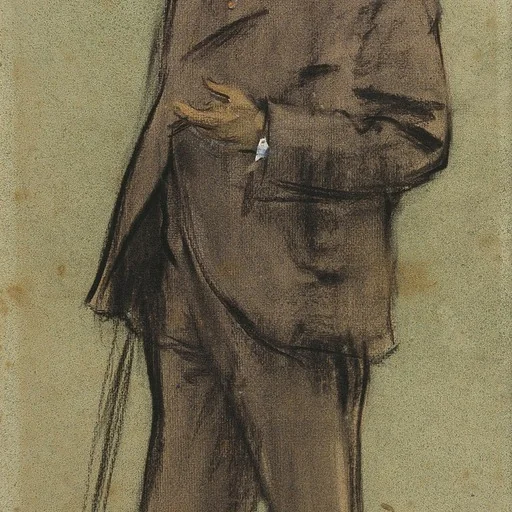
Artist
Albrecht Frans Lieven De Vriendt or Albrecht De Vriendt (In French-language publications referred to as Albert De Vriendt or Albert François Lieven De Vriendt) (Ghent, 8 December 1843 – Antwerp, 14 October 1900) was a…