Artwork
Large Wedding Dancers
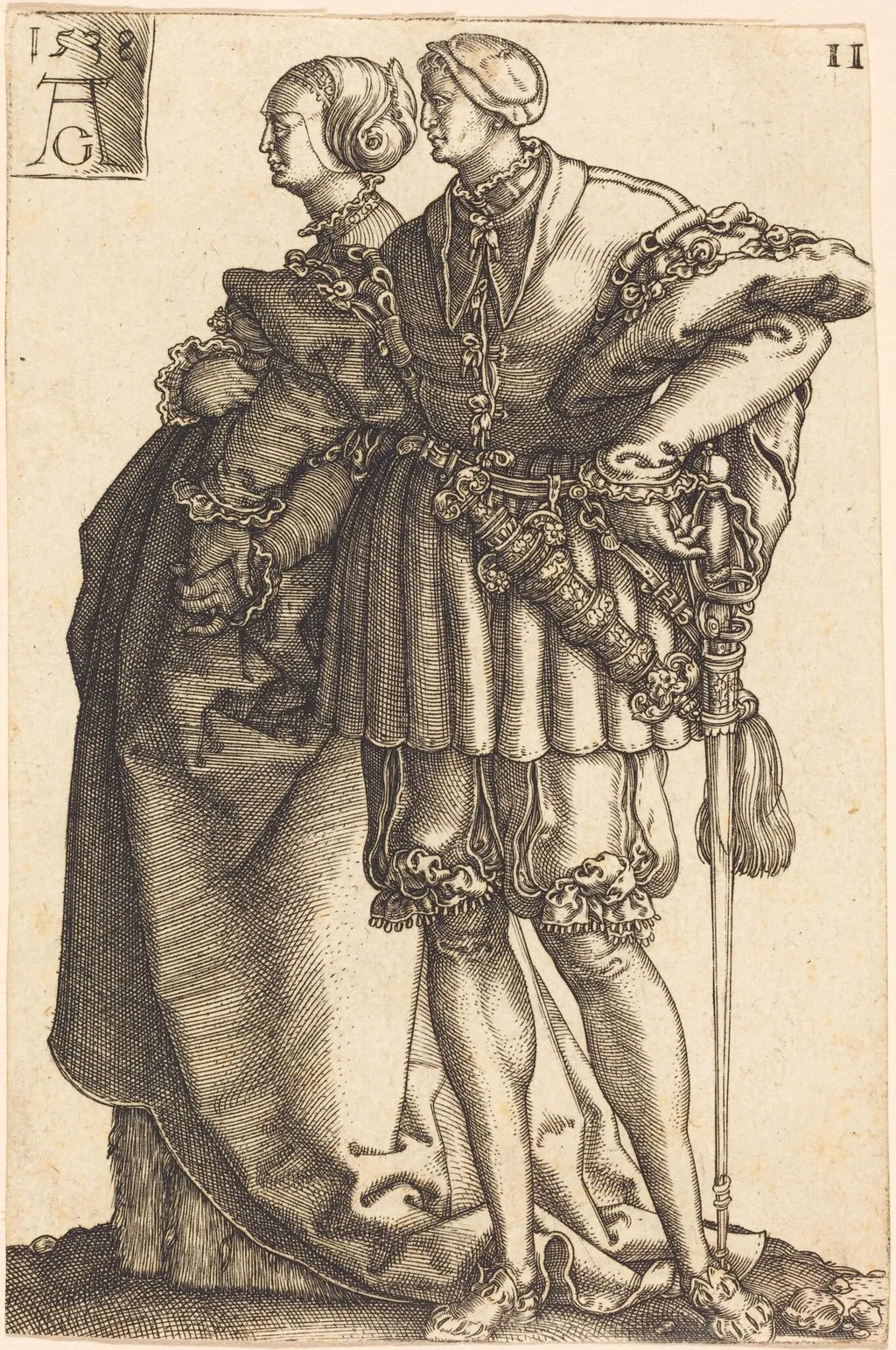
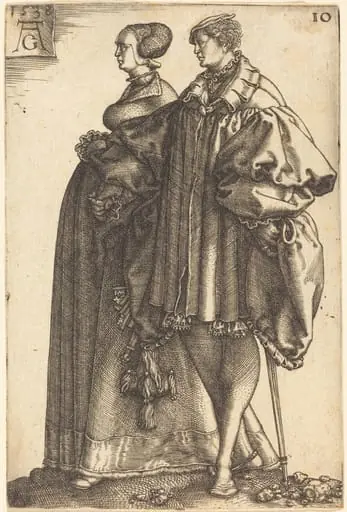
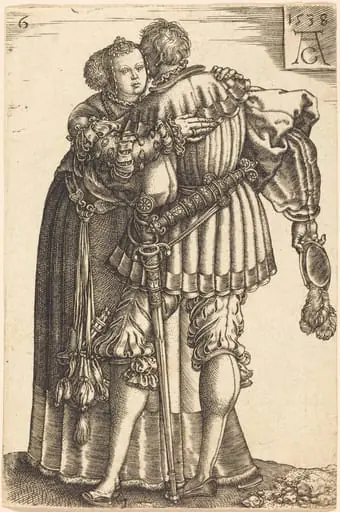
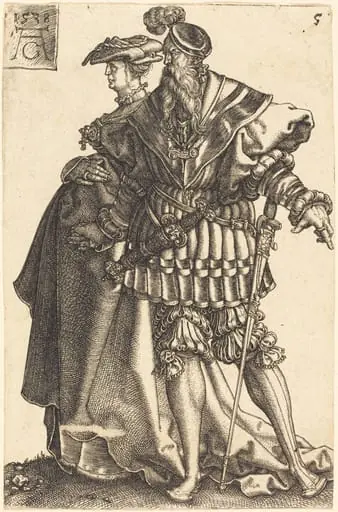
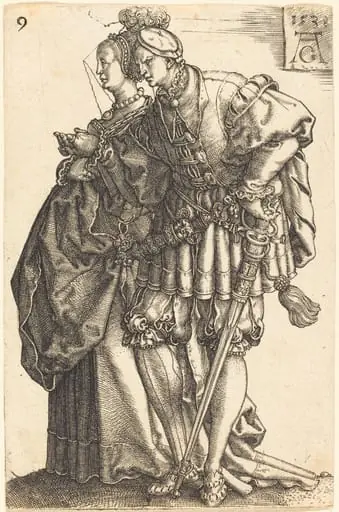
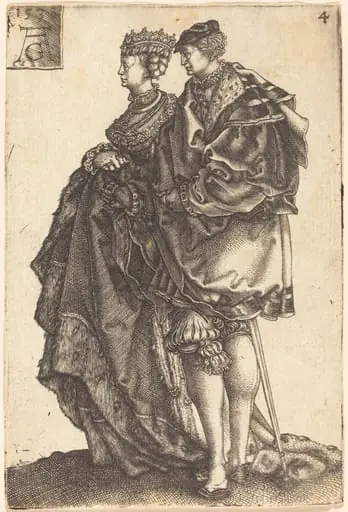
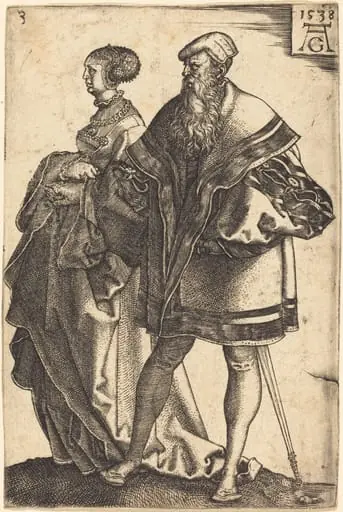
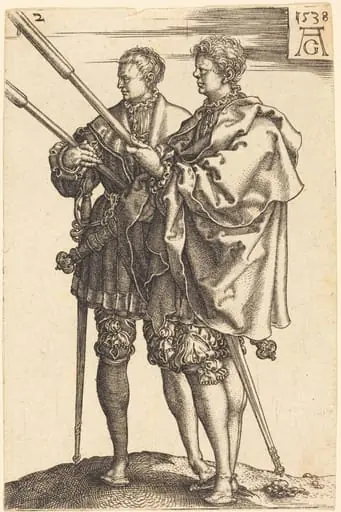
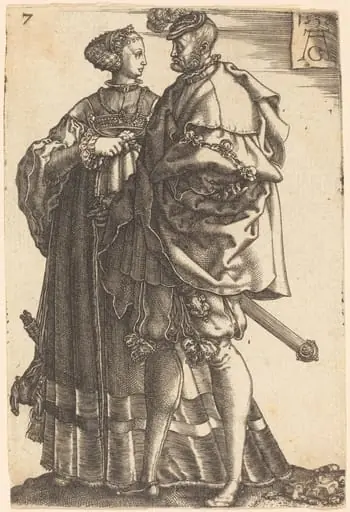
Large Wedding Dancers is an ink print by the Northern Renaissance artist Heinrich Aldegrever. It dates from 1538 and is held in the collection of the National Gallery of Art.
About this work
Overview
Created in 1538 by the German artist Heinrich Aldegrever, this engraving depicts a pair of figures in ceremonial attire, engaged in a formal dance.
Created in 1538 by the German artist Heinrich Aldegrever, this engraving depicts a pair of figures in ceremonial attire, engaged in a formal dance. Executed in the intaglio technique, the work belongs to a body of small-scale prints produced during the early 16th century, a period marked by refined graphic artistry in Central Europe. Aldegrever, associated with the so-called Little Masters, specialized in intricate compositions that captured everyday rituals with precision.
Subject & Meaning
The figures appear to represent a bride and groom in a wedding procession, their solemn expressions and elaborate garments suggesting ritual rather than unrestrained celebration. The man holds a staff adorned with fabric, a possible symbol of authority or ceremonial role, while the woman’s high-necked, ruffled dress reflects regional dress codes of the time. The composition emphasizes formality and social custom, aligning with the cultural weight of marriage in early modern German communities.
Technique & Style
The image is rendered through fine-line engraving on metal, with closely spaced parallel strokes modeling volume and texture. Aldegrever’s meticulous control of line creates depth in fabric folds, hair, and footwear without relying on tone or wash. The absence of shading beyond linear hatching reflects the constraints and strengths of the medium, showcasing his ability to convey detail and movement through precision rather than contrast.
History & Provenance
Aldegrever produced this print during his active years in Paderborn, where he worked alongside other engravers influenced by Dürer’s legacy. Though few records survive from the period, the print was likely circulated among collectors and artisans in northern Germany. Its survival in multiple institutional collections suggests it was valued for its technical execution and social documentation.
Context
In the decades following the Reformation, secular themes in printmaking gained traction as religious imagery faced restrictions. Scenes of marriage, dance, and civic life became popular subjects among printmakers seeking new audiences. Aldegrever’s work fits within this shift, offering a quiet, dignified portrayal of communal ritual rather than overt festivity, reflecting the restrained aesthetic of Protestant northern Europe.
Legacy
Though overshadowed by larger figures of the Northern Renaissance, Aldegrever’s prints contributed to the development of narrative engraving in Germany. His focus on minute detail and social observation influenced later generations of printmakers interested in documenting daily life. *Large Wedding Dancers* remains a representative example of how small-format prints served as both art and cultural record in the 16th century.
Artist & collection

Artist
Heinrich Aldegrever or Aldegraf was a German painter and engraver. He was one of the "Little Masters", the group of German artists making small old master prints in the generation after Albrecht Dürer.