Artwork
The Annunciation
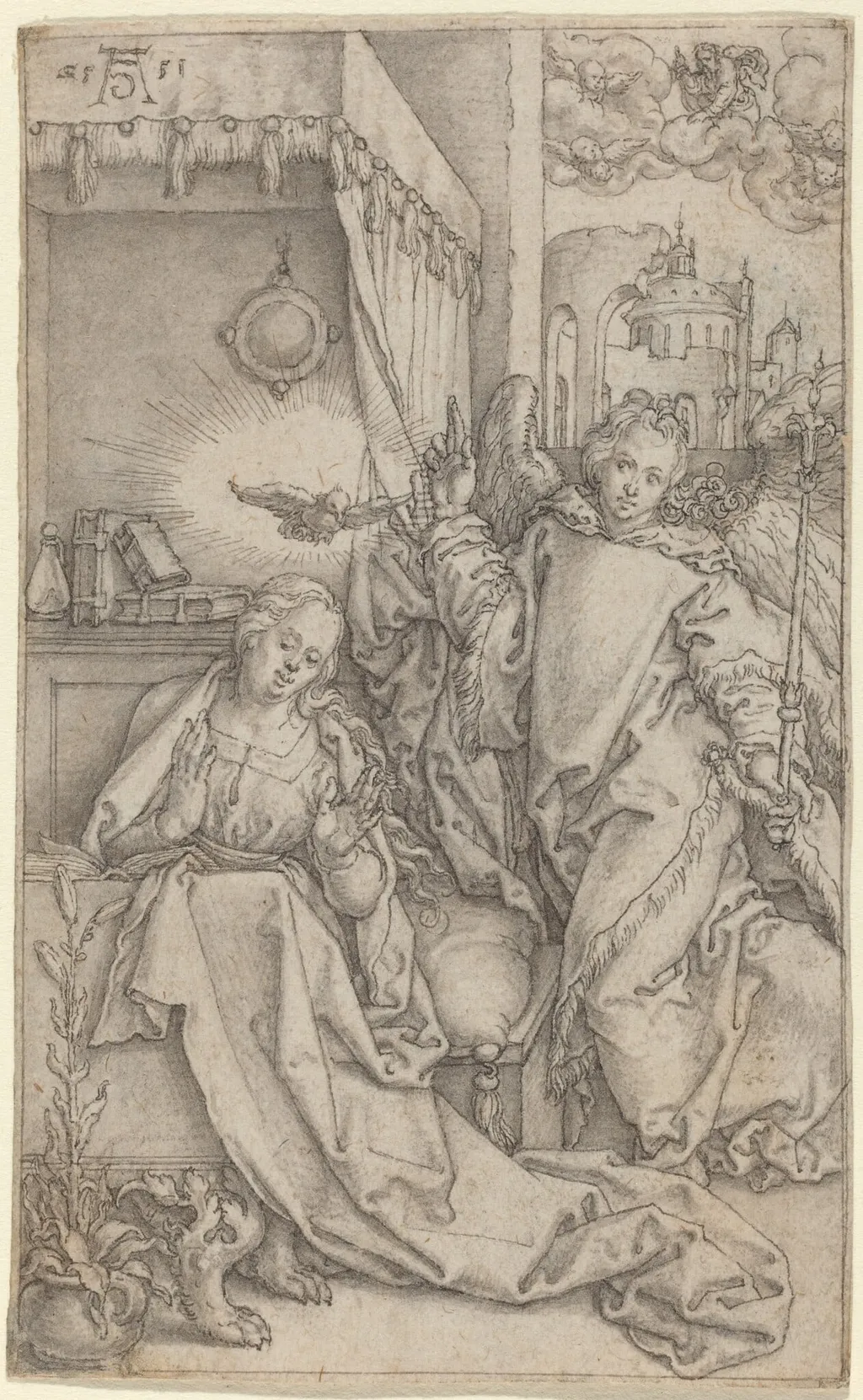
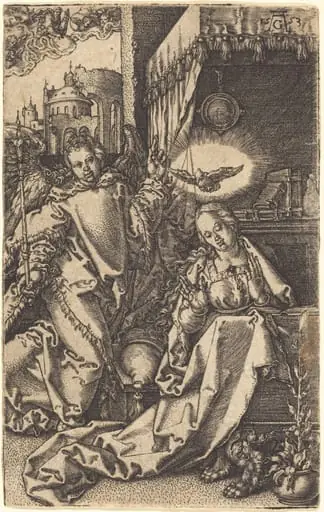
The Annunciation is an ink drawing by the Northern Renaissance artist Heinrich Aldegrever. It dates from 1552 and is held in the collection of the National Gallery of Art.
About this work
Overview
Heinrich Aldegrever created this drawing in 1552 using pen and black ink with gray wash, a technique common among German artists of the mid-16th century.
Heinrich Aldegrever created this drawing in 1552 using pen and black ink with gray wash, a technique common among German artists of the mid-16th century. As a member of the Little Masters, he focused on small, finely detailed works, often intended for private collectors. This piece belongs to a tradition of devotional imagery that emphasized intimacy over grandeur, reflecting the quiet spirituality of Protestant-leaning Northern Europe.
Subject & Meaning
The scene depicts the moment the angel Gabriel announces to the Virgin Mary that she will conceive Jesus. Mary’s posture and expression convey surprise and contemplation, while Gabriel’s gesture is gentle and reverent. The composition avoids dramatic flourishes, instead focusing on a private, human encounter. This understated treatment aligns with Reformation-era values that favored modesty and personal faith over ornate religious spectacle.
Technique & Style
Aldegrever employed fine pen lines to define forms and gray wash to suggest volume and atmosphere. The subtle gradations of ink create soft shadows and spatial depth without color, relying on tonal contrast to distinguish figures from their surroundings. His precise, controlled hand reflects training in engraving, where detail and clarity were paramount. The lack of background detail directs focus entirely to the two figures and their exchange.
History & Provenance
Created during Aldegrever’s mature period in Paderborn, the drawing likely served as a preparatory study or an independent devotional object. It was produced amid a flourishing market for small-scale religious prints and drawings among educated laypeople. While its early ownership is undocumented, its survival suggests it was valued within private collections, possibly by patrons sympathetic to Lutheran piety.
Context
Aldegrever worked in the decades following Albrecht Dürer, adapting his precision to a more restrained aesthetic shaped by the Reformation. Religious imagery shifted from Catholic grandeur to intimate, text-based narratives. This drawing reflects that transition: it avoids iconographic excess, instead emphasizing the emotional weight of a biblical moment through simplicity and restraint, consistent with Protestant ideals of the time.
Legacy
Though Aldegrever is less known today than his contemporaries, his drawings like this one illustrate the quiet endurance of devotional art in post-Reformation Germany. His mastery of ink and wash influenced later generations of Northern draftsmen who prioritized clarity and emotional nuance over spectacle. The work remains a quiet testament to the role of small-scale art in personal religious practice.
Artist & collection

Artist
Heinrich Aldegrever or Aldegraf was a German painter and engraver. He was one of the "Little Masters", the group of German artists making small old master prints in the generation after Albrecht Dürer.

 The Annunciation
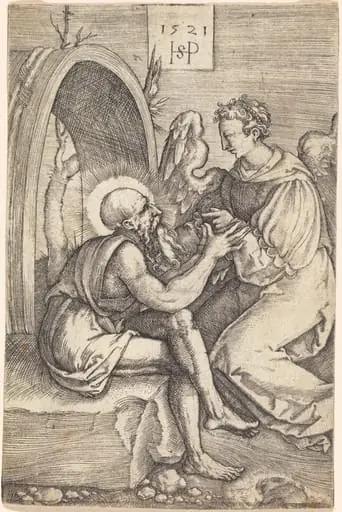 Saint Jerome with the Angel
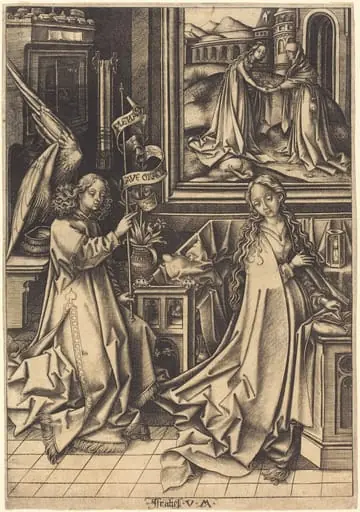 The Annunciation
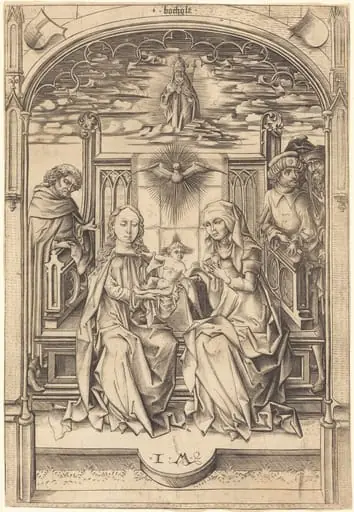 The Holy Family
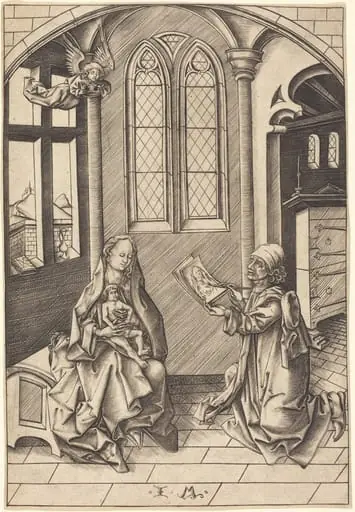 Saint Luke Drawing a Portrait of the Virgin
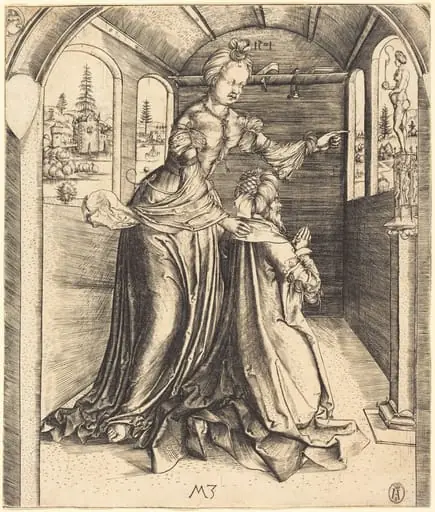 Solomon Worshipping False Gods
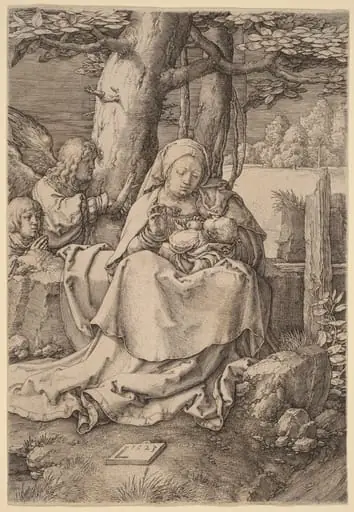 The Virgin and Child with Two Angels
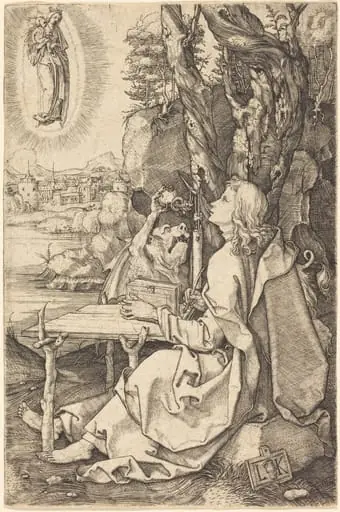 Saint John
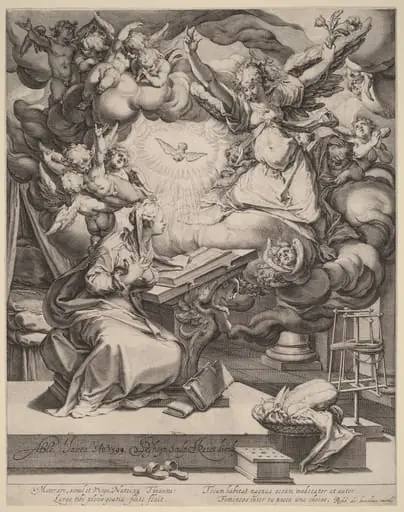 The Annunciation
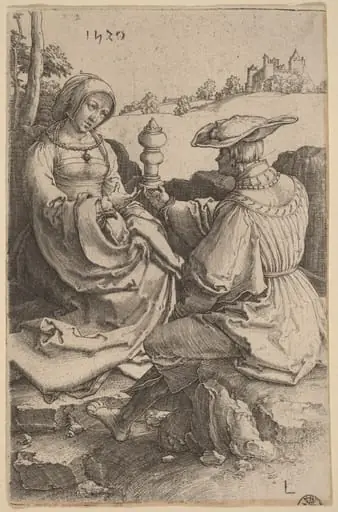 A Nobleman and a Lady Seated in a Landscape
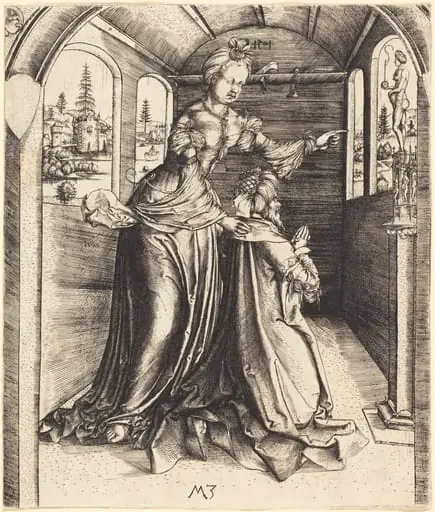 Solomon Worshipping False Gods
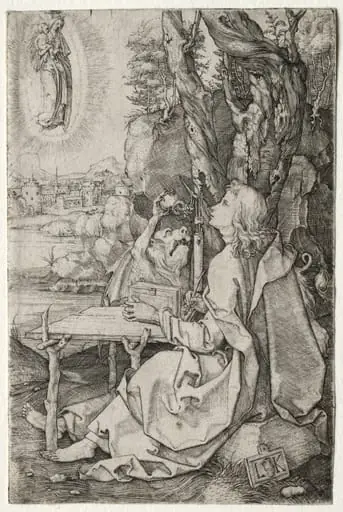 St. John on the Island of Patmos