Artwork
Untitled
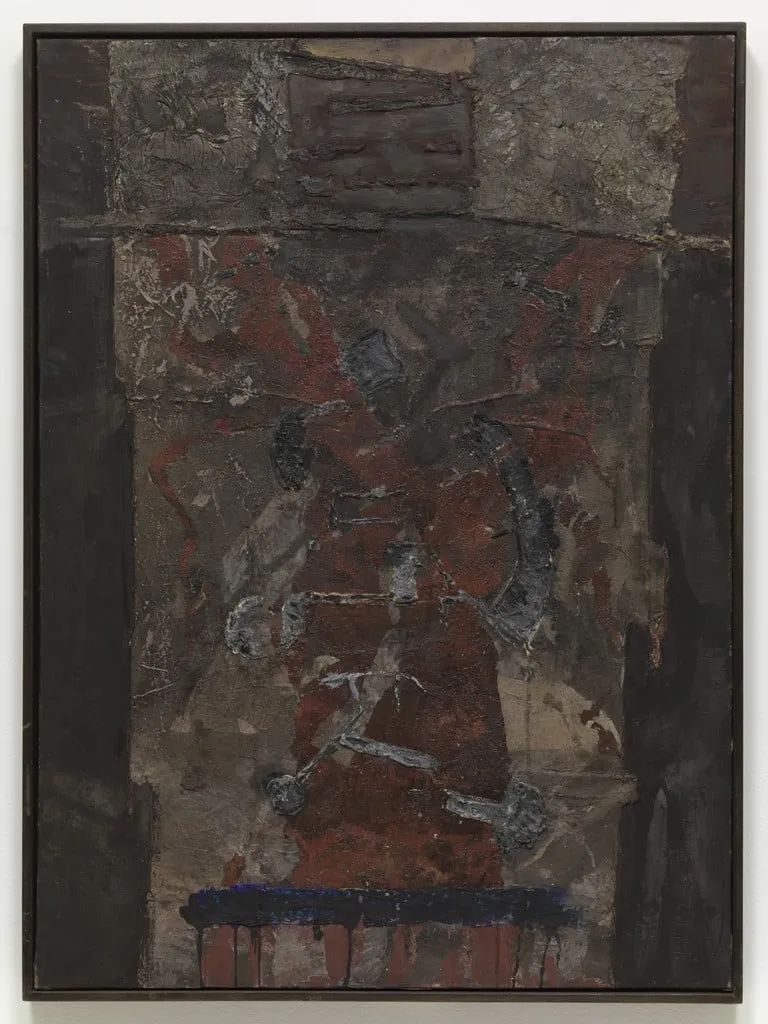
Untitled is an oil drawing by Aleksander Kobzdej. It dates from 1959 and is held in the collection of the Museum of Modern Art.
About this work
Overview
It resides in the collection of The Museum of Modern Art, where it is cataloged as a drawing despite its mixed-media construction.
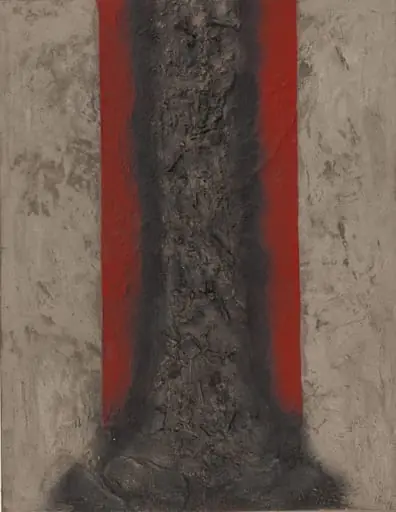
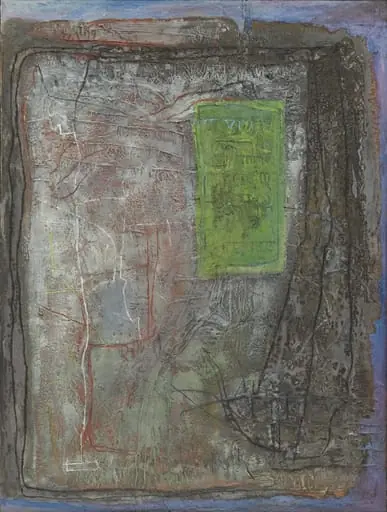
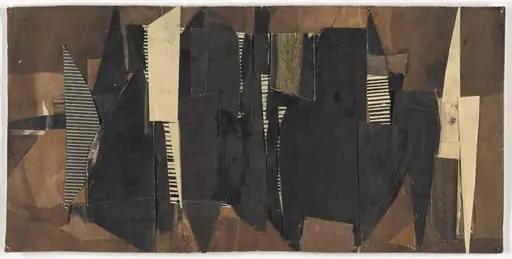
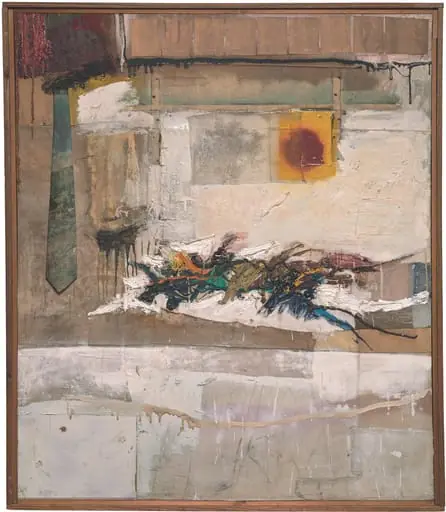
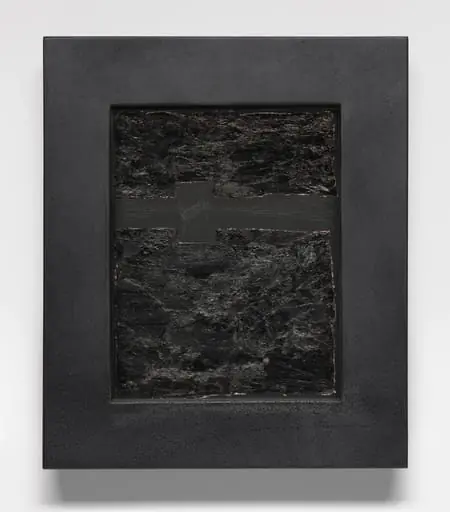
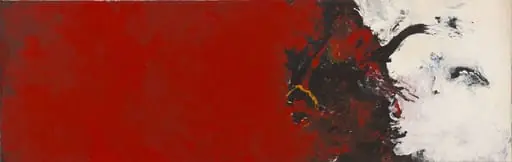
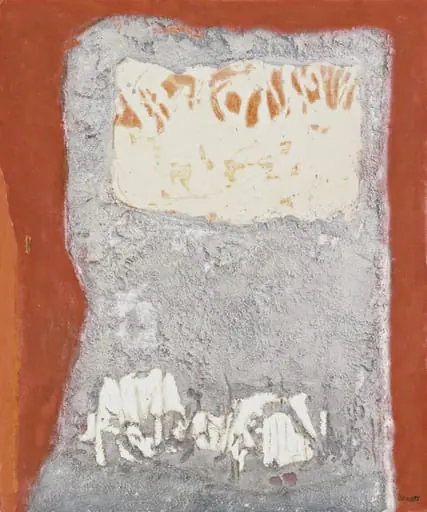
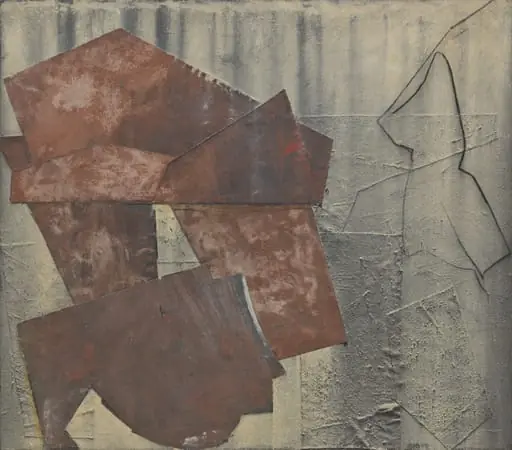
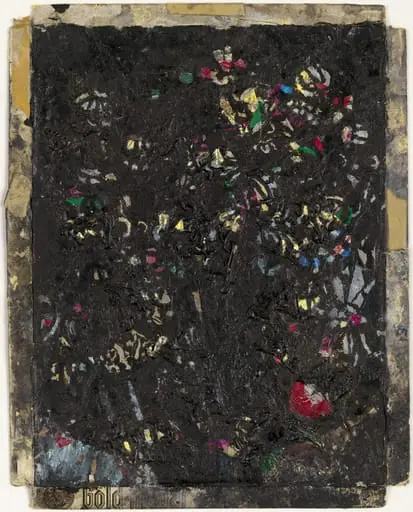
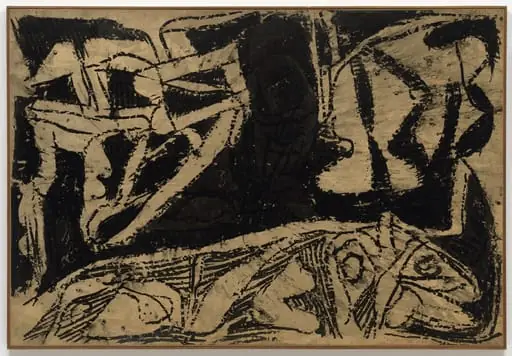
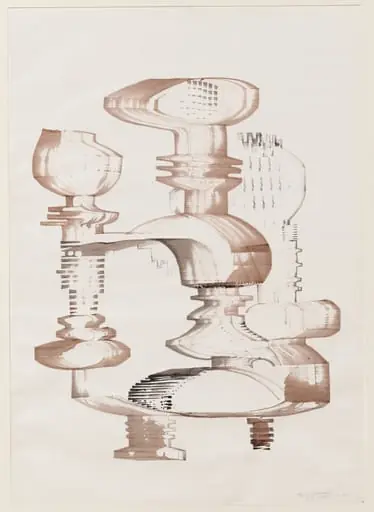
Created in 1959, this work by Aleksander Kobzdej combines casein and oil on paper mounted to canvas. Its physicality is emphasized through layered, uneven surfaces where pigment and embedded materials merge. The piece resists conventional representation, favoring tactile intensity over clarity. It resides in the collection of The Museum of Modern Art, where it is cataloged as a drawing despite its mixed-media construction.
Subject & Meaning
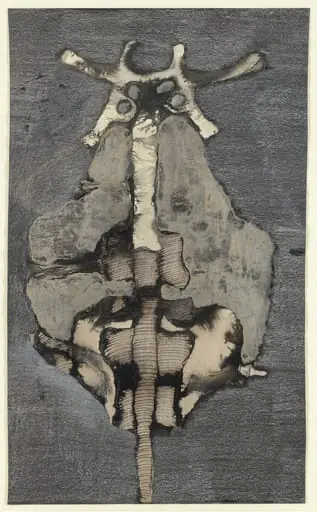
A human form emerges partially from a dense, chaotic ground, its limbs raised and face dissolved into the texture. The figure appears neither fully present nor entirely erased, suggesting themes of concealment, erasure, or psychological fragmentation. The dark palette of reds, browns, and grays, punctuated by a sliver of blue, evokes earth, decay, or buried memory rather than narrative clarity.
Technique & Style
Kobzdej applied paint thickly and irregularly, using scraping and impasto methods to build a surface that incorporates physical debris. The mixture of casein and oil allows for both matte and glossy textures, enhancing the work’s tactile ambiguity. Brushwork is aggressive and unrefined, prioritizing material presence over polished form, aligning with postwar European tendencies toward expressive materiality.
History & Provenance
The work entered The Museum of Modern Art’s collection in the late 1960s, likely acquired during a period of renewed interest in Eastern European artists responding to wartime trauma. Its origins trace to Kobzdej’s early postwar period in Poland, where materials were scarce and artistic expression often turned toward visceral, non-idealized forms. No earlier exhibition history is widely documented.
Context
Made during a time of political repression in Poland, the work reflects broader artistic shifts away from socialist realism toward personal, material-based expression. Artists like Kobzdej used texture and abstraction to convey inner states when direct political commentary was dangerous. The piece aligns with contemporaneous European movements such as Art Informel, which valued gesture and material over structure.
Legacy
Though not widely exhibited outside institutional collections, the work contributes to understanding how Polish artists navigated censorship through material experimentation. Its inclusion in MoMA’s holdings signals its recognition within broader narratives of postwar abstraction. It remains a quiet example of how physicality in art can carry emotional and historical weight without explicit symbolism.
Artist & collection

Artist
Aleksander Kobzdej (1920–1972) was a Polish painter. He was born in, what was then, Ukraine. Kobzdej is best known for being one of the most prominent representatives of the Polish Social Realist group, and for being…