Artwork
Untitled
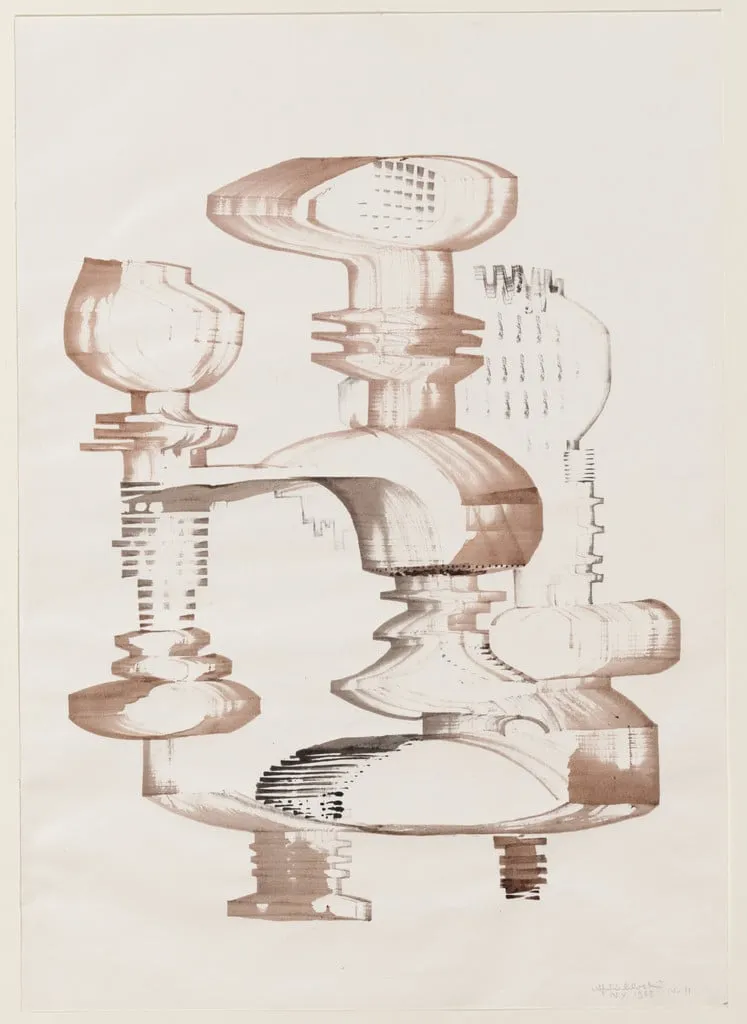
Untitled is an ink drawing by Andrzej J. Wroblewski. It dates from 1962 and is held in the collection of the Museum of Modern Art.
About this work
Overview
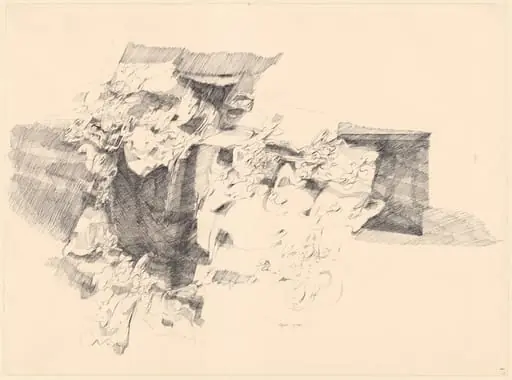
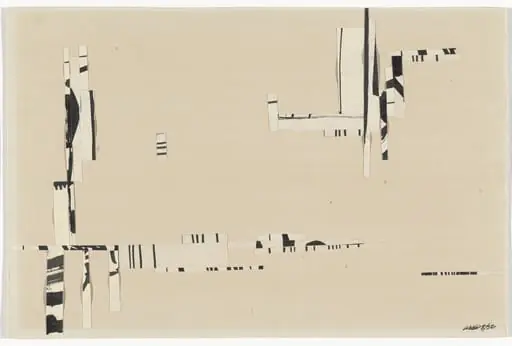
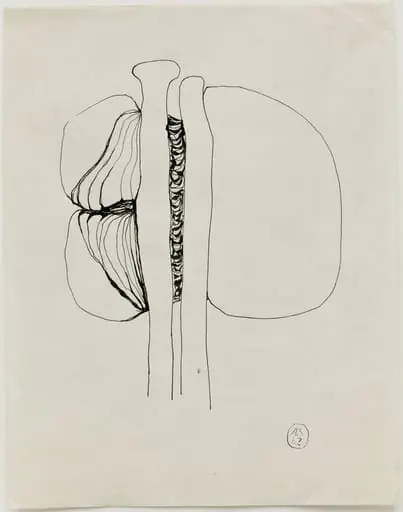
Executed in colored ink and ink on paper, the work presents two ambiguous, suspended forms that resist definitive identification.
This untitled 1962 drawing by Andrzej J. Wroblewski belongs to The Museum of Modern Art’s collection. Executed in colored ink and ink on paper, the work presents two ambiguous, suspended forms that resist definitive identification. Their fragmented, quasi-mechanical contours suggest disassembled objects—perhaps furniture or machinery—rendered in a manner that conveys precariousness rather than stability.
Subject & Meaning
The composition centers on two irregular shapes that evoke broken or deconstructed artifacts. One form resembles a chair’s seat and backrest, while the other features a rounded base and hollow upper section. Their indeterminate nature invites multiple interpretations, oscillating between representation and abstraction. The imagery may reflect themes of decay, transformation, or the fragility of manufactured structures.
Technique & Style
Wroblewski employs loose, energetic lines and selective ink washes to construct the forms. Light brown pigment fills certain areas, contrasting with untouched paper to create spatial ambiguity. The sketchy, uneven strokes reinforce a sense of impermanence, as if the objects are dissolving or caught in transition. This approach aligns with mid-century explorations of abstraction and gestural mark-making.
History & Provenance
Created in 1962, the drawing entered The Museum of Modern Art’s holdings as part of its broader collection of postwar European art. Its acquisition reflects institutional interest in Wroblewski’s contributions to abstract and semi-figurative drawing during the early 1960s. The work’s precise exhibition history prior to its museum accession remains unrecorded.
Context
The drawing emerges from a period in which artists increasingly blurred boundaries between figuration and abstraction. Wroblewski’s practice, though less widely documented than some contemporaries, engaged with the era’s experimentation in material and form. Works like this one challenge viewers to reconcile recognizable fragments with their distorted presentation, a tension characteristic of postwar artistic inquiry.
Artist & collection