Artwork
Untitled
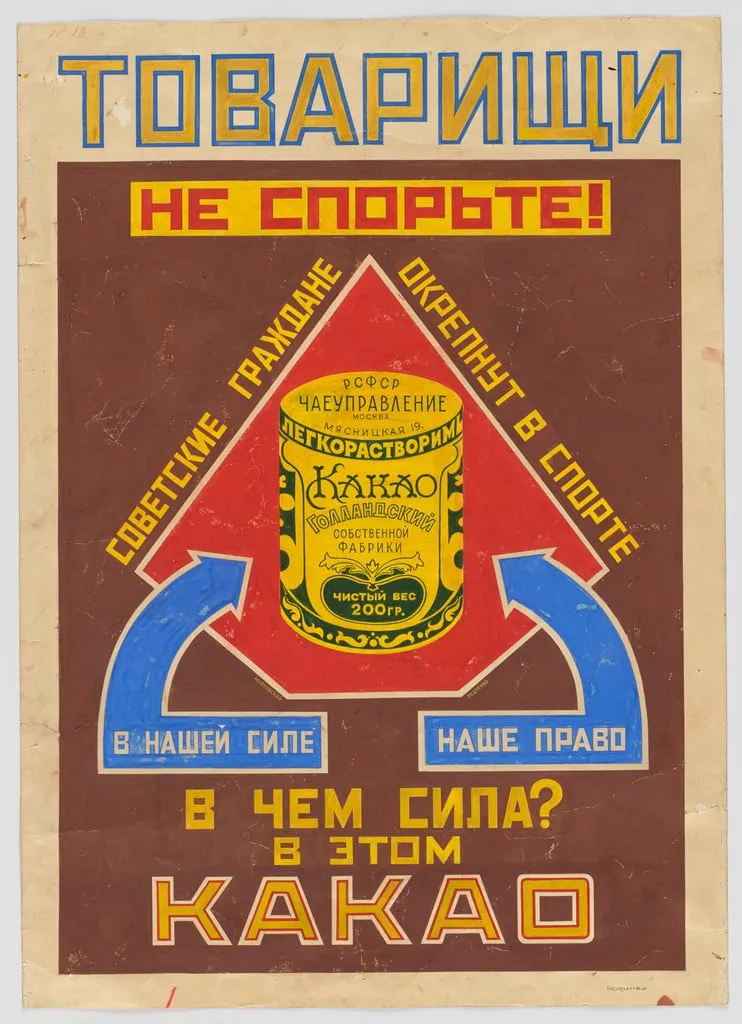
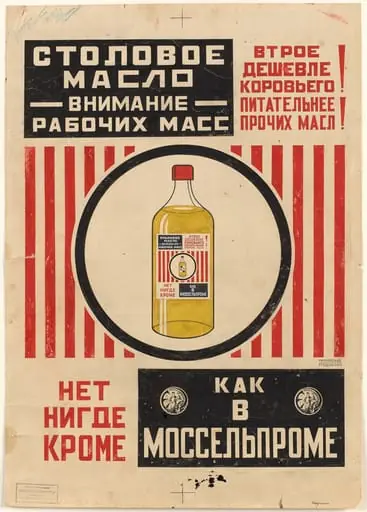
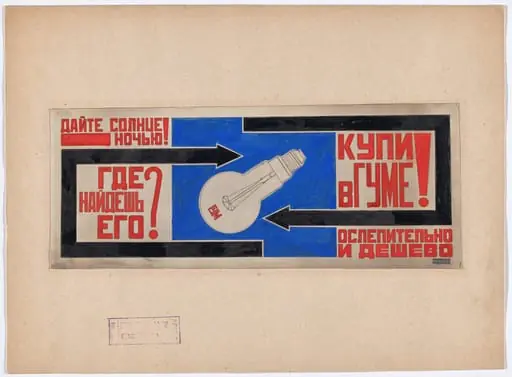
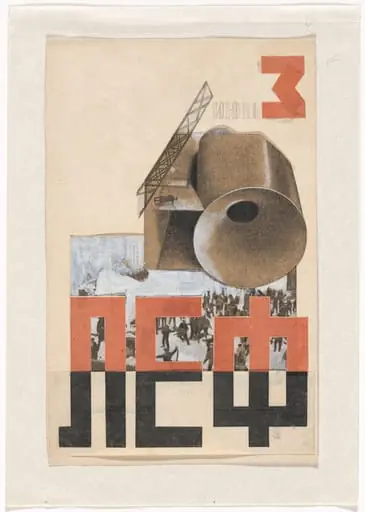
Untitled is a gouache drawing by Reklam-Konstruktor (Advertising Constructor) Agency Aleksandr Rodchenko. It dates from 1924 and is held in the collection of the Museum of Modern Art. This drawing, created around 1924 by Aleksandr Rodchenko for the Reklam-Konstruktor Agency, is executed in pencil and gouache on paper.
About this work
Overview
It functions as a propaganda poster promoting a cocoa product, blending commercial messaging with the visual language of Soviet constructivism.
This drawing, created around 1924 by Aleksandr Rodchenko for the Reklam-Konstruktor Agency, is executed in pencil and gouache on paper. It functions as a propaganda poster promoting a cocoa product, blending commercial messaging with the visual language of Soviet constructivism. Its bold composition and limited palette reflect the era’s emphasis on clarity and mass communication. The work is part of The Museum of Modern Art’s collection.
Subject & Meaning
At the center is a jar of cocoa, labeled in Russian, positioned as the focal point of the composition. Arrows radiate outward, directing attention to surrounding text that urges unity: 'Comrades, don’t argue! Our strength is in this cocoa.' The imagery transforms a consumer good into a symbol of collective solidarity, aligning commercial promotion with ideological messaging common in early Soviet advertising.
Technique & Style
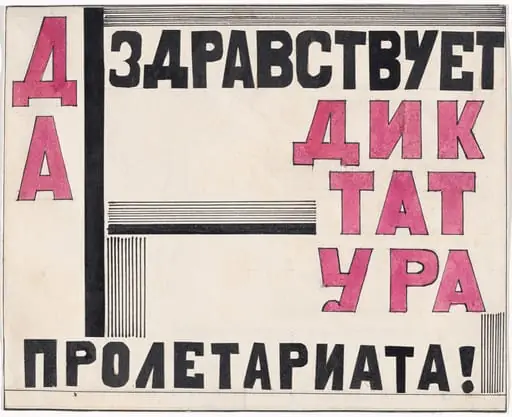
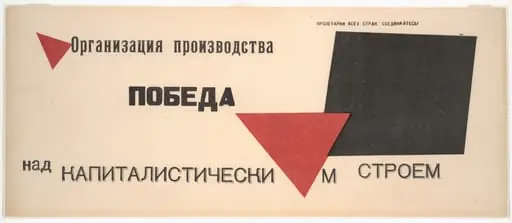
Rodchenko employed gouache for its opaque, flat application, creating sharp contrasts between vivid red, blue, and yellow forms. Pencil underdrawing defines precise geometric shapes—triangles, arrows, and block letters—emphasizing structure over texture. The design rejects ornamentation, prioritizing legibility and visual impact, characteristic of constructivist principles that valued function and industrial aesthetics.
History & Provenance
Created during Rodchenko’s active period with the Reklam-Konstruktor Agency, the work emerged from a state-supported initiative to use design for public messaging. It was produced for mass distribution in the early Soviet Union, where advertising served ideological ends. The piece entered The Museum of Modern Art’s collection in the mid-20th century as part of a broader interest in Soviet avant-garde graphic work.
Context
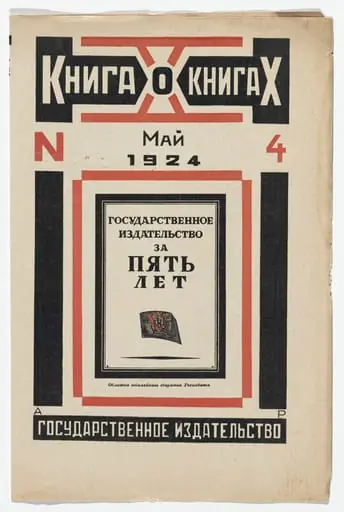
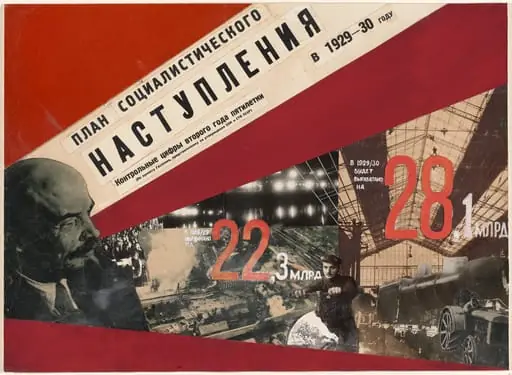
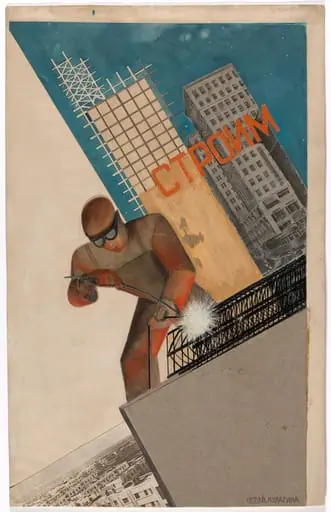
In the 1920s, Soviet artists were tasked with converting propaganda into accessible visual forms. Rodchenko, alongside other constructivists, sought to dissolve the boundary between art and utility. This drawing reflects a broader movement where typography, color, and geometry replaced traditional illustration to communicate directly with a largely illiterate population, merging political rhetoric with everyday consumer culture.
Legacy
The work exemplifies how Soviet design influenced global graphic traditions, particularly in advertising and political posters. Its stripped-down aesthetic and use of primary colors became reference points for later modernist movements. Though created for a specific historical moment, its formal clarity continues to inform design practices that prioritize direct communication over decorative complexity.
Artist & collection
Artist
Reklam-Konstruktor (Advertising Constructor) Agency Aleksandr Rodchenko
Reklam-Konstruktor Agency Aleksandr Rodchenko (1891–1956) was a Russian artist.