Artwork
Untitled
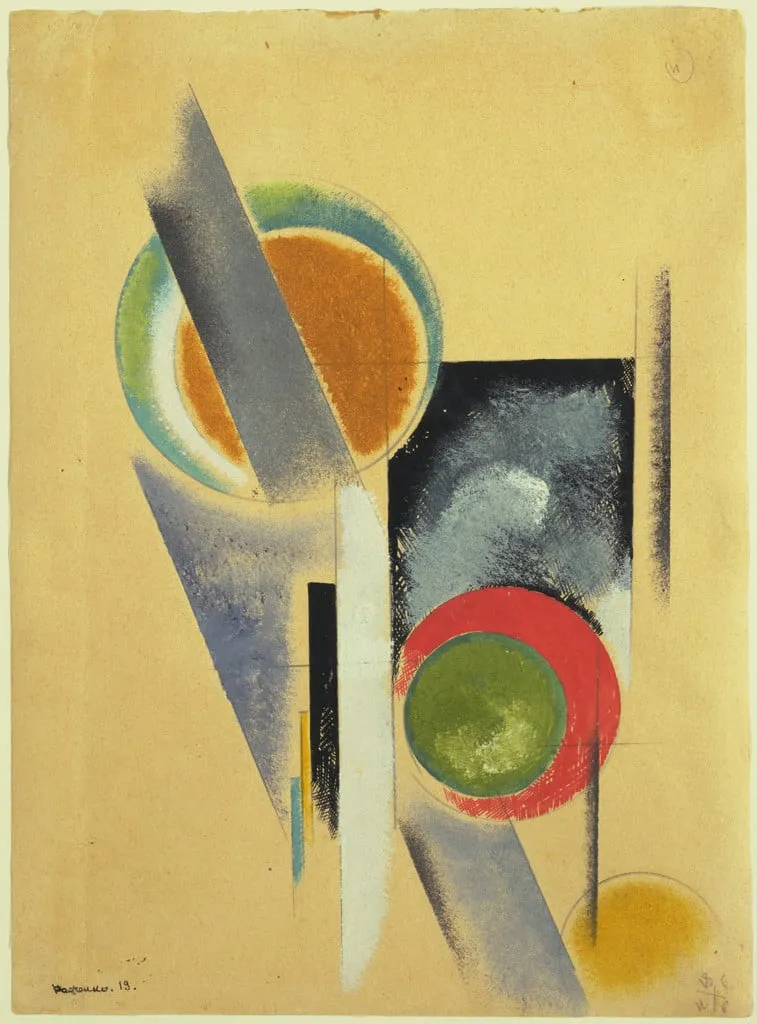
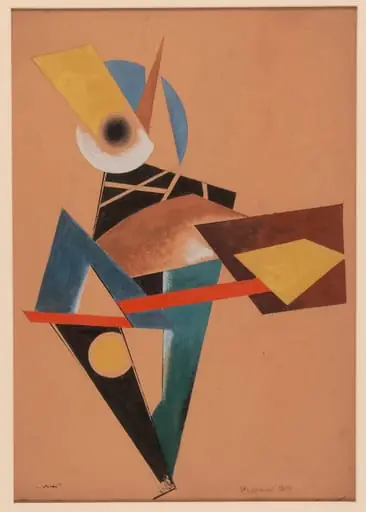
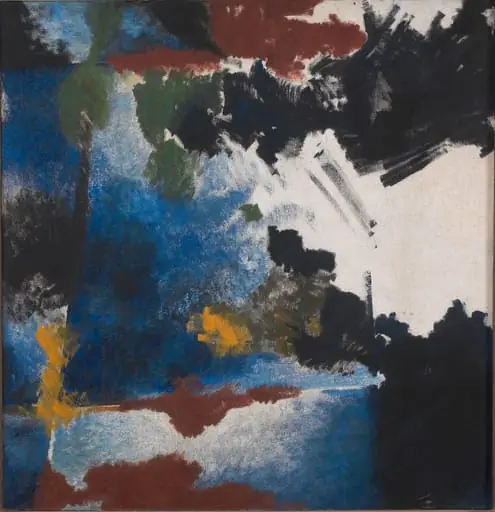
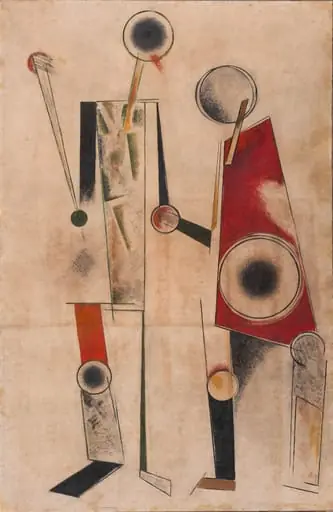
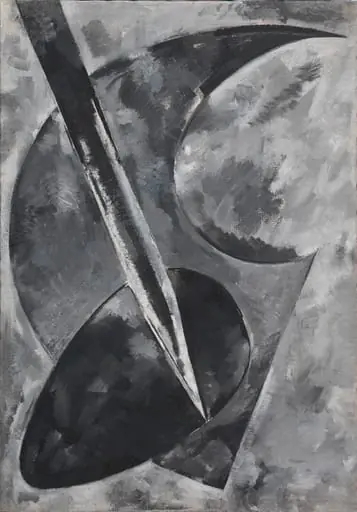
Untitled is a gouache drawing by Aleksandr Rodchenko. It dates from 1919 and is held in the collection of the Museum of Modern Art.
About this work
Overview
Created in 1919, this gouache on paper work by Aleksandr Rodchenko is part of The Museum of Modern Art’s collection. It exemplifies early Soviet avant-garde abstraction, rejecting representational forms in favor of geometric composition. The medium—gouache—offers a dense, matte surface that enhances the work’s tactile immediacy, distinguishing it from transparent watercolors or oil paints.
Subject & Meaning
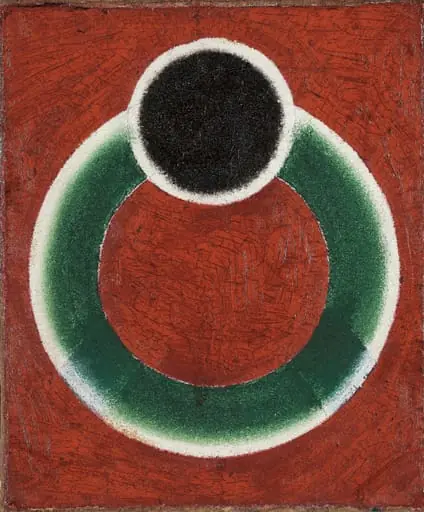
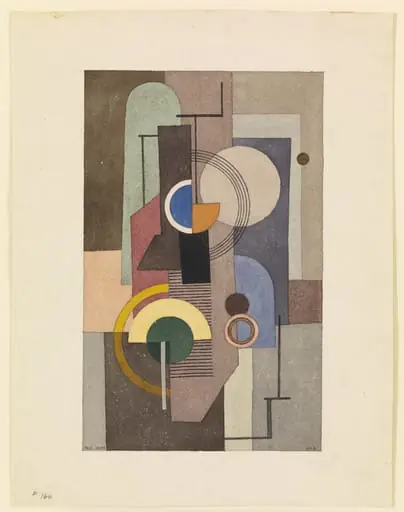
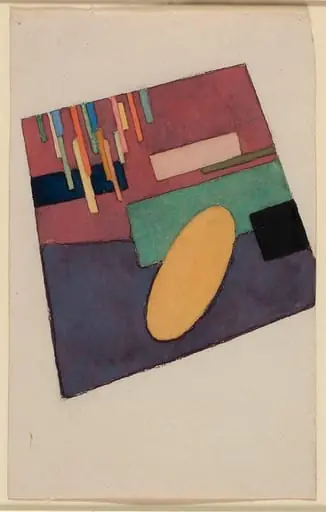
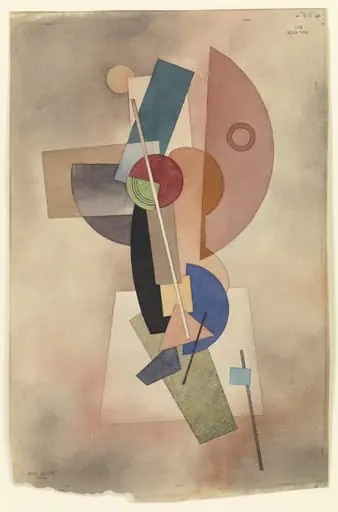
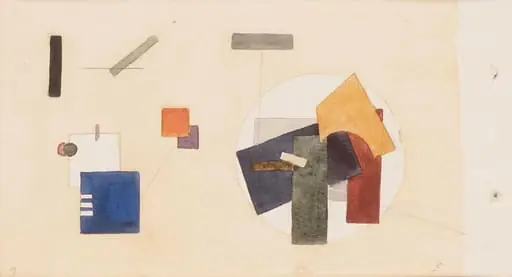
A tilted orange circle encircled by green suggests motion or imbalance, while a red disc within a black rectangle introduces structural tension.
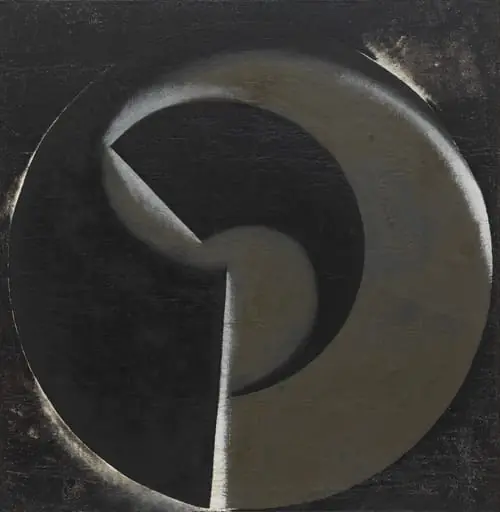
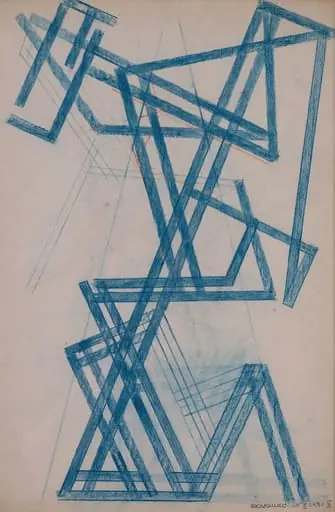
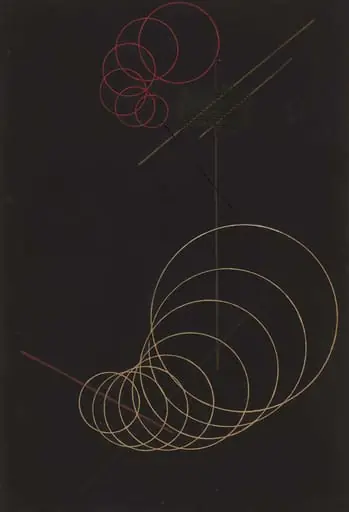
No recognizable objects appear; instead, the composition relies on abstract shapes to convey dynamism. A tilted orange circle encircled by green suggests motion or imbalance, while a red disc within a black rectangle introduces structural tension. The intersecting black lines and scattered yellow and blue accents disrupt symmetry, reflecting a visual language aligned with Constructivist ideals of energy and industrial rhythm.
Technique & Style
Rodchenko applied gouache with direct, unblended strokes, emphasizing flat planes and sharp edges. The paint’s opacity allows bold color contrasts without gradation, reinforcing the work’s austerity. Brushwork appears swift and deliberate, avoiding refinement in favor of expressive urgency. The lack of perspective or shading heightens the sense of abstraction, prioritizing formal relationships over illusion.
History & Provenance
The work emerged during a period of radical artistic experimentation in post-revolutionary Russia. Rodchenko, then engaged with Constructivism, produced numerous non-objective compositions exploring spatial and chromatic relationships. This piece entered MoMA’s collection through documented acquisition, reflecting its significance in the development of modern abstract art in the early 20th century.
Context
In 1919, Russian artists like Rodchenko were redefining art’s social role, moving away from decoration toward functional abstraction. This work aligns with contemporaneous efforts to synthesize art and industrial design, rejecting traditional aesthetics in favor of geometric purity. The use of primary colors and stark forms echoes broader movements in De Stijl and Bauhaus, though rooted in the specific political and cultural climate of revolutionary Russia.
Legacy
Rodchenko’s non-objective drawings from this period influenced later generations of abstract and minimalist artists. His insistence on structure, color, and materiality over narrative helped establish abstraction as a legitimate mode of artistic inquiry. This work remains a touchstone in discussions of how art can function as a formal system rather than a representation of the visible world.
Artist & collection
Artist
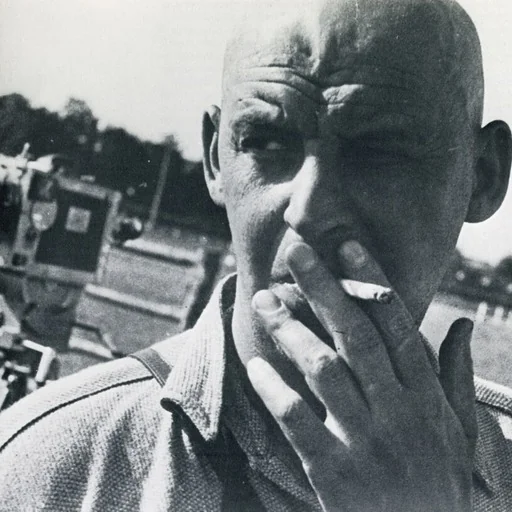
Aleksander Mikhailovich Rodchenko (Russian: Александр Михайлович Родченко; 5 December 1891 – 3 December 1956) was a Russian and Soviet artist, sculptor, photographer, and graphic designer.