Artwork
Autoportret la cafenea (cu Moartea)
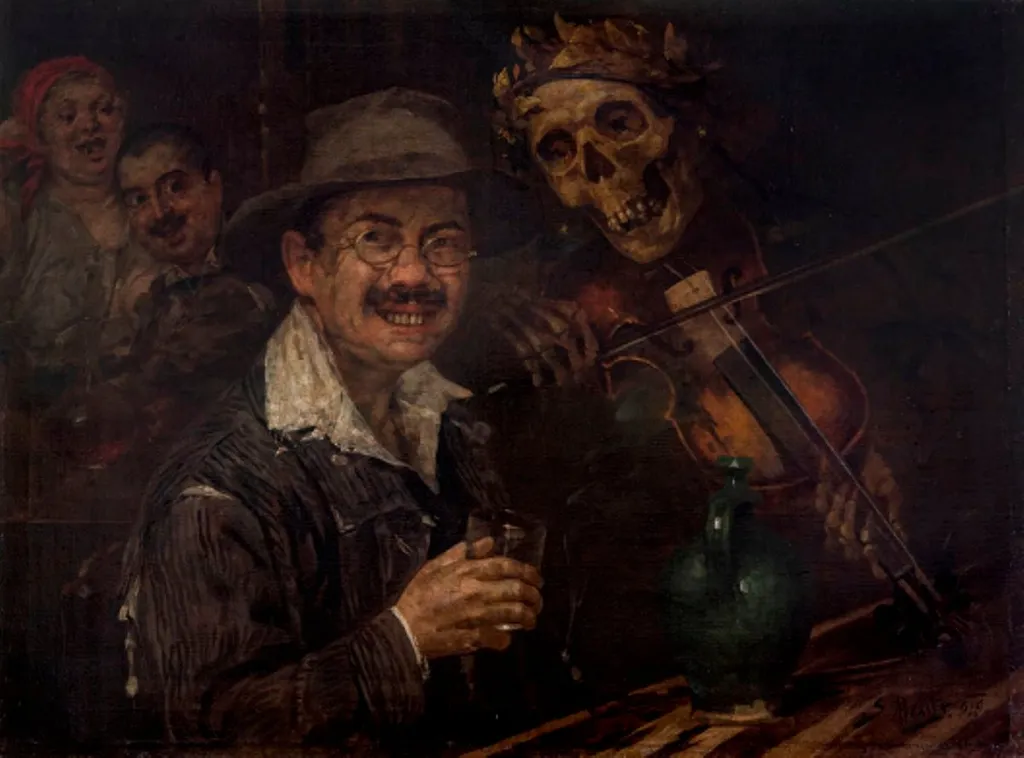
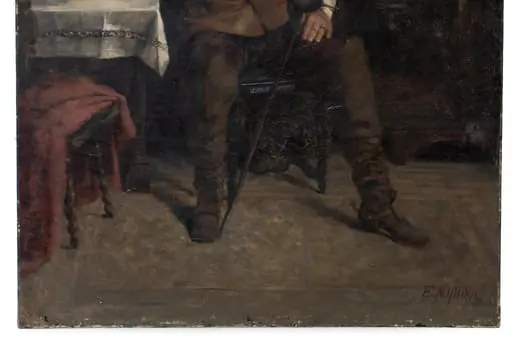
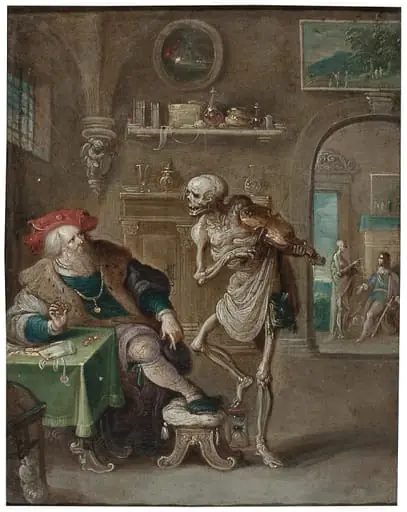
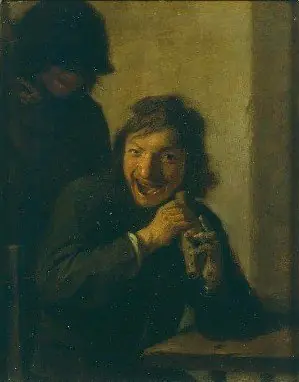
Autoportret la cafenea (cu Moartea) is a print by the Academic Art artist Stevan Aleksić. It is held in the collection of the Timișoara National Museum of Art. A solitary figure sits at a wooden table in a dimly lit tavern, smiling calmly while holding a glass.
About this work
Overview
The composition balances absurdity with stillness, evoking a quiet confrontation between life and death through subtle theatricality.
A solitary figure sits at a wooden table in a dimly lit tavern, smiling calmly while holding a glass. Behind him, a skeletal figure dressed in a crown plays a violin, its presence both eerie and composed. Other faces, indistinct and shadowed, linger at the edges of the scene. The composition balances absurdity with stillness, evoking a quiet confrontation between life and death through subtle theatricality.
Subject & Meaning
The painting juxtaposes the human figure’s casual demeanor with the skeletal musician’s regal attire, suggesting a symbolic dance between mortality and existence. The crown on the skeleton implies death’s authority, yet its musical act feels almost companionable. The grin of the living man may reflect resignation, defiance, or dark humor—inviting interpretation without resolution.
Technique & Style
Lighting is sharply contrasted, with focused illumination on the table and figures against deep, enveloping shadows. The brushwork is loose in the background, blurring onlookers into anonymity, while the central forms are rendered with deliberate clarity. The palette is muted, dominated by browns and greens, enhancing the somber, intimate atmosphere.
History & Provenance
Painted in 1934 by Romanian artist Ștefan Luchian, the work emerged during a period of personal decline and increasing preoccupation with mortality. Luchian, suffering from advanced illness, turned to introspective themes. The painting was kept privately until after his death, later entering public collections as part of Romania’s modernist heritage.
Context
Created amid the rise of Expressionism and Surrealism in Eastern Europe, the work diverges from overt political or social commentary. Instead, it reflects a personal meditation on illness and time, resonating with broader European anxieties of the interwar period. Its quiet strangeness aligns with literary and artistic currents that explored the uncanny in everyday settings.
Legacy
Though not widely exhibited during Luchian’s lifetime, the painting gained recognition posthumously as a poignant example of Romanian modernism. It is now studied for its psychological depth and unique synthesis of folk motifs with avant-garde sensibilities, influencing later artists interested in the intersection of humor and existential dread.
Artist & collection
Artist
Stevan Aleksić’s prints and portraits sit at the turn of the last century in Central Europe.