Artwork
The Synagogue
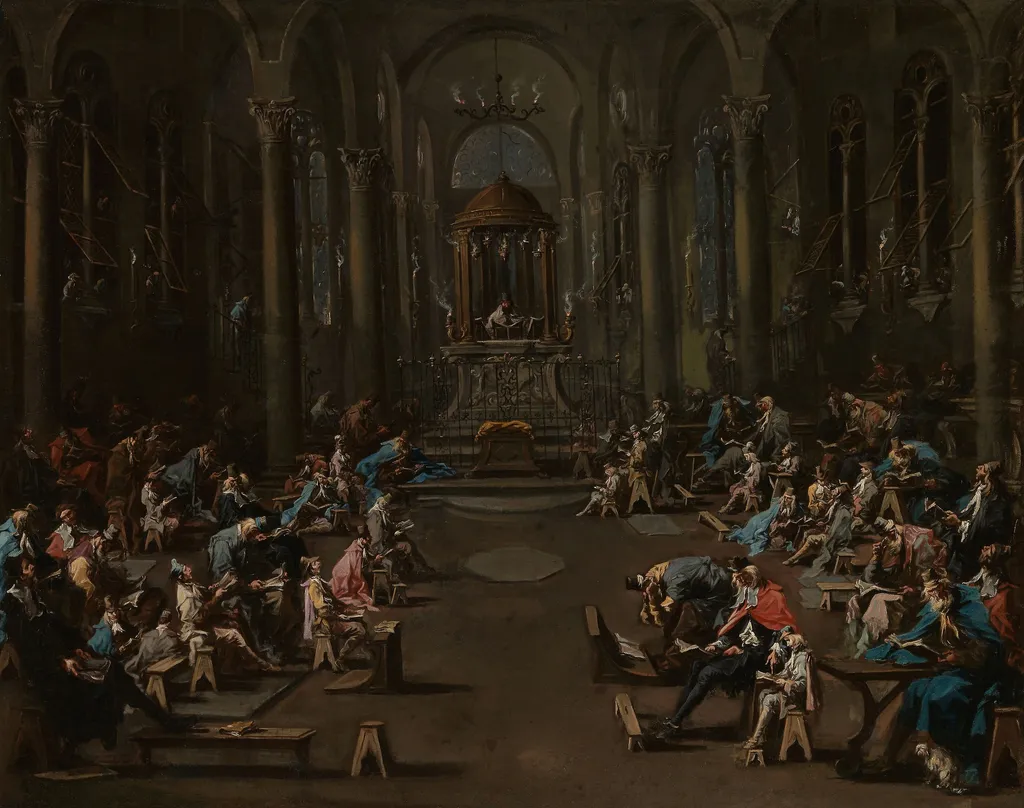
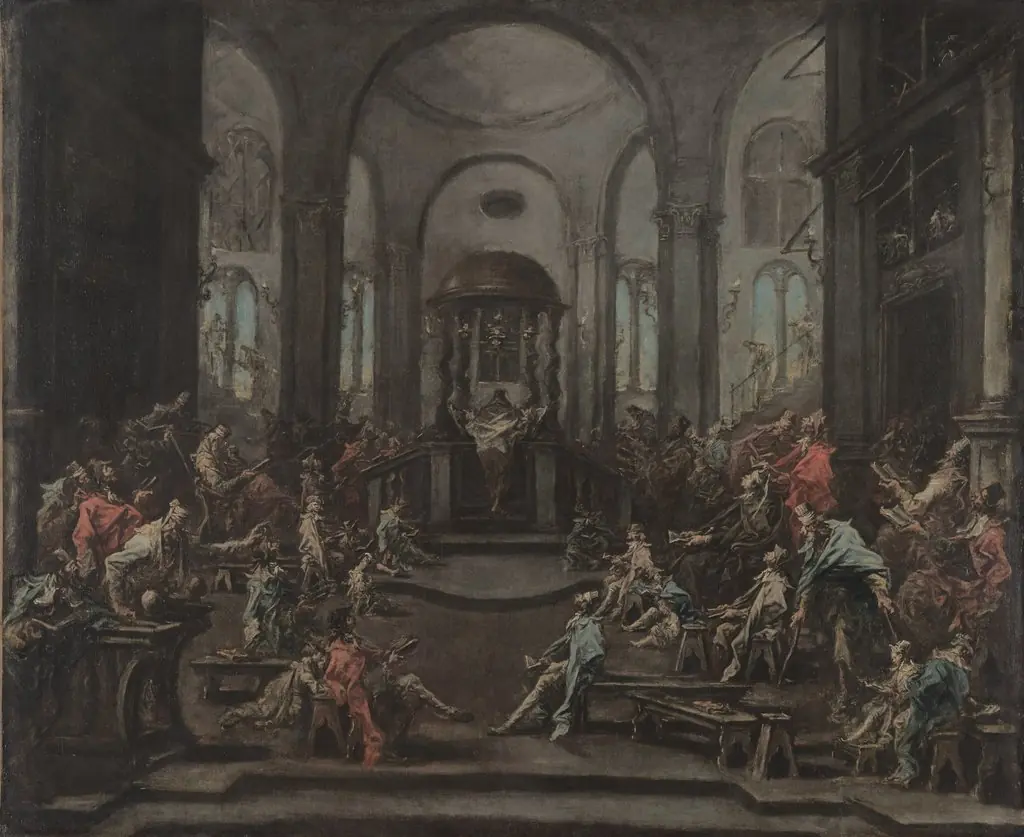
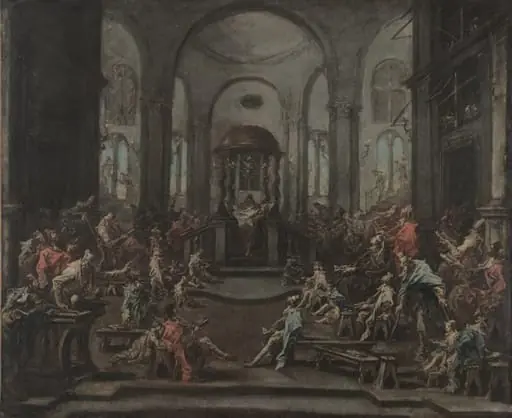
The Synagogue is an oil painting by the Rococo painting artist Alessandro Magnasco. It dates from 1730 and is held in the collection of the Art Institute of Chicago.
About this work
Overview
The painting is part of the Art Institute of Chicago’s collection and reflects his late-Baroque style, blending observation with imaginative composition.
Painted in 1730 by Alessandro Magnasco, known as il Lissandrino, this oil-on-canvas work presents a quiet interior space associated with Jewish worship. Magnasco, active in northern Italy, often depicted unconventional subjects with a distinctive, almost dreamlike sensibility. The painting is part of the Art Institute of Chicago’s collection and reflects his late-Baroque style, blending observation with imaginative composition.
Subject & Meaning
The scene portrays a synagogue interior during a moment of solemn reflection. Figures are arranged in rows, engaged in reading or prayer, their postures suggesting introspection rather than ritual performance. The absence of overt ceremony and the muted expressions imply a focus on personal devotion. The architecture frames the space as both sacred and human, emphasizing quiet communal continuity over dramatic spectacle.
Technique & Style
Magnasco employed oil paint to render subtle gradations of light and shadow, using chiaroscuro to define the depth of the arched interior and the volume of the figures. His brushwork is precise yet fluid, capturing the texture of fabric, wood, and stone with delicate attention. The composition avoids symmetry, instead guiding the eye through a layered, receding space that feels both real and subtly stylized.
History & Provenance
Created during Magnasco’s mature period in Milan or Genoa, the painting reflects his interest in marginalized or overlooked subjects. It entered the Art Institute of Chicago’s collection in the 20th century, following earlier ownership by European collectors. Its survival and preservation offer insight into how 18th-century artists engaged with religious life beyond mainstream Christian narratives.
Context
In early 18th-century Italy, depictions of Jewish worship were rare in art. Magnasco’s choice to portray a synagogue aligns with his broader tendency to depict non-elite or non-dominant communities. While the Rococo era favored ornament and elegance, his work diverges with its somber tone and unidealized figures, reflecting a more introspective, even melancholic current in late-Baroque painting.
Legacy
The painting stands as an early example of a non-Christian sacred space rendered with dignity and quiet realism in European art. Magnasco’s approach influenced later artists interested in atmospheric interiors and marginalized subjects. Its presence in a major public collection ensures continued scholarly attention and recognition of its unique place in the visual culture of its time.
Own this work as a print
Artist & collection
Artist
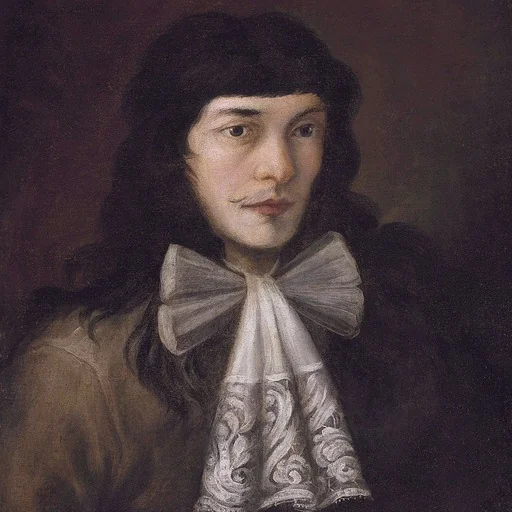
Alessandro Magnasco (February 4, 1667 – March 12, 1749), also known as il Lissandrino, was an Italian late-Baroque painter active mostly in Milan and Genoa.

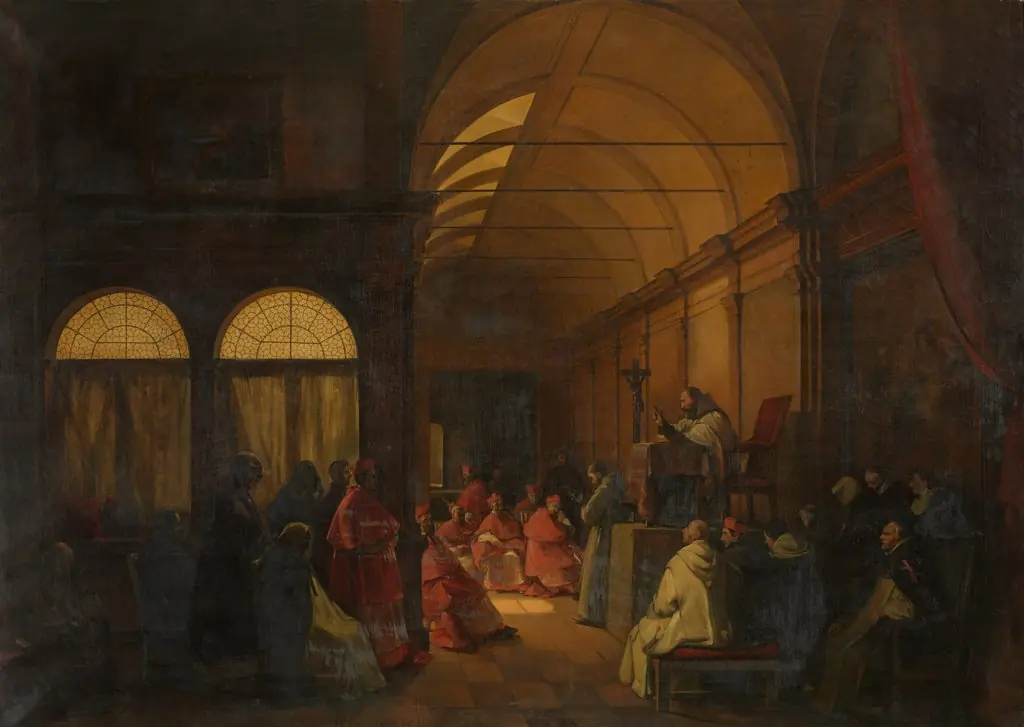 Before the Conclave
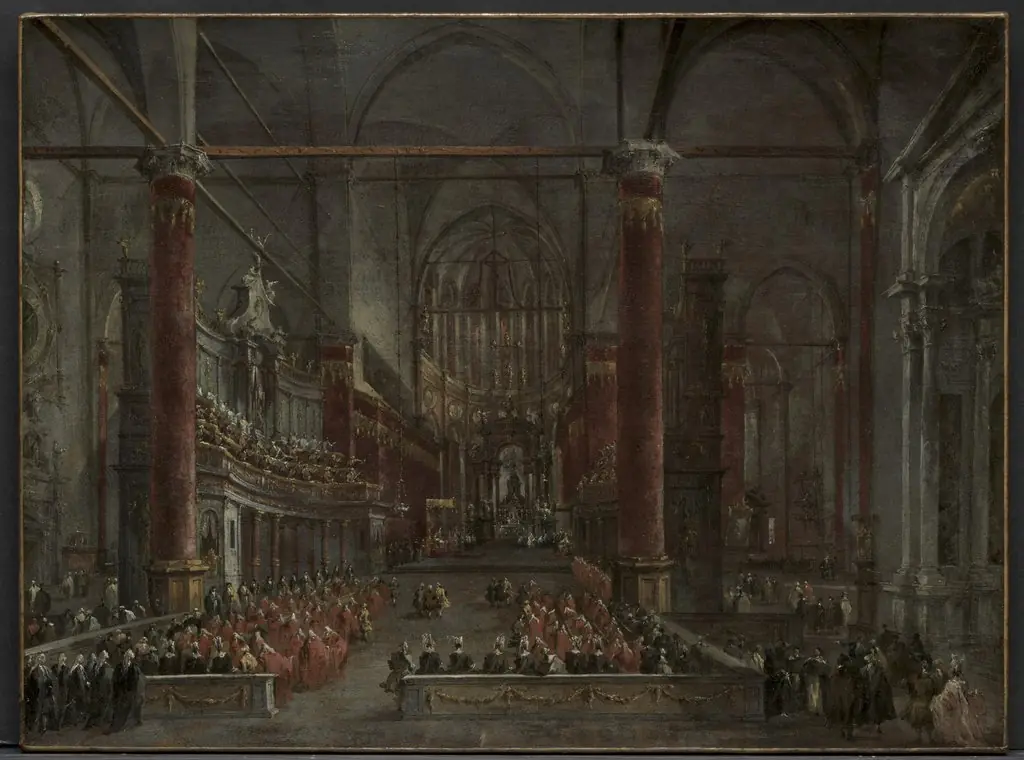 Pontifical Ceremony in SS. Giovanni e Paolo, Venice, 1782
 Night Banquet and Masquerade
 Imaginary church interior with a procession
 Interior of a Synagogue
 Soldier's Rest
 Allegory of the wedding of Archduke Ferdinand Karl and Anna de' Medici
 Mönche am Feuer
 Christ among the Doctors
 Church Interior