Artwork
Church Interior
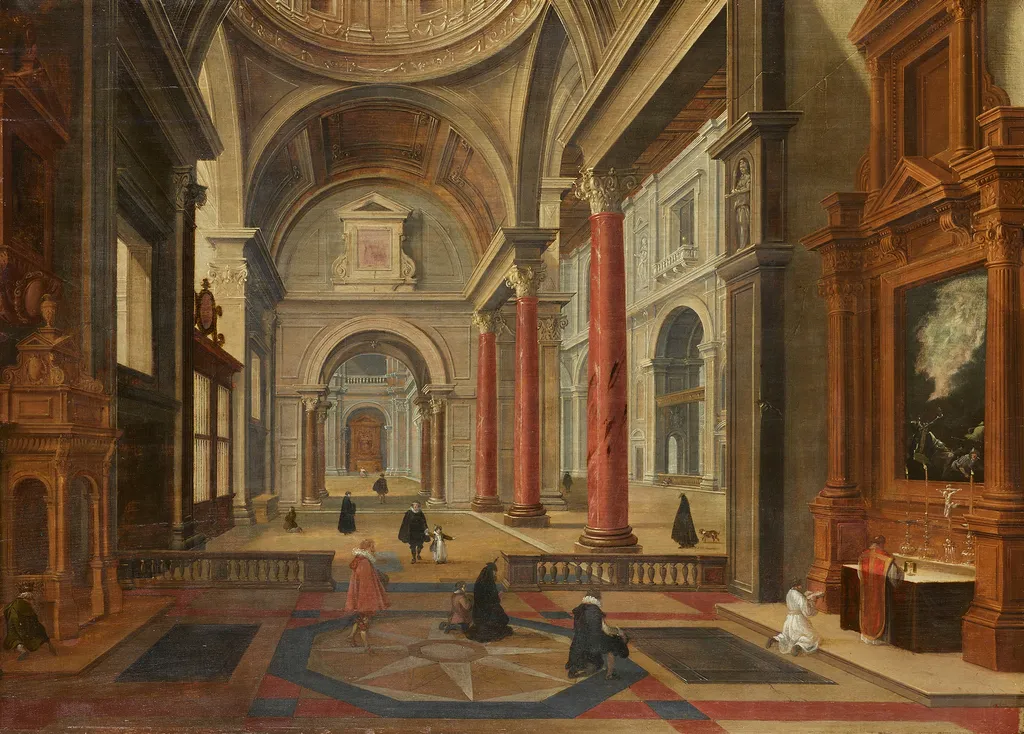
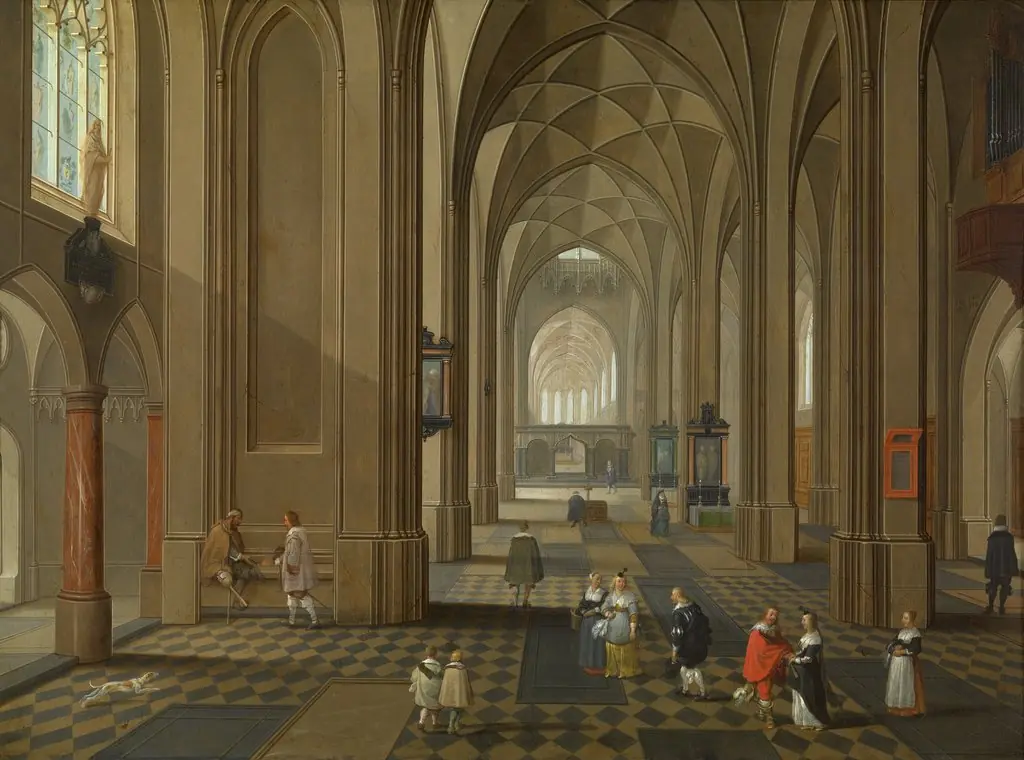
Church Interior is an unspecified painting by the Dutch Golden Age artist Esaias van de Velde. It dates from 1627 and is held in the collection of the Gemäldegalerie Berlin.
About this work
Overview
Painted in 1627 by Esaias van de Velde, this work captures the interior of a grand church, reflecting the quiet solemnity of Dutch Protestant worship.
Painted in 1627 by Esaias van de Velde, this work captures the interior of a grand church, reflecting the quiet solemnity of Dutch Protestant worship. Van de Velde, primarily recognized for his landscapes, turned his attention to architectural interiors during this period. The painting is part of the collection at the Gemäldegalerie in Berlin, where it remains a key example of early 17th-century Dutch interior scenes.
Subject & Meaning
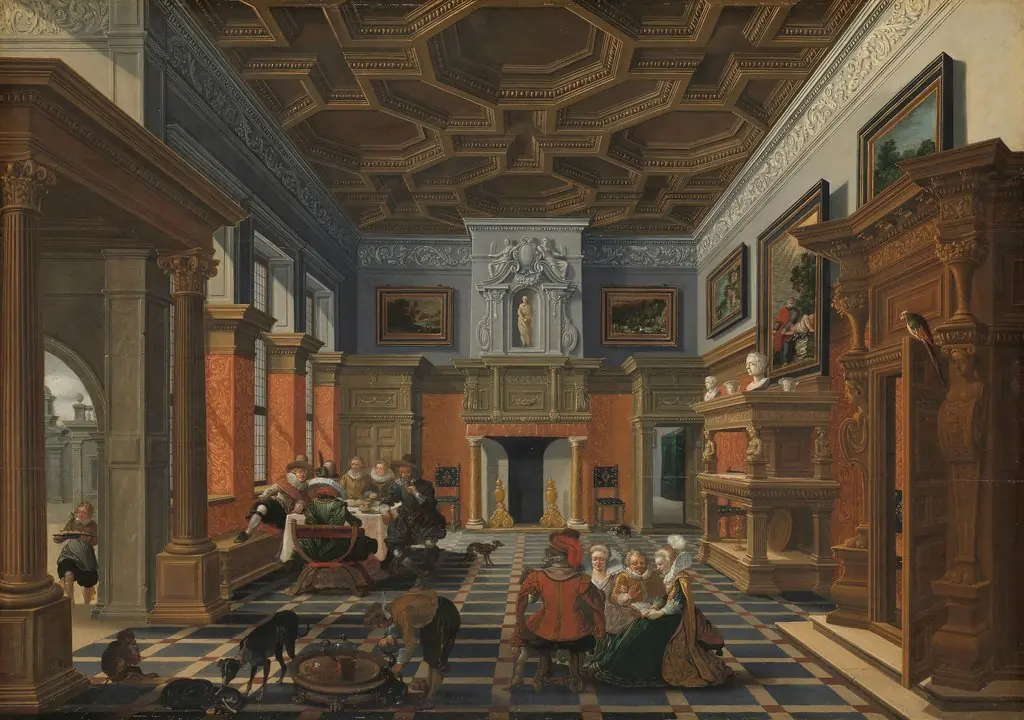
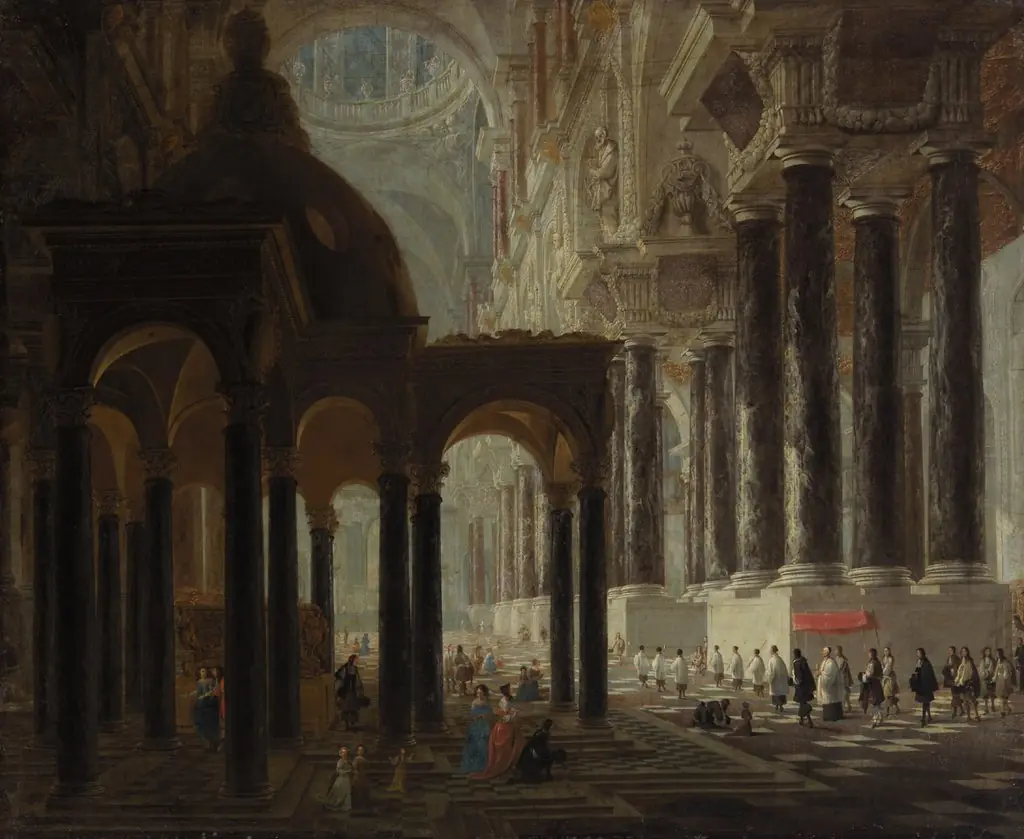
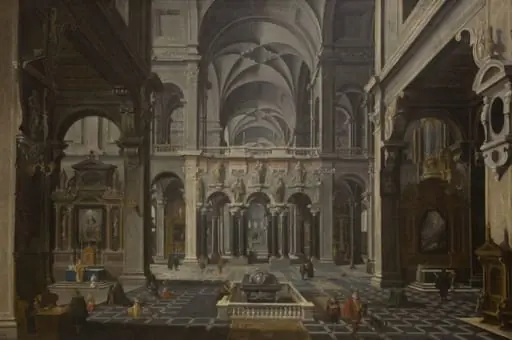
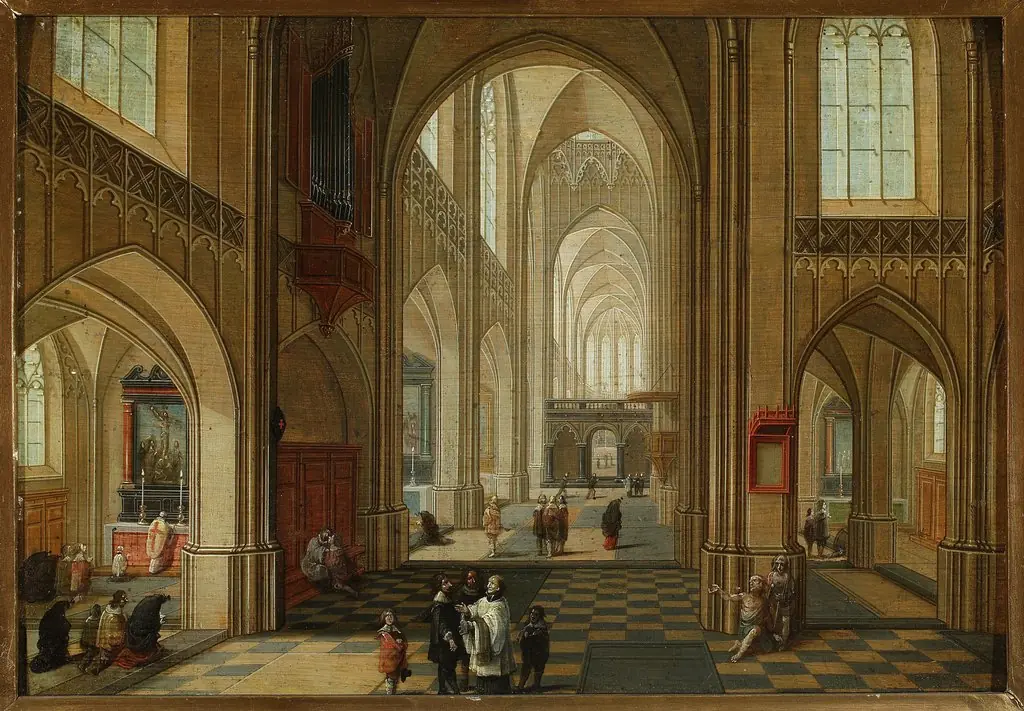
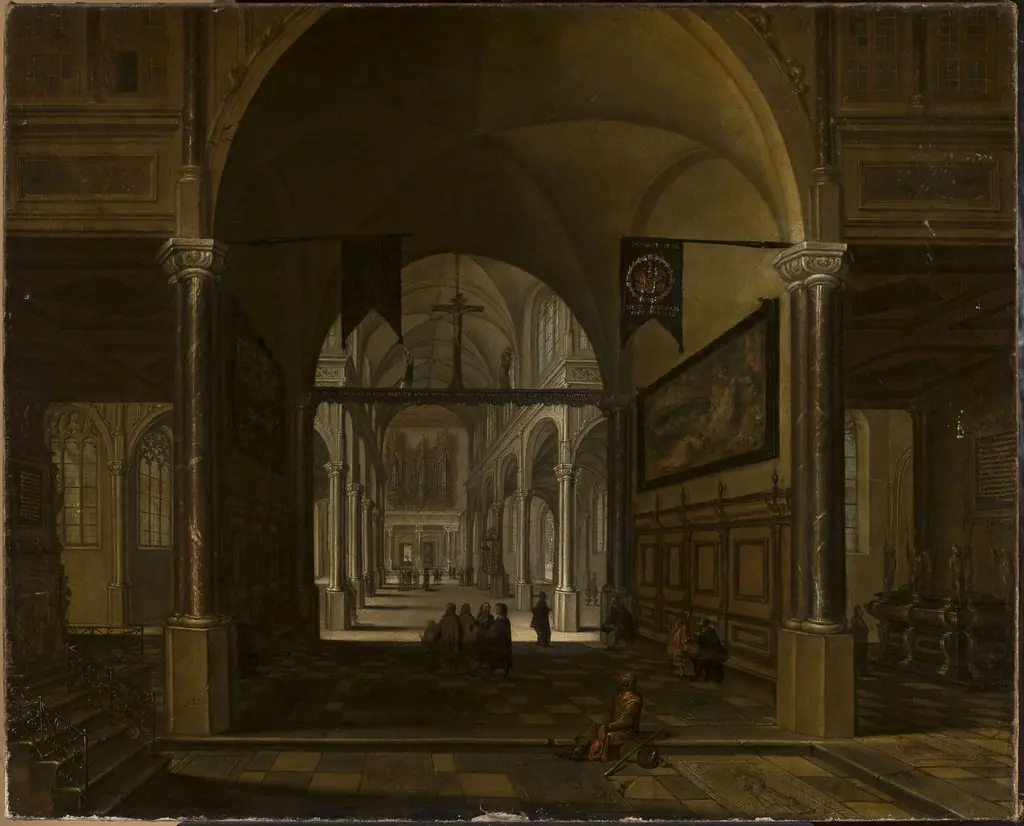
The scene depicts a modest congregation engaged in private devotion within a spacious church. Figures are arranged in quiet groups—some kneeling, others seated or standing—emphasizing individual reflection over ceremonial spectacle. The priest at the altar, dressed in red, anchors the composition without dominating it. The absence of overt religious iconography suggests a focus on personal piety, consistent with Reformed Protestant values of the time.
Technique & Style
Van de Velde employs precise linear perspective to convey the depth of the church’s architecture, with tall red columns and a vaulted ceiling receding into the distance. Stone tiles on the floor form a geometric pattern that guides the viewer’s eye. Soft, diffused light enters from unseen windows, casting subtle shadows and enhancing the sense of stillness. His brushwork is controlled, favoring clarity over dramatic effect, aligning with the restrained aesthetic of Dutch genre painting.
History & Provenance
The painting was completed in 1627 and entered the collection of the Gemäldegalerie Berlin in the 19th century, likely through acquisitions from private German collections. It has remained in the museum’s holdings since, with no record of significant relocation or ownership changes. Its preservation reflects its early recognition as a representative work of Dutch architectural painting from the period.
Context
In the early 1600s, Dutch artists increasingly turned to secular and architectural subjects following the Protestant Reformation, which discouraged religious imagery in churches. Van de Velde’s interior scenes, including this one, responded to a growing market for depictions of everyday sacred spaces. These works served both as visual records and as meditations on communal and personal devotion in a newly reformed society.
Legacy
Van de Velde’s *Church Interior* helped establish a genre of architectural painting that influenced later artists like Pieter Jansz. Saenredam. Its emphasis on spatial clarity and quiet human presence became a model for depicting sacred spaces without iconographic grandeur. Though not widely exhibited today, it remains a reference point in studies of Dutch religious life and the evolution of interior painting in the 17th century.
Own this work as a print
Artist & collection
Artist
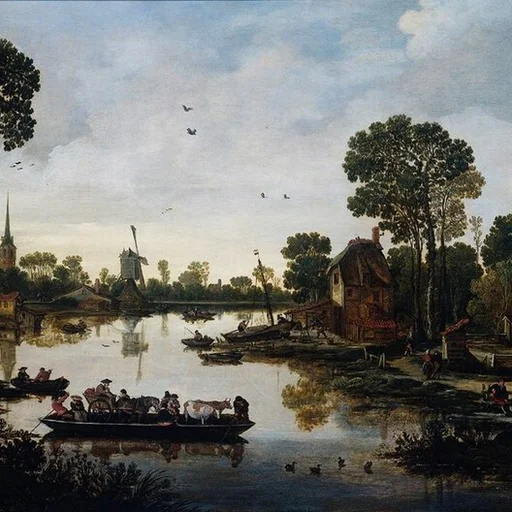
Esaias van de Velde (17 May 1587 (baptized) – 18 November 1630 (buried)) was a Dutch Golden Age painter, mainly of landscapes and a printmaker who experimented with etching.