Artwork
Magnifique Bay Horse
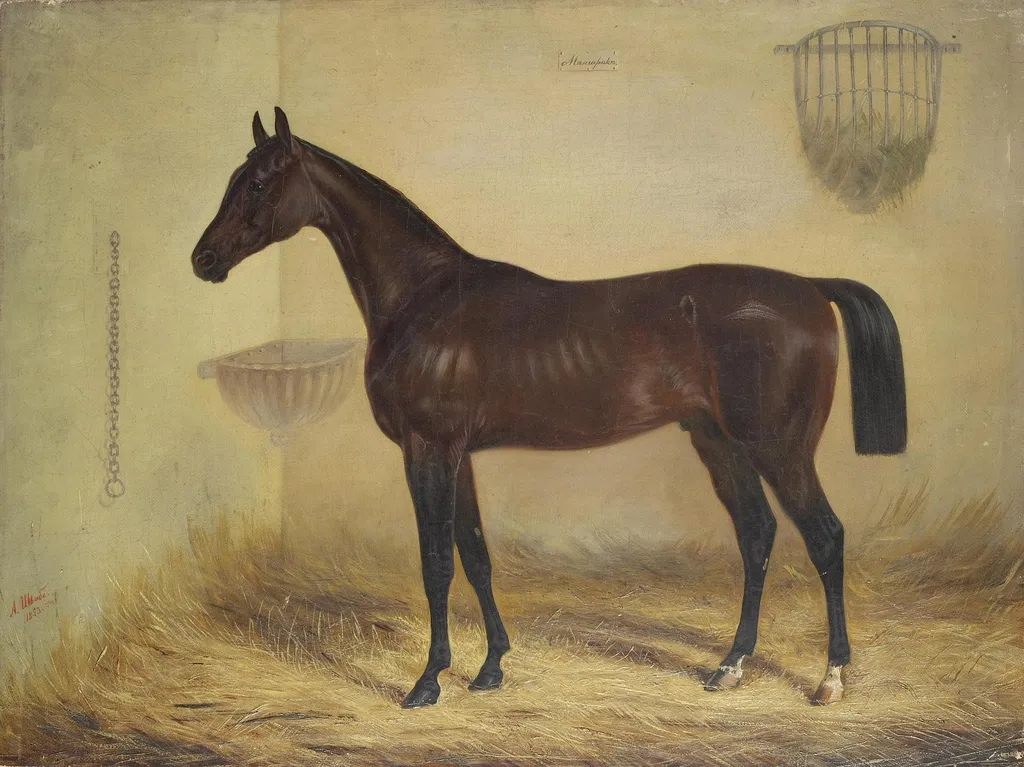
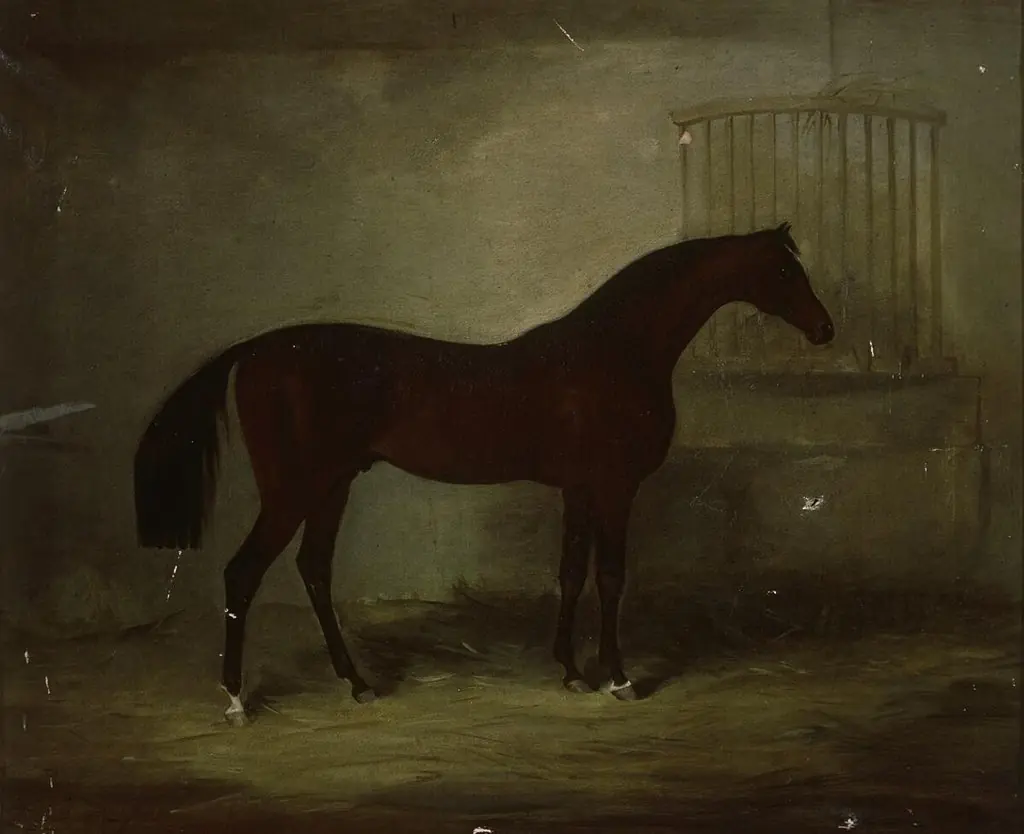
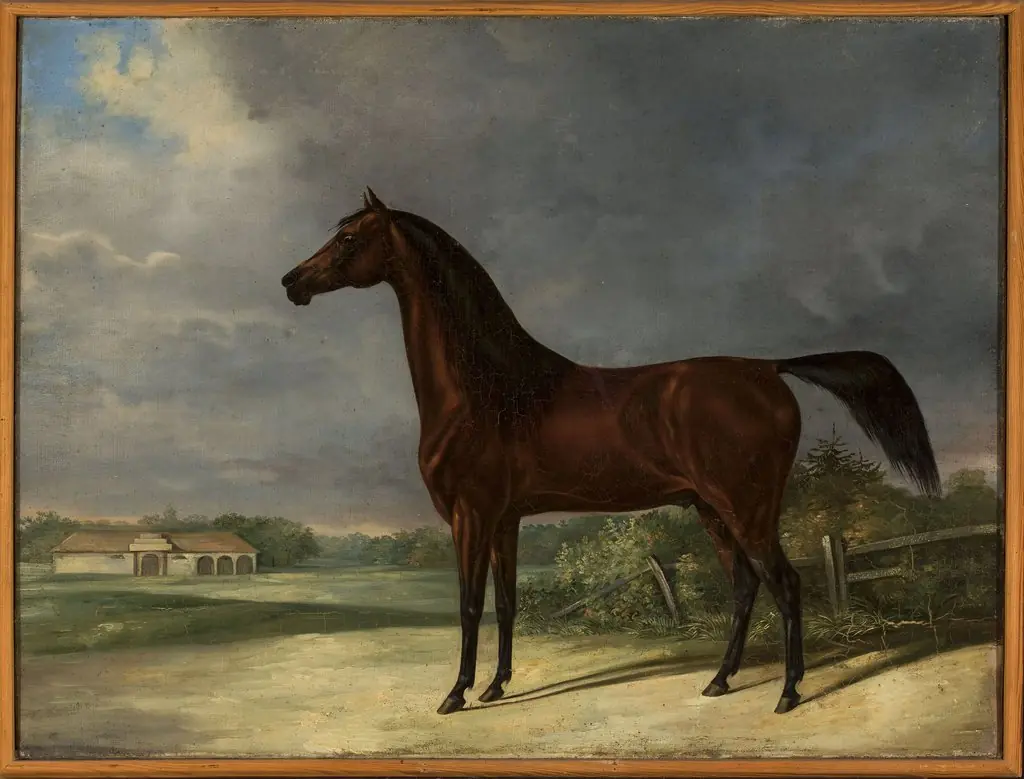
Magnifique Bay Horse is an oil painting by the Realist artist Alexander Schwabe. It dates from 1853 and is held in the collection of the Hermitage Museum.
About this work
Overview
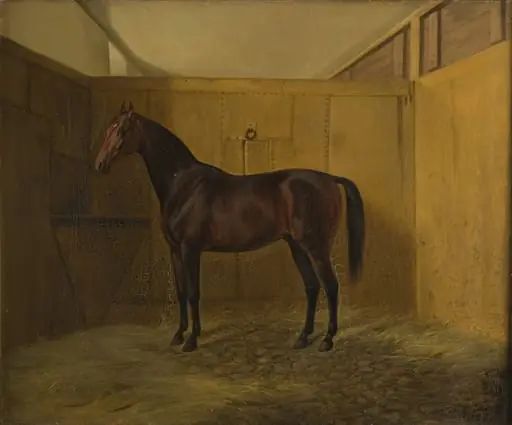
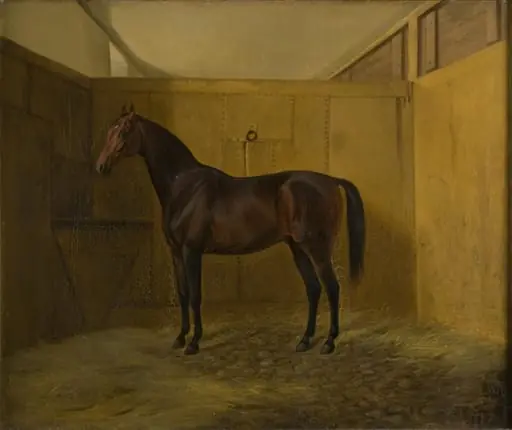
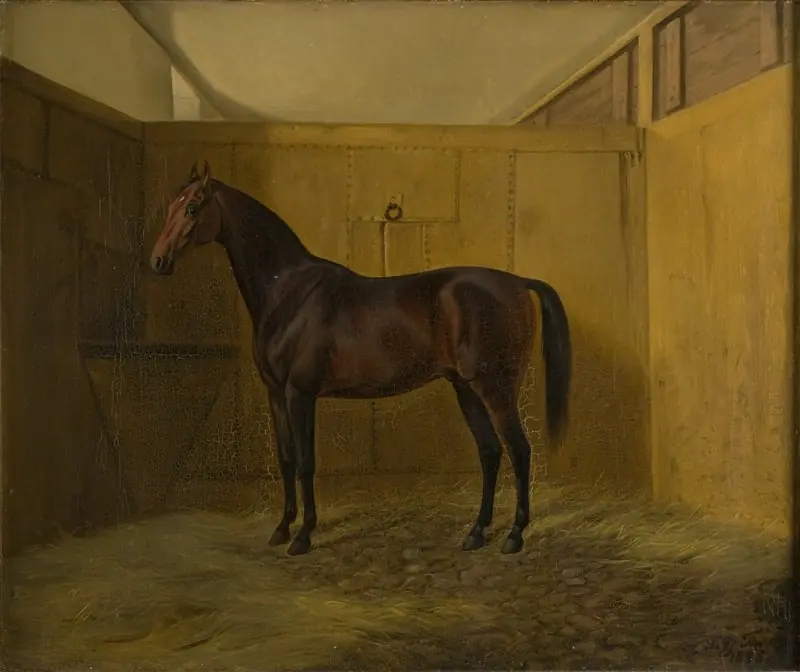
Painted in 1853 by Alexander Schwabe, this oil on canvas depicts a bay horse in a stable setting. The work is part of the State Hermitage Museum’s collection and reflects the 19th-century European tradition of animal portraiture. Schwabe’s focus on the horse’s physical presence and environment suggests an interest in realism and the dignity of working animals.
Subject & Meaning
The subject is a dark bay stallion, standing calmly in a hay-strewn enclosure. Its turned head and alert posture convey quiet vigilance rather than motion. The hanging basket and dangling chain imply a functional stable space, grounding the animal in daily rural life. The painting avoids romanticization, instead presenting the horse as a tangible, grounded presence within its working context.
Technique & Style
Schwabe employs chiaroscuro to model the horse’s muscular form, using subtle shifts in light to highlight the sheen of its coat. The straw beneath its hooves is rendered with textured brushwork, contrasting with the smoothness of the animal’s hide. The background remains muted, directing focus to the horse’s silhouette and the quiet interplay of shadow and reflected light across its body.
History & Provenance
The painting entered the State Hermitage Museum’s collection in the 19th century, likely acquired during a period of expanded interest in European realist art. Its provenance prior to museum acquisition is undocumented, but its technical precision and subject matter align with Schwabe’s known output as a painter of livestock and rural scenes in mid-century Germany.
Context
In the mid-1800s, detailed animal portraiture was valued in academic circles for its demonstration of observational skill. Schwabe’s work fits within a broader trend of artists documenting domesticated animals with scientific precision, often commissioned by landowners or institutions interested in breed characteristics and animal husbandry.
Legacy
Though not widely exhibited outside Russia, the painting remains a quiet example of 19th-century equine realism. It contributes to the understanding of how non-royal animals were rendered with dignity in European art, reflecting a shift toward appreciating the everyday labor and presence of livestock in visual culture.
Own this work as a print
Artist & collection