Artwork
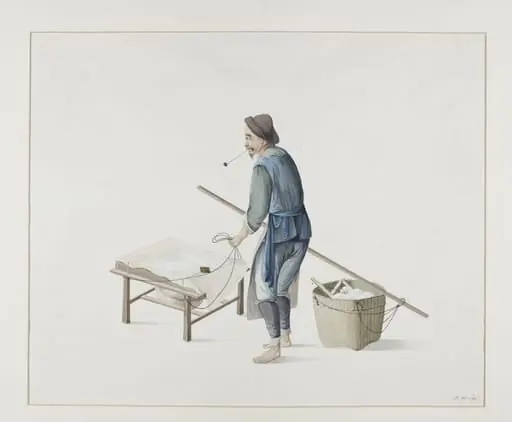
A Chinese Peasant Selling Betel
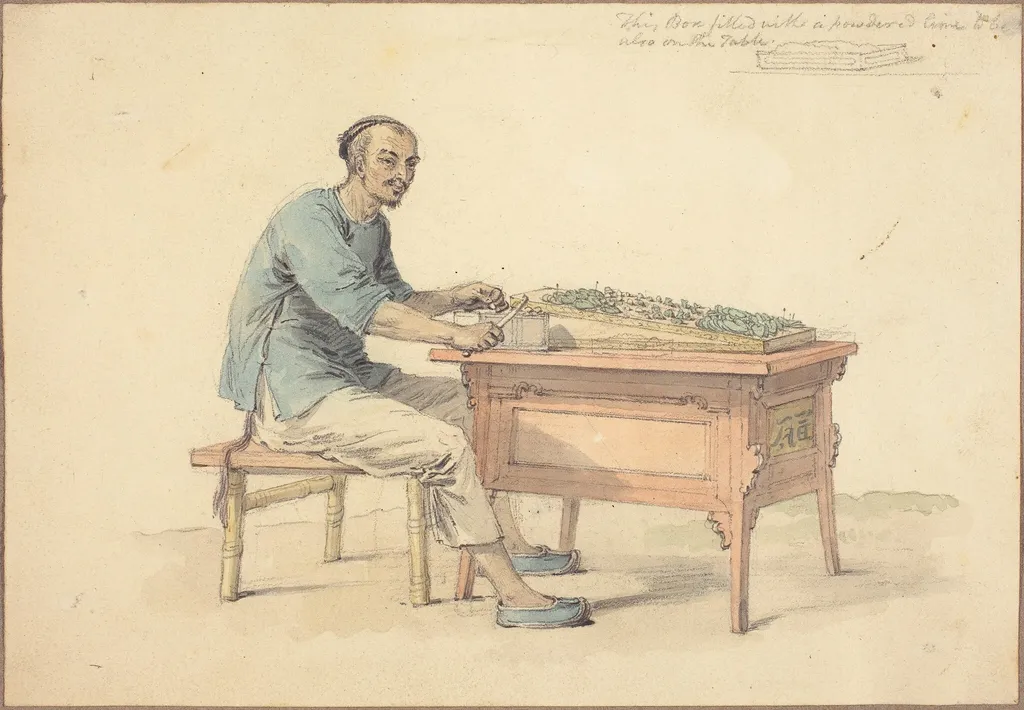
A Chinese Peasant Selling Betel is an ink drawing by the Romanticist artist William Alexander. It dates from 1794 and is held in the collection of the National Gallery of Art.
About this work
Overview
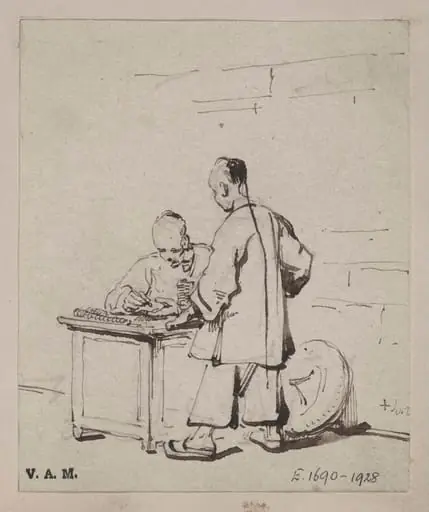
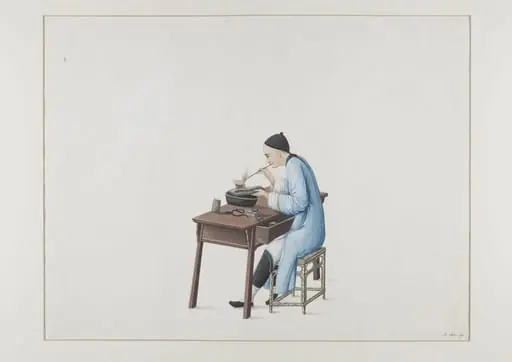
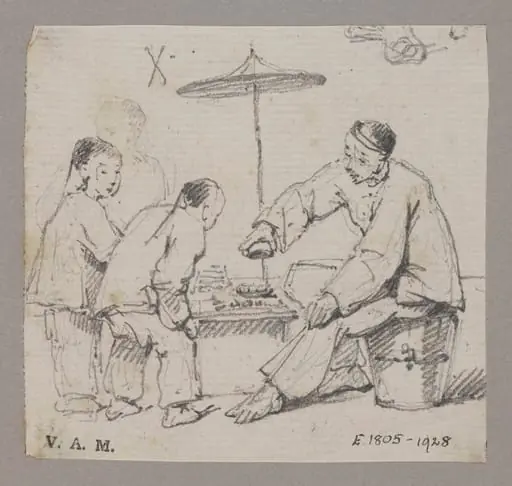
Created in 1794, this watercolor drawing by William Alexander depicts a solitary figure engaged in the preparation of betel. Rendered on wove paper with a combination of watercolor, pen, black ink, and graphite, the composition centers on a peasant seated at a modest wooden table, surrounded by leaves and assorted objects, his attention fixed on the task at hand.
Subject & Meaning
The central figure is a Chinese laborer handling betel leaves, a traditional stimulant chewed in many Asian societies. He pours a fine, camphor-based powder from a small container onto the foliage, suggesting a commercial transaction or preparation for consumption. The scene offers a glimpse into everyday economic activity and cultural practices of the period.
Technique & Style
Alexander employed a layered watercolor approach, building translucent washes over a graphite underdrawing. Pen and black ink add definition to the figure and objects, while the delicate glazing creates subtle tonal variations in the leaves and fabric. The use of wove paper provides a smooth surface that supports fine detail and the interplay of color and line.
History & Provenance
Signed and dated 1794, the work originates from Alexander’s period of interest in Asian subjects, reflecting contemporary European curiosity about distant cultures. The drawing has remained in private collections before entering a museum context, where it serves as a documented example of late‑18th‑century cross‑cultural representation in Western art.
Artist & collection