Artwork
Untitled
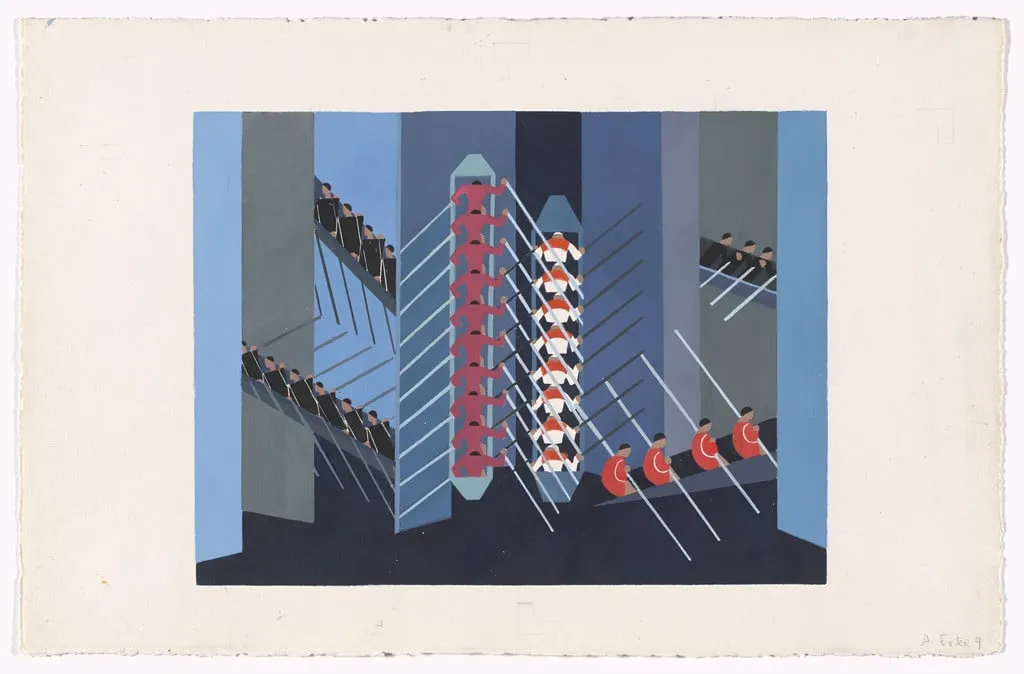
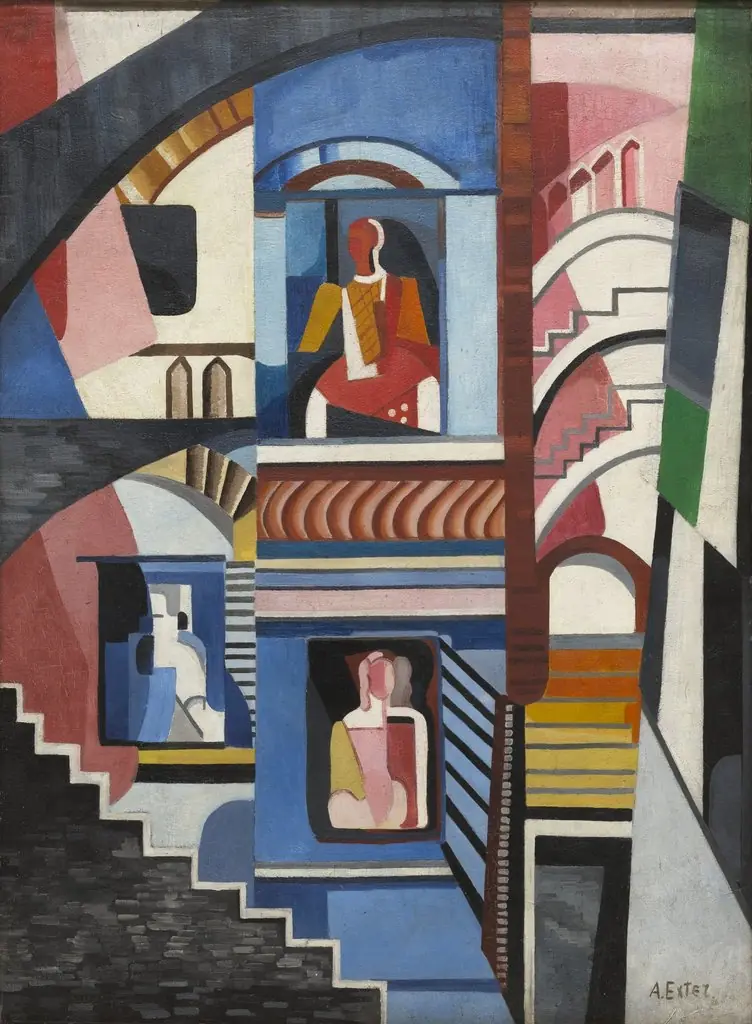
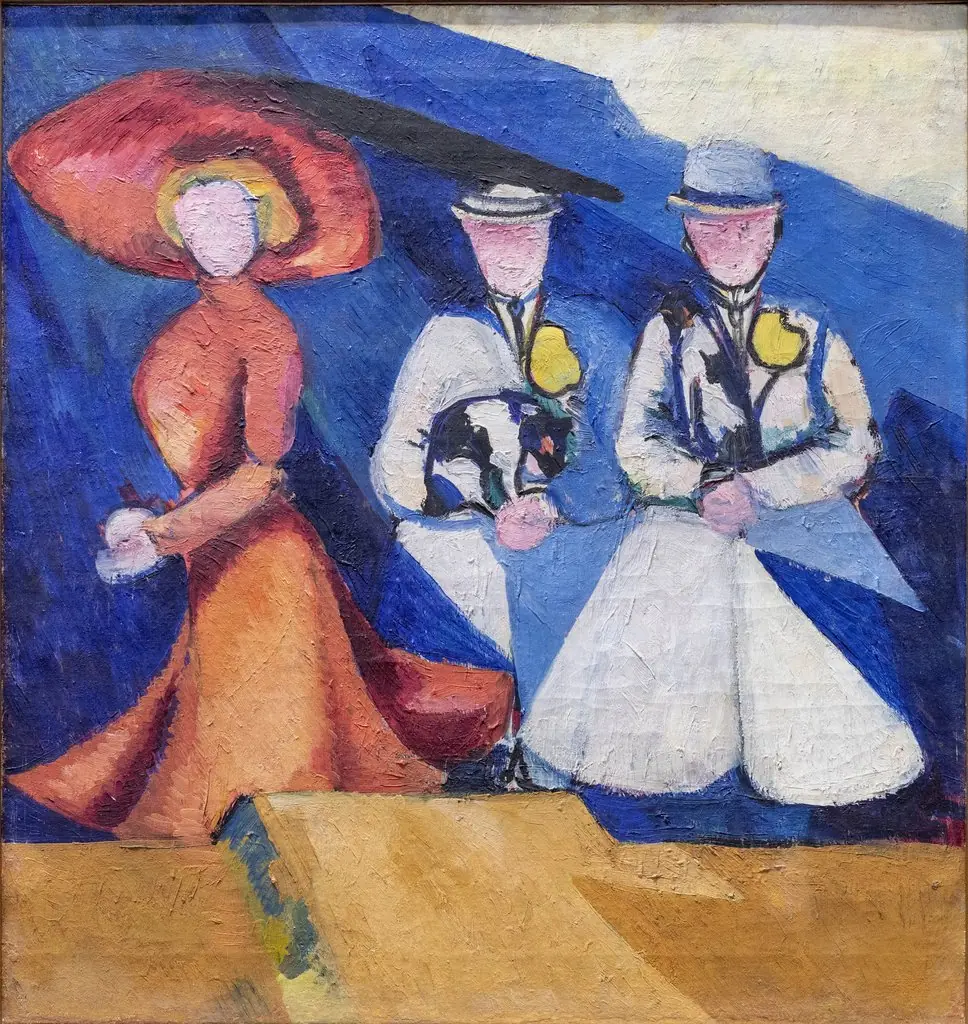
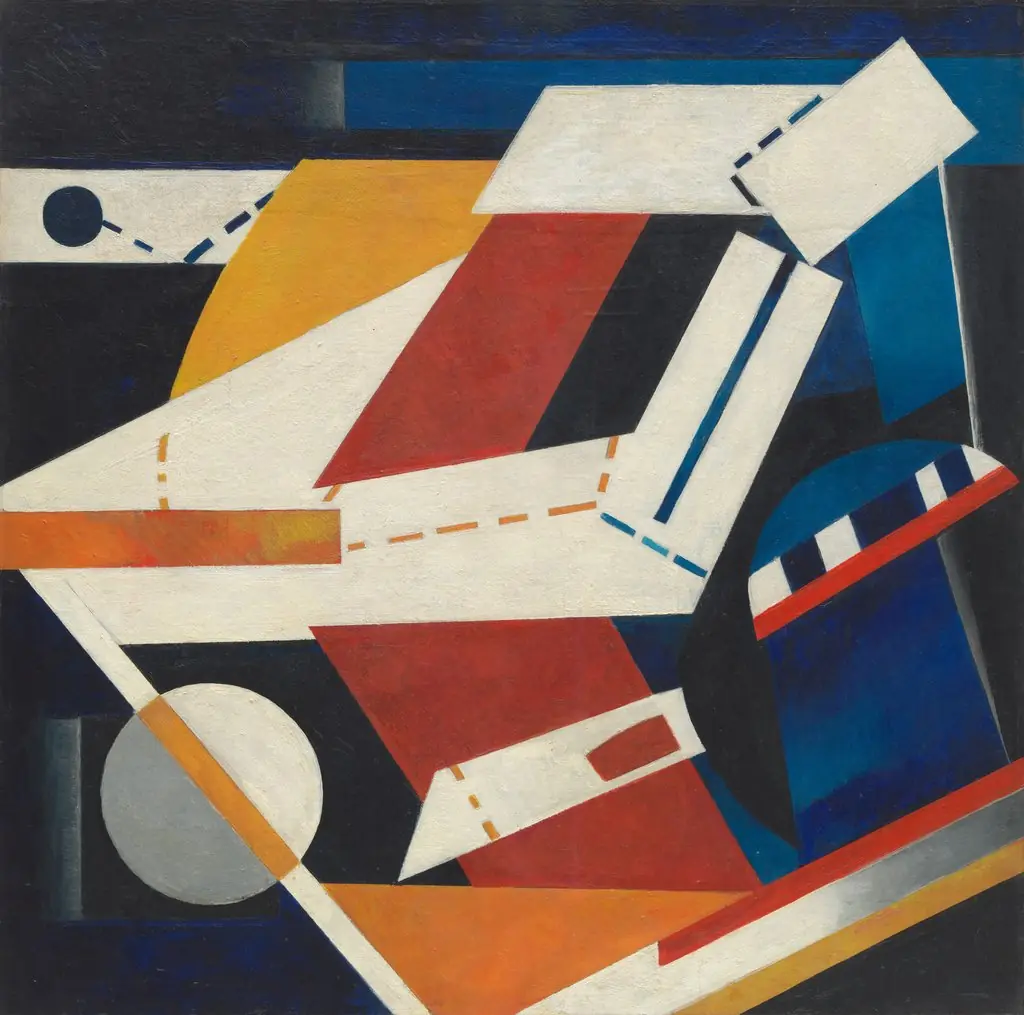
Untitled is a print by Aleksandra Ekster. It dates from 1930 and is held in the collection of the Museum of Modern Art. Created in 1930, this work is one of fifteen pochoir prints in a bound album by Alexandra Exter.
About this work
Overview
Executed using the stencil-based pochoir technique, it reflects her engagement with graphic design and decorative arts during her time in Paris.
Created in 1930, this work is one of fifteen pochoir prints in a bound album by Alexandra Exter. Executed using the stencil-based pochoir technique, it reflects her engagement with graphic design and decorative arts during her time in Paris. The piece belongs to The Museum of Modern Art’s collection and exemplifies her transition from painting into printmaking, aligning with broader modernist experiments in form and reproduction.
Subject & Meaning
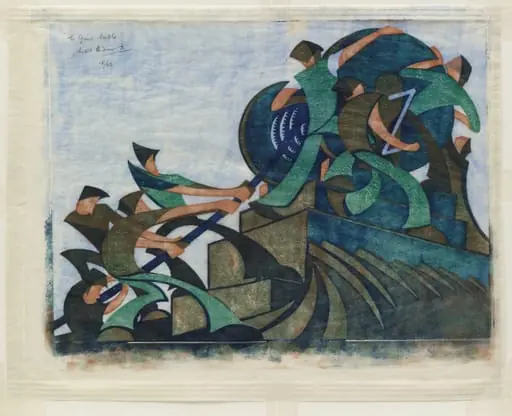
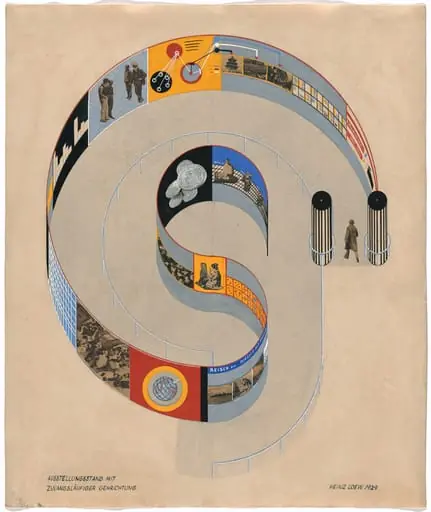
The image depicts a fragmented urban scene populated by abstracted human figures ascending irregular staircases. The figures, rendered as angular, stacked forms, suggest movement without narrative clarity. There is no single focal point; instead, the composition emphasizes rhythm and spatial dislocation. The absence of realistic context invites interpretation as an exploration of modern life’s complexity rather than a literal depiction.
Technique & Style
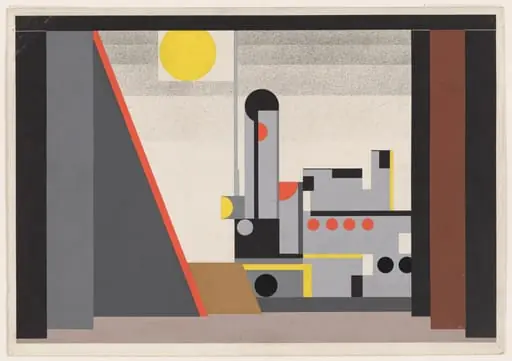
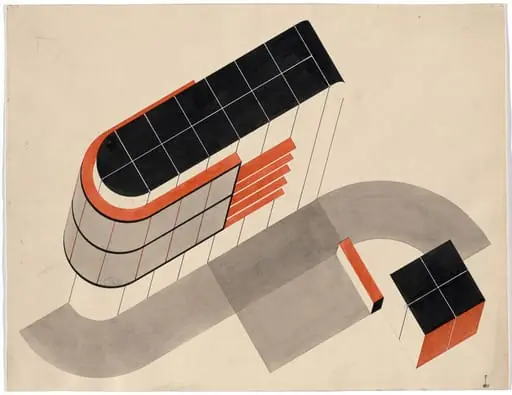
Exter employed pochoir, a labor-intensive stencil method that allows for precise, flat areas of color. The result is sharply defined shapes with crisp edges, free from brushwork or gradation. Bold hues—blue, red, and black—dominate, reinforcing the geometric abstraction. The style merges Cubist fragmentation with Constructivist economy, reflecting her background in stage design and her interest in integrating art with industrial aesthetics.
History & Provenance
The album was produced during Exter’s years in Paris, where she maintained ties with avant-garde artists including Picasso and Braque. Though her earlier work in Russia and Ukraine was rooted in Cubo-Futurism, this series reflects her adaptation to European modernist circles. The prints were likely made for limited circulation among collectors and artists. The Museum of Modern Art acquired the album as part of its early commitment to documenting international modernist print practices.
Context
In the late 1920s and early 1930s, many European artists turned to printmaking as a means of reaching wider audiences and exploring abstraction beyond canvas. Pochoir, long used in fashion and decorative arts, gained renewed interest among modernists for its precision and reproducibility. Exter’s album situates her within this trend, bridging her Russian avant-garde roots with Parisian graphic design circles.
Legacy
Exter’s pochoir series remains a significant example of how female modernists expanded the boundaries of printmaking beyond illustration. Her integration of architectural form, movement, and color influenced later generations working in graphic design and stage production. Though less widely known than her male contemporaries, her work contributed to the visual language of interwar modernism in both Europe and the United States.
Artist & collection
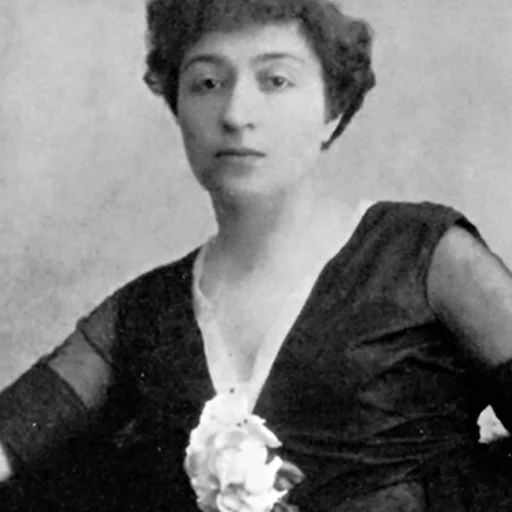
Artist
Aleksandra Aleksandrovna Ekster (née Grigorovich; Russian: Алекса́ндра Алекса́ндровна Эксте́р; Ukrainian: Олекса́ндра Олекса́ндрівна Е́кстер; 18 January 1882 – 17 March 1949), also known as Alexandra Exter, was a Russian and French painter…