Artwork
Château de la Bâtiaz, Sion, Martigny
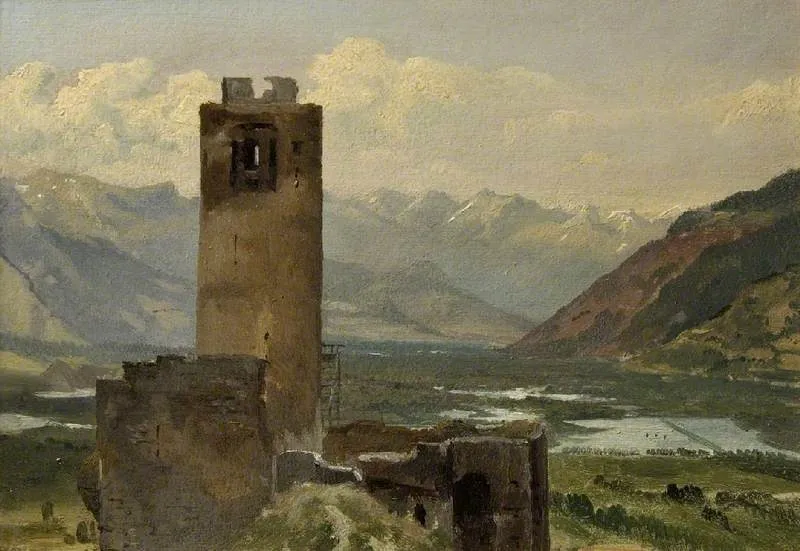
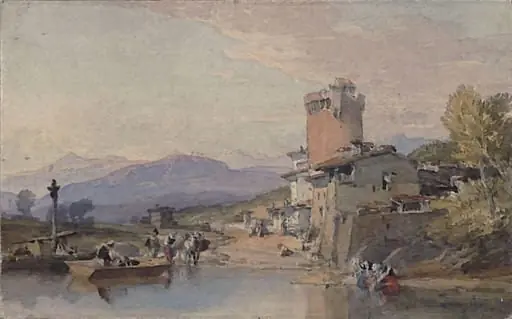
Château de la Bâtiaz, Sion, Martigny is an unspecified painting by Alexandre Desgoffe. It dates from 1827 and is held in the collection of the Fitzwilliam Museum.
About this work
Overview
The painting reflects his early interest in architectural forms and natural landscapes, executed with careful observation and restrained tonality.
Painted in 1827 by French artist Alexandre Desgoffe, this work captures the ruins of Château de la Bâtiaz near Sion in the Valais region. Though trained in the academic tradition under Ingres, Desgoffe here focuses on a precise topographical subject rather than myth or history. The painting reflects his early interest in architectural forms and natural landscapes, executed with careful observation and restrained tonality.
Subject & Meaning
The painting centers on a solitary, weathered stone tower, its ruin suggesting the passage of time and the decline of medieval fortifications. Behind it, the valley of the Rhône unfolds with a winding river and distant alpine peaks, grounding the scene in a specific Swiss locale. The muted sky and subdued palette evoke a quiet, contemplative mood, emphasizing the tower’s isolation rather than its former grandeur.
Technique & Style
Desgoffe employs a precise, linear approach to form, with careful rendering of the tower’s stonework and the layered contours of the landscape. The color palette is restrained—earthy browns, muted greens, and grayish skies—creating a harmonious, atmospheric unity. Brushwork is controlled, avoiding dramatic flourish, aligning with academic ideals of clarity and compositional balance.
History & Provenance
Created early in Desgoffe’s career, the painting predates his later travels to Italy and his decorative commissions for the Bibliothèque Nationale. It entered the Fitzwilliam Museum’s collection as part of its 19th-century European paintings, likely acquired through a private donation or bequest. Its survival as a relatively early work offers insight into the artist’s development before his shift toward larger-scale decorative projects.
Context
In the 1820s, French artists increasingly turned to regional landscapes and historical ruins as subjects, influenced by Romanticism’s fascination with decay and place. Though Desgoffe remained rooted in academic training, this painting aligns with a broader trend of topographical realism in Swiss and Alpine scenery, reflecting growing interest in national identity and natural heritage across Europe.
Legacy
While Desgoffe is better known for his later decorative works, this early painting stands as a quiet testament to his observational skill and sensitivity to architectural ruin. It remains a representative example of academic landscape painting in the decades before the rise of Impressionism, preserving a moment when precise depiction and atmospheric mood coexisted in European art.
Artist & collection
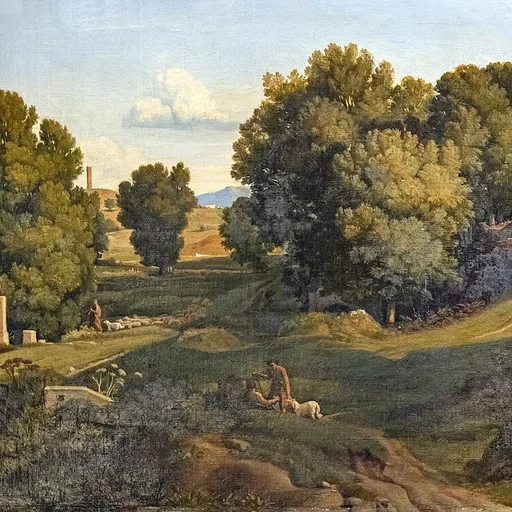
Artist
Alexandre Desgoffe (1805–1882) was a French landscape painter born in Paris. He studied under Ingres, and travelled in Italy from 1837 to 1842. He usually introduced into his landscapes historical or mythological…

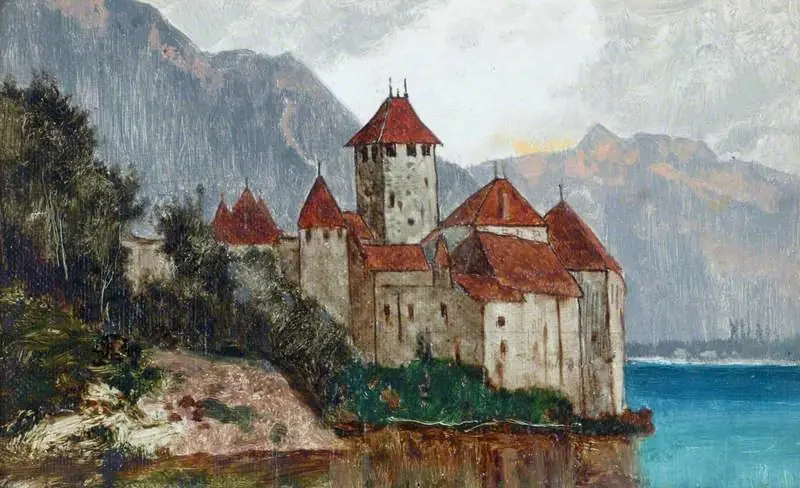 The Castle of Chillon on Lake Geneva
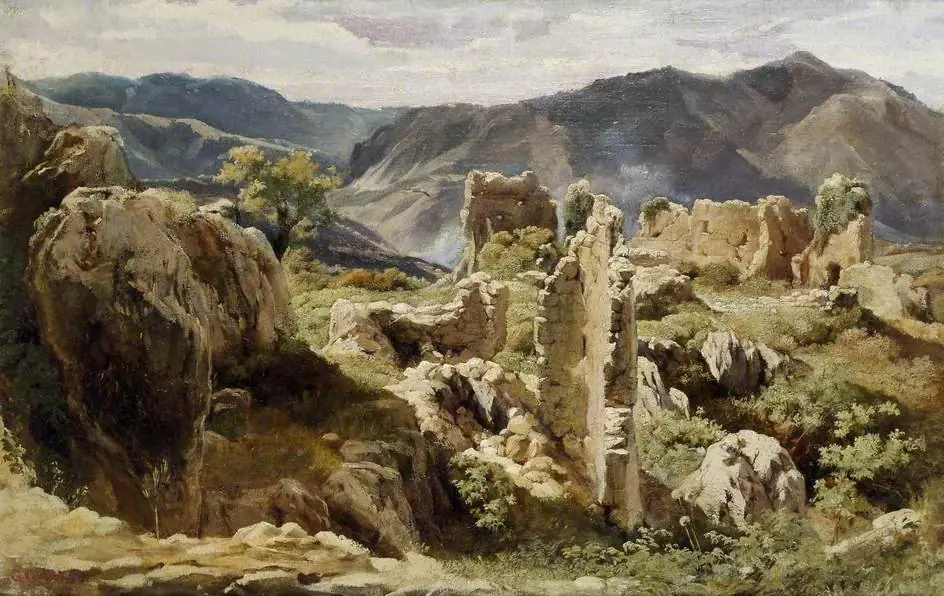 Ruins in the Colli Albani
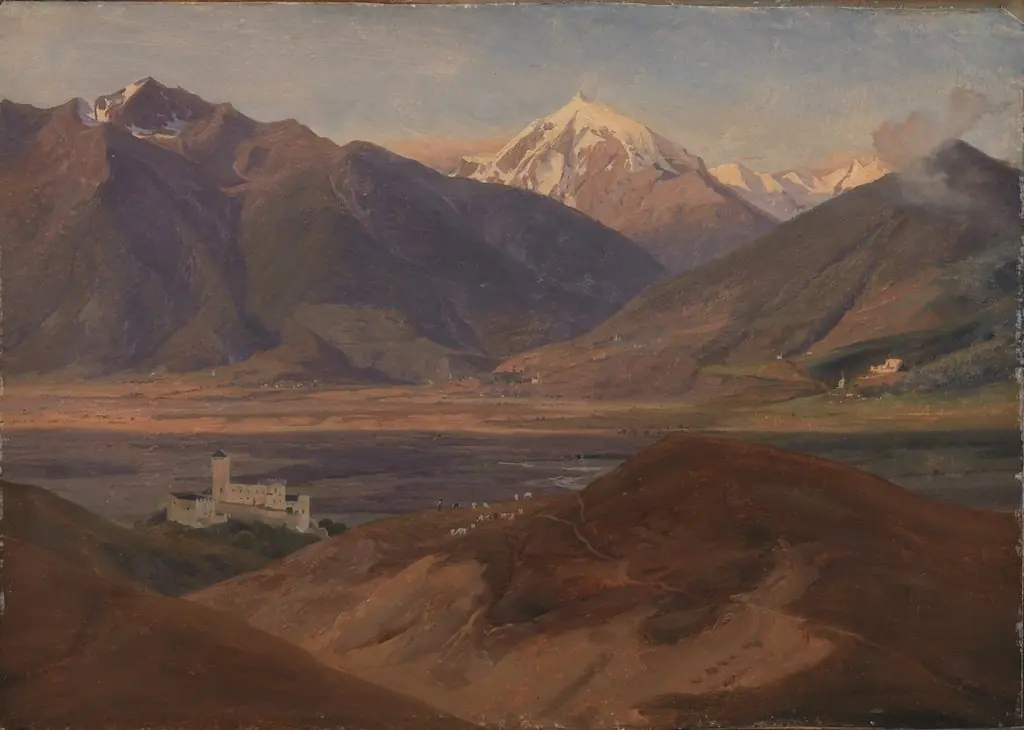 Mountain Landscape in Venosta with the Castle Coira and the Mountain Ortles
 Evening Landscape*
 Boccadasse, Genoa with Monte Fasce in the background
 Village of Lauris, in Vaucluse on the Banks of the River Durance
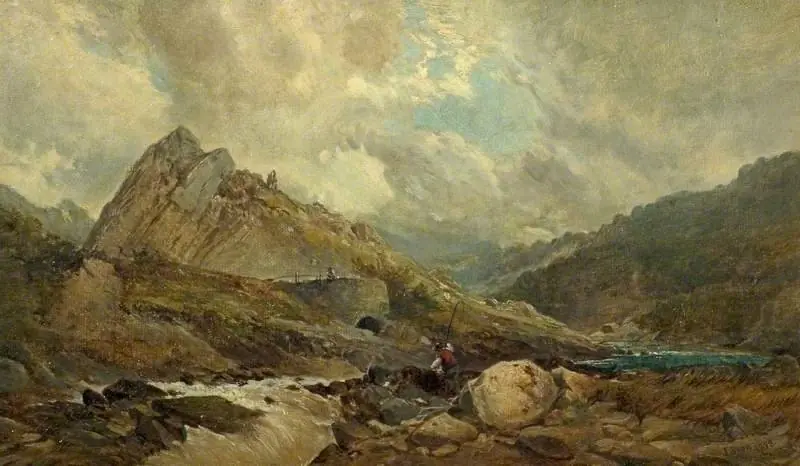 Valley of the Neath
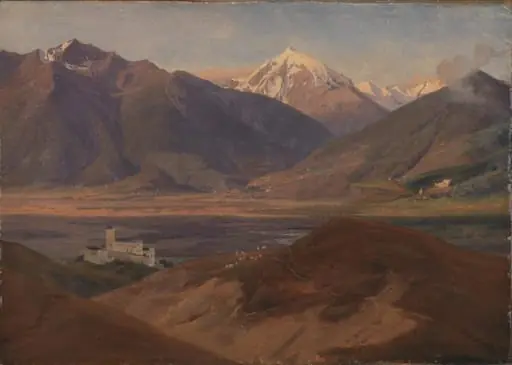 Mountain Landscape in Venosta with the Castle Coira and the Mountain Ortles
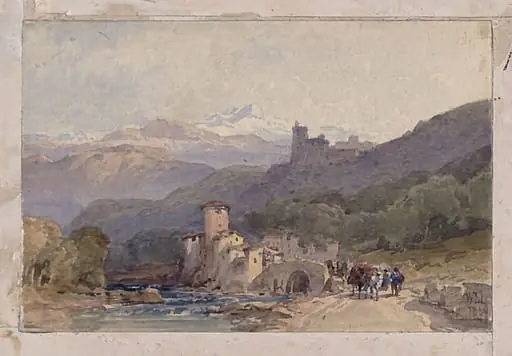 Strada di Aquila
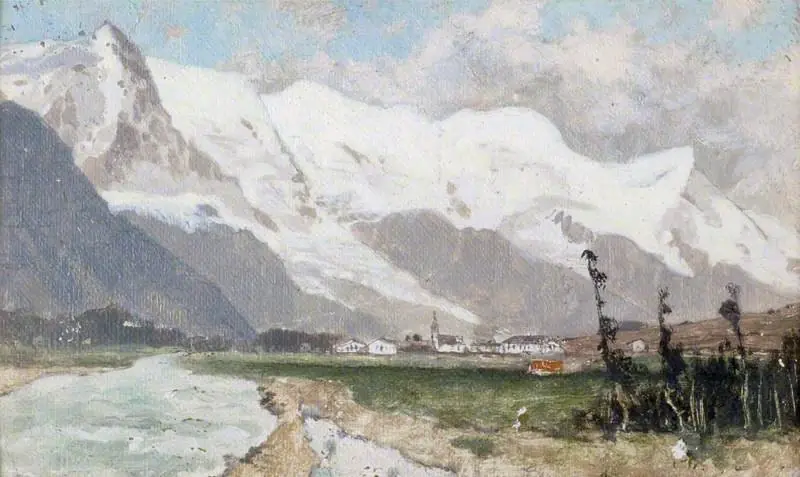 Chamonix and Mont Blanc
 On the Garigliano
 View near Sarzana, Val di Magra