Artwork
Pavilion at the Edge of a River
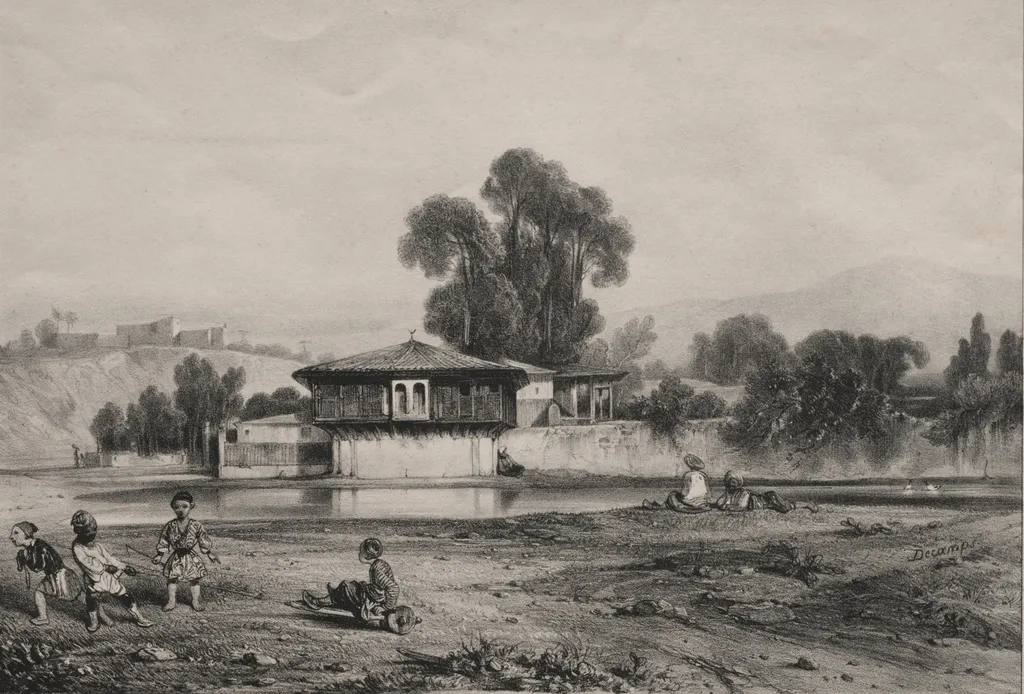
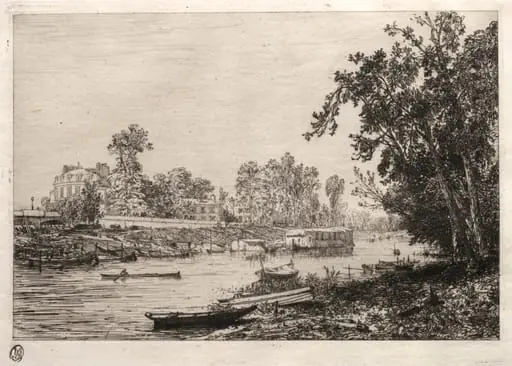
Pavilion at the Edge of a River is a print by the Romanticist artist Alexandre Gabriel Decamps. It dates from 1846 and is held in the collection of the Cleveland Museum of Art.
About this work
Overview
Created in 1846 by Alexandre-Gabriel Decamps, this ink and wash drawing depicts a tranquil riverside setting with a modest wooden pavilion at its center.
Created in 1846 by Alexandre-Gabriel Decamps, this ink and wash drawing depicts a tranquil riverside setting with a modest wooden pavilion at its center. The work is part of the collection at The Cleveland Museum of Art. Rendered with delicate tonal gradations, it captures a quiet moment in nature, emphasizing atmosphere over narrative detail. The composition invites contemplation through its subdued palette and soft focus.
Subject & Meaning
A group of four children engage in quiet play near the water’s edge, while a solitary figure observes from a distant wall. The scene avoids dramatic action, instead conveying stillness and solitude. The pavilion, neither grand nor inhabited, functions as a quiet anchor. The absence of human urgency suggests a moment suspended in time, evoking introspection rather than storytelling.
Technique & Style
Decamps employed ink wash to achieve subtle shifts in light and texture, allowing tones to blur at edges rather than define forms sharply. The pavilion’s roof and foliage are rendered with soft, diffused shading, mimicking the effect of atmospheric haze. This approach prioritizes mood over precision, aligning with Romantic-era interests in nature’s quiet subtleties and the emotional resonance of light.
History & Provenance
The drawing was completed in 1846 during Decamps’s later period, when he increasingly favored intimate, observational sketches over large-scale historical subjects. It entered the Cleveland Museum of Art’s collection through established acquisition channels, likely as part of a broader effort to represent European Romantic draftsmanship. Its provenance prior to museum acquisition remains undocumented in public records.
Context
In mid-19th century France, artists like Decamps turned away from academic grandeur toward personal, lyrical depictions of nature. This work reflects a growing interest in everyday moments and the emotional potential of landscape. While not overtly political, such scenes quietly resisted industrialization’s encroachment, offering instead a vision of serenity rooted in rural observation.
Legacy
Decamps’s use of wash to evoke atmosphere influenced later generations of French draftsmen, particularly those exploring tonal harmony over line. Though less celebrated than his paintings, this drawing exemplifies his skill in conveying quiet emotion through minimal means. It remains a quiet testament to the value of stillness in an era of rapid change.
Artist & collection
Artist
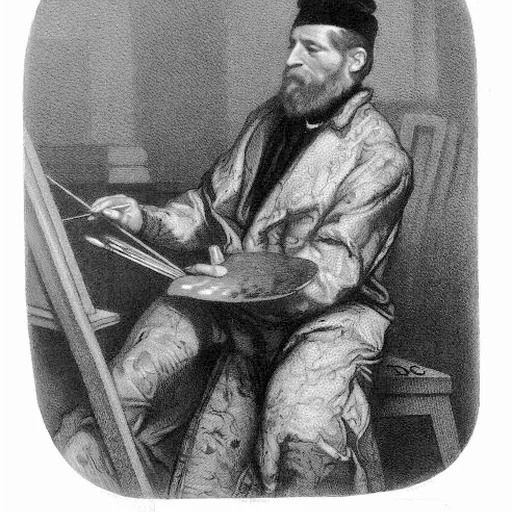
Alexandre-Gabriel Decamps was a French painter noted for his Orientalist works.

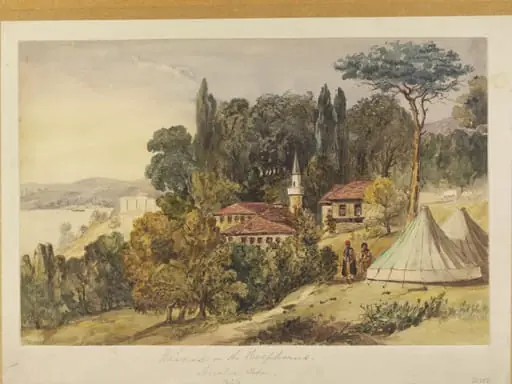 Beicos on the Bosphorus. Asiatic Side
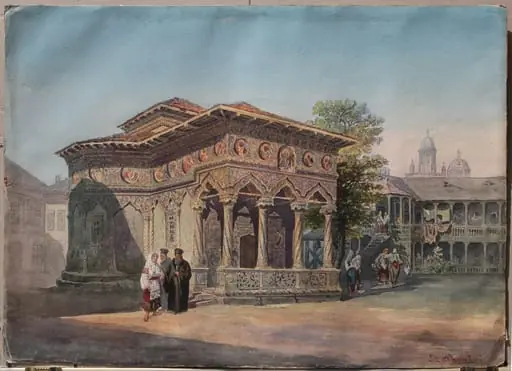 Biserica Stavropoleos
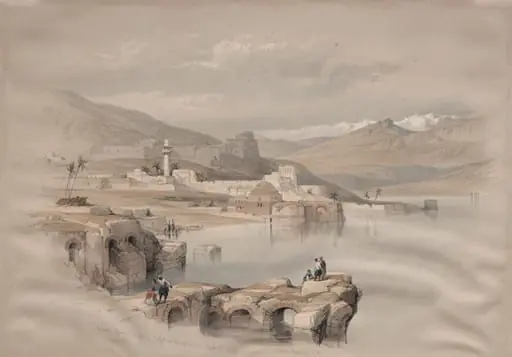 Tiberias, from the Walls, Safet in the Distance
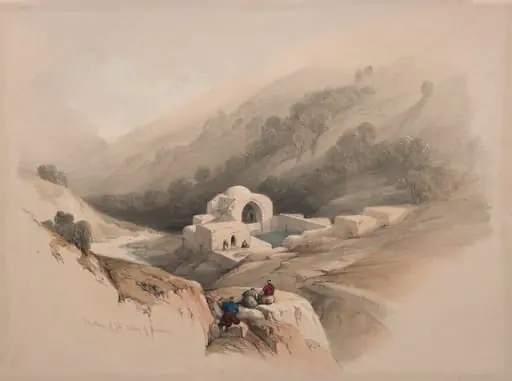 Fountain of Job, Valley of Hinnom
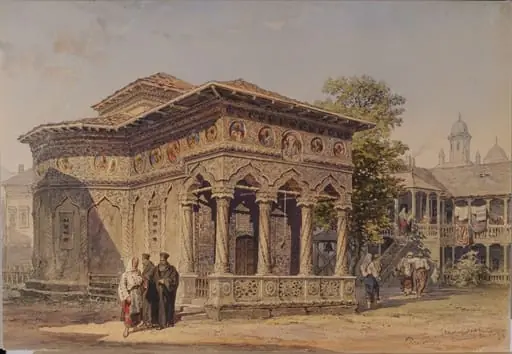 Biserica Stavropoleos
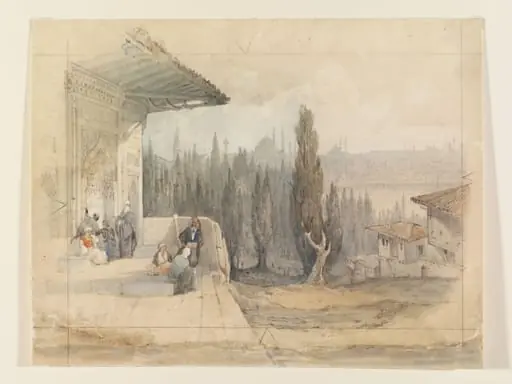 Pera
Pera![Kirkclisia [Kirklareli] 40 leagues from Constantinople, by Luigi Mayer](https://artifactworldgallery.com/img/luigi-mayer--kirkclisia-kirklareli-40-leagues-from-constantinople--fb21c76d0b35aeb7-w320.webp) Kirkclisia [Kirklareli] 40 leagues from Constantinople
Kirkclisia [Kirklareli] 40 leagues from Constantinople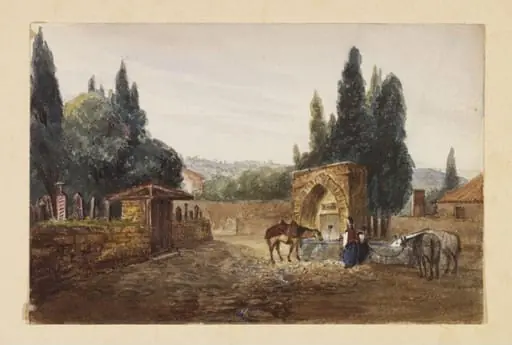 Scene at a Fountain outside a cemetery, probably Smyrna
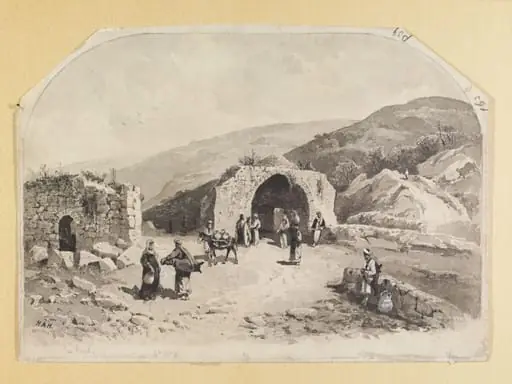 En Rogel, Holy Land
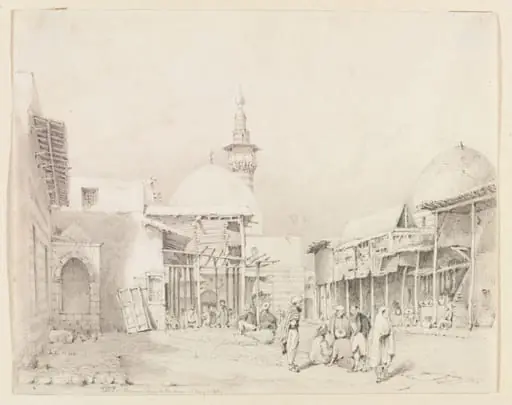 Damas. dans le Madan
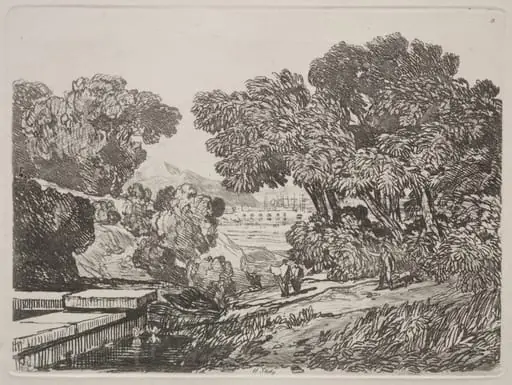 Liber Studiorum: A Study
 At Neuilly (Seine)