Artwork
Beicos on the Bosphorus. Asiatic Side
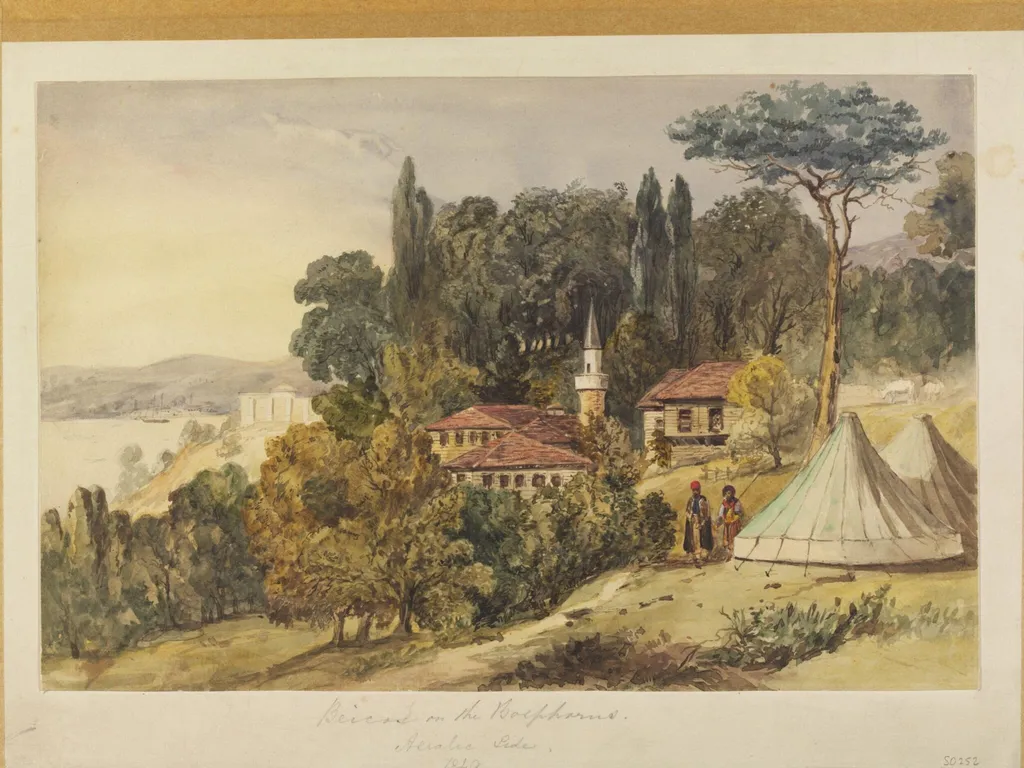
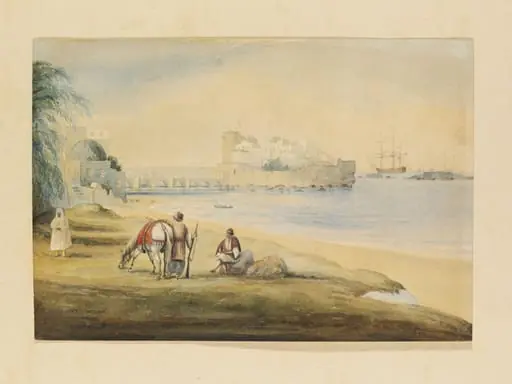
Beicos on the Bosphorus. Asiatic Side is a watercolor work on paper by the Romanticist artist Frederick Charles Cooper. It dates from 1849 and is held in the collection of the Victoria and Albert Museum.
About this work
Overview
Frederick Charles Cooper created this 1849 watercolour during Austen Henry Layard’s second expedition to Nineveh.
Frederick Charles Cooper created this 1849 watercolour during Austen Henry Layard’s second expedition to Nineveh. The work belongs to a group of topographical sketches made as the team traveled through Ottoman territories. Executed in delicate washes, the piece captures a quiet moment on the Asian shore of the Bosphorus, serving both as a personal record and a visual supplement to the expedition’s scholarly aims.
Subject & Meaning
The scene portrays two figures walking along a narrow path beside a modest dwelling with a red-tiled roof. Tents and trees recede into the background, with the steeple of a church barely visible amid foliage. The absence of grand architecture or human activity emphasizes solitude and stillness, reflecting the quiet observation typical of travel documentation rather than dramatic narrative. The location underscores the cultural crossroads of the region during a period of Western archaeological engagement.
Technique & Style
Cooper employed light, fluid watercolour washes to suggest atmosphere rather than detail. The pale sky and calm water are rendered with minimal pigment, allowing the paper’s whiteness to contribute to the luminosity. Brushwork is loose and suggestive, particularly in the foliage and distant hills, aligning with 19th-century topographical practices that prioritized immediacy and observational accuracy over idealized composition.
History & Provenance
The watercolour is one of several made by Cooper during Layard’s 1849–1851 campaign. Some of these drawings were later included in Layard’s 1853 publication on Nineveh. Cooper’s personal expedition diary remains in private hands, while related sketches are held in the British Museum’s Department of Western Asiatic Antiquities, preserving the visual record of the expedition’s route and surroundings.
Context
This work emerged amid a surge of European interest in ancient Mesopotamia, driven by archaeological exploration and imperial curiosity. While the focus of Layard’s mission was Assyrian ruins, Cooper’s sketches often recorded the contemporary landscapes and settlements along the journey. These images provided context for the distant past, framing excavation sites within living geographies and cultures of the Ottoman Empire.
Legacy
Cooper’s watercolours remain valuable as primary visual documents of the Bosphorus region in the mid-19th century. They offer insight into how Western explorers perceived and recorded non-Western landscapes, blending topographical precision with a subdued Romantic sensibility. Though not widely exhibited, they contribute to the historical archive of archaeological travel and cross-cultural observation.
Artist & collection
Artist
Frederick Charles Cooper painted watercolours of Ottoman-era landmarks he saw in 1849.

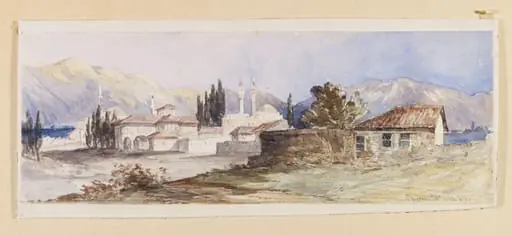 Smyrne
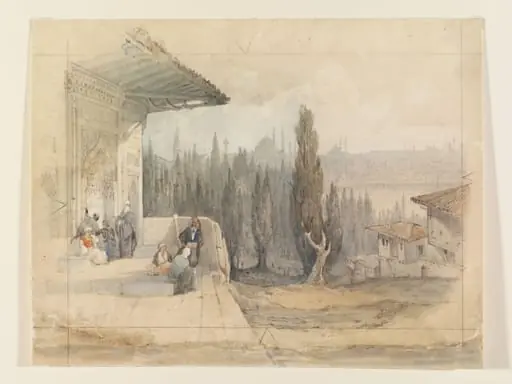 Pera
Pera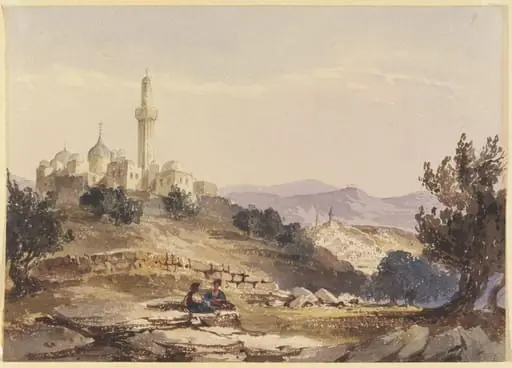 Mosque of the Ascension on the Mount of Olives
![Kirkclisia [Kirklareli] 40 leagues from Constantinople, by Luigi Mayer](https://artifactworldgallery.com/img/luigi-mayer--kirkclisia-kirklareli-40-leagues-from-constantinople--fb21c76d0b35aeb7-w320.webp) Kirkclisia [Kirklareli] 40 leagues from Constantinople
Kirkclisia [Kirklareli] 40 leagues from Constantinople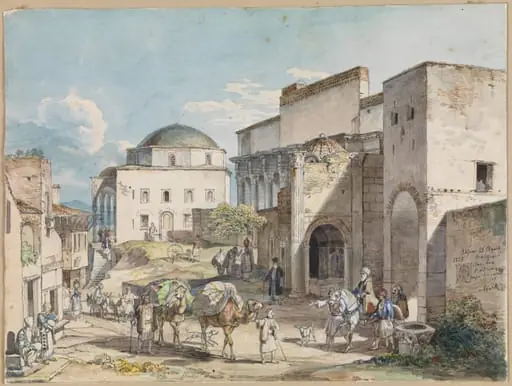 Gadeparti i Athen. Med Hadji Hazekis' palads og Tzistarakis Moskeen
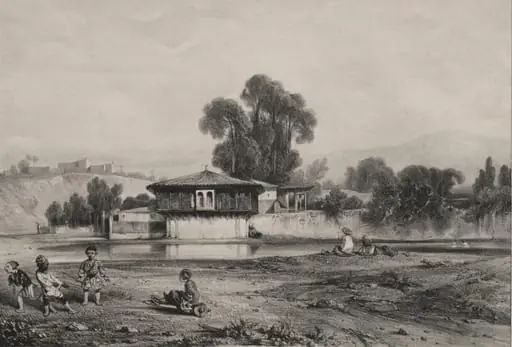 Pavilion at the Edge of a River
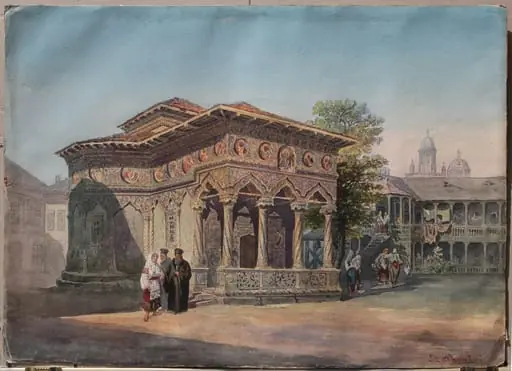 Biserica Stavropoleos
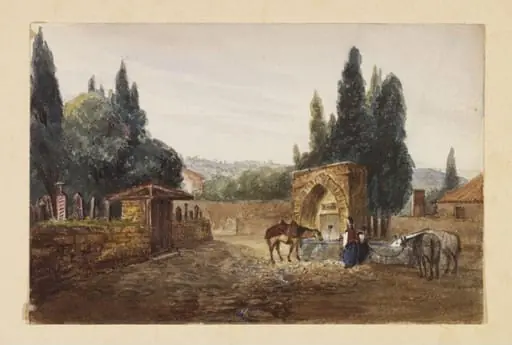 Scene at a Fountain outside a cemetery, probably Smyrna
 View of the Sea Castle (Sidon)