Artwork
St Peter's Street, Derby
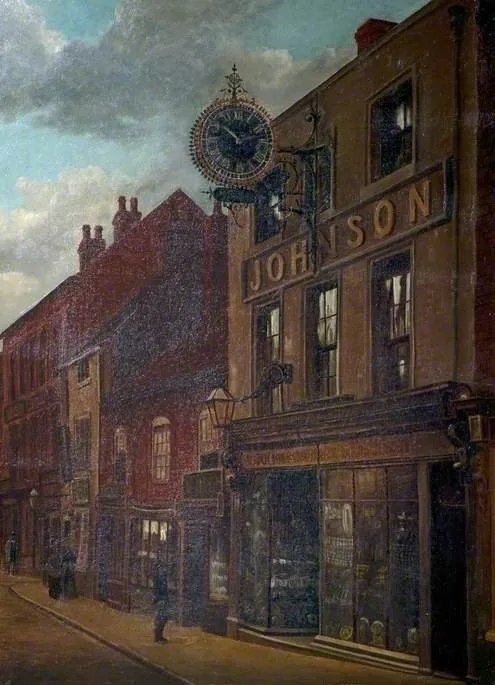
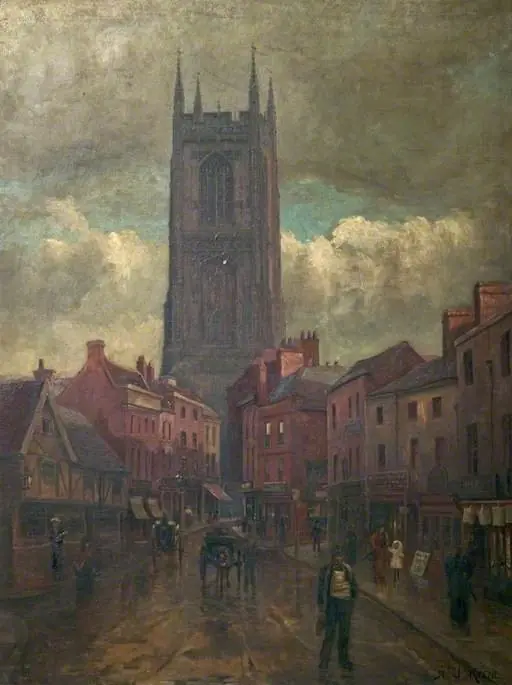
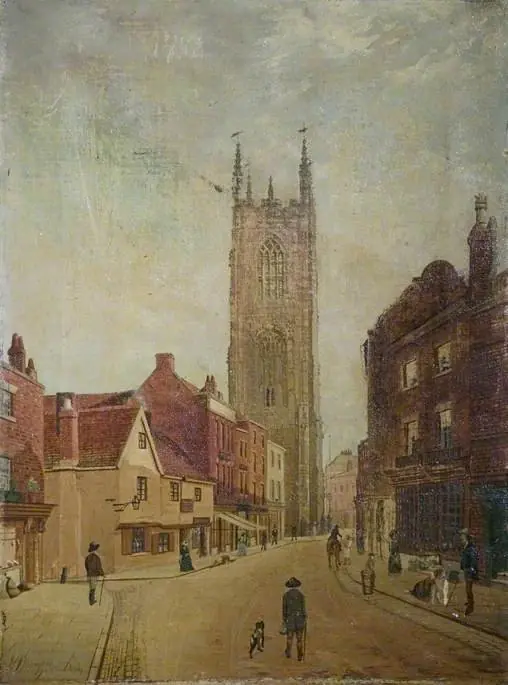
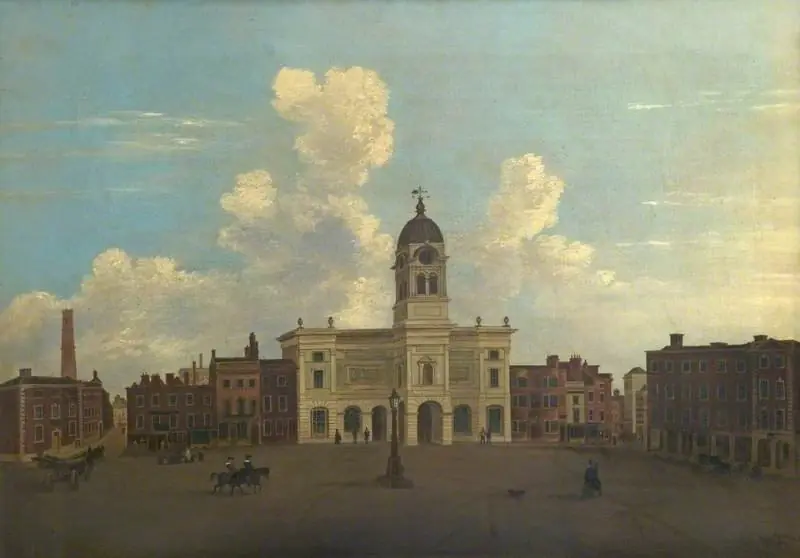
St Peter's Street, Derby is an oil painting by the Impressionist artist Alfred John Keene. It dates from 1892 and is held in the collection of the Derby Museum and Art Gallery.
About this work
Overview
It remains part of the permanent collection at Derby Museum and Art Gallery, where it reflects the artist’s interest in local scenes and everyday environments.
Painted in 1892 by Alfred John Keene, St Peter's Street, Derby is an oil-on-canvas depiction of a modest urban thoroughfare in Derby, England. The work captures a quiet moment in daily life, rendered with attention to architectural detail and atmospheric light. It remains part of the permanent collection at Derby Museum and Art Gallery, where it reflects the artist’s interest in local scenes and everyday environments.
Subject & Meaning
The painting portrays a single stretch of St Peter's Street, dominated by a three-story brick building marked with the name 'JOHNSON.' A solitary pedestrian walks along the pavement, reinforcing the scene’s stillness. No dramatic events unfold; instead, the work emphasizes the ordinary rhythm of urban life in late Victorian England, suggesting a quiet dignity in routine surroundings.
Technique & Style
Keene employed oil paint to build subtle tonal variations, contrasting the warm reds and browns of the brickwork with the cooler blues and greys of the overcast sky. Brushwork is restrained, favoring clarity over texture, and perspective is carefully aligned to draw the eye down the street. The composition avoids theatricality, instead relying on balanced forms and naturalistic lighting to convey realism.
History & Provenance
Created in 1892, the painting remained in private hands until acquired by Derby Museum and Art Gallery, where it has been held since at least the early 20th century. Its inclusion in the museum’s collection aligns with the institution’s focus on regional artists and local topography. No significant exhibitions or ownership changes are documented beyond its institutional stewardship.
Context
In the 1890s, Derby was an industrial town with growing civic pride, and artists like Keene turned to local streetscapes as subjects worthy of artistic attention. This painting reflects a broader trend among British painters of the period to document urban life without idealization, capturing the quiet transformation of towns shaped by commerce and modest domesticity.
Legacy
St Peter's Street, Derby endures as a quiet record of a specific time and place in Derby’s history. While Keene is not widely known beyond regional circles, this work contributes to the visual archive of late Victorian England’s everyday environments. It remains a reference point for understanding how local artists interpreted their immediate surroundings with sincerity and restraint.
Artist & collection