Artwork
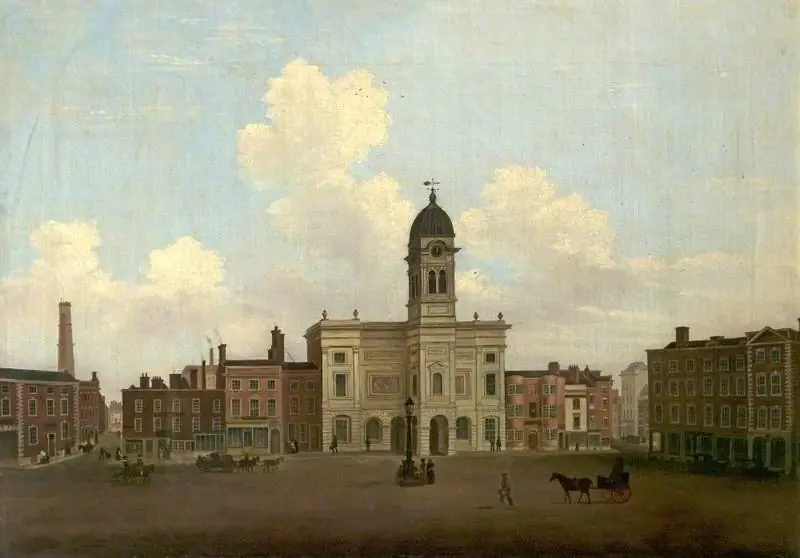
All Saints' Church Tower, Queen Street, Derby
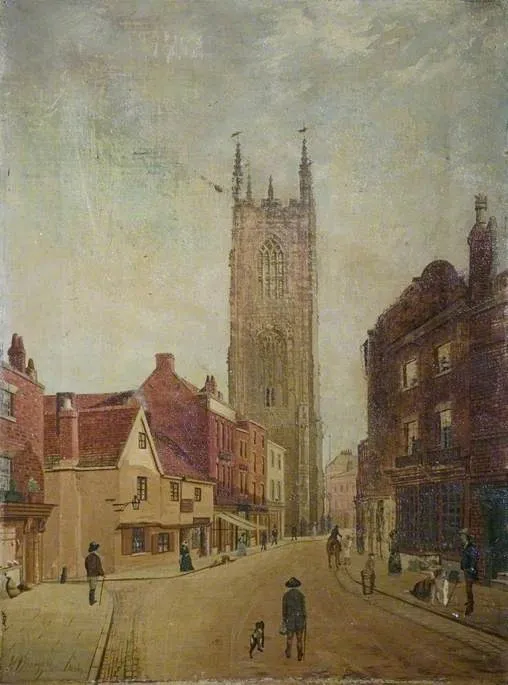
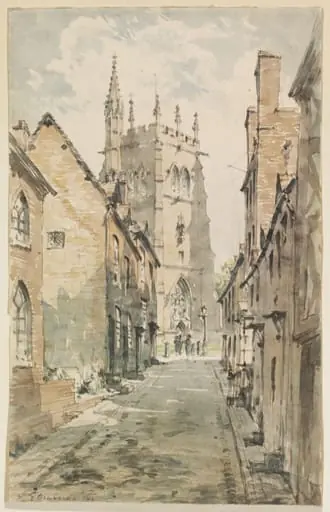
All Saints' Church Tower, Queen Street, Derby is an oil painting by the Impressionist artist James Howard Burgess. It dates from 1892 and is held in the collection of the Derby Museum and Art Gallery.
About this work
Overview
Rendered in a restrained palette of earth tones and soft grays, the painting reflects a deliberate focus on atmosphere rather than dramatic detail.
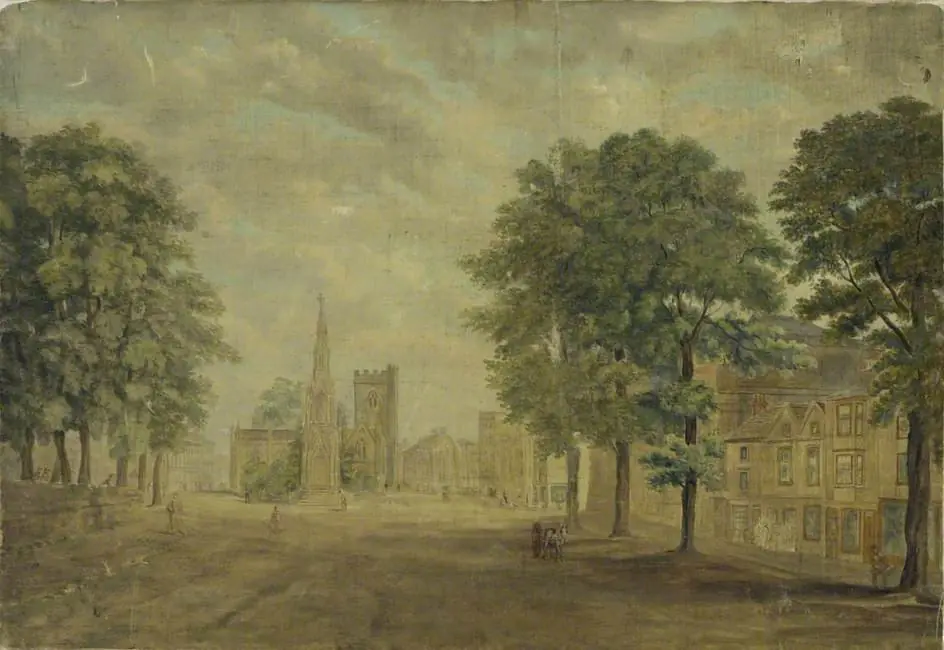
Painted in 1892 by James Howard Burgess, this oil on canvas depicts the tower of All Saints' Church rising above Queen Street in Derby. The work captures a quiet urban moment, with modest buildings lining the street and pedestrians moving subtly through the scene. Rendered in a restrained palette of earth tones and soft grays, the painting reflects a deliberate focus on atmosphere rather than dramatic detail.
Subject & Meaning
The composition centers on the church tower as a steady, vertical anchor amid the horizontal lines of the street and surrounding structures. Its presence suggests the enduring role of religious architecture in daily life, while the scattered figures convey ordinary human activity. The absence of overt narrative invites contemplation of routine urban existence, framed by the quiet permanence of the tower.
Technique & Style
Burgess employed visible, deliberate brushwork to build texture in the sky, brickwork, and pavement, avoiding smooth finishes in favor of tactile surface variation. The color scheme leans toward muted ochres, browns, and pale blues, enhancing the subdued light of a cloudy day. This approach prioritizes mood over precision, aligning with late 19th-century British realism that valued emotional resonance over idealized detail.
History & Provenance
The painting has remained in Derby since its creation, entering the collection of Derby Museum and Art Gallery in the early 20th century. Its continuous local ownership reflects its significance as a documented view of the city’s architectural landscape at the close of the Victorian era. No major exhibitions or transfers are recorded, suggesting it was valued locally rather than as a widely circulated work.
Context
Created during a period of urban expansion in Derby, the painting offers a quiet counterpoint to industrial imagery common in the era. While factories and railways dominated public discourse, Burgess chose to record the familiar, unaltered streetscape. This choice aligns with a broader trend among regional artists who documented everyday environments as records of communal identity.
Legacy
Though not widely known outside Derby, the painting endures as a local historical document. It contributes to the understanding of how ordinary urban spaces were perceived in the late 19th century, offering insight into the visual culture of provincial England. Its preservation in the city’s public collection underscores its role as a quiet testament to place and time.
Artist & collection
Artist
James Howard Burgess painted quiet, precise street scenes in 19th-century England.

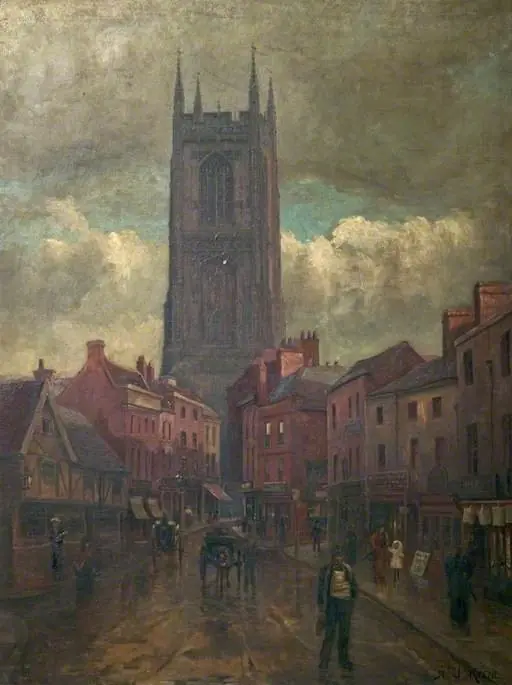 All Saints' Church Tower, Queen Street, Derby
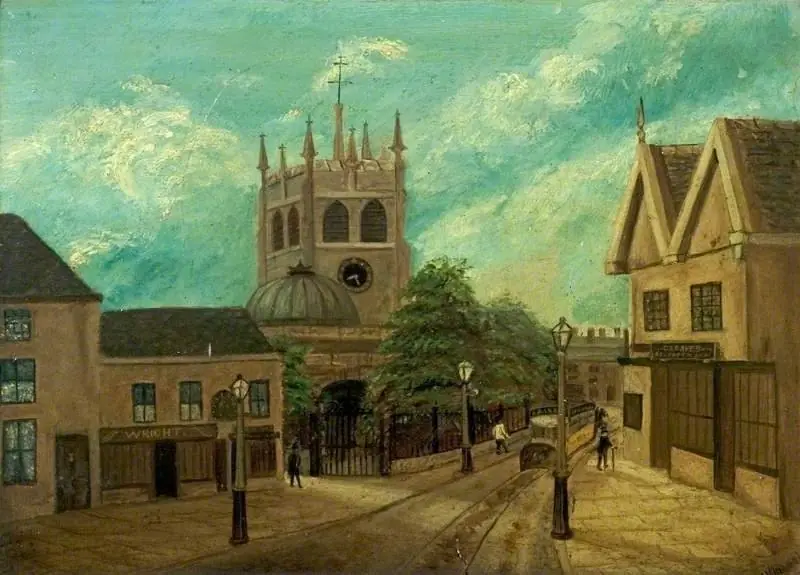 Old St Werburgh's Church, Derby, from Friargate
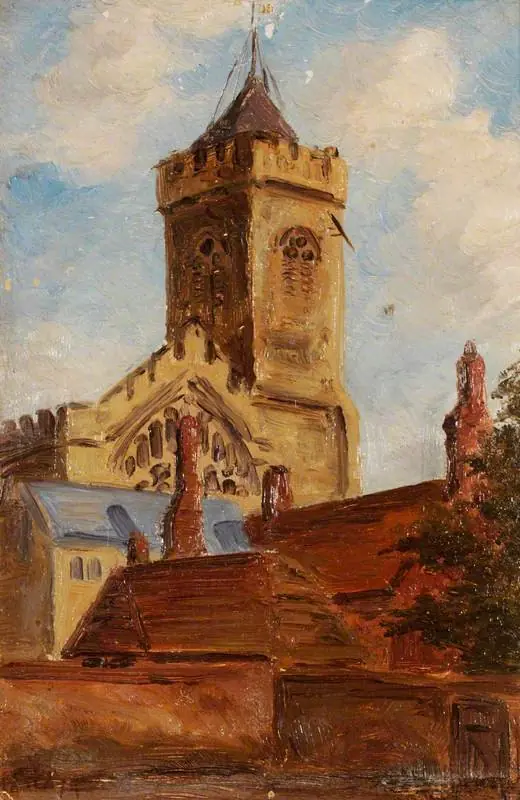 A Gothic Church Tower and Other Buildings
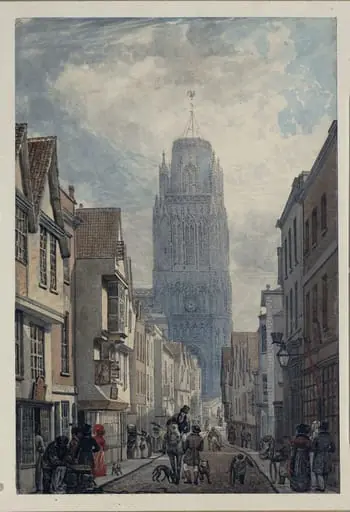 A street in Bristol with the tower of the Church of St. Mary Redcliffe
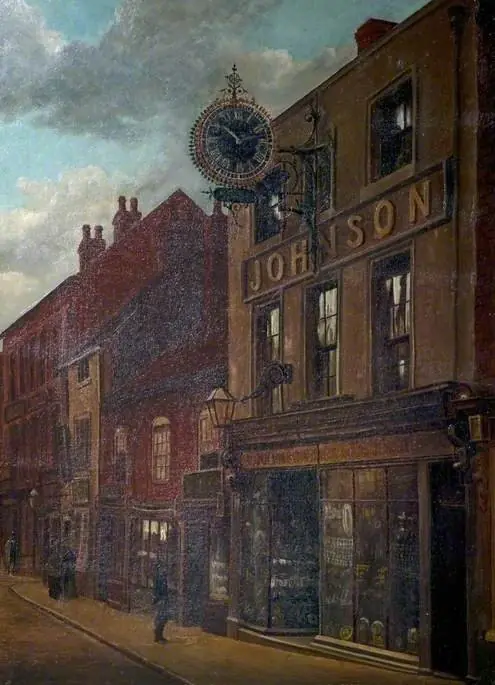 St Peter's Street, Derby
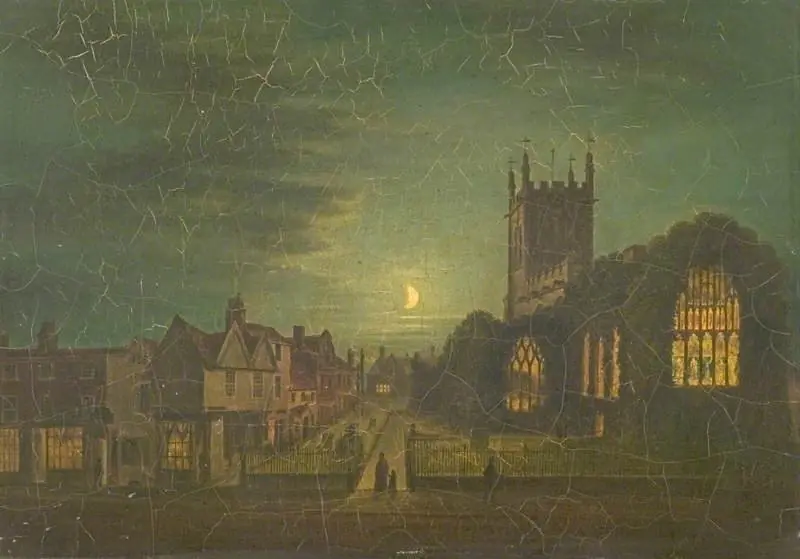 St Peter's Church, Derby, by Moonlight
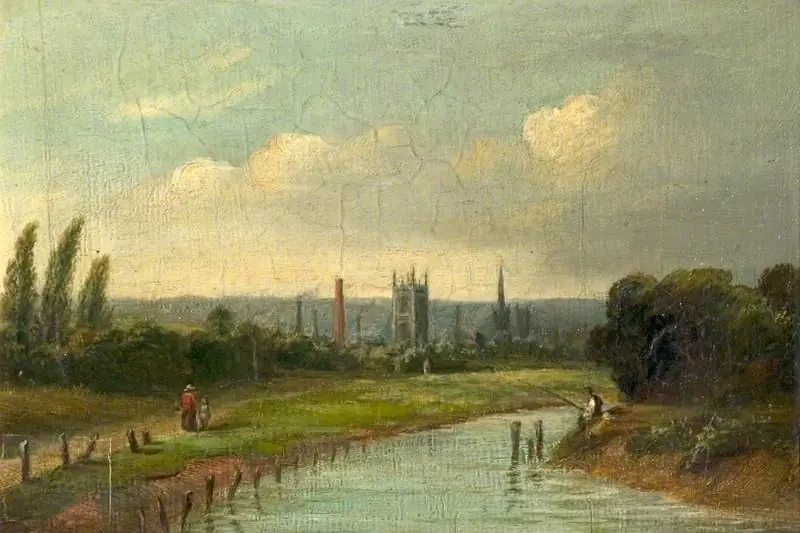 Derby from the South-East
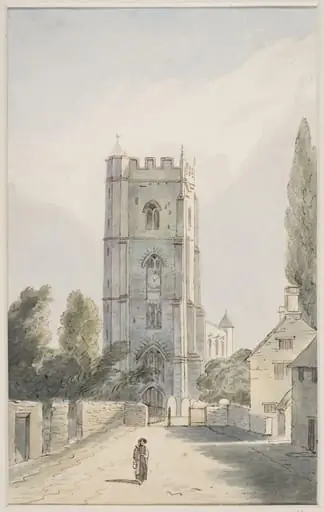 Queen Camel Church
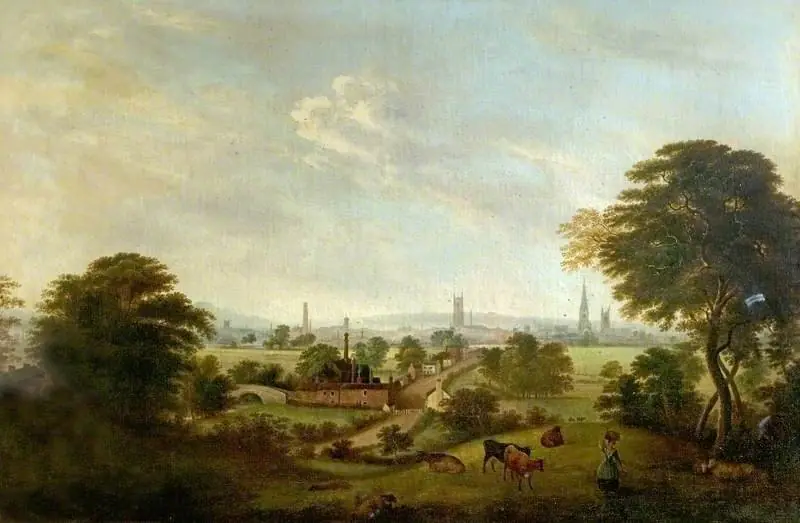 View of Derby from Nottingham Road
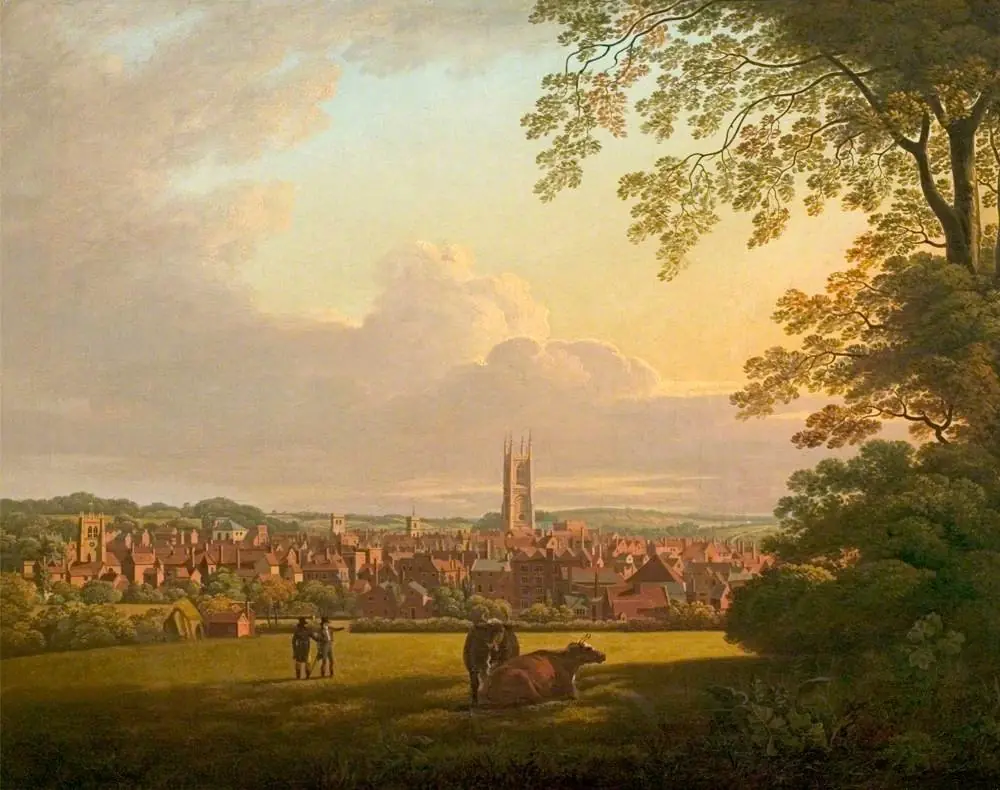 Derby from a Field Adjoining Abbey Barns
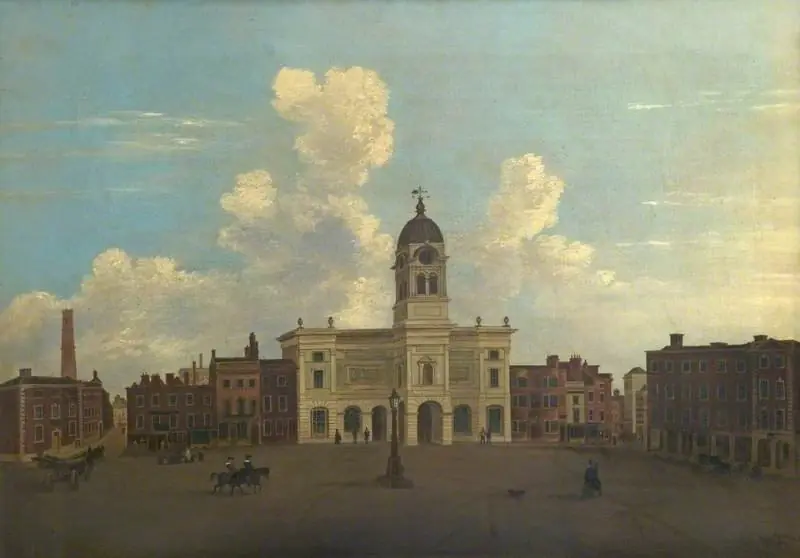 View of the Market Place, Derby
 View of the Market Place, Derby