Artwork
All Saints' Church Tower, Queen Street, Derby
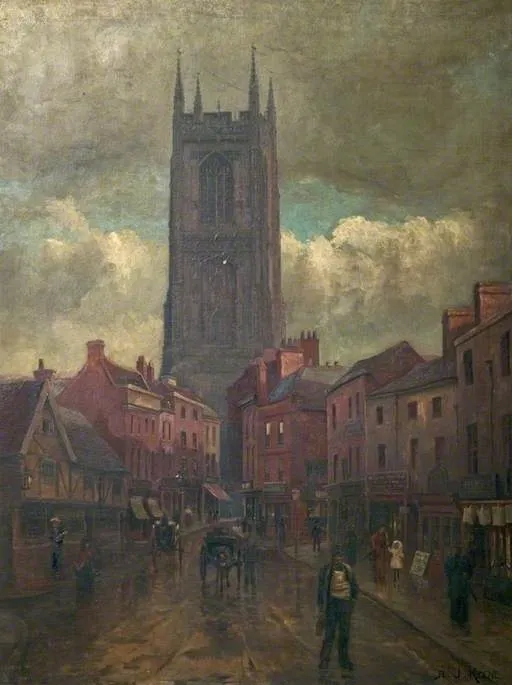
All Saints' Church Tower, Queen Street, Derby is an oil painting by the Impressionist artist Alfred John Keene. It dates from 1895 and is held in the collection of the Derby Museum and Art Gallery.
About this work
Overview
Though titled after the church, the composition emphasizes the street below, where pedestrians and carriages move beneath a overcast sky.
Painted in 1895 by Alfred John Keene, this oil on canvas depicts the tower of All Saints' Church in Derby, viewed from Queen Street. The work captures a quiet urban moment, blending architectural detail with everyday life. Though titled after the church, the composition emphasizes the street below, where pedestrians and carriages move beneath a overcast sky. The painting resides in the Derby Museum and Art Gallery, part of a local collection focused on regional topography and daily life.
Subject & Meaning
The painting presents a slice of late-Victorian Derby, where the church tower stands as a steady landmark amid evolving urban fabric. The mix of older buildings and newer commercial signs suggests a city in transition. Figures and carriages on the damp street imply routine activity, not spectacle. The scene conveys neither grandeur nor decay, but the quiet rhythm of civic life, with the church as a silent witness rather than a focal point of devotion.
Technique & Style
Keene employed soft, blended brushwork to render the wet pavement and diffused light of a rainy afternoon. Colors are restrained—muted grays, browns, and pale blues—enhancing the subdued atmosphere. The tower is rendered with careful precision, contrasting with the looser handling of figures and vehicles. Light filters through clouds, casting gentle reflections on the street without dramatic highlights, reinforcing a tone of calm observation over theatrical effect.
History & Provenance
Created in 1895, the painting remained in Derby, likely acquired by the local museum soon after completion. Keene, a Derby-based artist, frequently documented the town’s streets and landmarks, making this work part of a broader local archive. There is no record of public exhibition beyond regional shows, and it has not changed hands since entering the museum’s collection, where it has been preserved as a record of the city’s appearance at the turn of the century.
Context
In the 1890s, Derby was expanding industrially while retaining its historic core. All Saints' Church, though not the cathedral (a common misattribution), was a prominent ecclesiastical structure. Keene’s painting reflects a growing interest in documenting urban change through art, distinct from romanticized landscapes. His focus on ordinary streetscapes aligns with regional realism, offering a quiet counterpoint to the grand narratives of national art at the time.
Legacy
The painting endures as a modest but valuable record of Derby’s urban texture in the late 19th century. It contributes to the understanding of how local artists engaged with their surroundings without seeking national acclaim. Though not widely reproduced, it remains a touchstone for historians and residents interested in the city’s visual heritage, valued for its unembellished observation rather than artistic innovation.
Artist & collection

 All Saints' Church Tower, Queen Street, Derby
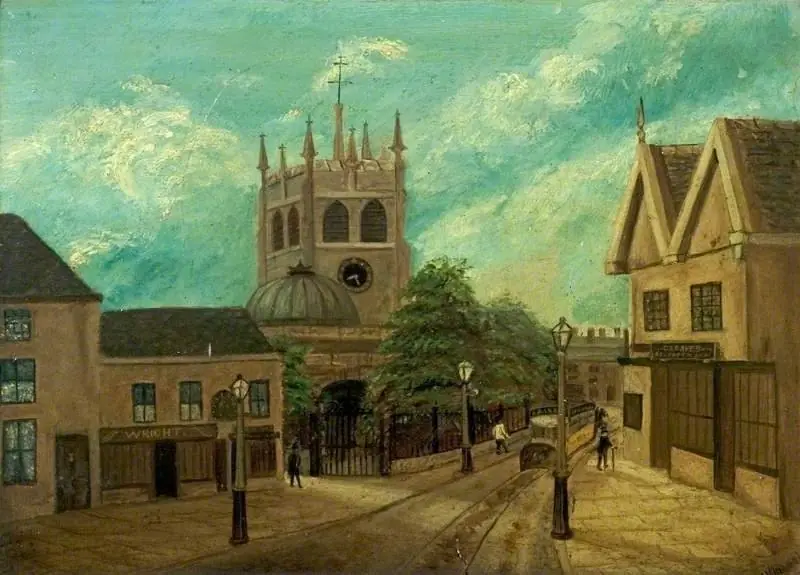 Old St Werburgh's Church, Derby, from Friargate
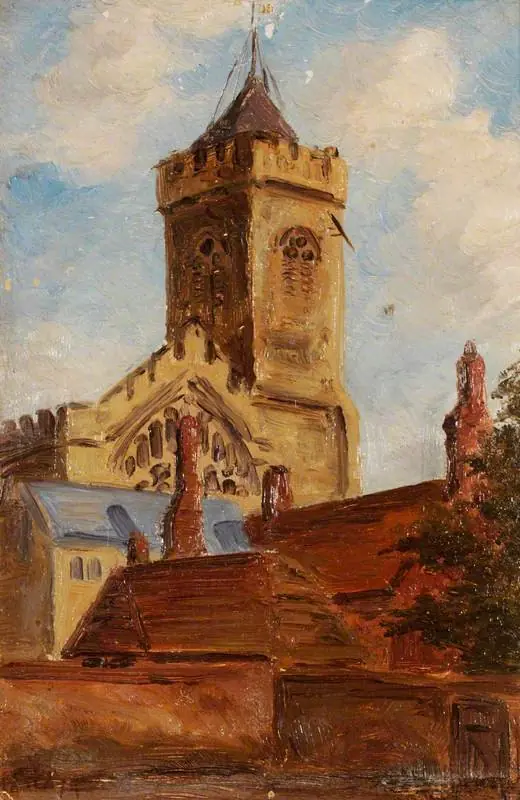 A Gothic Church Tower and Other Buildings
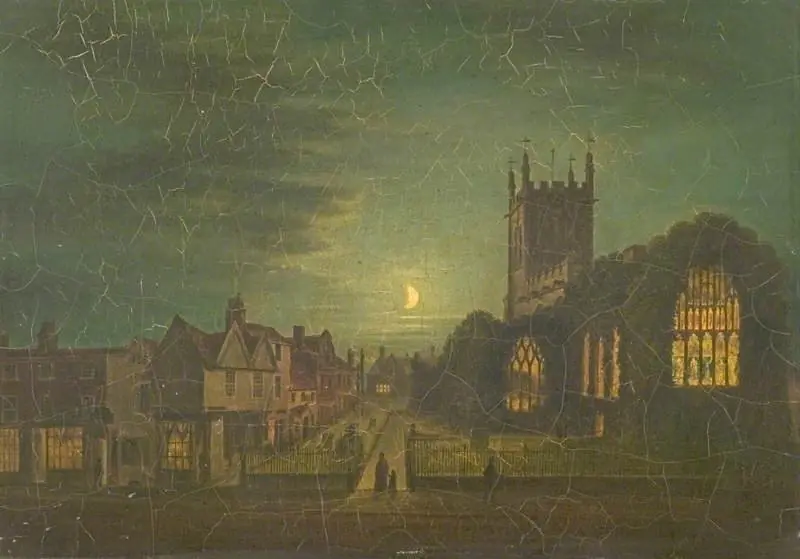 St Peter's Church, Derby, by Moonlight
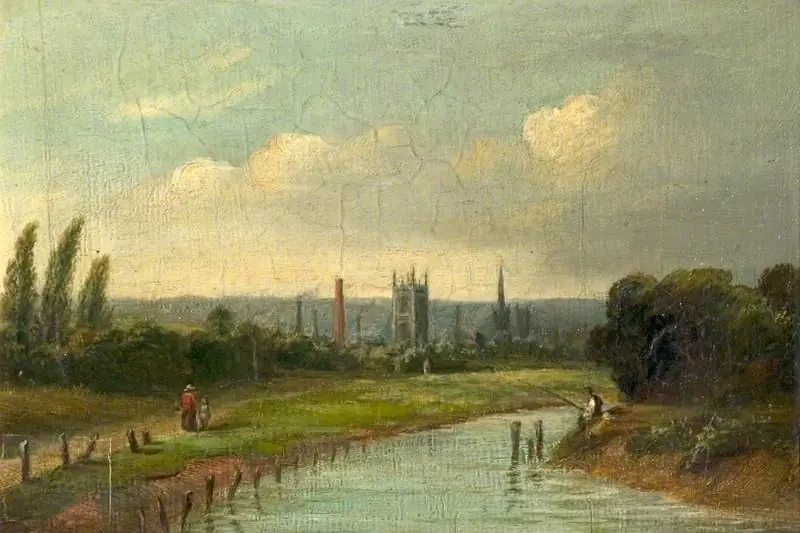 Derby from the South-East
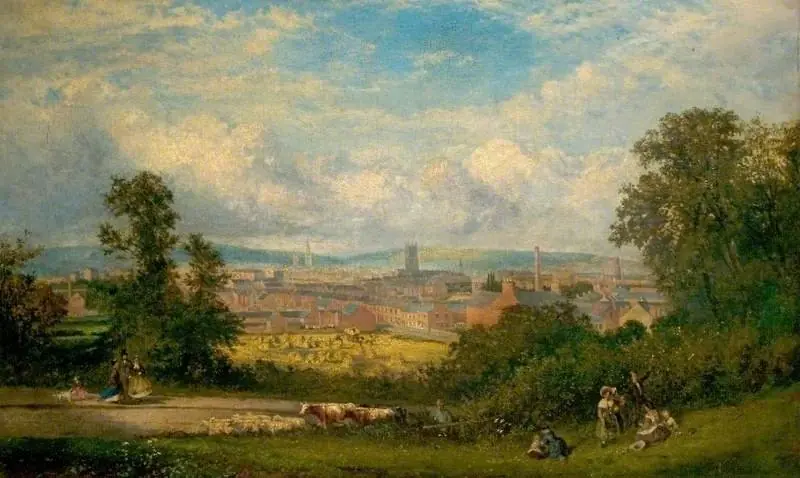 Derby from Burton Road
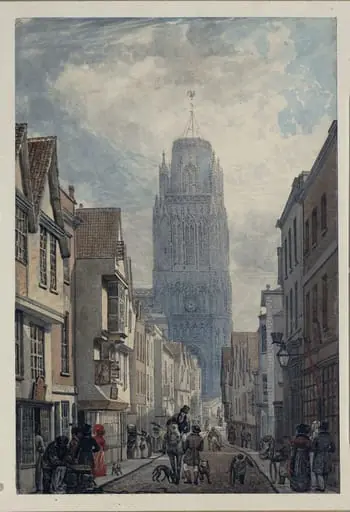 A street in Bristol with the tower of the Church of St. Mary Redcliffe
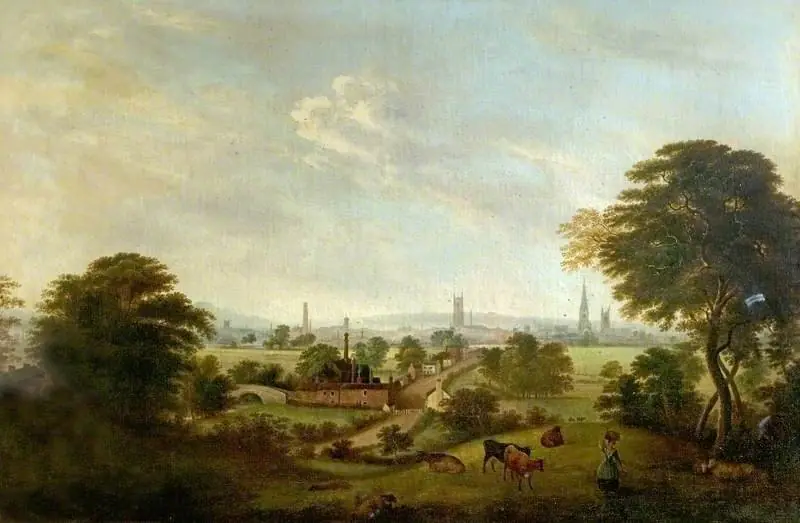 View of Derby from Nottingham Road
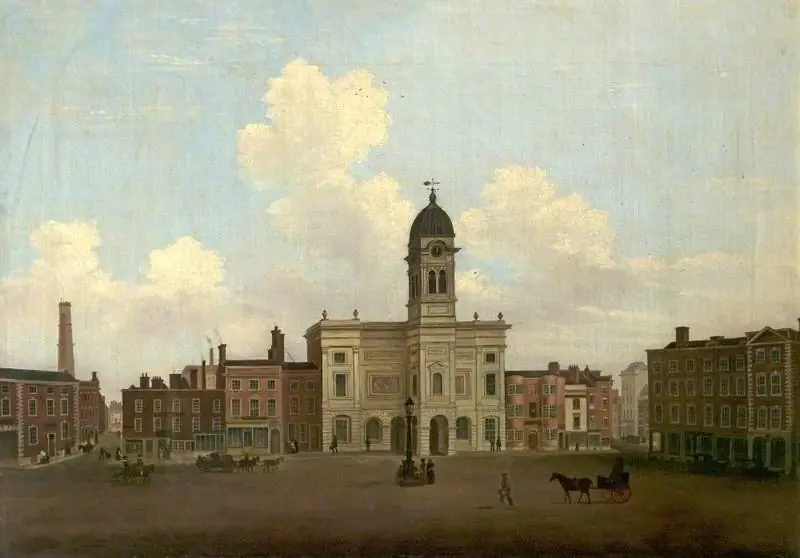 View of the Market Place, Derby
 Derby from a Field Adjoining Abbey Barns