Artwork
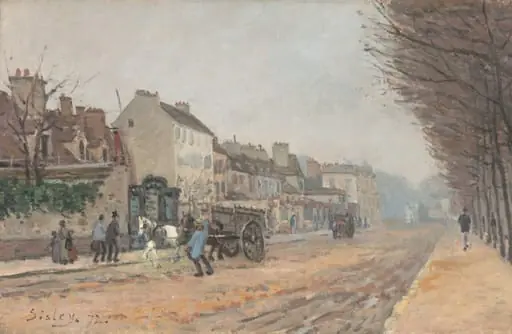
Street in Moret
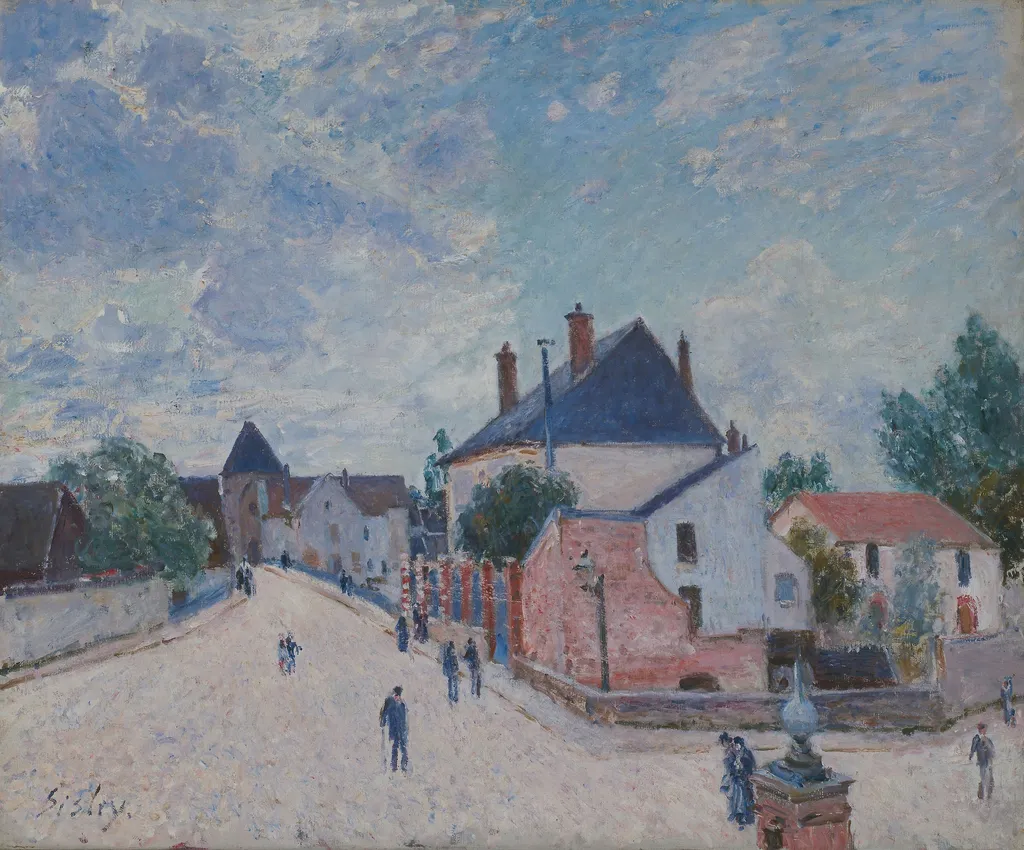
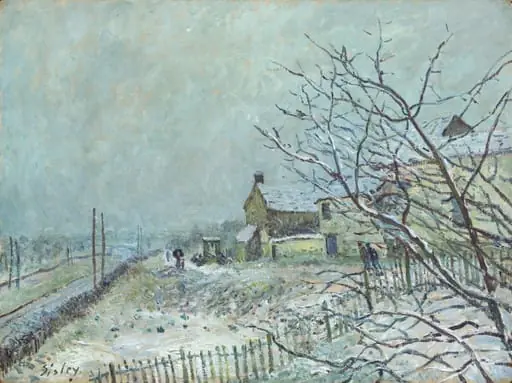
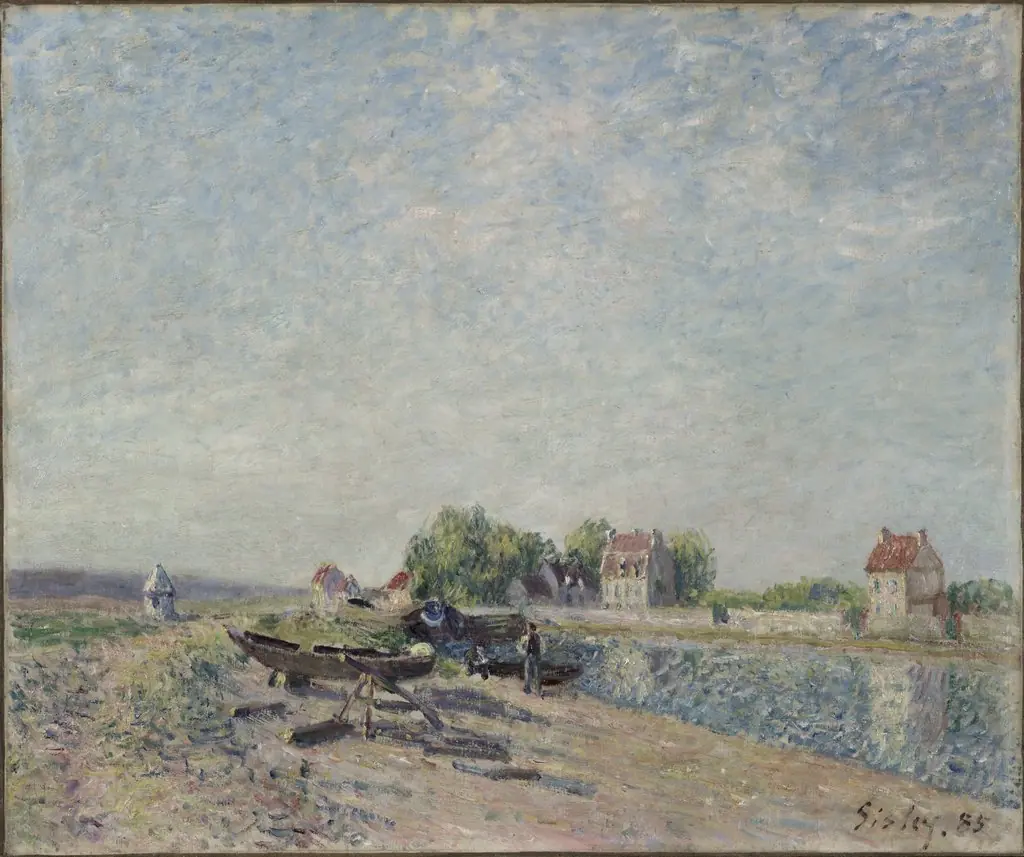
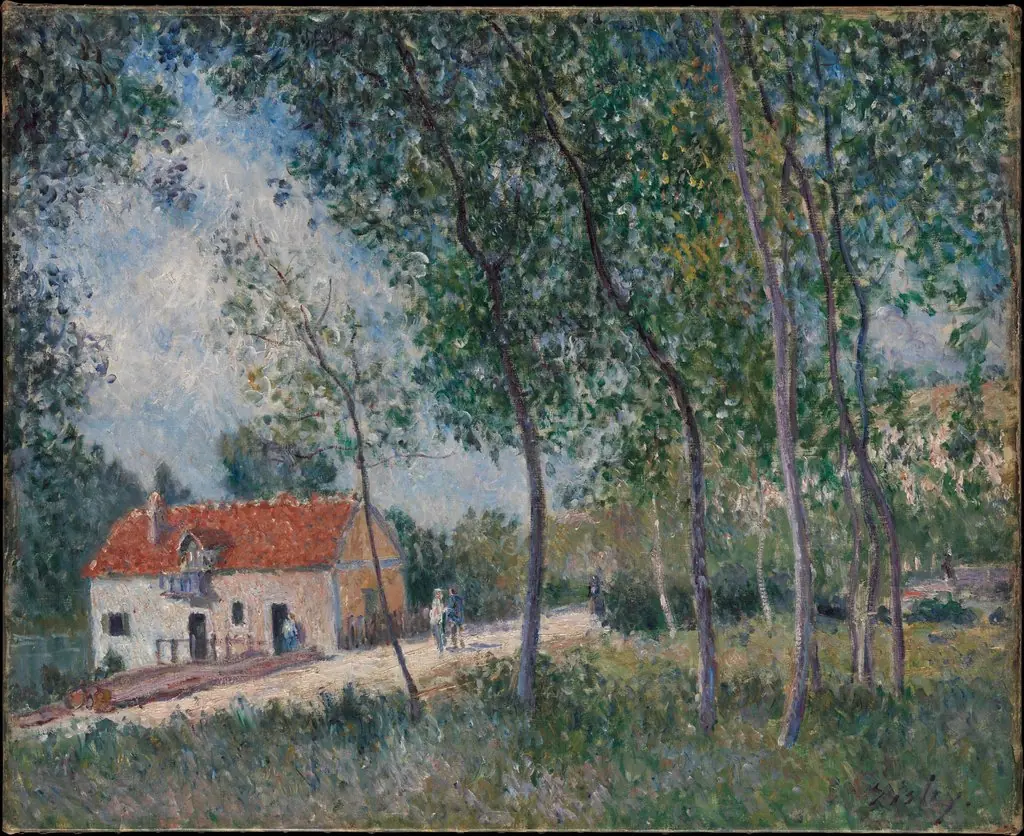
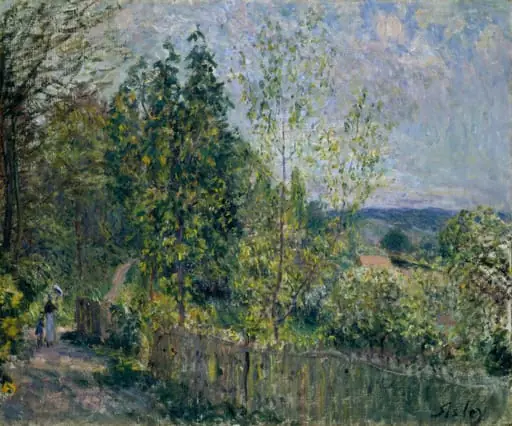
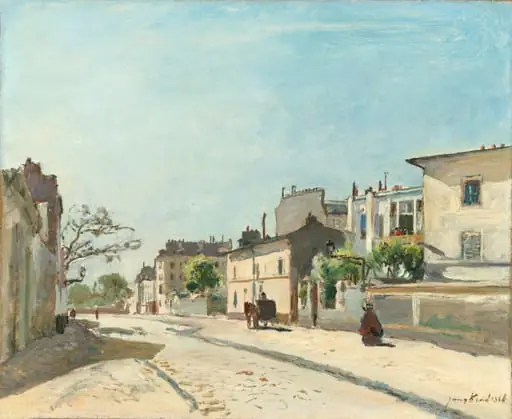
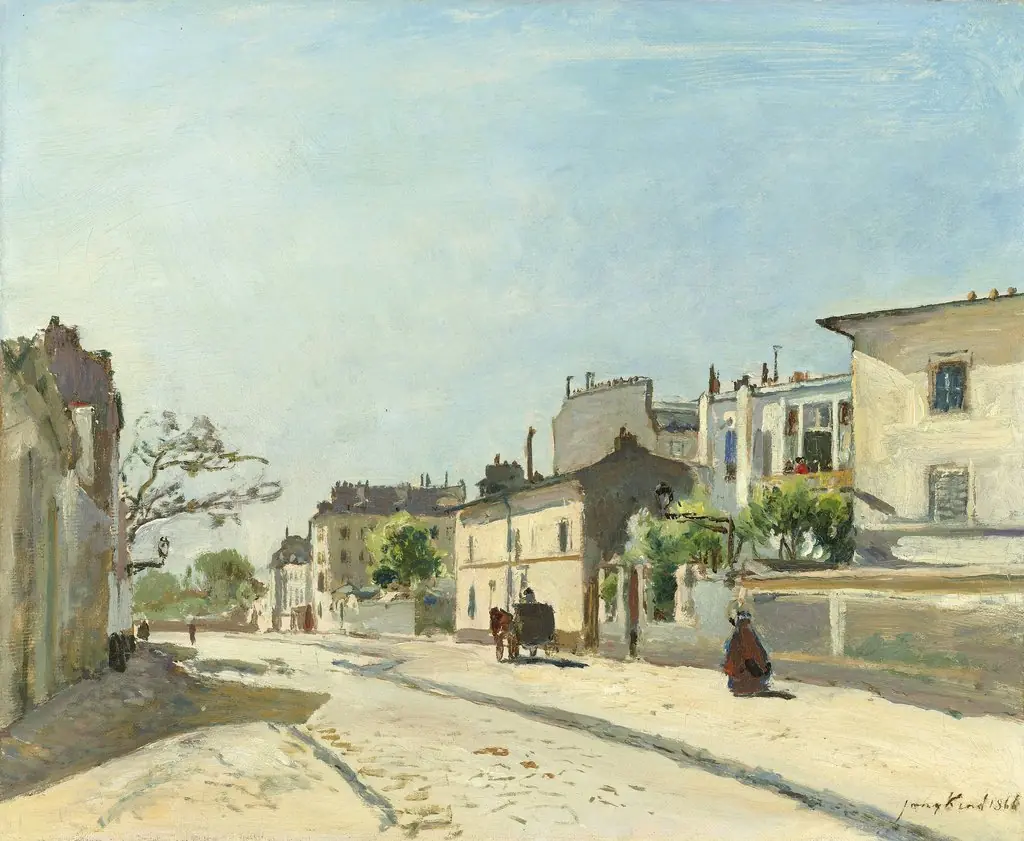
Street in Moret is an oil painting by the Impressionist artist Alfred Sisley. It dates from 1896 and is held in the collection of the Art Institute of Chicago.
About this work
Overview
It captures a quiet urban lane in the small town of Moret-sur-Loing, reflecting Sisley’s lifelong commitment to landscape and town scenes rendered outdoors.
Painted in 1896, *Street in Moret* is an oil-on-canvas work by Alfred Sisley, a British-born artist who lived and worked primarily in France. It captures a quiet urban lane in the small town of Moret-sur-Loing, reflecting Sisley’s lifelong commitment to landscape and town scenes rendered outdoors. The painting is part of the permanent collection at the Art Institute of Chicago, where it exemplifies his restrained yet attentive approach to everyday environments.
Subject & Meaning
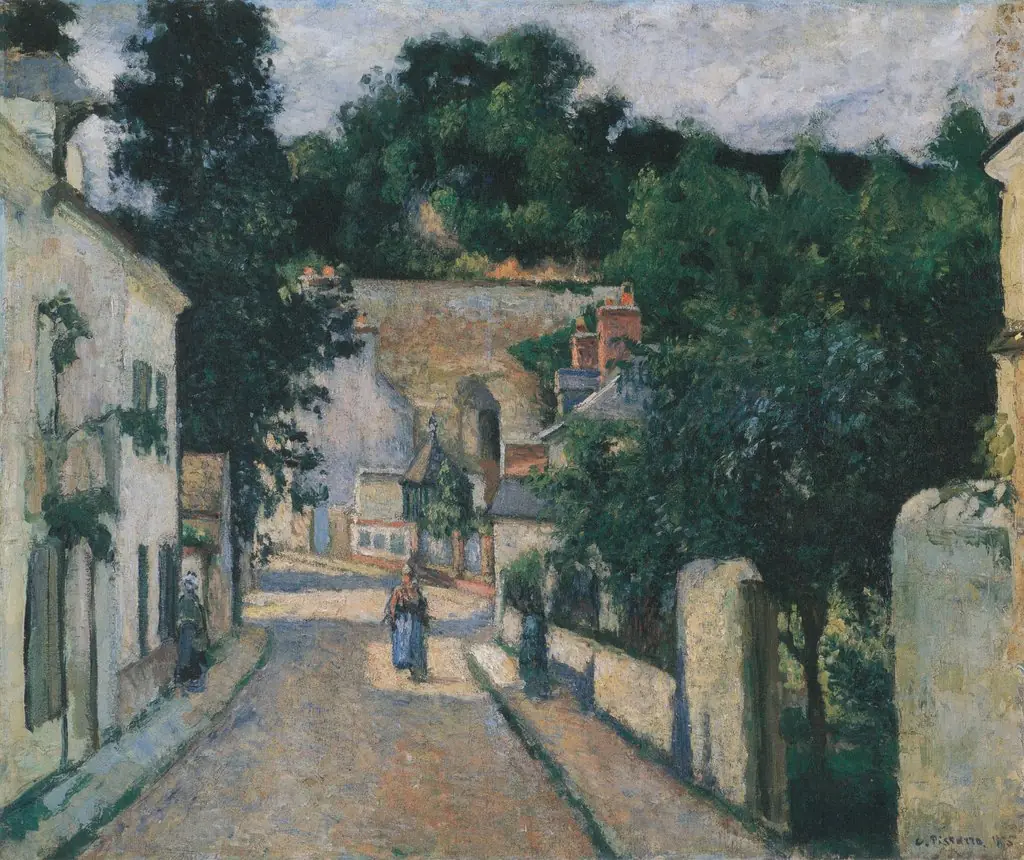
The scene depicts a modest street in Moret, flanked by modest buildings in soft hues of white, pink, and brown, with a clear sky above. A handful of figures move along the pavement, their small scale emphasizing the tranquility of the setting. Sisley avoids narrative or drama, instead inviting quiet observation of ordinary life. The work conveys a sense of stillness and temporal passage, characteristic of his interest in the subtle rhythms of daily existence.
Technique & Style
Sisley applied oil paint in thin, broken brushstrokes to capture shifting light and atmospheric effects. The surfaces of buildings and pavement are rendered with delicate tonal variations rather than sharp outlines, allowing color and luminosity to define form. His method avoids heavy impasto or dramatic contrast, favoring a harmonious, muted palette that reflects the natural conditions of the moment. This technique aligns with Impressionist principles of direct observation and optical realism.
History & Provenance
Created during the final decade of Sisley’s life, *Street in Moret* belongs to a series of works he produced in Moret-sur-Loing after settling there in the 1880s. The painting remained in private hands until acquired by the Art Institute of Chicago in the early 20th century. Its provenance reflects the growing recognition of Sisley’s work among American collectors, despite his relative obscurity during his lifetime compared to peers like Monet or Renoir.
Context
Sisley was one of the few Impressionists who never abandoned the movement’s core ideals, even as others explored new directions. In the 1890s, as urbanization accelerated, he turned increasingly to small-town scenes like Moret, preserving the quiet charm of places less touched by industrial change. His work stood apart from both academic tradition and emerging Post-Impressionist experiments, offering a consistent, meditative vision of the French countryside and its edges.
Legacy
Though never widely celebrated in his lifetime, Sisley’s dedication to plein air painting and his subtle handling of light have earned him a respected place in the history of Impressionism. *Street in Moret* exemplifies his ability to elevate ordinary scenes through careful observation and restrained technique. Today, it is studied as a quiet testament to the movement’s enduring focus on perception, atmosphere, and the fleeting beauty of the everyday.
Own this work as a print
Artist & collection
Artist
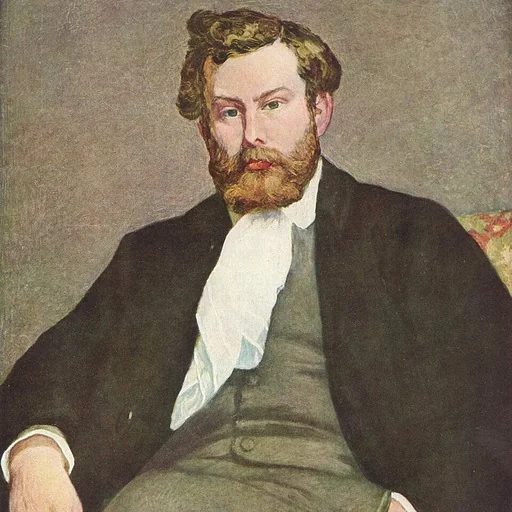
Alfred Sisley (; French: ; 30 October 1839–29 January 1899) was a French-Born British Impressionist landscape painter who was born to British parents, but spent most of his life in France.