Artwork
Rue du Haut-de-l'Hermitage, Pontoise
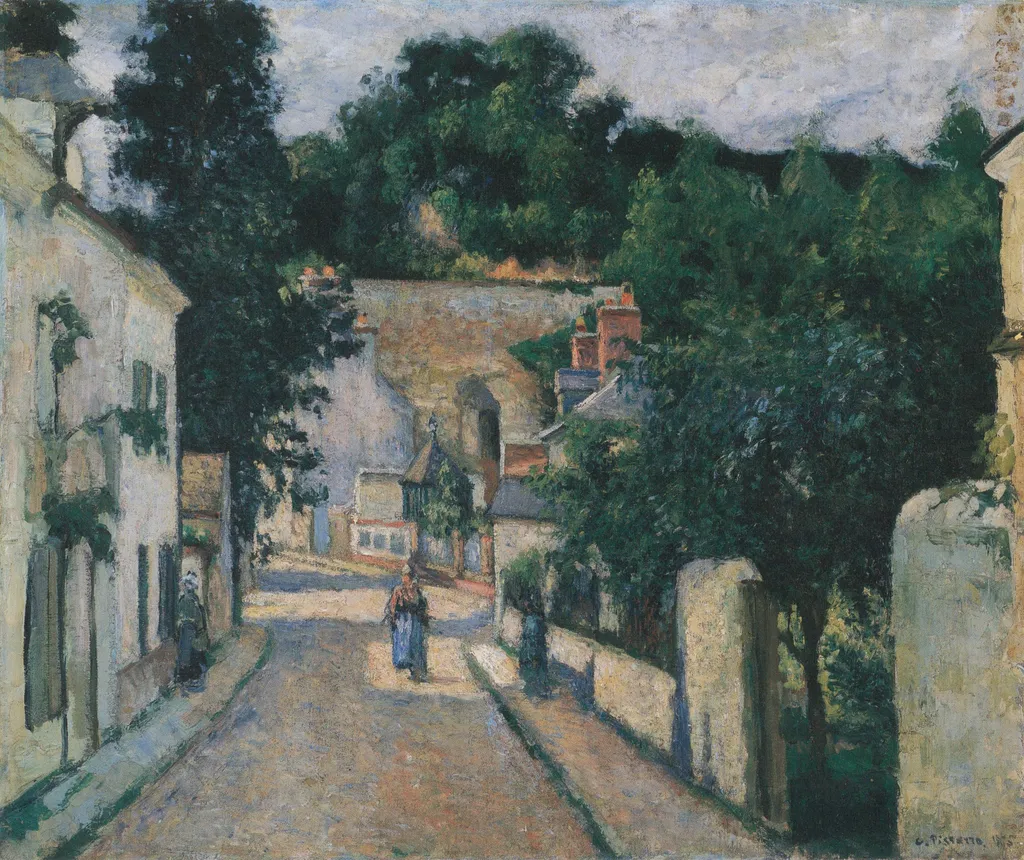
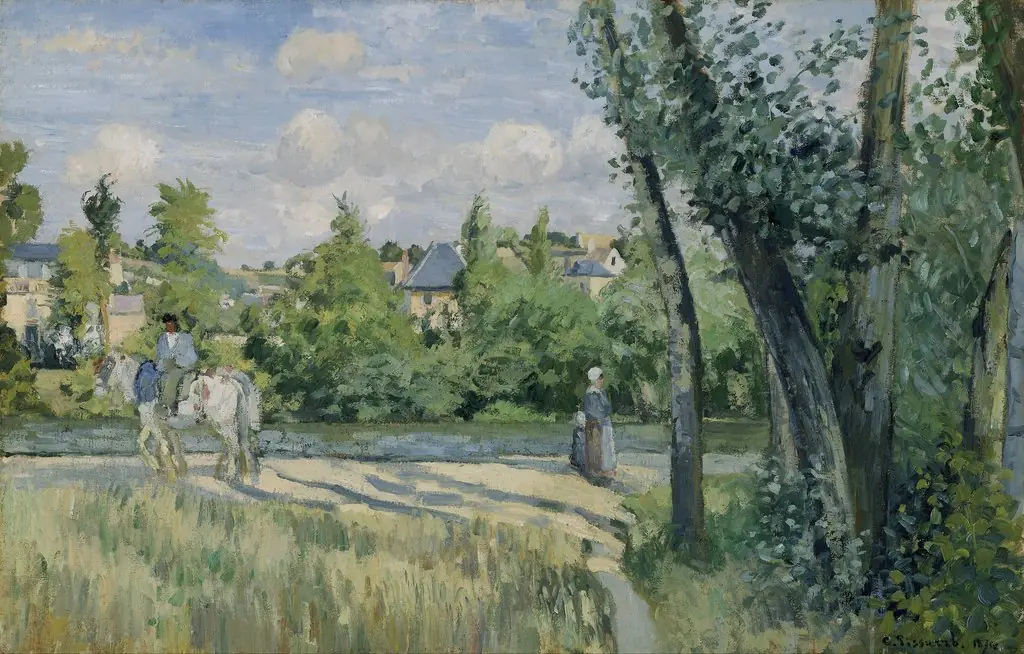
Rue du Haut-de-l'Hermitage, Pontoise is an oil painting by the Impressionist artist Camille Pissarro. It dates from 1875 and is held in the collection of the National Gallery of Canada.
About this work
Overview
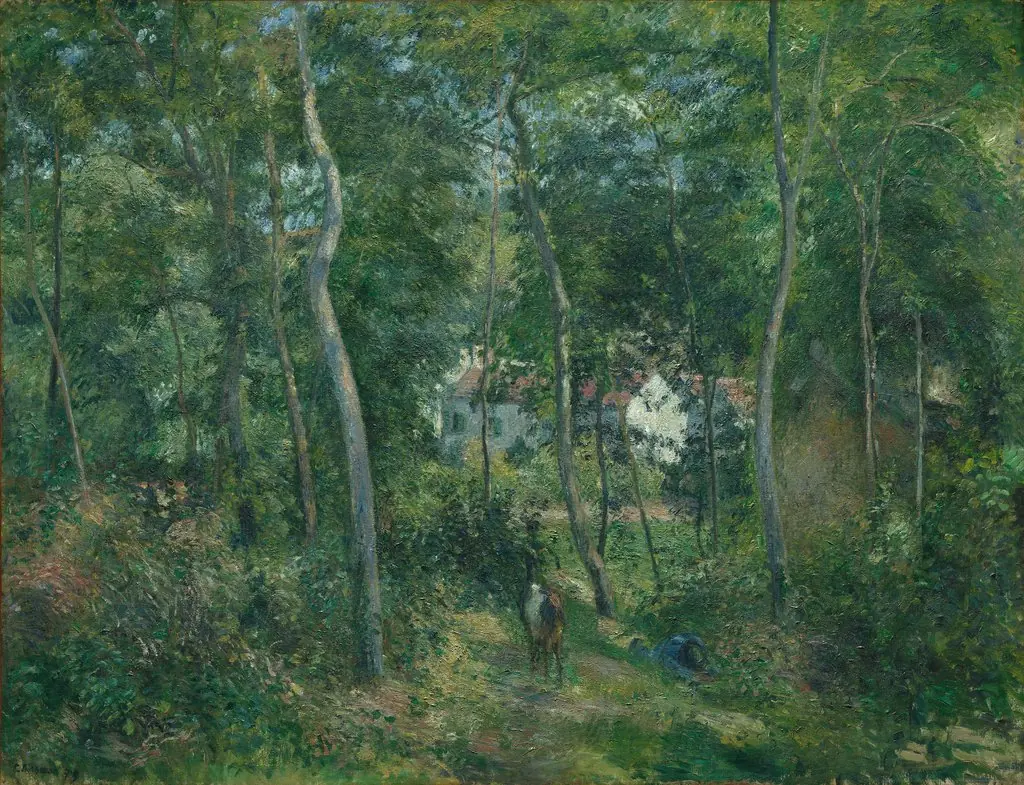
Painted in 1875, *Rue du Haut-de-l'Hermitage, Pontoise* is an oil on canvas work by Camille Pissarro, capturing a quiet street in the suburban town of Pontoise.
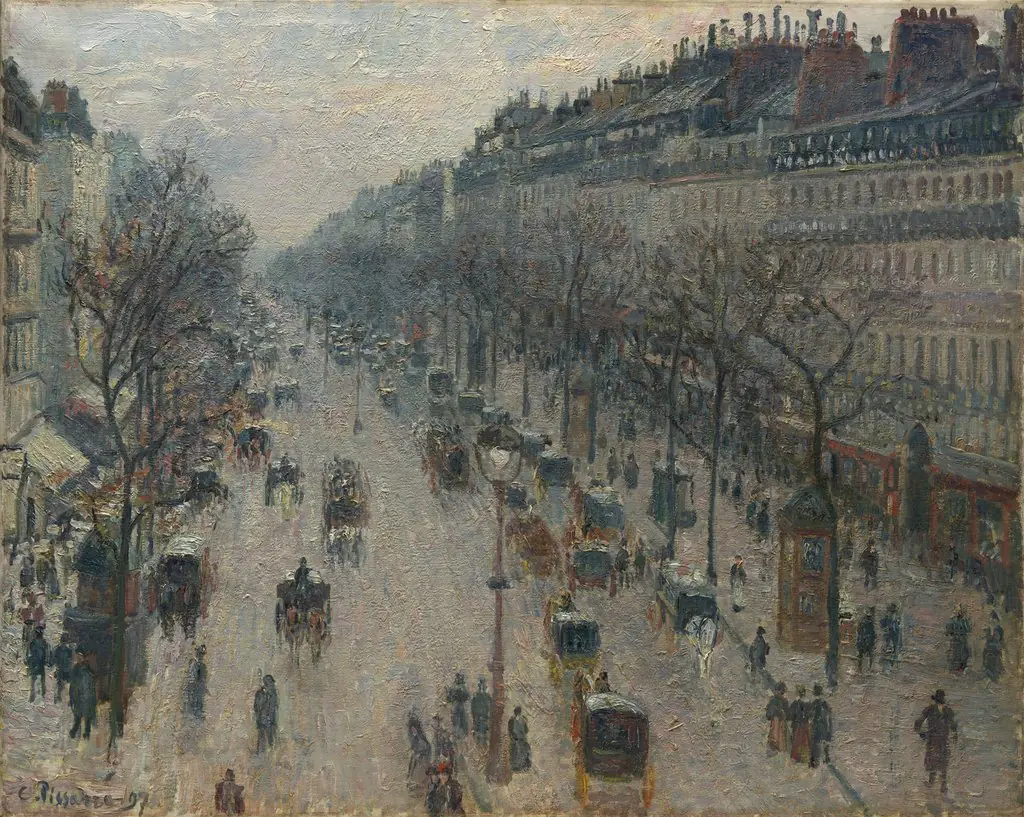
Painted in 1875, *Rue du Haut-de-l'Hermitage, Pontoise* is an oil on canvas work by Camille Pissarro, capturing a quiet street in the suburban town of Pontoise. It reflects his commitment to depicting everyday urban life with attention to natural light and atmospheric conditions. The scene avoids dramatic narrative, instead focusing on the rhythm of ordinary movement and the quiet architecture of a working-class neighborhood.
Subject & Meaning
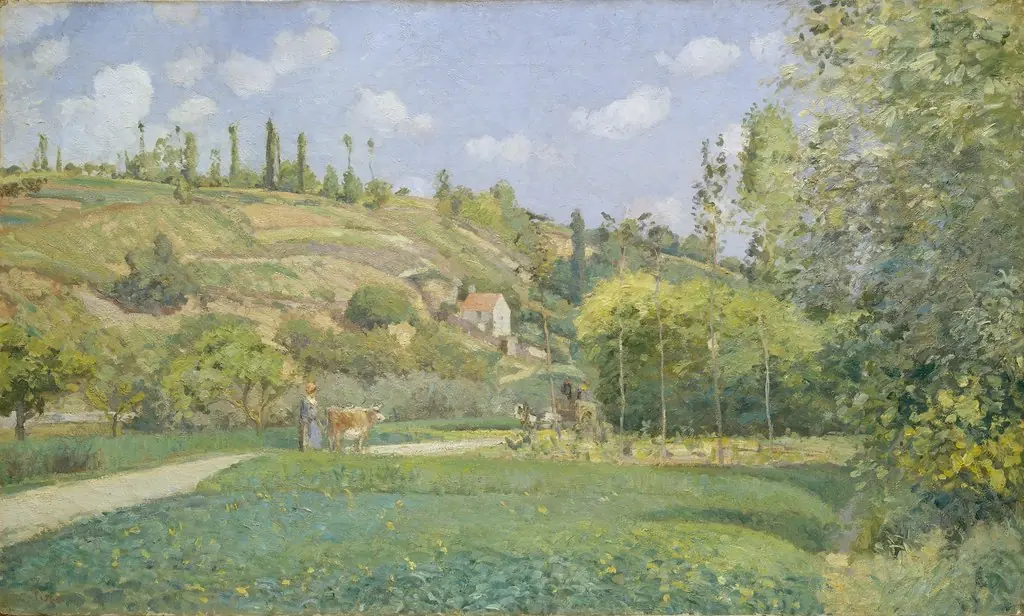
The painting presents a modest residential street, with a lone woman walking along a cobblestone road flanked by modest buildings and leafy trees. There is no focal point of grandeur—only the gentle passage of time and routine. The absence of human drama emphasizes the dignity of daily life, aligning with Pissarro’s interest in portraying the unidealized reality of the French countryside and its outskirts.
Technique & Style
Pissarro employed loose, deliberate brushwork to suggest texture and movement without defined outlines. The palette is restrained, dominated by muted ochres, grays, and greens, enhancing the scene’s quietude. Light is rendered through subtle shifts in tone rather than sharp contrast, creating a sense of depth and airiness. The brushstrokes retain a sense of immediacy, characteristic of Impressionist practice, while avoiding the fragmentation seen in later Neo-Impressionist works.
History & Provenance
Created during Pissarro’s most active years in Pontoise, the painting emerged from a period when he was refining his Impressionist approach alongside artists like Cézanne and Gauguin. It remained in private hands for much of the 20th century before entering a public collection. Its provenance reflects its status as a representative work of mid-1870s French Impressionism, though it has never been widely exhibited compared to his larger urban scenes.
Context
In the mid-1870s, Pissarro was central to the Impressionist exhibitions, advocating for independent showings outside the Salon. *Rue du Haut-de-l'Hermitage* reflects his belief in painting en plein air and documenting the changing French landscape amid industrialization. Unlike urban centers like Paris, Pontoise offered a transitional space where rural and emerging suburban life coexisted—a subject he returned to repeatedly.
Legacy
This work exemplifies Pissarro’s role as a bridge between early Impressionism and later experimental movements. While not as radical as his pointillist phase, the painting’s observational rigor and quiet composition influenced younger artists seeking authenticity over spectacle. Its understated presence continues to inform discussions on the poetic potential of ordinary scenes in modern painting.
Own this work as a print
Artist & collection
Artist
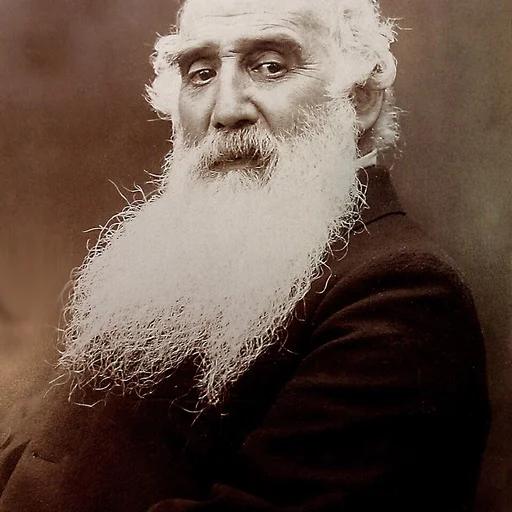
Jacob Abraham Camille Pissarro ( piss-AR-oh; French: ; 10 July 1830 – 13 November 1903) was a Danish-French Impressionist and Neo-Impressionist painter born on the island of Saint Thomas (now in the US Virgin Islands, but then in the…