Artwork
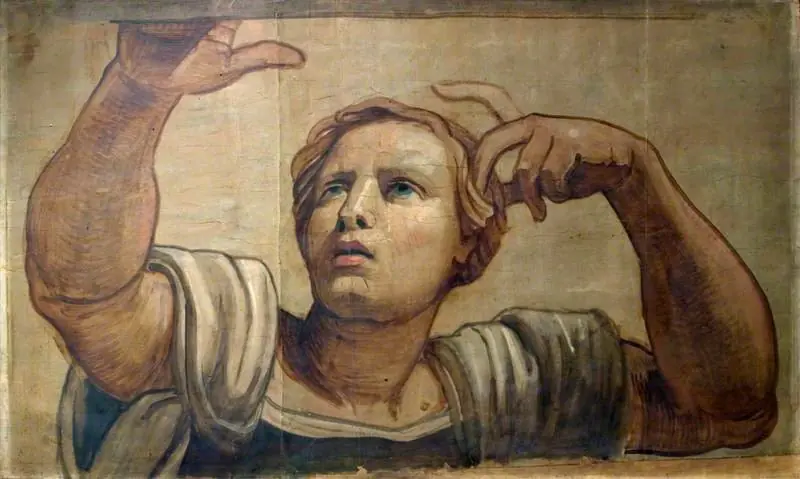
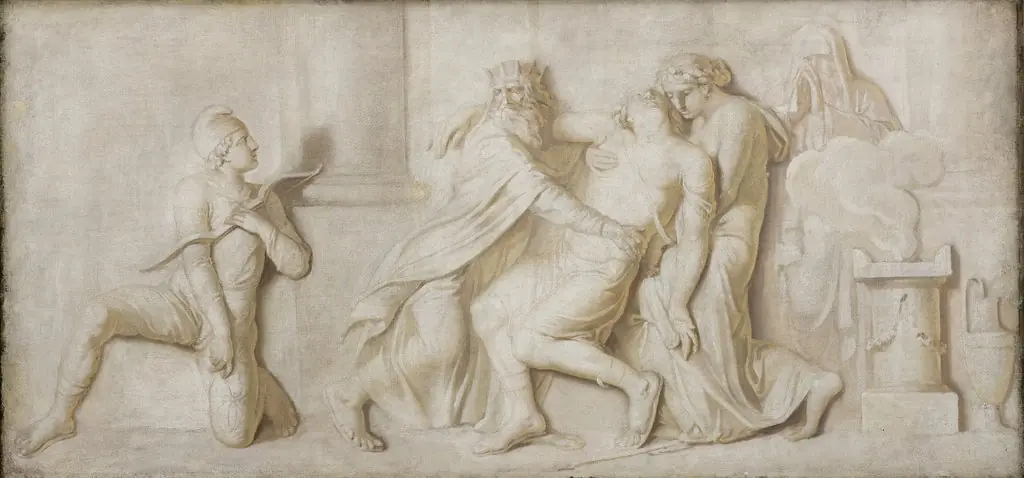
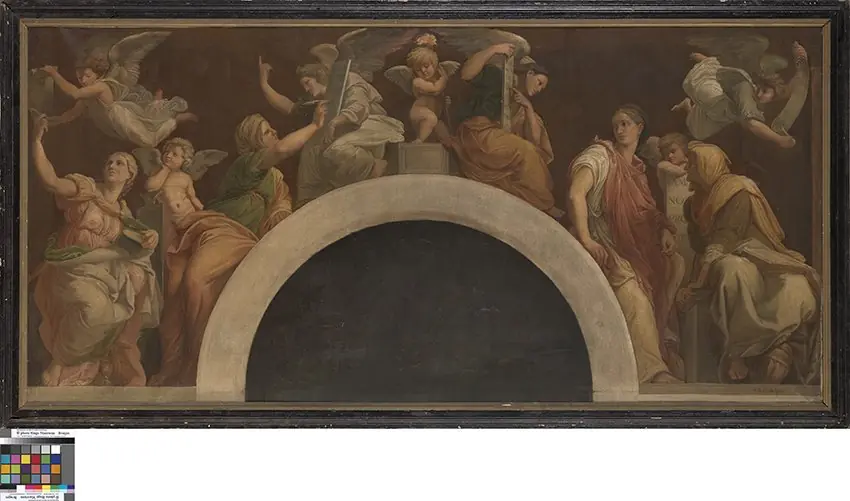
Figure Group (cartoon for the south wall, left centre of the ceiling cove, Dining Room, Dorchester House)
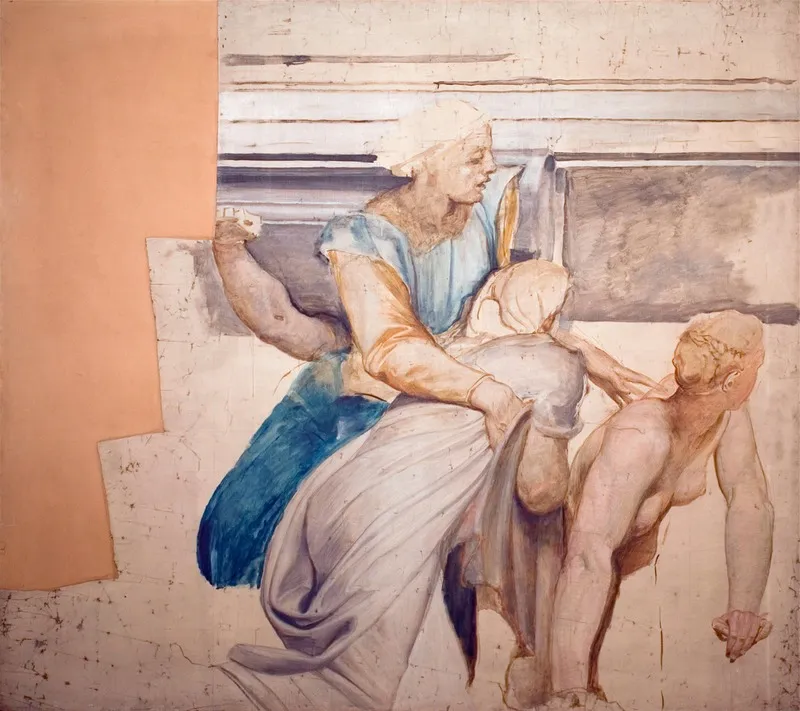
Figure Group (cartoon for the south wall, left centre of the ceiling cove, Dining Room, Dorchester House) is an oil painting by Alfred Stevens. It dates from 1860 and is held in the collection of the Victoria and Albert Museum.
About this work
Overview
Created in 1860, this oil painting by Alfred Stevens functioned as a full-scale preparatory study for a decorative ceiling panel in Dorchester House, London.
Created in 1860, this oil painting by Alfred Stevens functioned as a full-scale preparatory study for a decorative ceiling panel in Dorchester House, London. It belongs to a series of cartoons designed to guide the execution of wall and ceiling ornamentation. Though executed in oil, its purpose was architectural rather than autonomous, reflecting Stevens’s engagement with interior decoration during a period when fine and applied arts frequently intersected.
Subject & Meaning
The composition depicts a seated woman in a modest blue gown and white head covering, cradling a naked infant. A partially obscured figure tugs at the child, introducing a subtle tension into the scene. The interaction suggests a domestic moment infused with ambiguity—perhaps a guardian’s vigilance or an interruption of quiet intimacy. Stevens avoids overt narrative, favoring psychological nuance over literal storytelling, consistent with his interest in private, contemplative moments.
Technique & Style
Stevens employed soft modeling and layered brushwork to render the woman’s garments and the child’s skin with delicate gradations of tone. The background, composed of muted peach, gray, and white planes, suggests spatial depth through subtle shifts in color and texture rather than linear perspective. His use of impasto in highlights and restrained chiaroscuro reflects his study of Dutch Golden Age painting, particularly in the treatment of light and fabric.
History & Provenance
Commissioned as part of a decorative program for Dorchester House, the painting remained within the estate’s collection until the house’s demolition in 1929. It was subsequently acquired by the Victoria and Albert Museum, where it is preserved as a rare example of a preparatory cartoon for interior decoration. Its survival is notable, as such studies were often discarded after their functional purpose was fulfilled.
Context
In the mid-19th century, British aristocratic interiors increasingly incorporated fine art into their design schemes, blurring boundaries between painting and decoration. Stevens, though Belgian, was active in Paris and London, bridging French and British aesthetic sensibilities. His shift from socially critical subjects to scenes of bourgeois leisure mirrored broader cultural trends, aligning his work with the era’s fascination with refined domesticity.
Legacy
Though Stevens is better known for finished paintings of elegant women, this cartoon reveals his skill in translating painterly detail into architectural contexts. It stands as a testament to the collaborative nature of 19th-century interior design and the value placed on preparatory work. The piece contributes to scholarly understanding of how fine art functioned within domestic environments beyond the easel.
Artist & collection
Artist
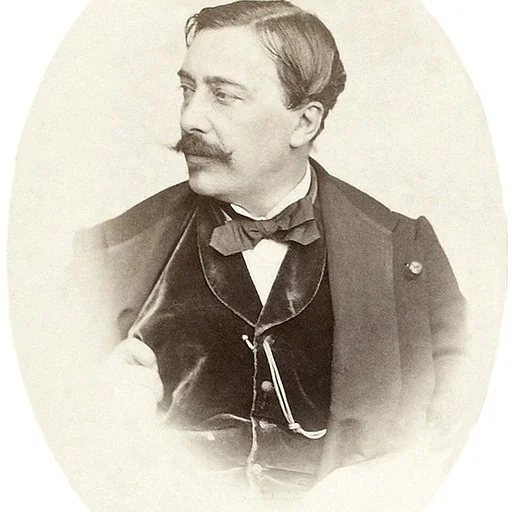
Alfred Émile Léopold Stevens (11 May 1823 – 24 August 1906) was a Belgian painter, known for his paintings of elegant modern women.