Artwork
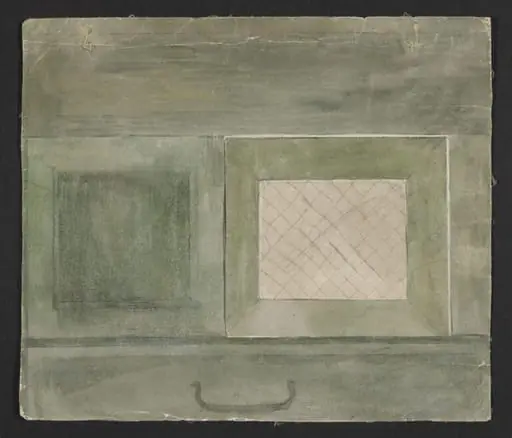
Model of the Ceiling of the Dining Room, Dorchester House: Decoration of the South Wall of the Cove
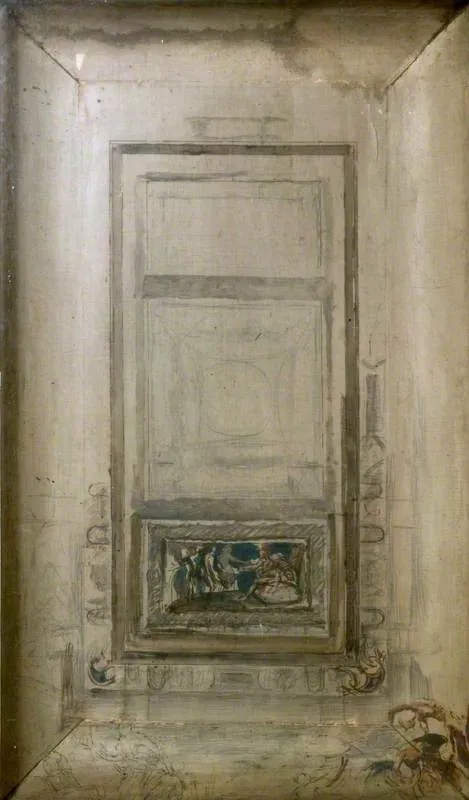
Model of the Ceiling of the Dining Room, Dorchester House: Decoration of the South Wall of the Cove is an unspecified painting by Alfred Stevens. It dates from 1860 and is held in the collection of the Victoria and Albert Museum.
About this work
Overview
Stevens, primarily known for genre scenes, here engaged directly with interior decoration, bridging his painting practice with spatial design.
Created in 1860 by Belgian artist Alfred Stevens, this architectural model is a preparatory study for the ceiling and south wall cove of the dining room at Dorchester House in London. Though executed in a sketchlike manner with pencil and charcoal, it includes subtle color accents, suggesting it was intended as a detailed proposal rather than a casual sketch. Stevens, primarily known for genre scenes, here engaged directly with interior decoration, bridging his painting practice with spatial design.
Subject & Meaning
The composition centers on a large rectangular void, flanked by smaller geometric frames and a miniature painted scene at the base. This layout likely corresponded to planned decorative elements: the central space for a future mural or relief, the surrounding bands for ornamental molding, and the lower scene as a focal point. The symmetry reflects classical ideals of balance, while the unfinished state implies the work was a working design, open to client revision.
Technique & Style
Stevens employed dry media—pencil and charcoal—to define structural outlines, with faint washes of color hinting at intended pigments. The technique echoes the precision of Dutch Golden Age studies, though adapted for architectural planning. The sketchy handling contrasts with his finished paintings, revealing a more experimental, provisional approach. Details like the small painted vignette suggest he integrated narrative elements even in design drafts.
History & Provenance
The model was made for Dorchester House, a prominent London residence owned by the 1st Earl of Dorchester. Stevens was commissioned to design its dining room’s interior around 1860, during a period when British aristocrats sought continental artistic influence. The study’s survival indicates its importance in the design process, though the final execution of the room remains undocumented.
Context
In mid-19th-century Britain, elite interiors increasingly incorporated fine art into architectural surfaces, blending painting, sculpture, and ornament. Stevens, trained in Brussels and active in Paris, brought continental sensibilities to British commissions. His involvement in decorative schemes reflected a broader trend among artists to transcend canvas and contribute to total interior environments, aligning with emerging ideas of Gesamtkunstwerk.
Legacy
This study illustrates Stevens’ lesser-known role as an interior designer, expanding understanding of his artistic range beyond portraiture and genre scenes. It stands as a rare surviving example of a preparatory design for a Victorian domestic interior, offering insight into how artists collaborated with patrons on spatial decoration. Though the room itself was later altered or demolished, the model preserves a moment of artistic intention in domestic design.
Artist & collection
Artist
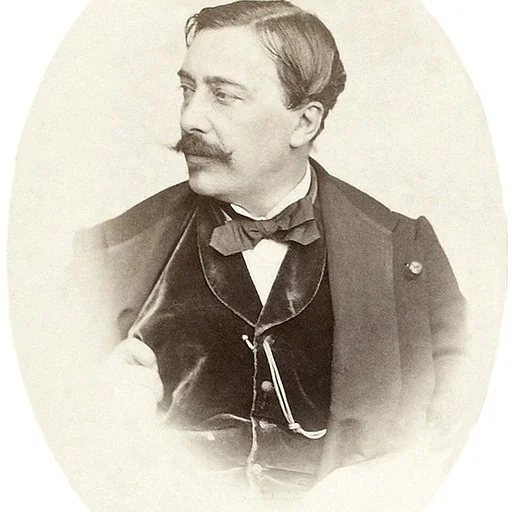
Alfred Émile Léopold Stevens (11 May 1823 – 24 August 1906) was a Belgian painter, known for his paintings of elegant modern women.