Artwork
Amiens Cathedral
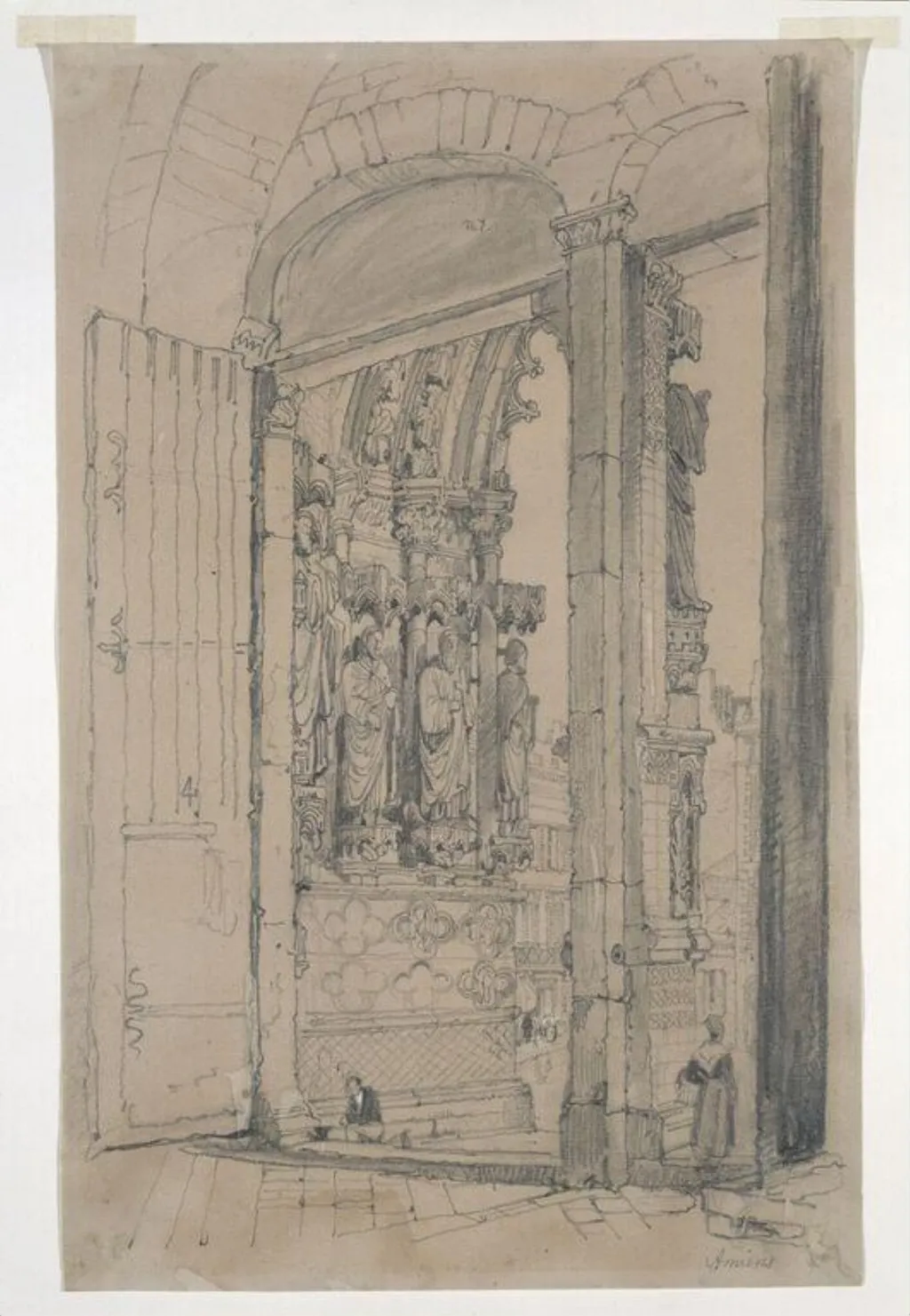
Amiens Cathedral is a drawing by the Romanticist artist Samuel Prout. It dates from 1824 and is held in the collection of the Victoria and Albert Museum.
About this work
Overview
This pencil drawing by Samuel Prout captures the interior of Amiens Cathedral, viewed from within toward the southwest.
This pencil drawing by Samuel Prout captures the interior of Amiens Cathedral, viewed from within toward the southwest. Executed with careful attention to architectural detail, it functions as a preparatory study for a lithograph published in the first volume of *Voyages pittoresques et romantiques dans l'ancienne France*. The work reflects the 19th-century practice of artists documenting historic structures through direct observation, serving both documentary and artistic purposes.
Subject & Meaning
The drawing focuses on the cathedral’s nave, emphasizing the verticality of its columns and the luminous altar at the far end. Statues in wall niches and draped fabric around the altar suggest ritual presence, while the dim interior light enhances the sense of sacred space. Prout’s composition guides the viewer’s gaze upward, reinforcing the spiritual aspiration embedded in Gothic architecture without overt symbolism or narrative.
Technique & Style
Prout employs fine pencil lines and subtle tonal gradations to render the cathedral’s stonework and atmospheric depth. Cross-hatching defines shadowed recesses and textured surfaces, while delicate highlights suggest where light filters through unseen windows. The precision in carving details and the restrained use of tone reflect the topographical rigor typical of architectural studies of the period, prioritizing accuracy over expressive flourish.
History & Provenance
Created around the early 1830s, the drawing was intended as a study for a lithograph published in *Voyages pittoresques et romantiques dans l'ancienne France*. The final print was engraved by George Barnard, who translated Prout’s pencil work into a printed image for a wider audience. The original sketch remains a private record of the artist’s process, distinct from its published counterpart.
Context
In the early 19th century, European artists increasingly traveled to document medieval architecture as part of a broader cultural revival of interest in the Gothic past. Prout’s work aligns with this movement, contributing to a visual archive that balanced scholarly observation with aesthetic appreciation. Such drawings informed public perception of historic monuments during a time of rising heritage consciousness.
Legacy
Prout’s study exemplifies the role of the artist as recorder of architectural heritage. Though not widely exhibited as a standalone work, its transformation into a published lithograph helped disseminate images of Amiens Cathedral to audiences beyond France. The drawing endures as a quiet testament to the methodical observation that underpinned 19th-century architectural documentation.
Artist & collection
Artist
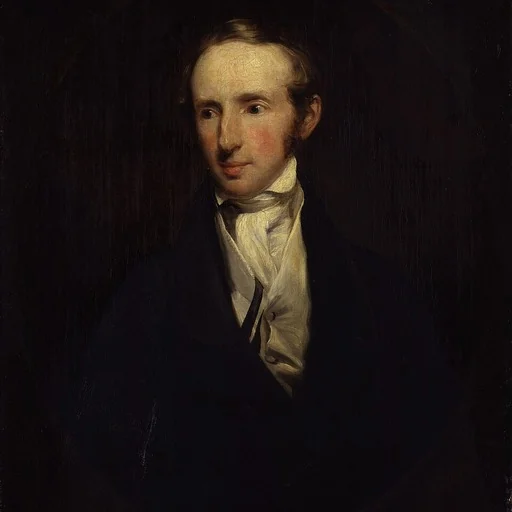
Samuel Prout (; 17 September 1783 – 10 February 1852) was a British watercolourist, and one of the masters of watercolour architectural painting, who largely invented the genre of the grand steet scene in British…

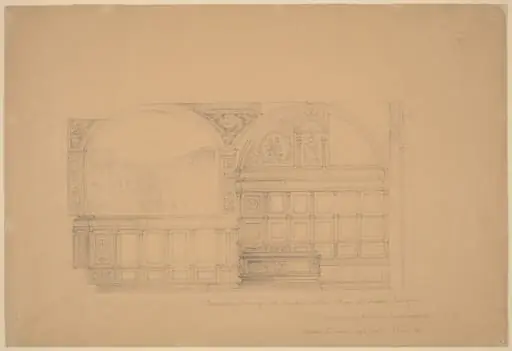 Perugino's Udienza del Cambio in the Collegio del Cambio, Perugia
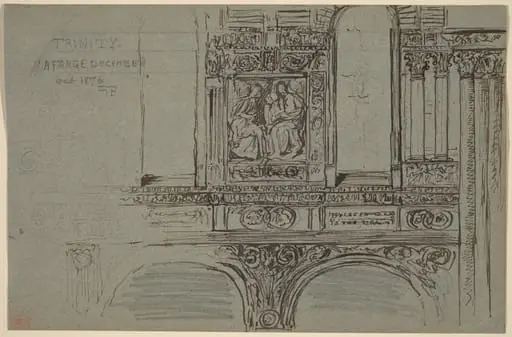 Trinity Church, Boston (nave) - Mural Study
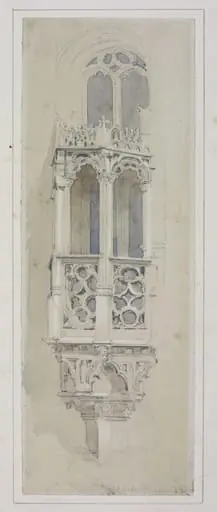 Sketch of a window and balcony, Hotel de Ville, Brussels
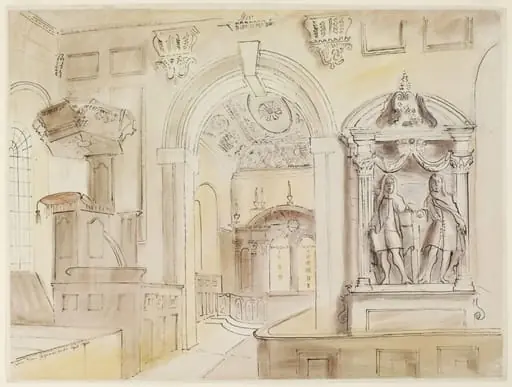 Interior of St. Peter's Church, Gayhurst
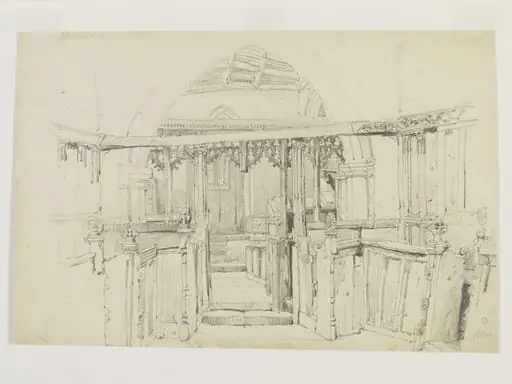 Blore-Ray Church in Staffordshire
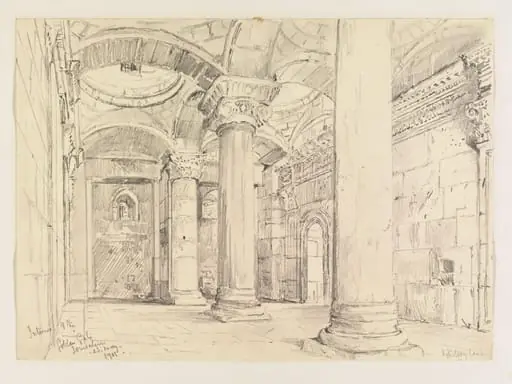 Interior of the Golden Gate Jerusalem
 Untitled
 Untitled
 Architectural drawing
 The Gun Forge