Artwork
Aberystwyth Trawler
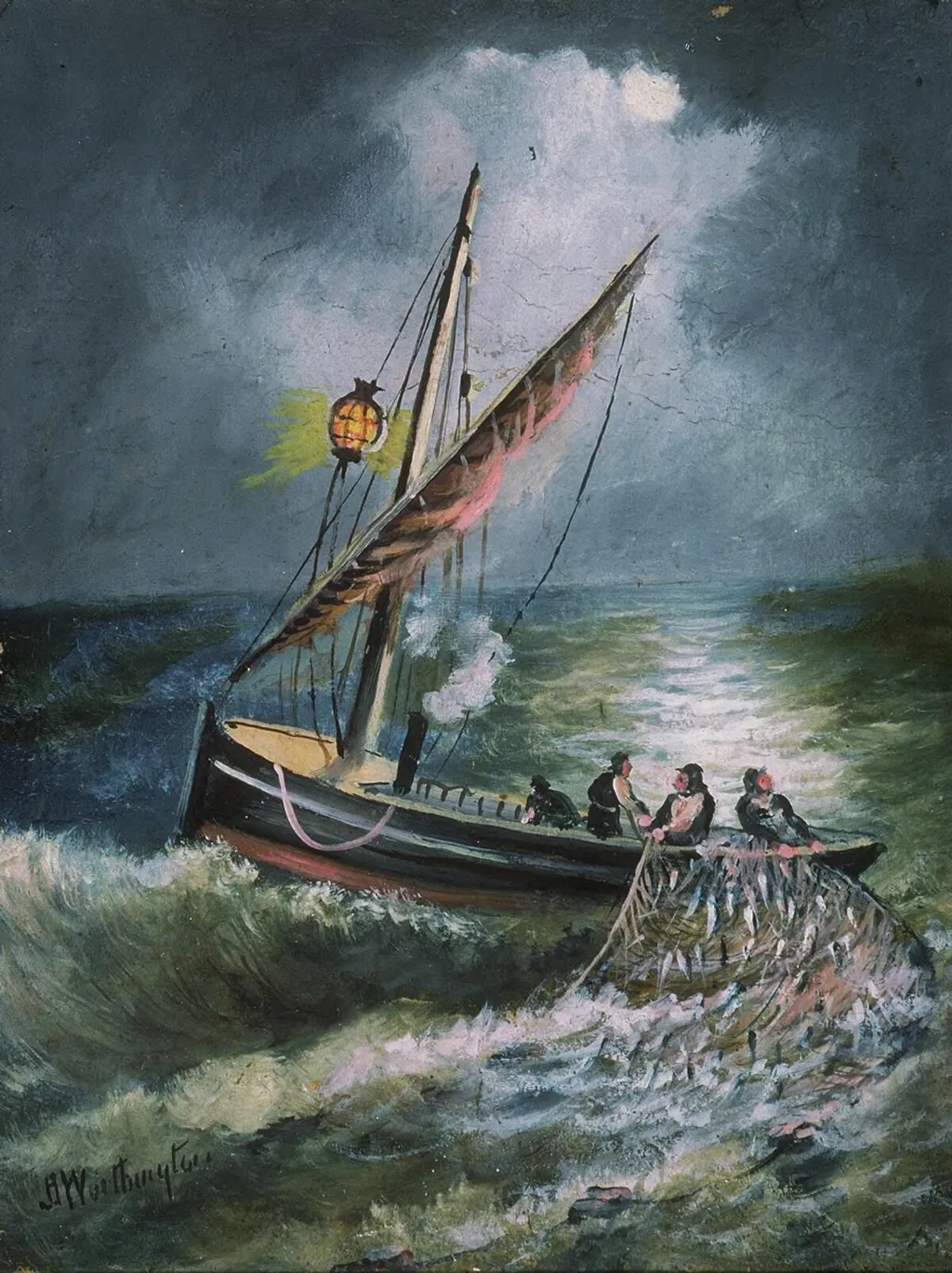
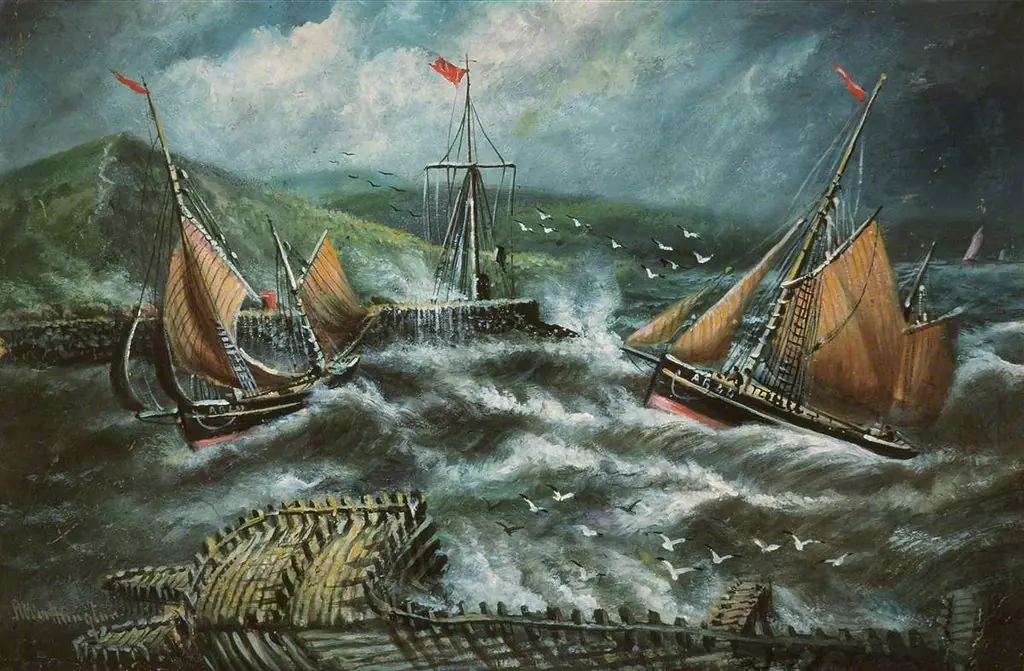
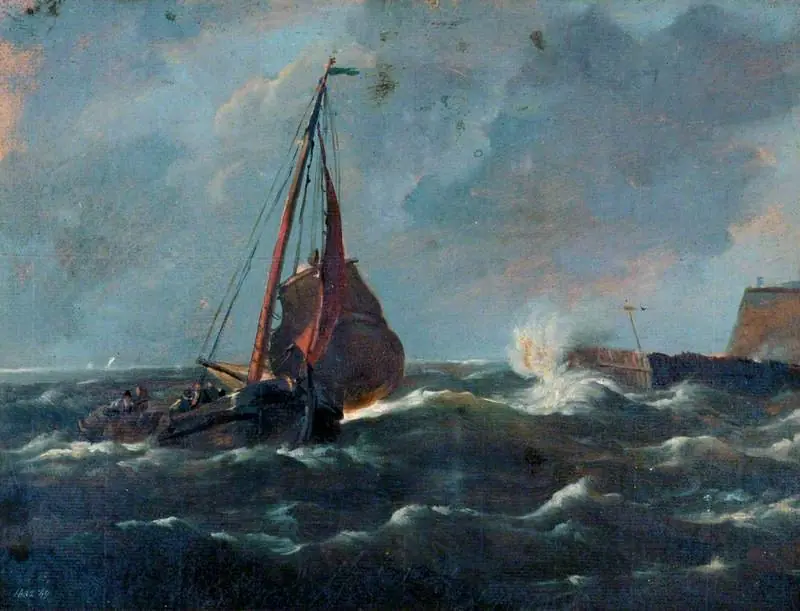
Aberystwyth Trawler is an oil painting by the Impressionist artist Alfred Worthington. It dates from 1896 and is held in the collection of the National Library of Wales.
About this work
Overview
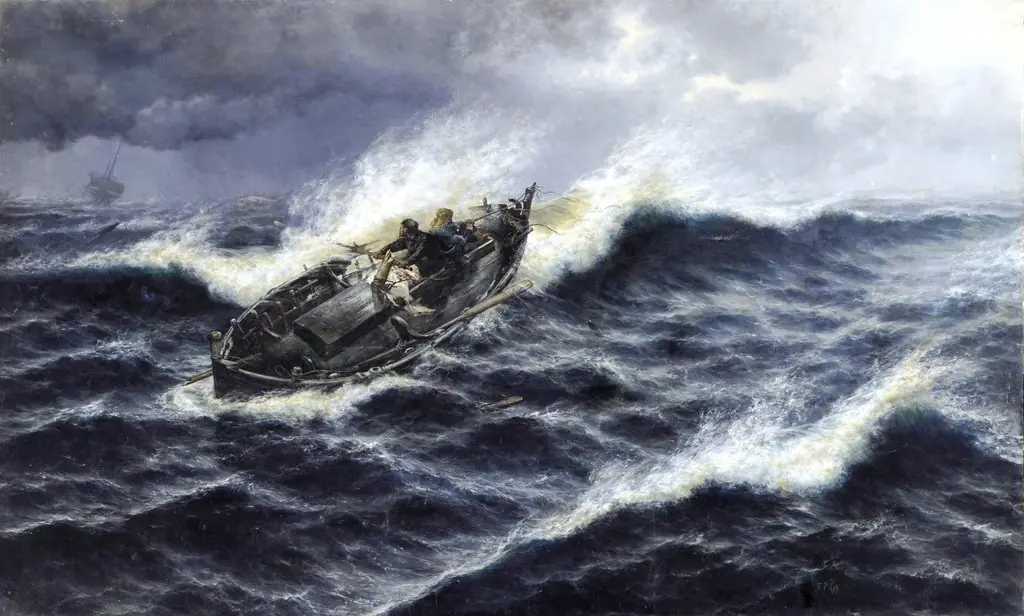
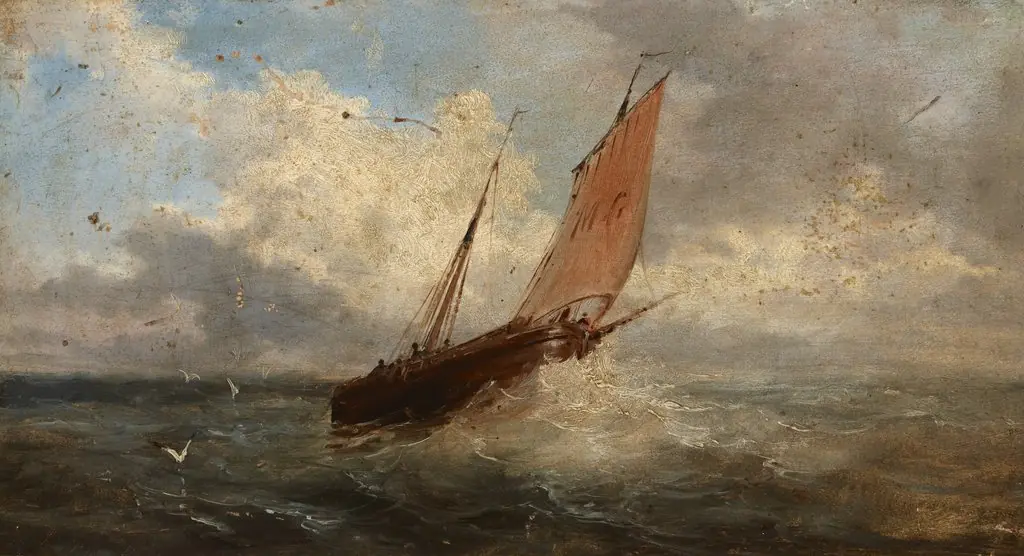
Aberystwyth Trawler is an 1896 oil painting by Alfred Worthington, capturing a fishing vessel at sea off the coast of Wales. The work belongs to the National Library of Wales and reflects the artist’s interest in maritime labor. It presents a moment of quiet intensity, focusing on the interaction between crew, vessel, and environment rather than grand spectacle.
Subject & Meaning
The painting portrays a small trawler in active motion, its crew engaged in the routine tasks of fishing. The lantern glowing on the mast suggests nightfall or early dawn, emphasizing the harsh rhythms of coastal life. The boat’s angled position and the turbulent sea convey vulnerability and resilience, underscoring the physical demands of the fishers’ trade without romanticizing it.
Technique & Style
Worthington employs chiaroscuro to model the boat and waves, using contrast between light and shadow to suggest volume and movement. The brushwork is controlled yet expressive, particularly in the rendering of water and fabric. The dark, brooding sky anchors the composition, while the warm glow of the lantern draws attention to the human element amid the elemental forces of sea and weather.
History & Provenance
Painted in 1896, the work remained in private hands until its acquisition by the National Library of Wales. Its inclusion in the library’s collection reflects its value as a regional document, preserving the visual record of Welsh maritime activity at the turn of the century. No major exhibitions or public records of its early reception are known.
Context
In late 19th-century Wales, coastal communities relied heavily on small-scale fishing. Aberystwyth Trawler emerges from a period when industrialization was altering traditional livelihoods. The painting aligns with broader British artistic trends that observed working-class life with observational clarity, avoiding sentimentality while honoring its dignity.
Legacy
The painting endures as a quiet testament to the endurance of Welsh fishing communities. Though not widely reproduced, it holds significance within regional collections for its authentic depiction of maritime labor. It contributes to the historical record of coastal Wales, offering insight into the visual culture of everyday seafaring life.
Own this work as a print
Artist & collection
Artist
English painter in the 1880s–90s, Worthington captured Welsh coastal life and village scenes in oil.