Artwork
Untitled
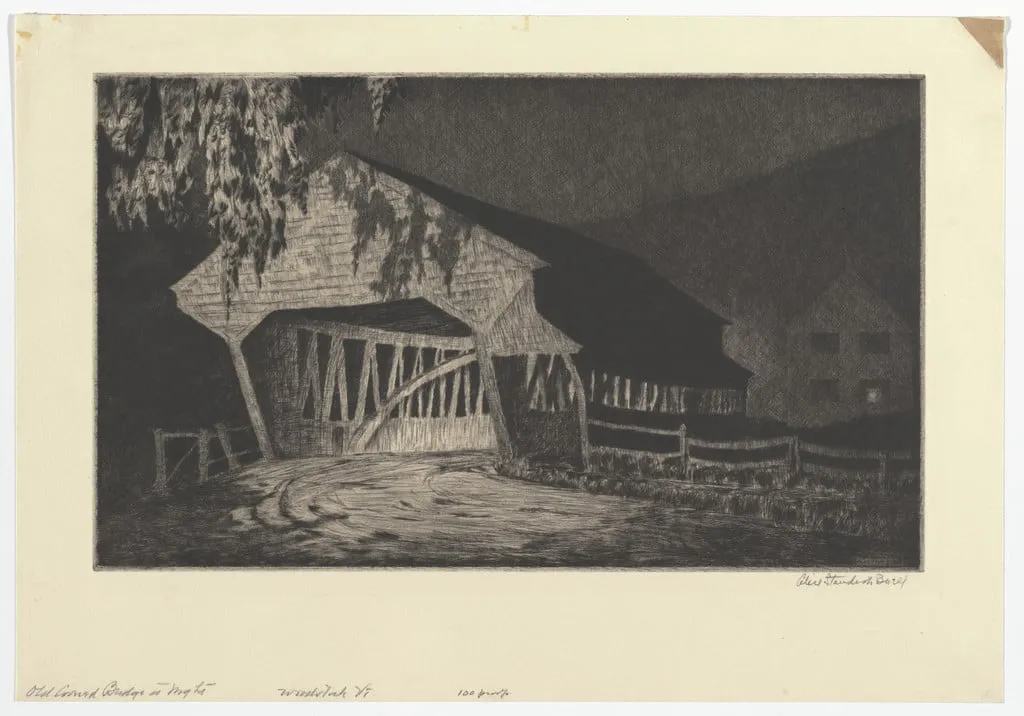
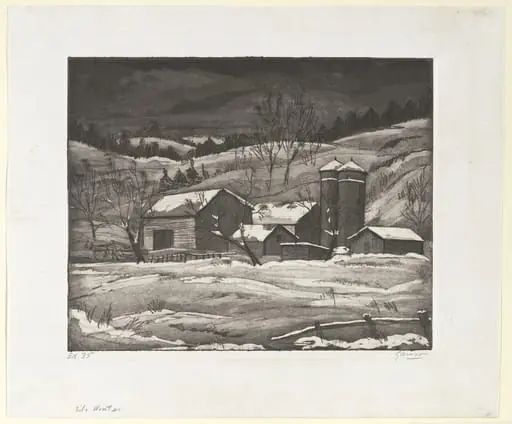
Untitled is an ink print by Alice Standish Buell. It dates from 1933 and is held in the collection of the Museum of Modern Art.
About this work
Overview
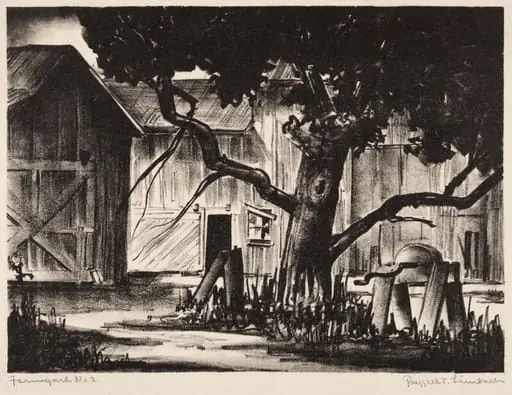
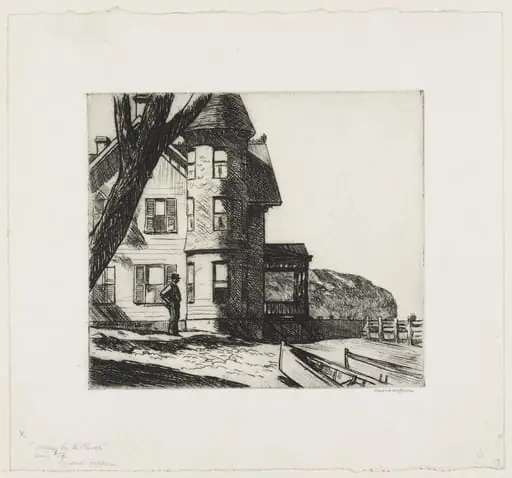
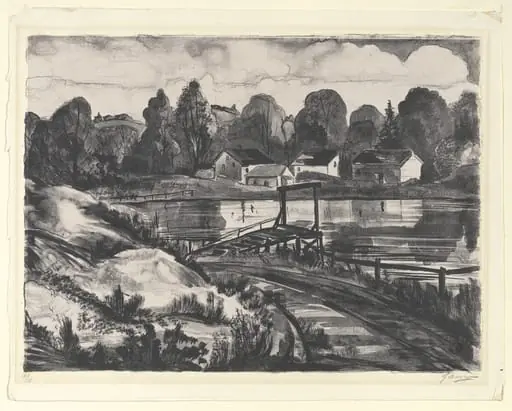
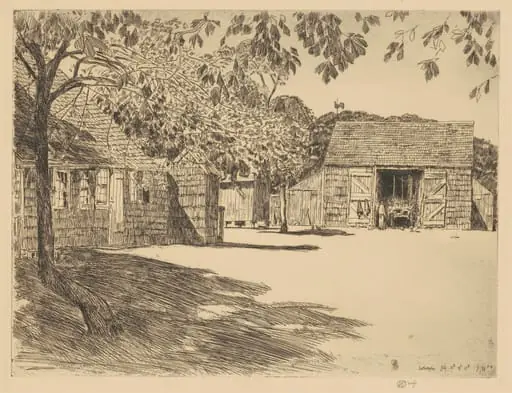
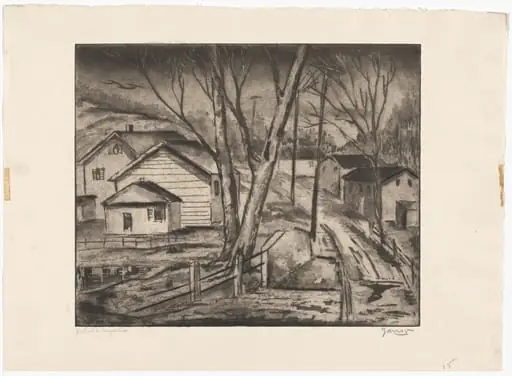
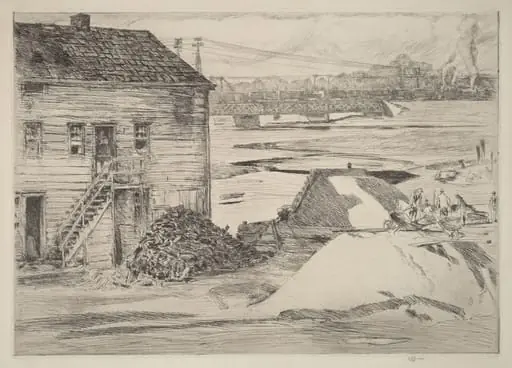
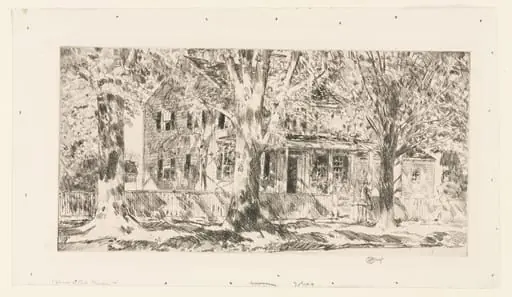
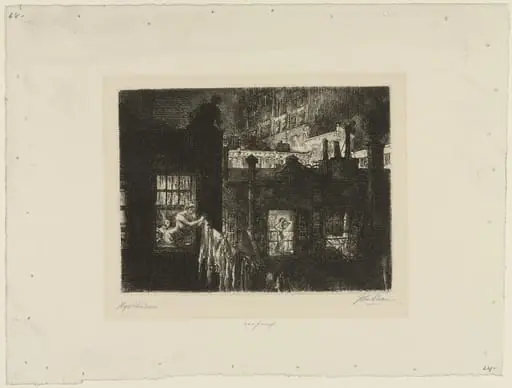
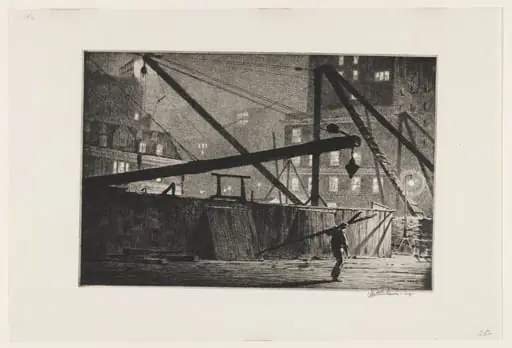
Alice Standish Buell created this black-and-white etching around 1933. It is part of the collection at The Museum of Modern Art. The work depicts a solitary wooden bridge at night, rendered in fine linear detail and tonal contrast. No textual markers or identifiable landmarks appear, leaving the location implied rather than stated.
Subject & Meaning
The scene presents a quiet, isolated bridge under nightfall, framed by a leaning tree with bare branches and a low fence along one side. The absence of human figures or signage enhances a sense of stillness and ambiguity. The title references Middletown, yet the setting remains deliberately generic, inviting contemplation of place rather than identification.
Technique & Style
Buell employed etching to achieve subtle gradations of shadow and light. Fine lines define the bridge’s slanted roof and the texture of the water, while dense ink areas deepen the nocturnal atmosphere. The composition relies on contrast and negative space to evoke mood, reflecting a quiet, introspective approach to landscape.
History & Provenance
The print was made circa 1933 and entered the collection of The Museum of Modern Art at some point after its creation. No documented exhibition or ownership history prior to its acquisition by the museum is publicly available. Its inclusion in the collection suggests recognition of its quiet formal qualities within early 20th-century American printmaking.
Context
Created during the Great Depression, the image reflects a broader interest among American artists in rural and vernacular architecture. While not overtly political, its subdued tone aligns with regionalist sensibilities of the era, emphasizing solitude and the passage of time over narrative or spectacle.
Legacy
Buell’s etching contributes to a modest but significant body of work by women printmakers of the early 20th century. Its restrained aesthetic and technical precision offer a counterpoint to more dramatic depictions of American life, preserving a quiet, observational mode within the history of printmaking.
Artist & collection