Artwork
Farmyard No. 2
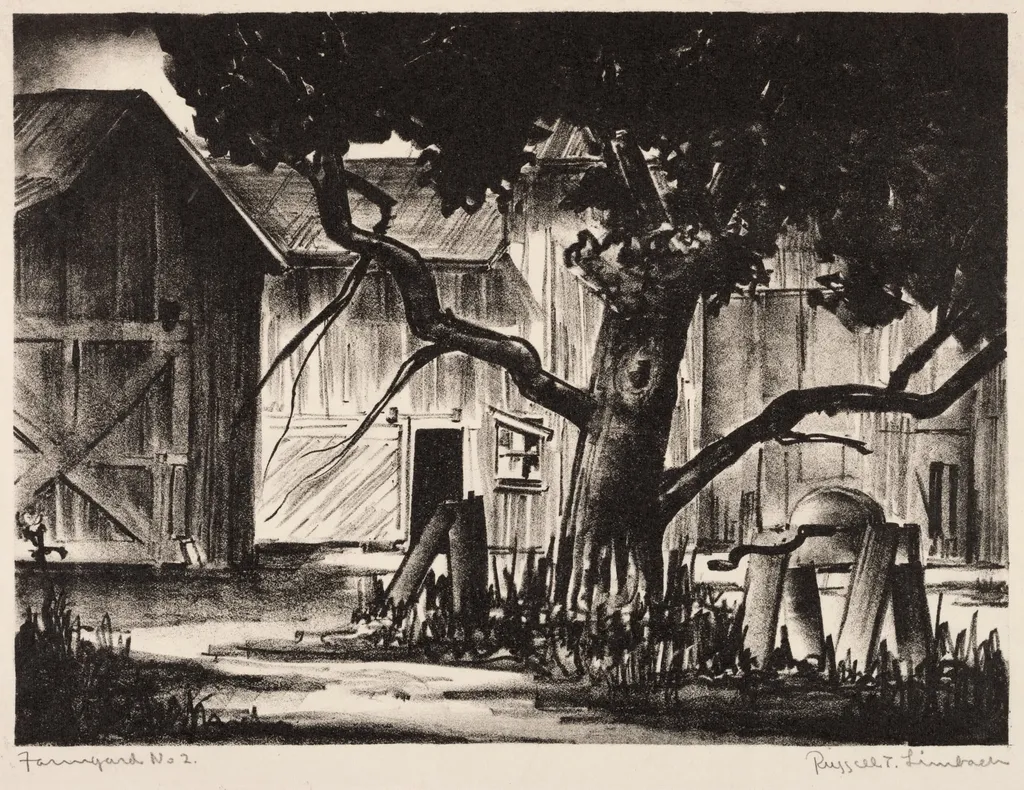
Farmyard No. 2 is a print by Russell T. Limbach. It dates from 1928 and is held in the collection of the Cleveland Museum of Art. Farmyard No.
About this work
Overview
The work is part of the collection at The Cleveland Museum of Art, where it is preserved as an example of early 20th-century American printmaking.
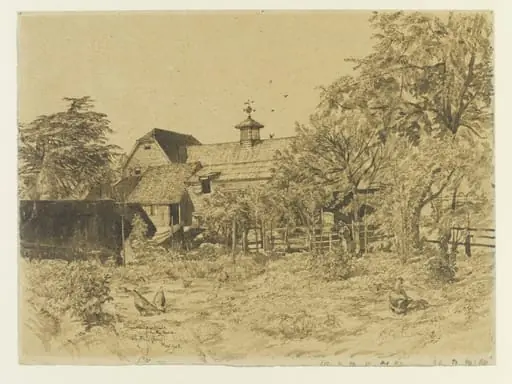
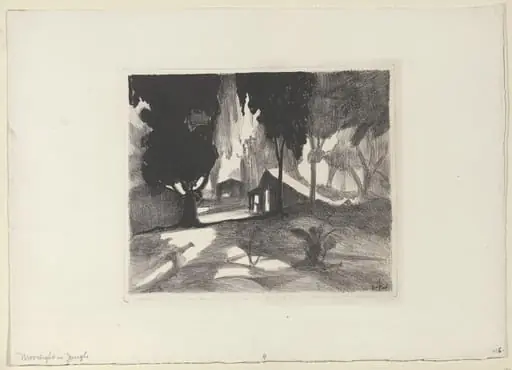
Farmyard No. 2 is a black-and-white print by Russell T. Limbach, dated around 1928. It depicts a quiet rural scene at twilight, rendered with strong contrasts between light and shadow. The composition focuses on a barn and a few livestock, surrounded by sparse, textured elements suggesting fences and foliage. The work is part of the collection at The Cleveland Museum of Art, where it is preserved as an example of early 20th-century American printmaking.
Subject & Meaning
The scene captures a tranquil moment on a farm at dusk, with cows standing near a barn whose open door reveals only darkness within. The absence of human figures and the muted activity suggest solitude or the end of a day’s labor. The twisted trees and indistinct ground markings evoke a sense of quiet decay or natural overgrowth, reinforcing themes of rural isolation and the passage of time.
Technique & Style
Limbach employed bold, simplified lines to define forms and separate tonal zones, emphasizing contrast over detail. The use of dense, repetitive marks for the ground and foliage creates texture without realism, while the blurred outlines of the animals suggest movement or fading light. The chiaroscuro effect—sharp transitions between light and dark—gives the image a sculptural weight and atmospheric tension.
History & Provenance
Created circa 1928, Farmyard No. 2 entered the collection of The Cleveland Museum of Art at an early stage, likely acquired during the museum’s active period of collecting American prints in the 1920s and 1930s. Its preservation suggests it was recognized by curators as representative of regional artistic trends, though little public documentation exists about its exhibition history or the artist’s intentions at the time of creation.
Context
Limbach worked during a time when American artists were turning to rural subjects as a counterpoint to industrial modernity. His prints reflect influences from regionalist movements and the growing interest in printmaking as a serious medium. Farmyard No. 2 aligns with contemporaneous works that sought emotional resonance through simplified forms and dramatic lighting, rather than detailed realism.
Legacy
Though Russell T. Limbach is not widely known today, Farmyard No. 2 remains a quiet example of early 20th-century American printmaking that values mood over narrative. Its restrained aesthetic and emphasis on tonal contrast continue to be studied as part of the broader evolution of regional art practices, offering insight into how artists interpreted everyday rural life through abstraction and light.
Artist & collection