Artwork
Untitled
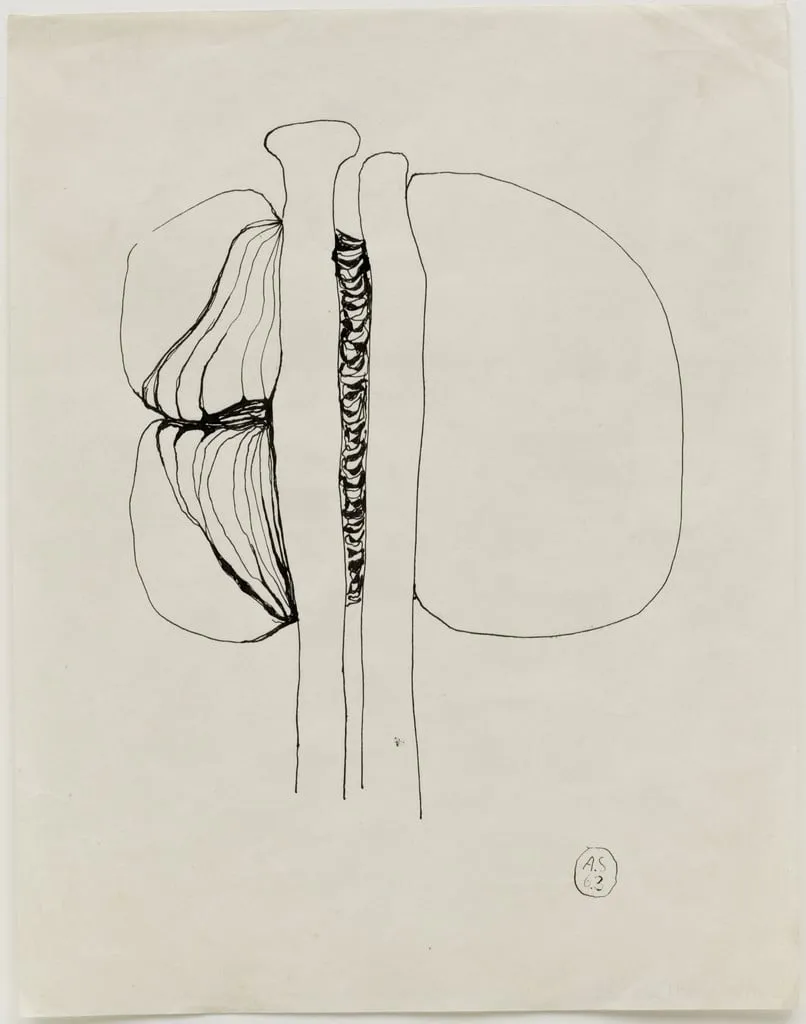
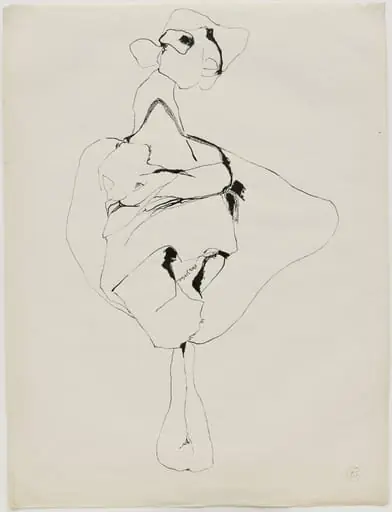
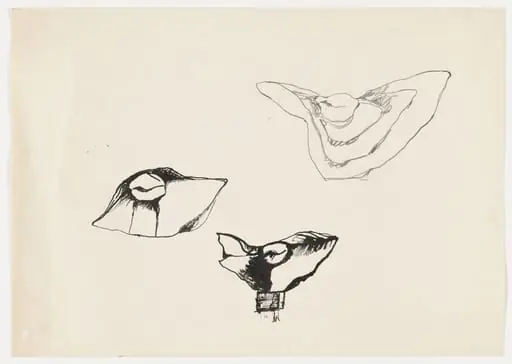
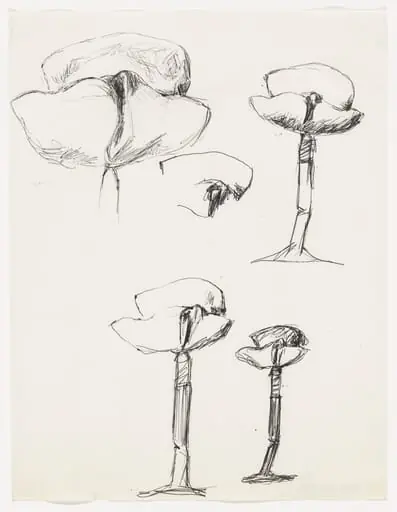
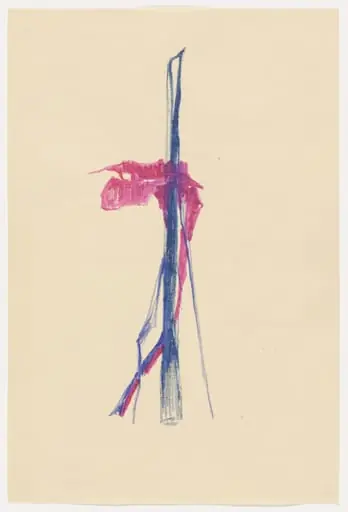
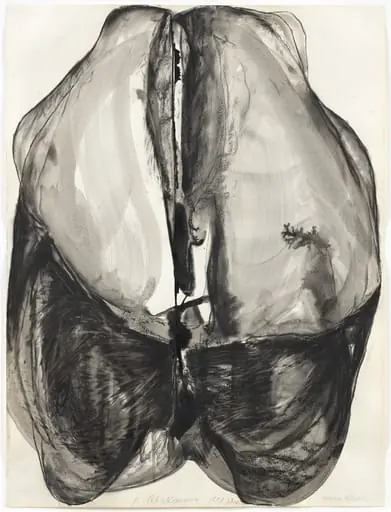
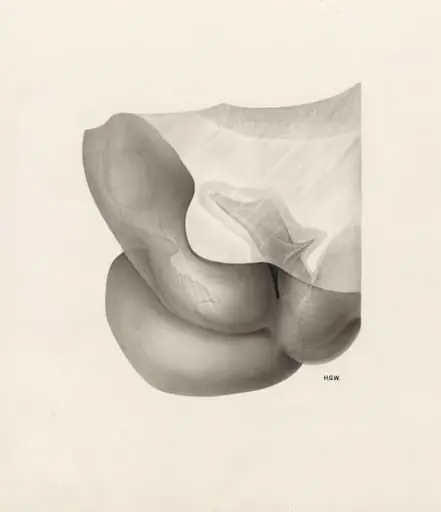
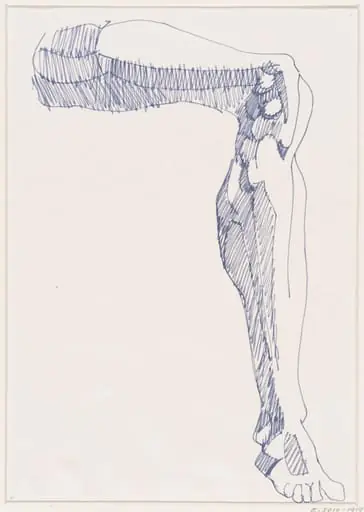
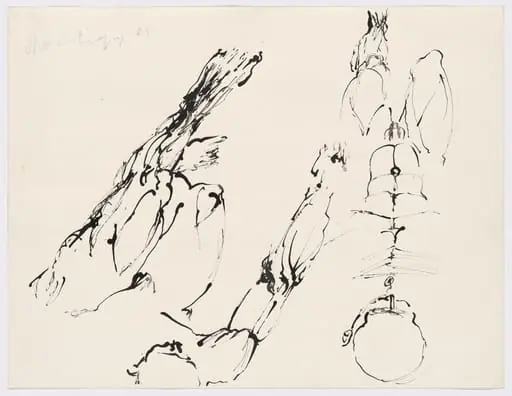
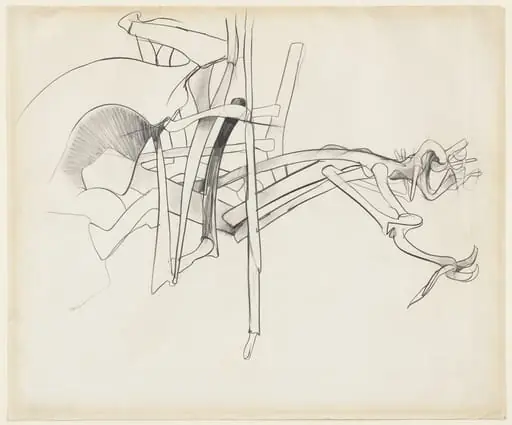
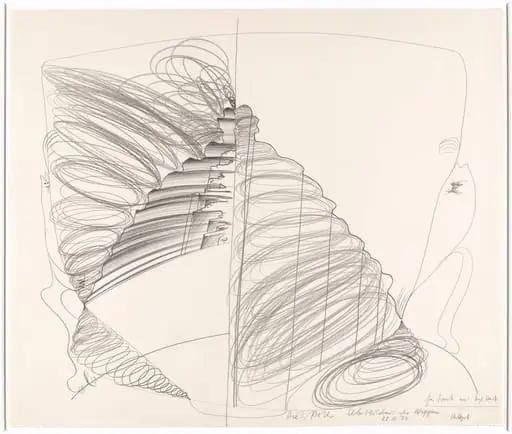
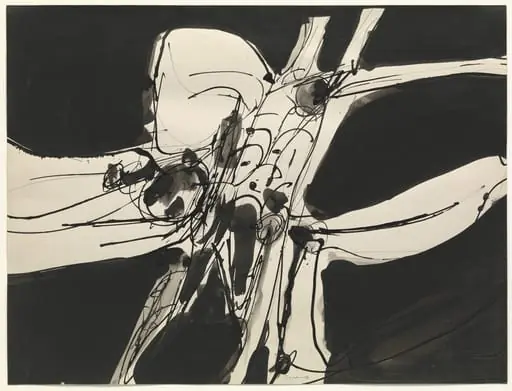
Untitled is an ink drawing by Alina Szapocznikow. It dates from 1963 and is held in the collection of the Museum of Modern Art.
About this work
Overview
Created in 1963, this ink drawing by Alina Szapocznikow reflects her engagement with the physicality and vulnerability of the body. Executed on light paper with minimal strokes, the work belongs to a series in which she deconstructed anatomical forms, moving beyond traditional sculpture into graphic explorations of corporeal absence. It is part of The Museum of Modern Art’s permanent collection.
Subject & Meaning
Rather than depicting organs or blood, the artist leaves the cavity empty, suggesting loss, erasure, or the fragility of bodily integrity.
The figure is rendered as a hollowed silhouette, its torso split vertically to expose an internal void. Rather than depicting organs or blood, the artist leaves the cavity empty, suggesting loss, erasure, or the fragility of bodily integrity. The stiff, diagrammatic pose evokes medical illustrations, yet the absence within resists clinical interpretation, pointing instead to psychological or existential rupture.
Technique & Style
Szapocznikow used precise, unmodulated ink lines to outline the figure’s exterior, creating a sharp contrast with the untouched paper within. The spine is rendered as a series of parallel strokes—neither shaded nor filled—emphasizing structure without flesh. The absence of cross-hatching or tonal variation reinforces a sense of detachment, aligning the work with a reductive, almost clinical aesthetic.
History & Provenance
Made during a period of intense personal and artistic transformation, the drawing emerged after Szapocznikow’s experiences as a Holocaust survivor and her subsequent shift from traditional sculpture to more fragmented, bodily forms. It entered The Museum of Modern Art’s collection in the late 20th century, recognized for its contribution to postwar European drawing practices.
Context
In early 1960s Europe, artists were redefining the body through abstraction and material experimentation. Szapocznikow’s work resonated with movements like Nouveau Réalisme and Surrealism, yet resisted their symbolic excesses. Her drawings, including this one, responded to trauma and medical discourse, offering quiet, unsentimental meditations on the body’s impermanence.
Legacy
This drawing exemplifies Szapocznikow’s influence on later artists exploring bodily fragmentation and memory. Its restrained language—voids instead of wounds, lines instead of flesh—paved the way for conceptual approaches to the body in contemporary art. It remains a key reference in discussions of trauma, representation, and the limits of depiction.
Artist & collection
Artist
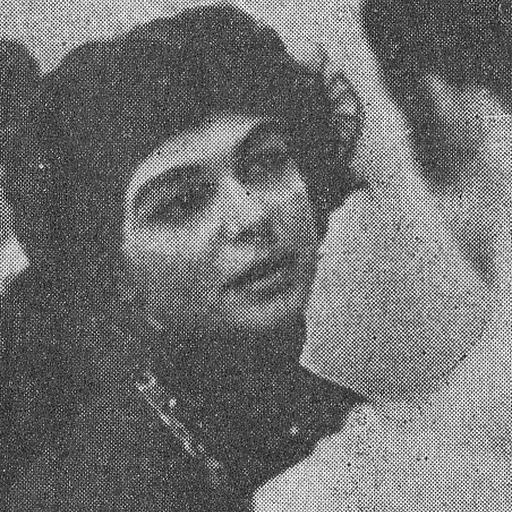
Alina Szapocznikow (Polish: ; May 16, 1926 – March 2, 1973) was a Polish artist and Holocaust survivor.