Artwork
Charlotte Corday
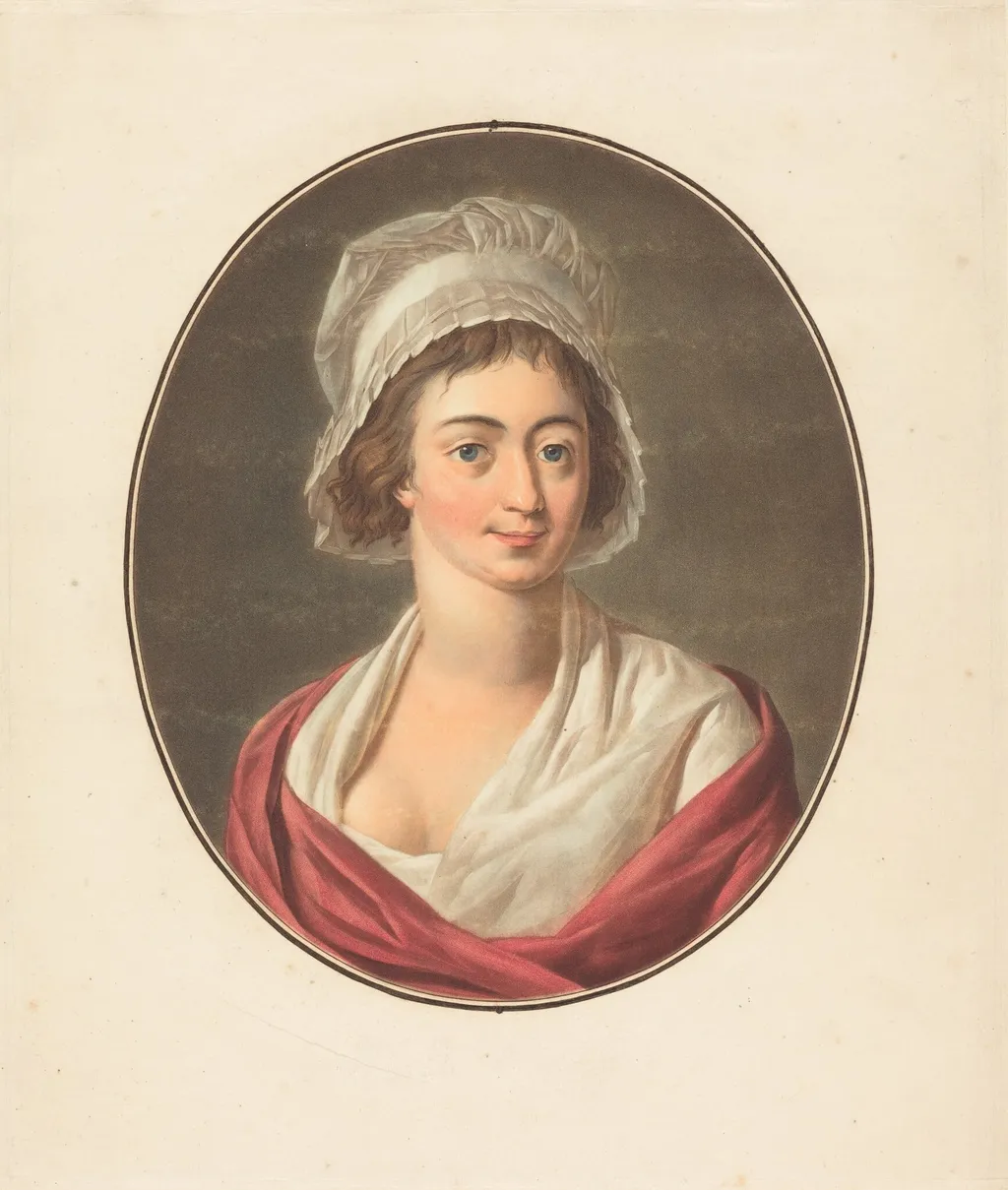
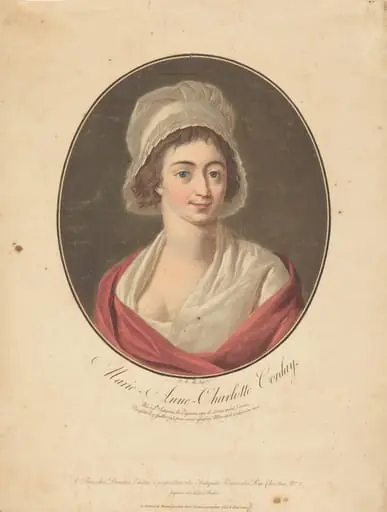
Charlotte Corday is a paint print by the Romanticist artist Pierre-Michel Alix. It dates from 1793 and is held in the collection of the National Gallery of Art.
About this work
Overview
Pierre-Michel Alix produced this portrait of Charlotte Corday in 1793 using color wash on wove paper, a technique favored for its speed and tonal subtlety.
Pierre-Michel Alix produced this portrait of Charlotte Corday in 1793 using color wash on wove paper, a technique favored for its speed and tonal subtlety. Trained in engraving under Jacques-Philippe Le Bas, Alix specialized in capturing likenesses of revolutionary figures. The work belongs to a genre of ephemeral political portraiture, distinct from formal oil paintings, and reflects the urgency of documenting key personalities during France’s turbulent transition.
Subject & Meaning
Charlotte Corday is depicted as a composed figure, her calm expression contrasting with the violent act for which she is known—the assassination of Jean-Paul Marat. The portrait avoids overt judgment, presenting her instead as a solemn, almost contemplative individual. The simplicity of her attire and the absence of symbolic elements suggest an attempt to humanize her, framing her not as a monster or martyr, but as a person caught in political upheaval.
Technique & Style
Alix employed a loose, aqueous wash technique on paper, allowing for rapid execution and nuanced gradations of tone. The lighting is softly modeled, emphasizing the contours of her face without sharp definition, creating a sense of immediacy. The dark, unadorned background isolates her form, directing attention to her expression. This method, common in journalistic or commemorative prints, prioritizes emotional resonance over finish, aligning with the transient nature of revolutionary imagery.
History & Provenance
The print entered institutional collections shortly after its creation, preserved in the Louvre’s Cabinet des estampes and the Bibliothèque nationale de France. These holdings reflect its significance as a contemporary record of revolutionary figures. Unlike painted portraits commissioned by elites, Alix’s work circulated more widely, serving as a visual reference during a period when public memory was being actively shaped by printed media.
Context
Created just months after Corday’s execution, the portrait emerged amid intense public debate over her actions. While Jacobins vilified her, royalists and moderates sometimes portrayed her as a virtuous avenger. Alix’s neutral rendering fits within a broader trend of printmakers documenting controversial figures without overt political alignment, offering the public a visual anchor amid ideological chaos.
Legacy
Alix’s portrait remains one of the most recognizable images of Corday, influencing later depictions in literature and theater. Its restrained aesthetic—free from heroism or condemnation—offers a rare visual record that prioritizes presence over propaganda. As a work of ephemeral art preserved in national archives, it endures as a testament to the power of print in shaping historical perception.
Artist & collection

Artist
Pierre-Michel Alix (1762 – 27 December 1817) was a French engraver. He studied under Jacques-Philippe Le Bas and was best known for his portraits of notable figures during the French Revolution and First French Empire.…

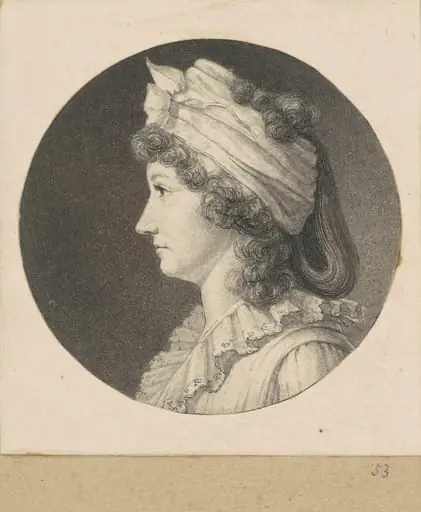 Unidentified Woman
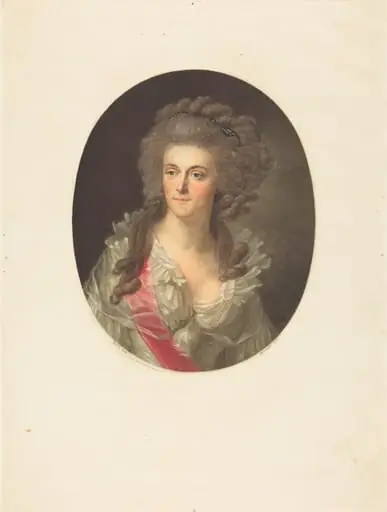 Frederica Sophia Wilhelmina of Prussia, Princess of Orange Nassau
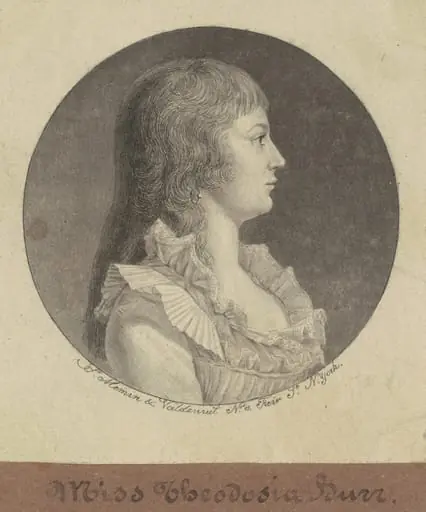 Theodosia Burr
 Sarah Coates Levy
 H Beard Print Collection
 Catherine Keteltas Livingston
 Marie de Laubespine
 Head of a Woman Wearing a Striped Bonnet
 Portrait of La Duchessa Mancini Colonna (1646-1699)
 H Beard Print Collection