Artwork
Unidentified Woman
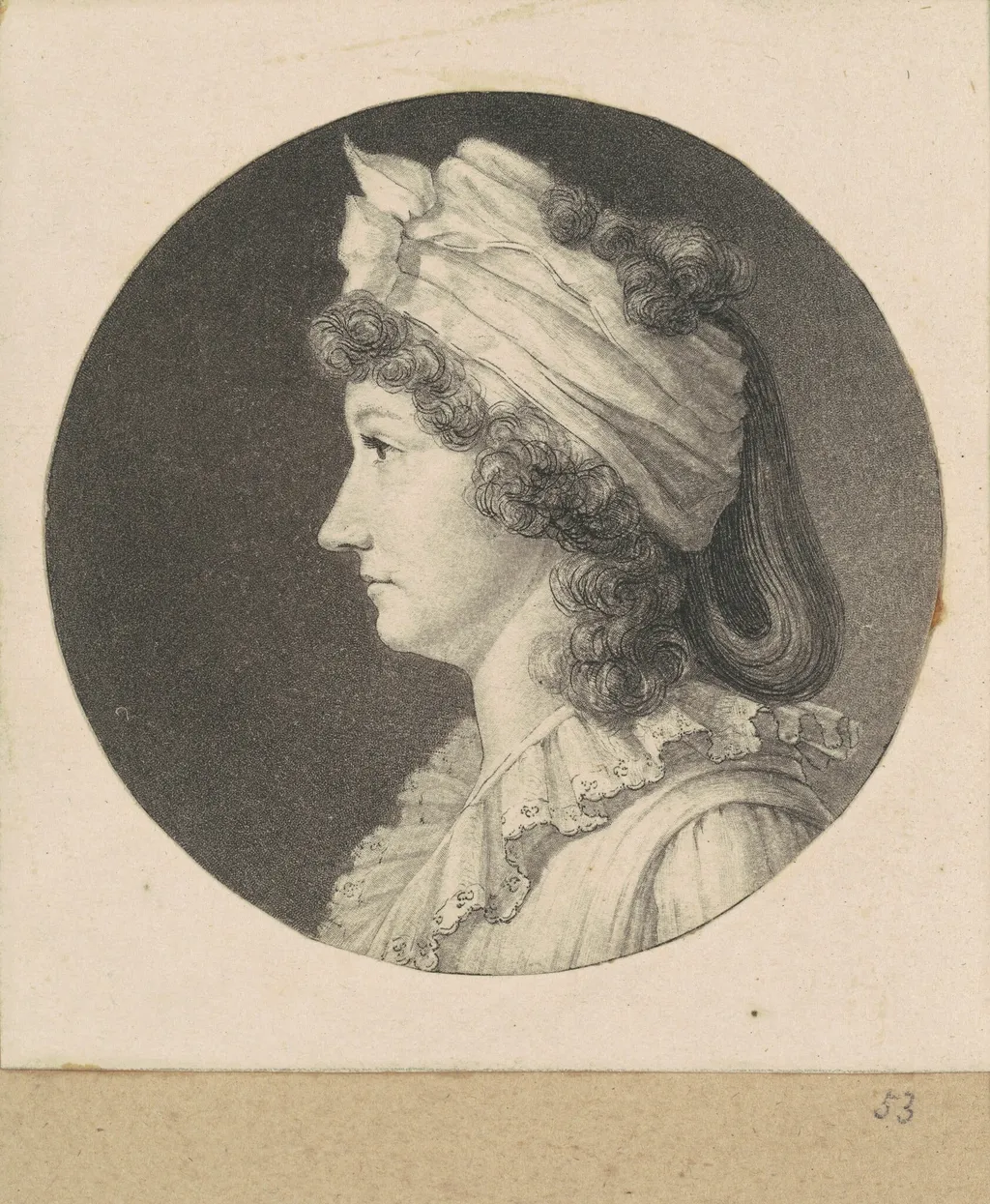
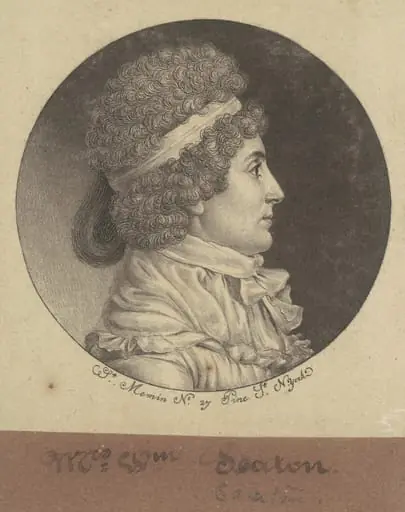
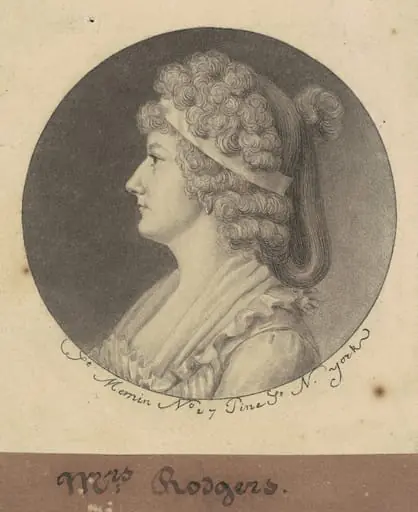
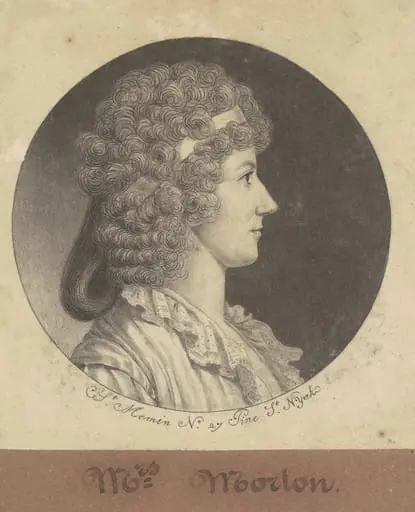
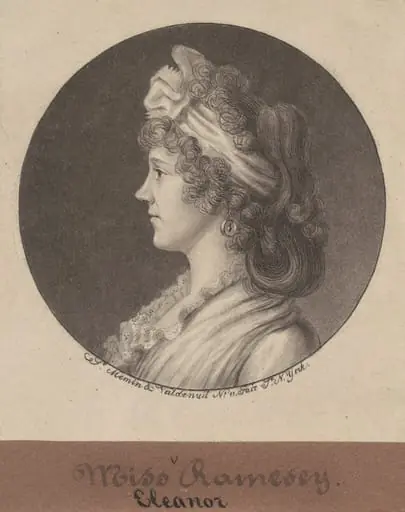
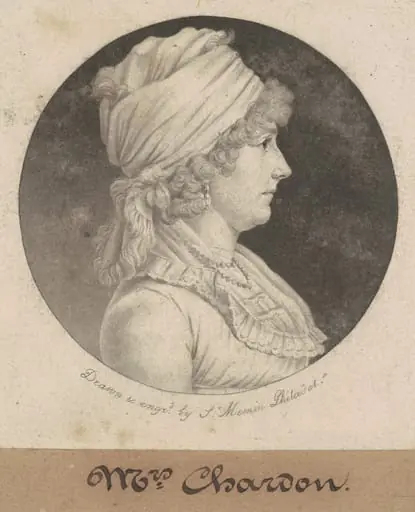
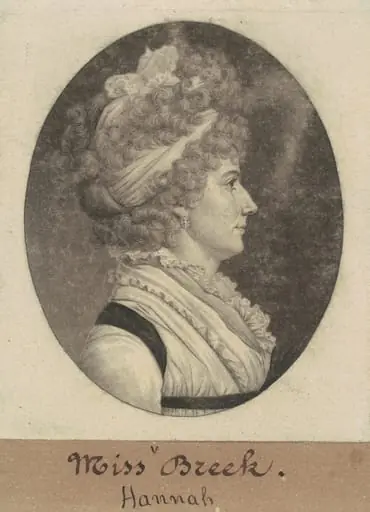
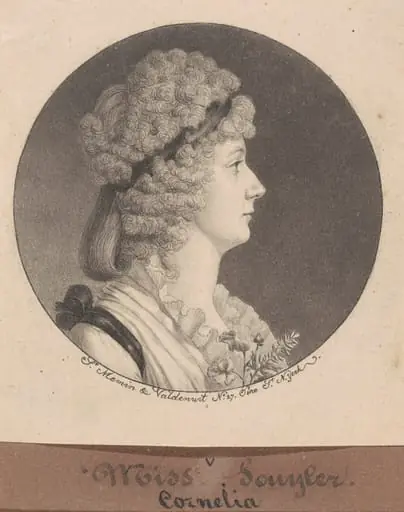
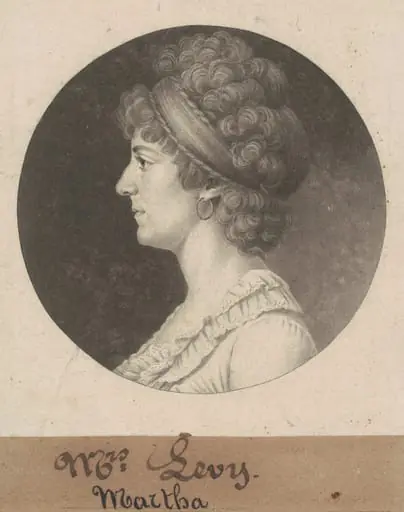
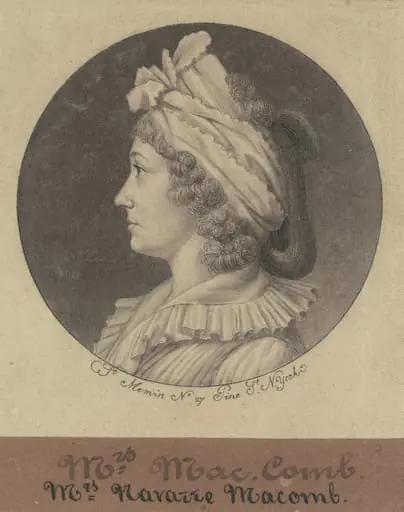
Unidentified Woman is an ink print by the Romanticist artist Charles Balthazar Julien Févret de Saint-Mémin. It dates from 1797 and is held in the collection of the National Gallery of Art. Created in 1797, this print by Charles B.
About this work
Overview
Févret de Saint-Mémin portrays an anonymous woman rendered in mezzotint and engraving on wove paper.
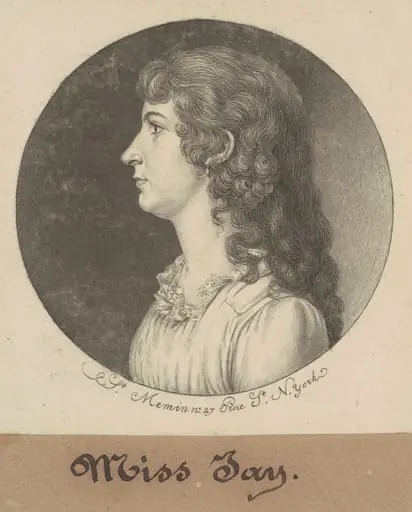
Created in 1797, this print by Charles B. J. Févret de Saint-Mémin portrays an anonymous woman rendered in mezzotint and engraving on wove paper. The image is mounted on a brown wove support, typical of the period’s presentation standards. Saint-Mémin, known for his precision in portraiture, produced numerous such works during his time in the United States, capturing individuals from various social circles without always recording their identities.
Subject & Meaning
The sitter remains unidentified, her name and background lost to history. Her composed expression and modest attire—a wide-brimmed hat and draped scarf—suggest middle- or upper-class status, yet she is not a public figure. The portrait’s quiet dignity reflects a broader 18th-century interest in documenting ordinary individuals, not just elites, through the emerging medium of printmaking as a tool for personal and social record.
Technique & Style
Saint-Mémin employed mezzotint, a labor-intensive process that allows subtle gradations of tone, combined with fine engraving lines to define features. The result is a richly textured surface that captures the softness of fabric, the sheen of hair, and the contours of the face with remarkable clarity. His technique prioritizes realism over ornamentation, emphasizing the sitter’s presence through careful light modulation and restrained detail.
History & Provenance
The print entered the collection of the National Portrait Gallery, where it remains part of a larger group of Saint-Mémin’s American portraits. Many of these were made during his residence in the U.S. between 1793 and 1814, often commissioned by families seeking affordable likenesses. This particular work likely originated from that period, though its original patron and commission context have not been documented.
Context
In late 18th-century America, portraiture was increasingly accessible through printmaking, allowing middle-class patrons to own likenesses previously reserved for the wealthy. Saint-Mémin’s work contributed to this shift, blending European engraving traditions with American demand for personal documentation. His output helped establish print as a legitimate medium for individual representation beyond elite circles.
Legacy
Saint-Mémin’s portraits, including this one, remain significant for their technical refinement and historical record of anonymous individuals. Though uncelebrated in their time, these works now offer insight into the social fabric of early America. His influence endures in the preservation of everyday faces through print, expanding the scope of portraiture beyond the historically prominent.
Artist & collection

Artist
Charles Balthazar Julien Févret de Saint-Mémin
Charles Balthazar Julien Févret de Saint-Mémin (French pronunciation: ; 1770–1852) was a French portrait painter and museum director.