Artwork
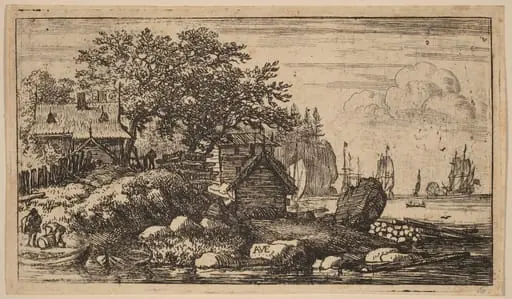
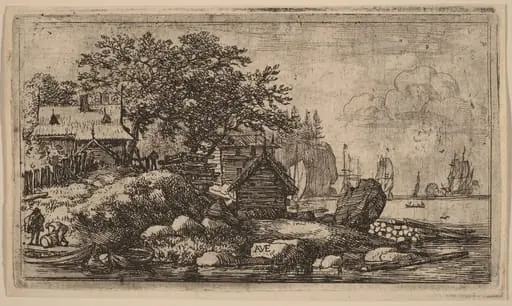
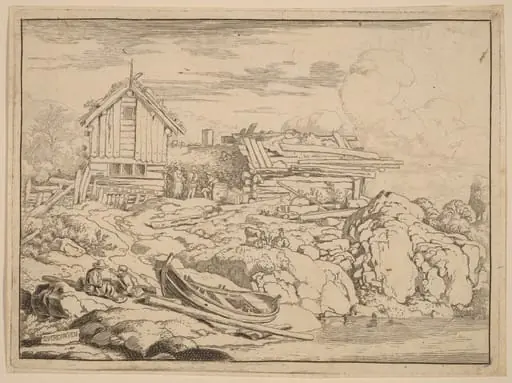
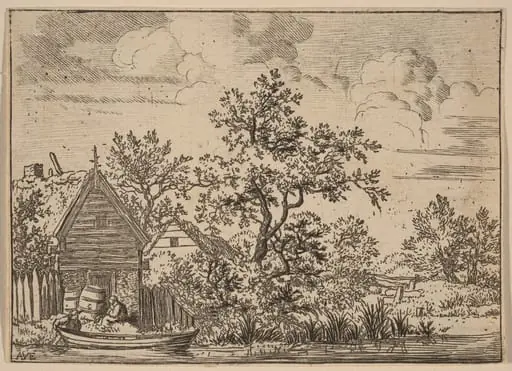
Eight landscapes (H.57-64): Landscape with Two Empty Boats
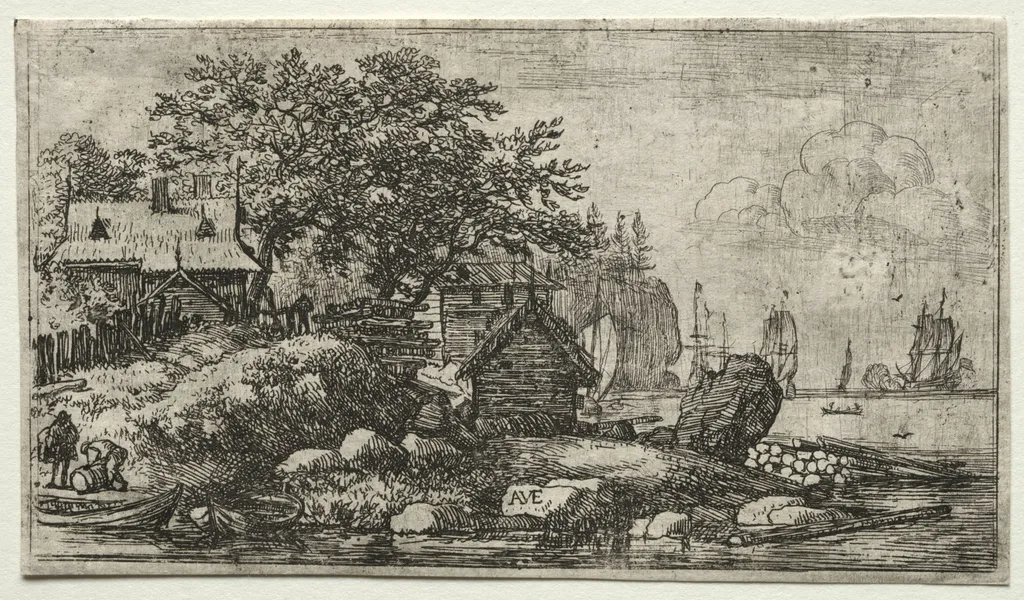
Eight landscapes (H.57-64): Landscape with Two Empty Boats is a print by Allart van Everdingen. It is held in the collection of the Cleveland Museum of Art.
About this work
Overview
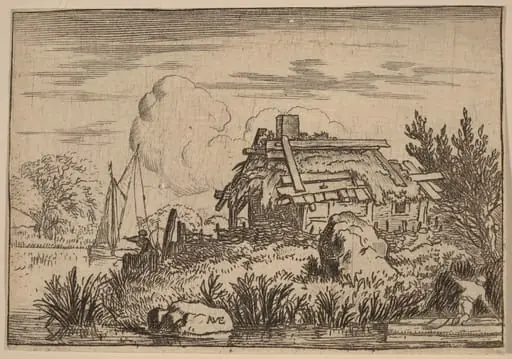
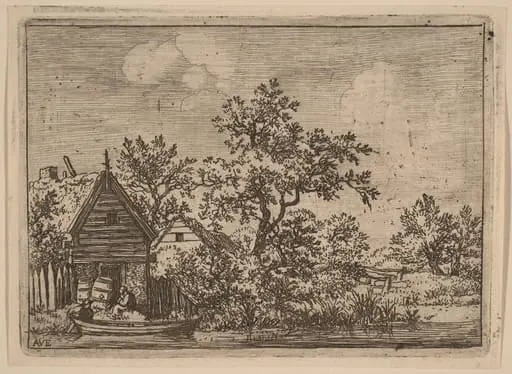
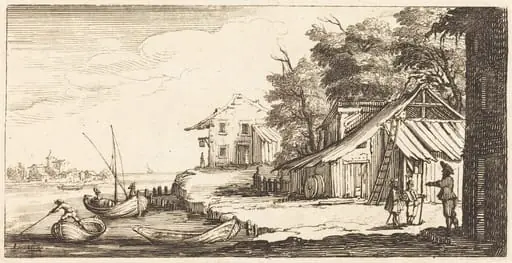
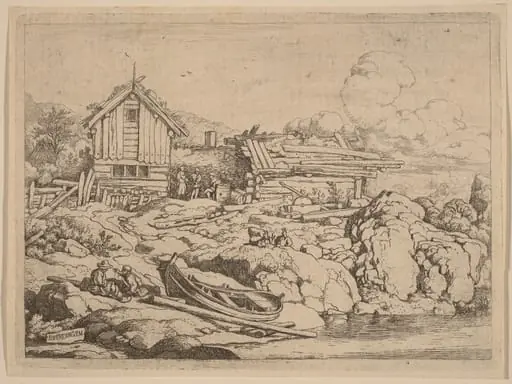
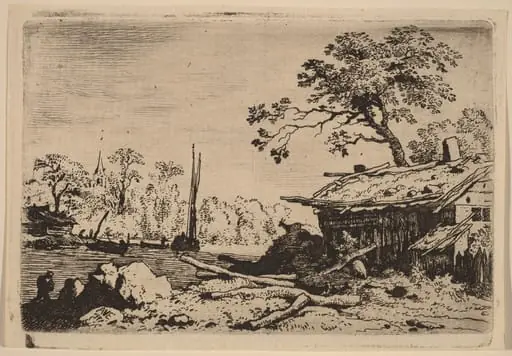
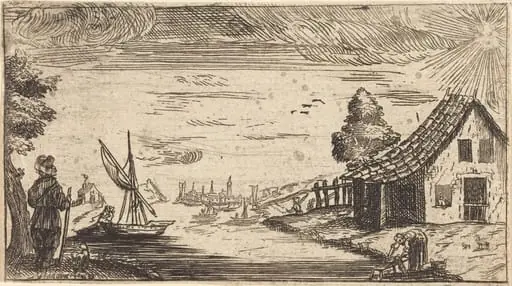
Created in the mid-17th century, it depicts a quiet waterside scene with two unmanned boats resting near the shore.
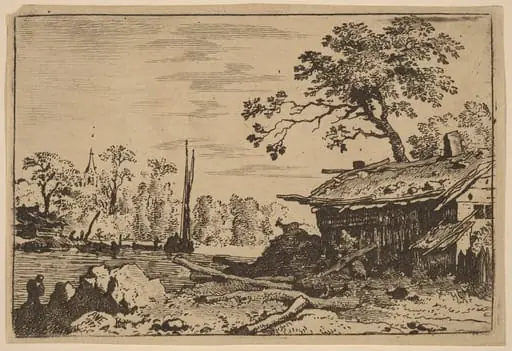
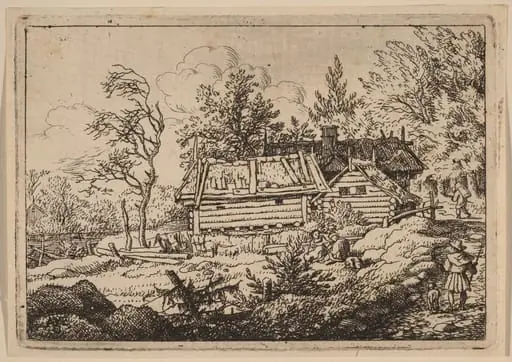
This print is one of eight landscape etchings by Allart van Everdingen, cataloged as H.57–64. Created in the mid-17th century, it depicts a quiet waterside scene with two unmanned boats resting near the shore. The work is part of the Cleveland Museum of Art’s collection and exemplifies van Everdingen’s focus on natural, unpopulated environments, rendered with careful attention to atmospheric tone and spatial depth.
Subject & Meaning
The scene presents an abandoned, tranquil waterscape: two empty boats lie still on the water’s edge, surrounded by sparse vegetation and distant trees. A modest structure, barely visible in the background, suggests human presence without figures. The absence of people invites contemplation, emphasizing solitude and the quiet persistence of nature. The composition avoids narrative, instead evoking a meditative stillness characteristic of Dutch landscape traditions.
Technique & Style
Van Everdingen employed etching to achieve fine linear detail and subtle tonal gradations. Light and shadow are carefully modulated to suggest depth and texture, particularly in the rendering of tree trunks and foliage. The use of chiaroscuro enhances the sense of atmosphere, with soft transitions between illuminated areas and shaded ground. The technique avoids dramatic contrast, favoring a restrained, naturalistic effect that aligns with Northern European landscape conventions of the period.
History & Provenance
The print was produced between 1640 and 1675, during van Everdingen’s active career as a printmaker. It entered the Cleveland Museum of Art’s collection as part of a group of eight related landscapes. The work’s provenance traces through 19th- and early 20th-century European collections before its acquisition by the museum. No evidence suggests it was altered or reprinted after the artist’s death in 1675.
Context
Van Everdingen’s landscapes reflect a broader Dutch interest in depicting rural and wilderness scenes during the Golden Age. Unlike Italianate visions of grandeur, his work favors modest, northern terrain—rocky shores, dense woods, and quiet waterways. His travels to Scandinavia influenced his depiction of rugged natural forms, which he translated into intimate, contemplative prints that appealed to collectors seeking quiet, reflective imagery.
Legacy
Van Everdingen’s etchings, including this one, contributed to the development of landscape printmaking in the Netherlands. His emphasis on naturalism and atmospheric tone influenced later generations of printmakers who sought to capture mood over spectacle. Though less celebrated than contemporaries like Rembrandt, his work remains a quiet benchmark in the evolution of Dutch topographical print culture.
Artist & collection
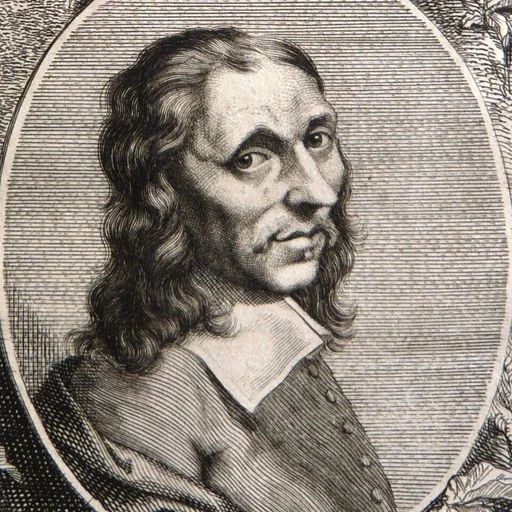
Artist
Allaert van Everdingen (Dutch pronunciation: ; bapt. 18 June 1621 – 8 November 1675 (buried)), was a Dutch Golden Age painter and printmaker in etching and mezzotint.