Artwork
Ruinous Hut
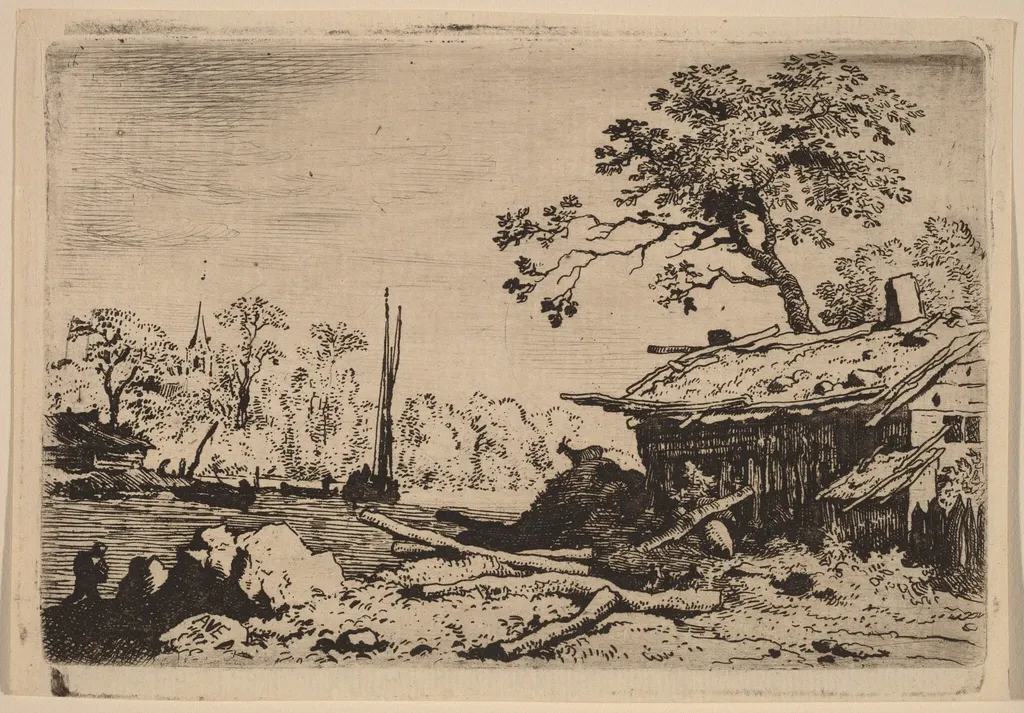
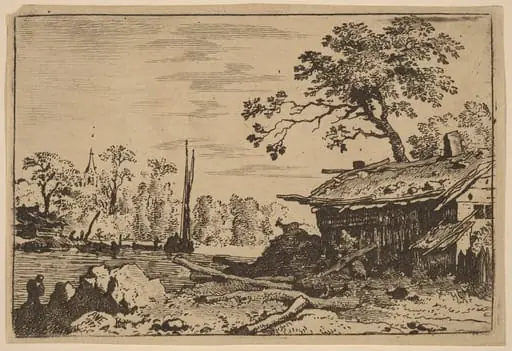
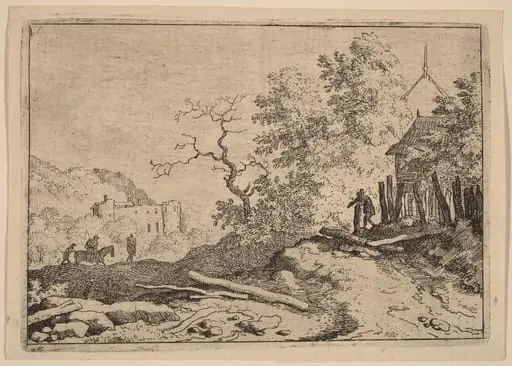
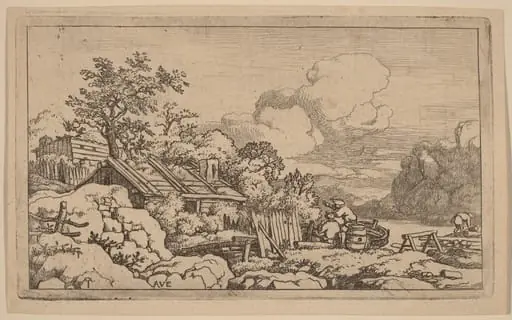
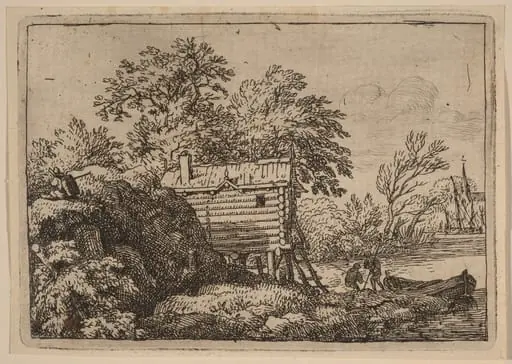
Ruinous Hut is an ink print by the Baroque artist Allart van Everdingen. It dates from 1650 and is held in the collection of the National Gallery of Art.
About this work
Overview
Ruinous Hut is a 17th-century etching by Dutch Golden Age artist Allaert van Everdingen, created around 1650. The print captures a serene, abandoned scene of a crumbling hut in a natural setting.
Subject & Meaning
The etching depicts a weathered, half-collapsed hut beside a calm river, surrounded by bare trees, scattered bushes, and a distant bridge. The composition conveys a sense of solitude and decay.
Technique & Style
Van Everdingen employed sharp, detailed etching lines to render textures, such as tree bark and the hut’s worn edges, achieving a balance of intricacy and melancholic atmosphere.
History & Provenance
Created circa 1650, Ruinous Hut exemplifies Van Everdingen’s focus on natural and architectural subjects through etching, a medium for which he was notably accomplished.
Context
Understanding the etching process—where acid is used to engrave designs onto metal plates—provides insight into the technical skill behind Van Everdingen’s detailed, textured work.
Legacy
Ruinous Hut reflects Van Everdingen’s contribution to Dutch Golden Age printmaking, characterized by capturing everyday and natural scenes with meticulous, atmospheric detail.
Artist & collection
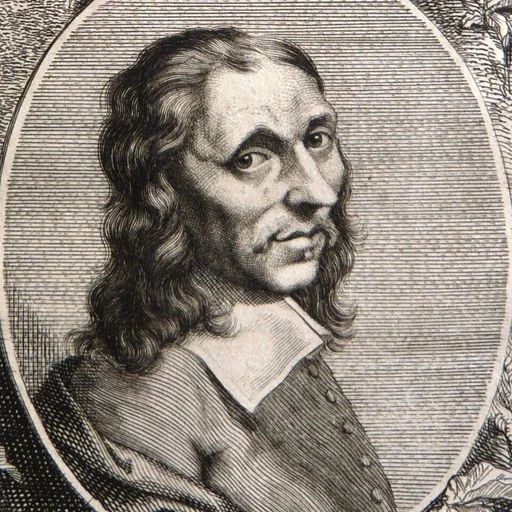
Artist
Allaert van Everdingen (Dutch pronunciation: ; bapt. 18 June 1621 – 8 November 1675 (buried)), was a Dutch Golden Age painter and printmaker in etching and mezzotint.